
7 Best CaliberMind Alternatives: Compared for 2026
Seven CaliberMind alternatives compared on pricing, setup effort and account-level attribution, with real user reviews for each.
Table of contents
CaliberMind is a serious B2B attribution platform. It's also built for enterprises with data teams, and that's usually why people go looking for something else.
The questions we hear most are about cost, implementation time and how much RevOps help the platform needs to stay accurate.
In this guide, I'll compare seven alternatives on those three things, with pricing from each vendor and real user reviews.
How we compared these tools
We used the tools that offer a free plan or trial ourselves, Dreamdata among them. CaliberMind, HockeyStack, Marketo Measure, Demandbase and LeanData sell through demos, so those sections draw on product walkthroughs, documentation and the teams we know who run them.
The brands and agencies we work with, plenty of them B2B teams that outgrew or never reached enterprise tools, shaped what we looked at, along with user reviews on G2. For each tool we checked:
- How pricing works and whether it's published
- How much setup and ongoing data work it needs
- Whether it tracks accounts, people, or both
- Whether results reach the CRM and the ad platforms
SourceLoop is our product. We put it first for teams that want CaliberMind-style answers without an enterprise rollout, and say where Dreamdata or HockeyStack is the better fit.
Last checked November 2026. Confirm current pricing with each vendor.
Why teams look beyond CaliberMind
CaliberMind combines multi-touch attribution, account-level funnels, journey summaries and an AI assistant on top of its own data warehouse. Its pricing is based on data volume, not seats, so the whole go-to-market team can use it. It's now part of Integrate.
Users credit it with flexibility:
"We can build attribution models that actually reflect our business instead of being stuck with a standard model that doesn't tell the full story." (Source)
The friction comes from the same place. Custom models and a full data warehouse need clean CRM data and someone to look after them, and pricing is quoted after a guided scoping process.
"Like any attribution platform, CaliberMind is only as good as the data feeding it." (Source)
"The UX is confusing sometimes and it's hard to find the reports. The learning curve is high." (Source)
CaliberMind alternatives compared
Here's how the 7 CaliberMind alternatives compare on fit, pricing, how you can start, and setup, as of November 2026.
| Tool | Best for | Pricing | Free plan or trial | Account-level journeys | Typical setup |
|---|---|---|---|---|---|
 SourceLoop | Lead-gen businesses, agencies, SaaS | From $49/mo | Yes | Partly | Self-serve, same day |
 HockeyStack | Mid-market and enterprise B2B | Quote, annual | No | Yes | Guided onboarding |
 Dreamdata | B2B SaaS running ABM | Free plan, paid quoted | Yes | Yes | Self-serve start, guided on paid |
 Ruler Analytics | Lead gen with phone sales | From £299/mo | No | No | Guided, a few weeks |
 Adobe Marketo Measure | Enterprises on Marketo and Salesforce | Quote | No | Yes | Guided, needs a Salesforce admin |
 Demandbase One | ABM with intent data | Quote, platform plus per user | Intent data trial | Yes | Guided |
 LeanData | Salesforce routing plus attribution | Quote | No | Yes | Salesforce admin |
The 7 best CaliberMind alternatives
Here's each alternative, where it beats CaliberMind, and what it costs.
1. SourceLoop
Best for: lead generation businesses, the agencies running their ads and SaaS teams that want attribution to CRM revenue without a data team or an annual contract.
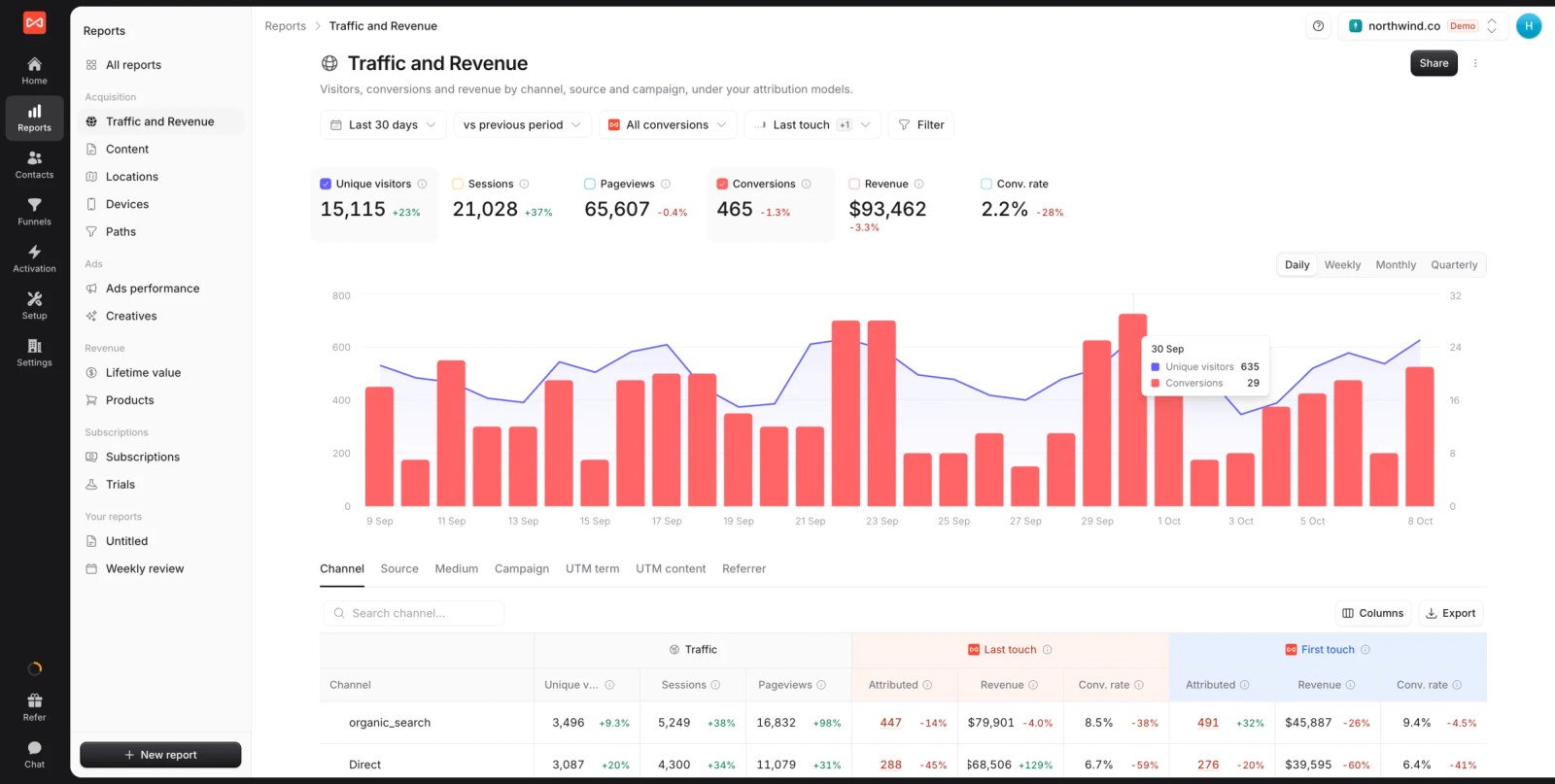
SourceLoop is a marketing attribution and revenue measurement tool. It doesn't try to be a GTM data warehouse. It records every visit on your site, follows each lead into your CRM, and credits pipeline and revenue back to the campaigns that started it.
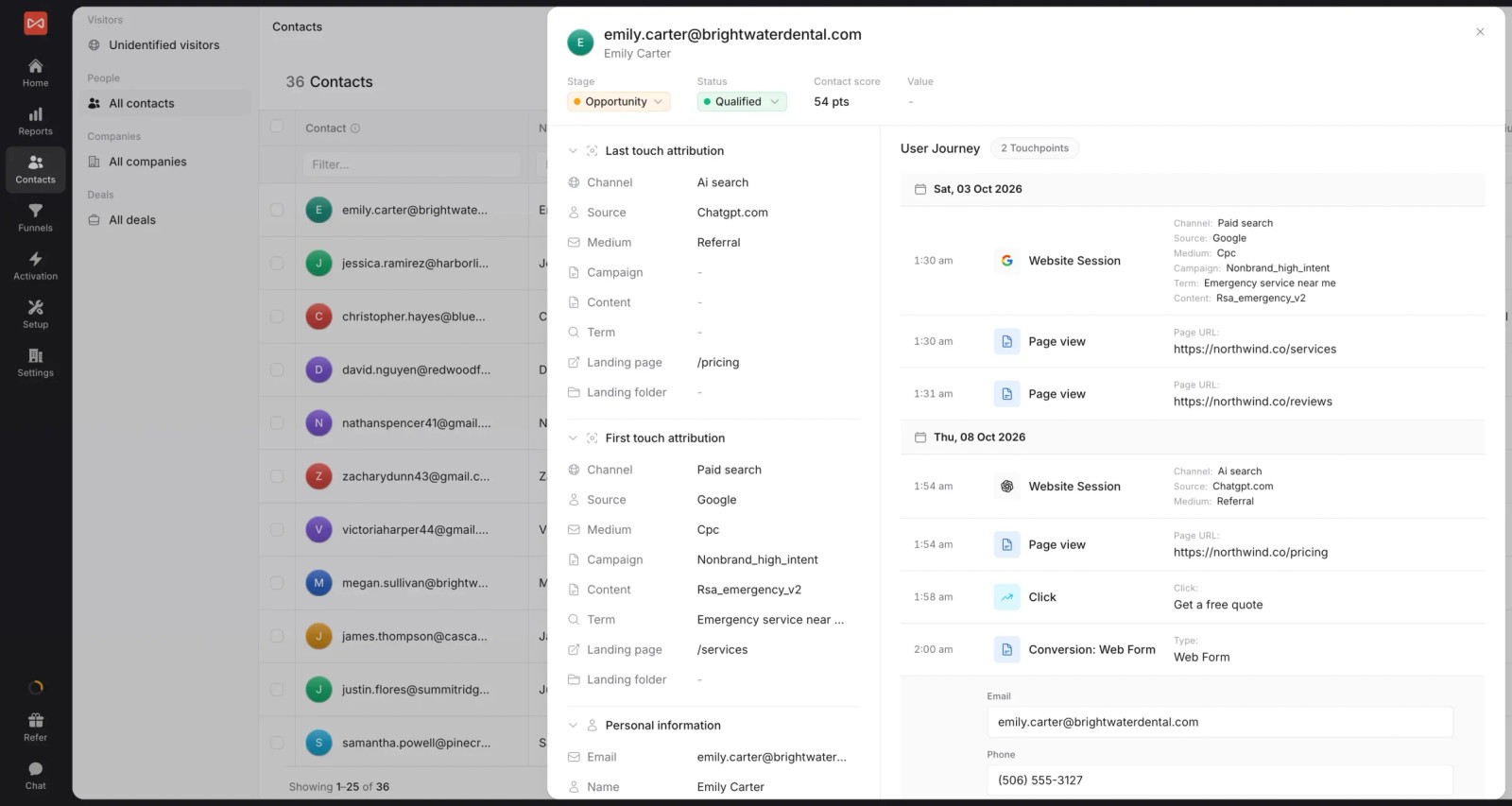
For a B2B team, the setting that matters is Credit visits from: Everyone at their company. A deal then credits the colleague who first found you on search as well as the person who signed, which gets you most of the account view without IP-based identification.
Key features
- Full journeys on every lead: each visit's source, ad click and landing page stays attached to the person, across forms, calls, chats and bookings.
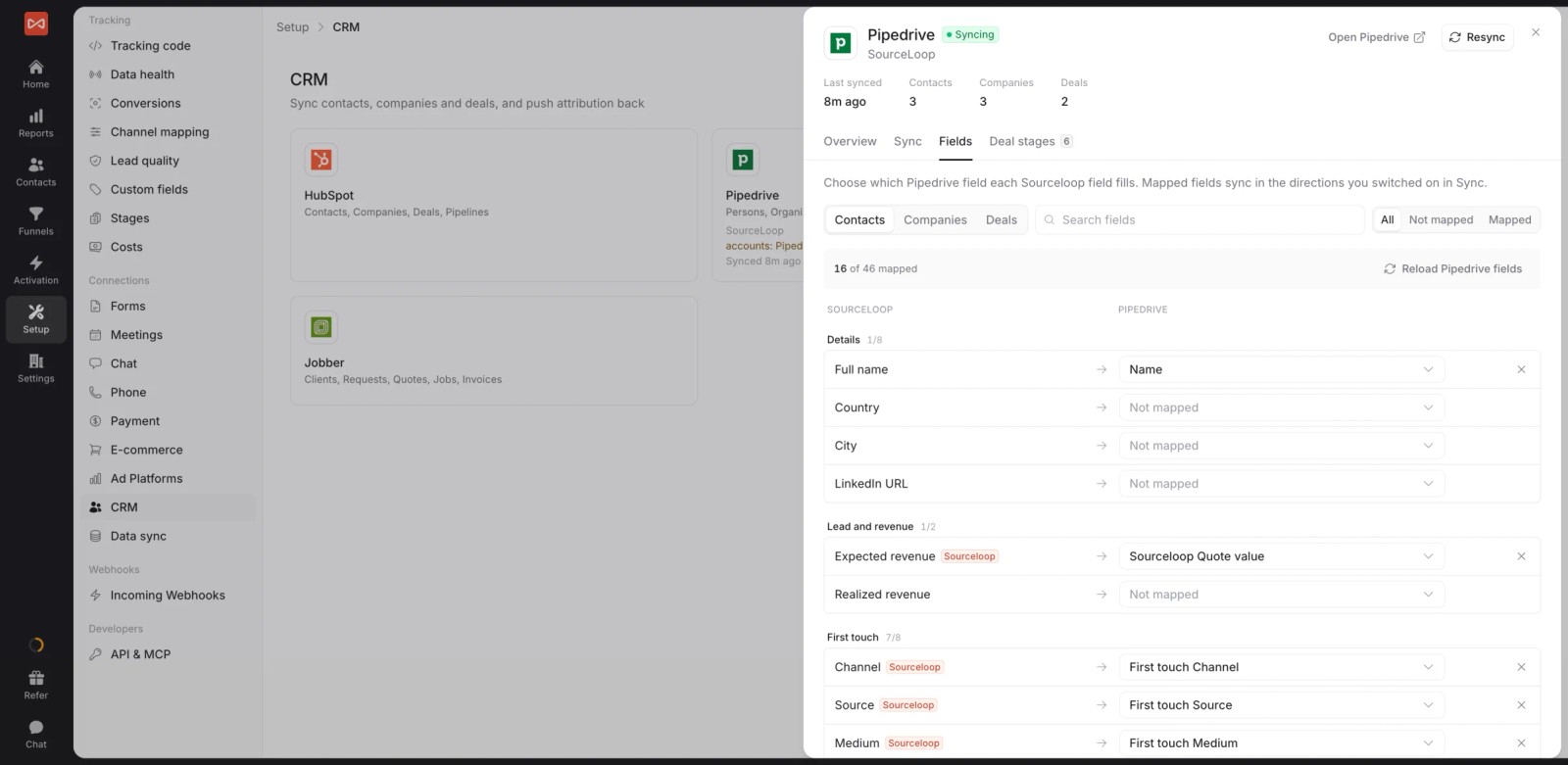
- Two-way CRM sync: HubSpot, Salesforce and Pipedrive, with attribution fields written to the record and stages and won deals read back.
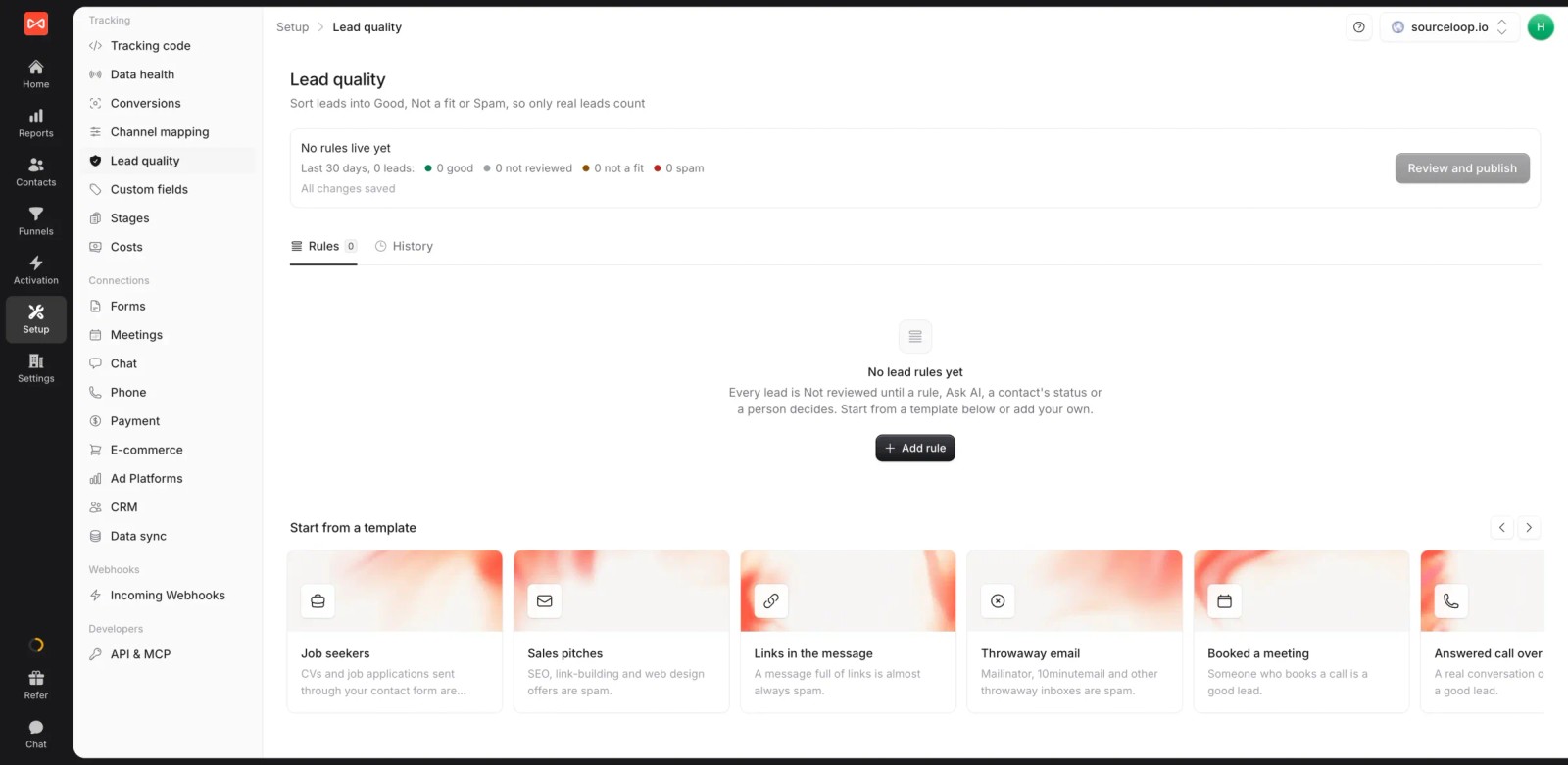
- Lead quality rules: leads are marked Good, Not a fit or Spam from form answers, email domain or call length, so pipeline reports skip the junk.
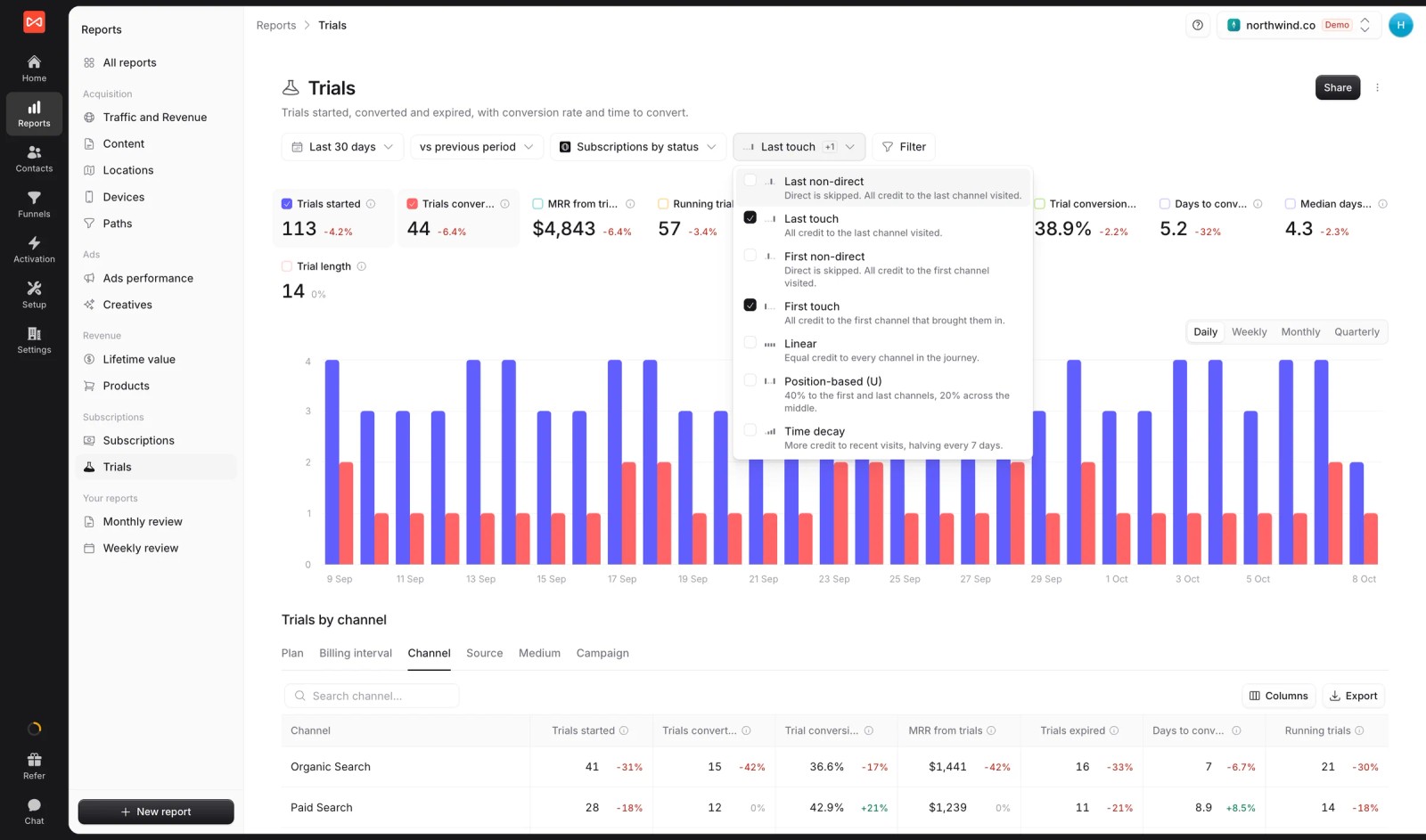
- Seven attribution models: first and last touch, first and last non-direct, linear, U-shaped and time decay, on leads, CRM stages, deals or revenue.
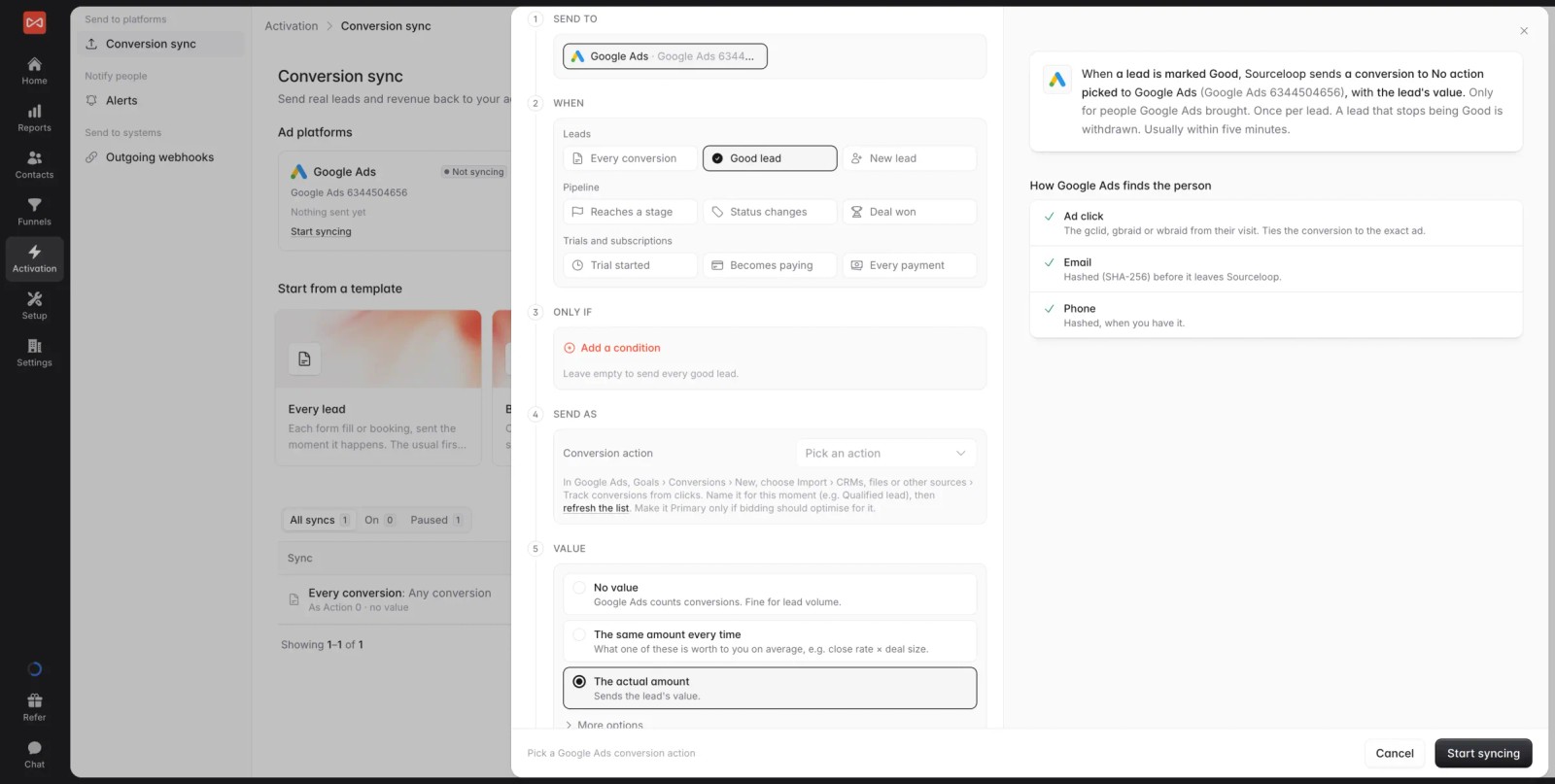
- Conversion sync: good leads and won deals go back to Google Ads, Meta, Microsoft Ads and ChatGPT Ads with their value, through server-side conversion sync.
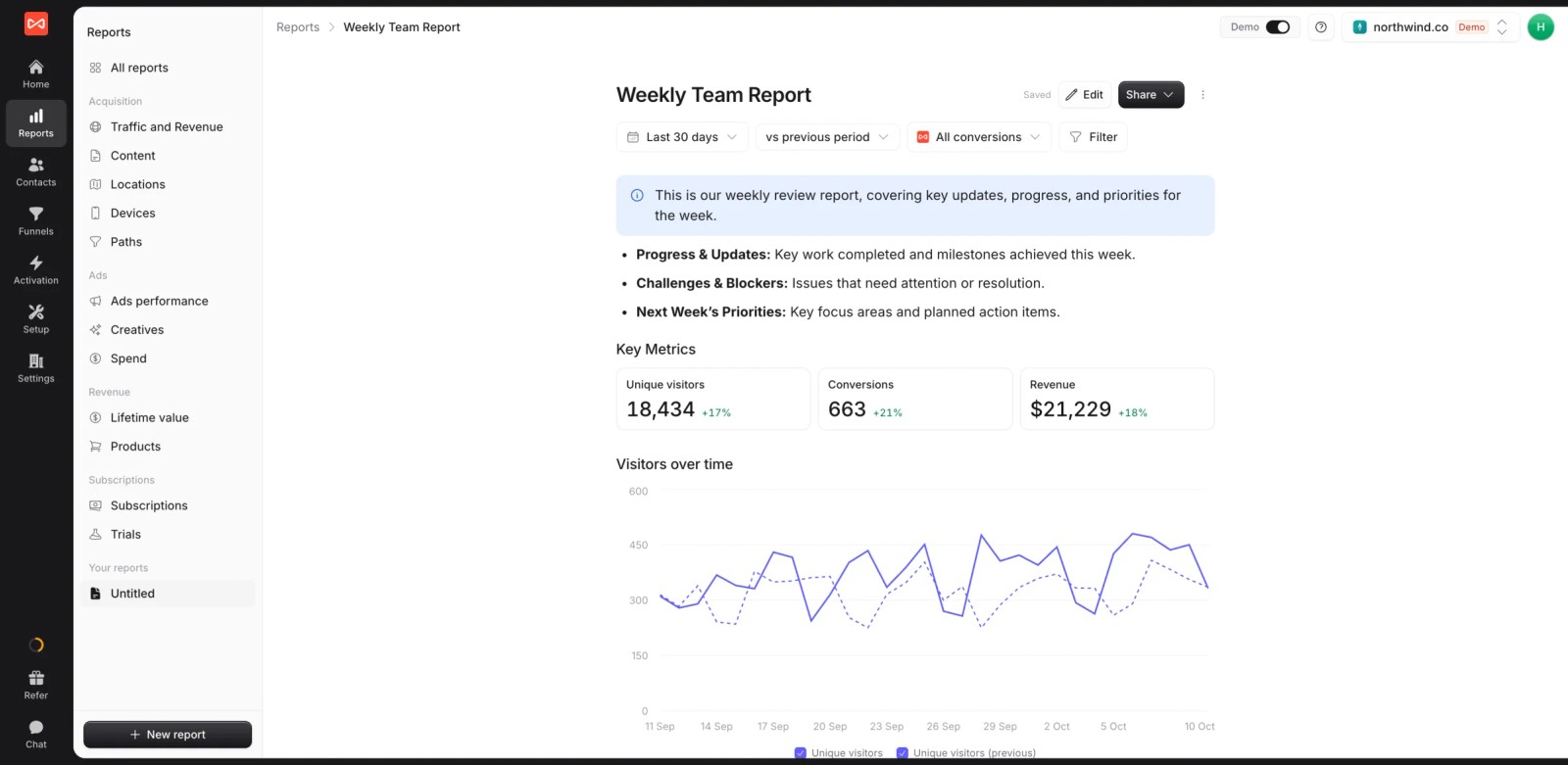
- Custom reports and alerts: build reports with live numbers for the board, and post new opportunities or weekly pipeline to Slack or email.
- API and MCP server (Professional and up), so an AI assistant can query attribution and deals or draft a report.
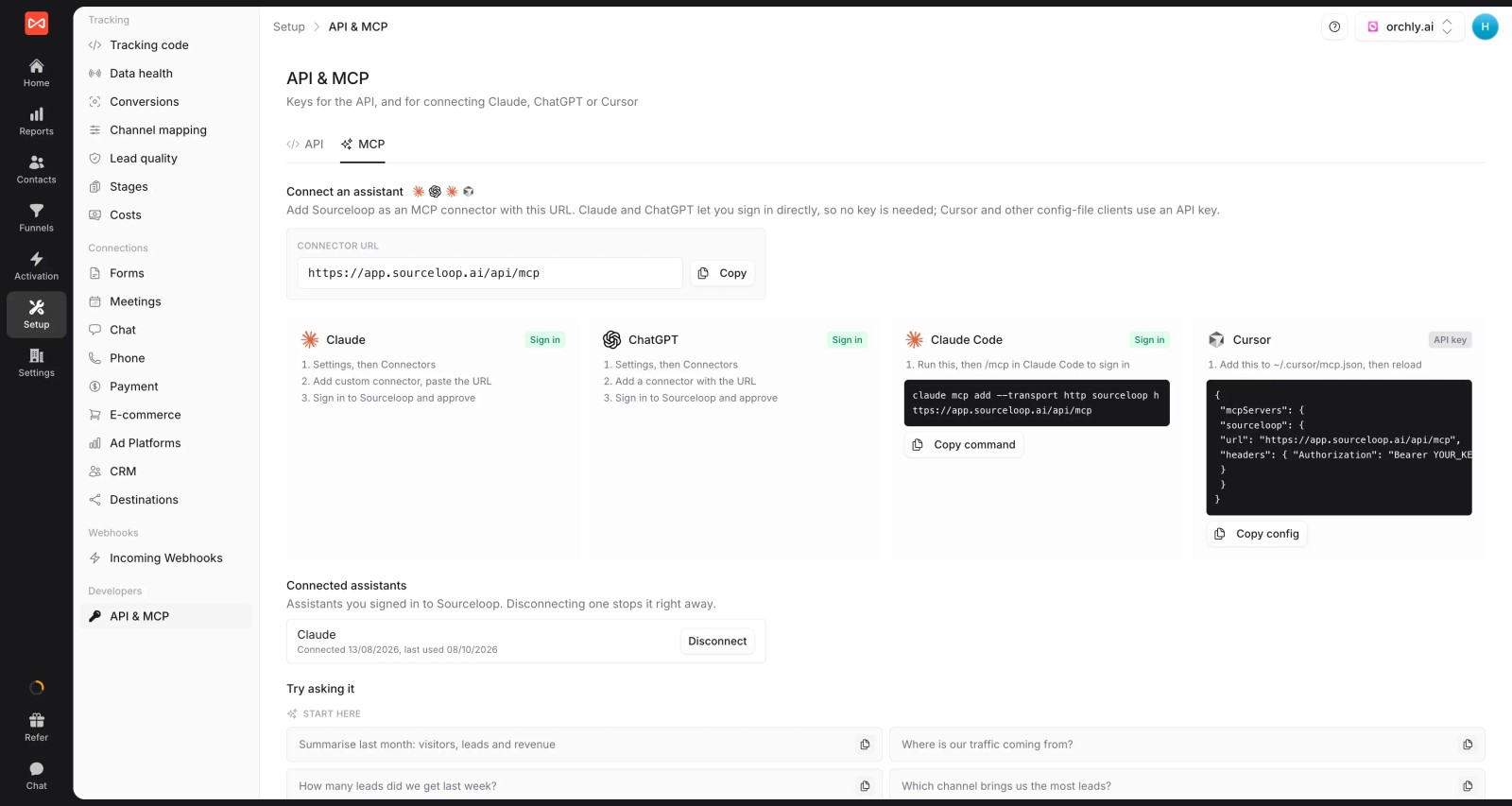
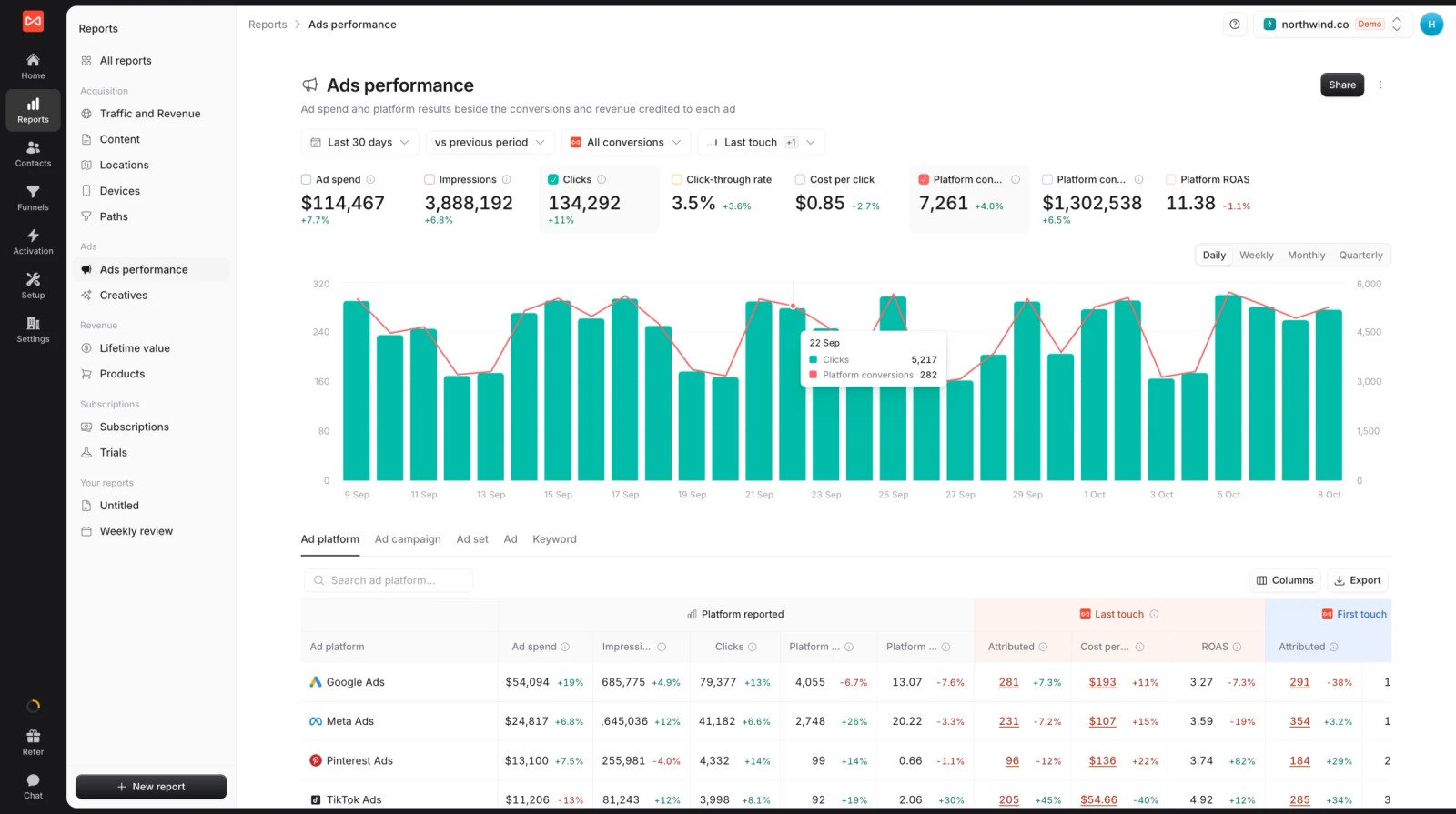
- Ad spend next to pipeline: spend and platform-reported conversions sit beside the leads and deals SourceLoop credits to Google Ads, Meta and Microsoft Ads, so budget talks start from the same numbers.
Where it falls short
- No custom attribution models, intent data or IP-based company identification.
- It's lighter on deep account analytics than CaliberMind or Dreamdata. If ABM reporting is the core of your program, start with those.
SourceLoop vs CaliberMind
| Feature | SourceLoop | CaliberMind |
|---|---|---|
| Pricing | Published, from $49/mo | Quoted by data volume |
| Setup | Self-serve, same day | Guided implementation |
| Attribution models | Seven rule-based models | Custom models |
| Account view | Company journeys from captured emails and the CRM | Full account engagement and funnels |
| Conversion sync to ad platforms | Google Ads, Meta, Microsoft Ads, ChatGPT Ads | Not a core feature |
| Data warehouse | Export to Snowflake, BigQuery, S3 or GCS | Built in |
Pricing
- Essential: $49/mo for one site and 30,000 page views, with tracking, attribution reports, lead quality rules and alerts
- Professional: $99/mo for 100,000 page views and unlimited users, adding CRM sync, conversion sync to the ad platforms, the API and MCP
- Agency: $249/mo for three sites and 1.5 million page views, adding white label reporting
- Unlimited conversions on every plan, 7-day trial.
2. HockeyStack
Best for: mid-market and enterprise B2B teams with big multi-channel budgets and someone to own the platform.
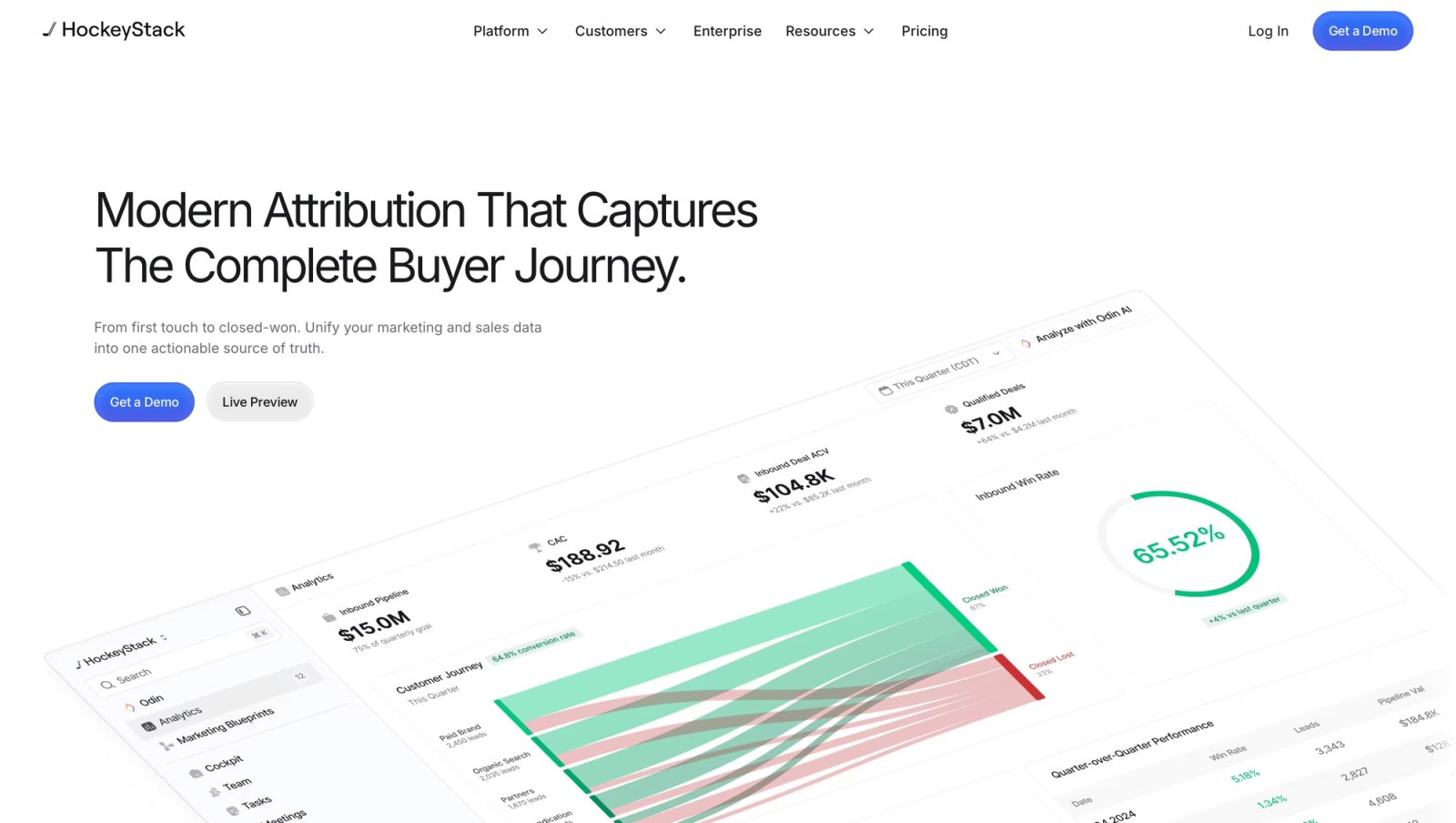
HockeyStack pulls CRM, marketing automation, ad, product and website data into one model, then adds AI agents on top for analysis and sales. Of everything here, it's the closest to CaliberMind in ambition.
In walkthroughs, the journey views and the ability to flip between attribution models in seconds are genuinely impressive. The worry is what happens after the contract is signed. In 2026, several reviewers described implementations where their data never connected properly.
That split is worth taking seriously. Ask for references from companies with a stack like yours before you sign.
Key features
- CRM, ad platform, marketing automation and product usage data are pulled into a single model, so marketing and sales stop arguing over whose numbers are right.
- First touch, linear, last touch and other models can be flipped on the same report in seconds, which helps when different teammates want different views of credit.
- AI agents sit on top of the unified data, answering analysis questions for marketers and helping sales teams spot accounts worth a closer look.
- Journey maps follow a buyer from the first anonymous research visit through to closed-won, showing which touches showed up in deals that actually closed.
Where it falls short
- There's no self-serve trial, so every evaluation starts with a sales call and an annual contract discussion before you see your own data.
- Several 2026 reviewers describe data that didn't match Salesforce or never connected at all, so implementation risk is real when your CRM is messy.
- It needs clean CRM data and a dedicated owner to stay accurate, which is a stretch for small teams without RevOps support.
What users say
"I like being able to switch between attribution models like first touch, linear, and last touch in a second, so different marketing teammates can look at reports in different ways." (Source)
"Data was constantly incorrect in HockeyStack compared to our Salesforce instance and the sync/load times were incredibly slow." (Source)
"The core failure: they couldn't connect our data." (Source)
Pricing
- Quoted, with annual contracts. Our HockeyStack alternatives guide covers what buyers report paying.
3. Dreamdata
Best for: B2B SaaS companies running account-based marketing with long, multi-person sales cycles.
Dreamdata joins every contact's touchpoints into one company timeline and ties them to CRM stages from MQL to closed-won. It identifies visiting companies from their IP and offers an AI analytics agent and an MCP server.
We've used it, and the company journey view is where it shines. Seeing every person at an account, every ad and every page in one timeline makes a long deal easy to explain.
What took longer was knowing where to look. There are many ways to view the same data, and new teammates needed a guided tour first. The free plan is a good way to try it, but full attribution sits on custom-priced plans.
Key features
- Every person at a company is placed on one account timeline, so a long deal with several stakeholders reads as one story from first visit to signature.
- Visiting companies are identified from their website traffic, which surfaces accounts that are researching you weeks before anyone fills in a form.
- Attribution is tied to CRM stages from MQL through opportunity to closed-won, so you can see which channels move deals forward, not just create leads.
- An analytics agent and an MCP server let your team, or your own AI assistant, ask questions of the data without building every report by hand.
Where it falls short
- Full attribution and activation sit on custom-priced plans, so for most teams the free tier works as a preview more than a complete setup.
- There are many ways to view the same data, and new teammates usually need a guided walkthrough before they find the report they want.
- It's built around web and CRM data, so phone calls and offline leads need a separate tool before they show up in journeys.
What users say
"Dreamdata helps me to justify where marketing budget is placed as it is directly tied back to my CRM across MQLs, SQLs, Opps, and Closed Won." (Source)
"The interface can be tricky, especially when I’m trying to show revenue impact to non-digital marketers." (Source)
Pricing
- Free: $0/mo with 2 months of history and 5 seats
- Attribution & Activation: custom pricing, with a guided trial
4. Ruler Analytics
Best for: lead generation businesses where phone calls close the sale, such as legal, finance and home services.
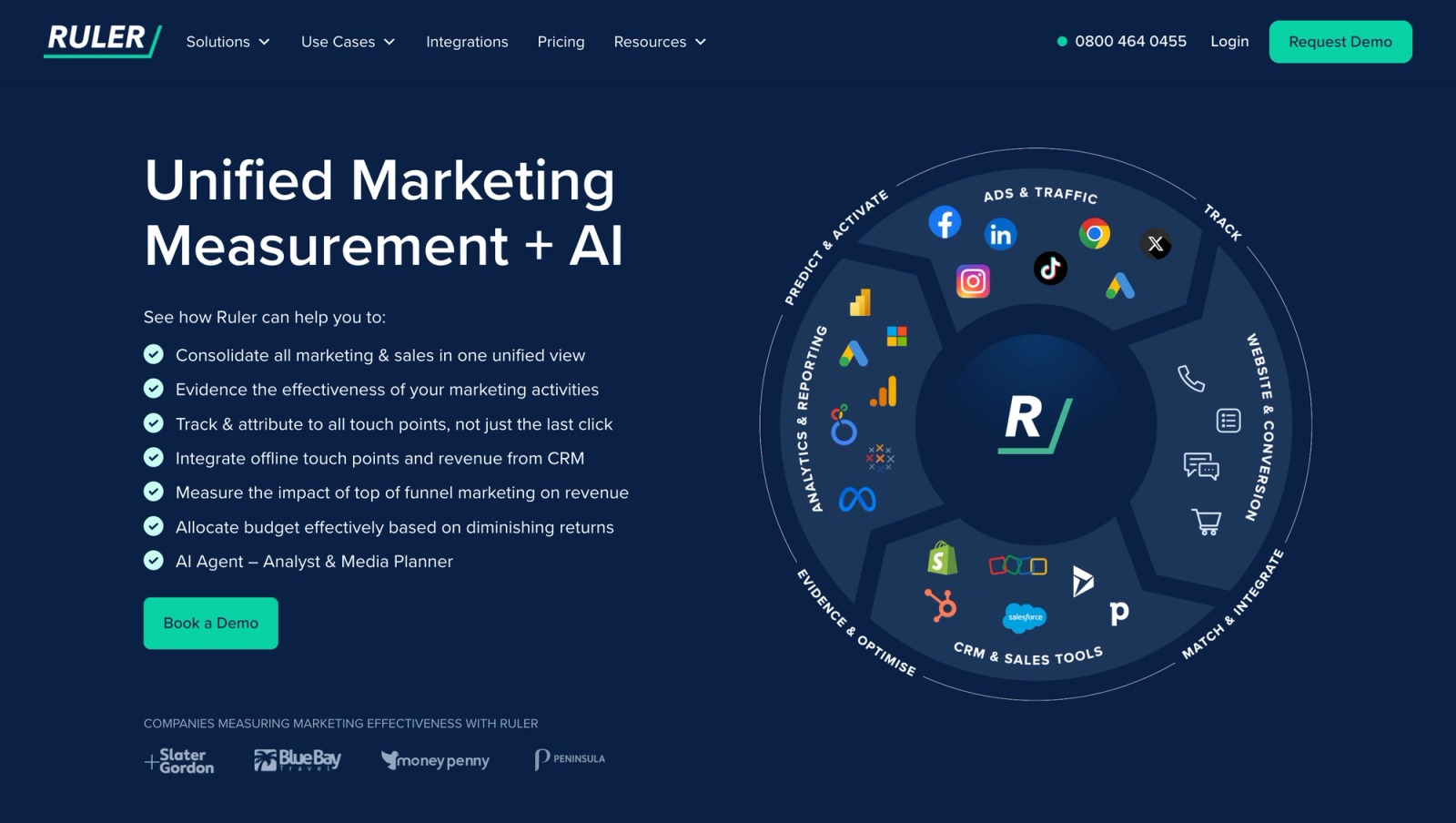
Ruler Analytics is a different kind of CaliberMind alternative. It isn't account-based. It tracks individual leads from forms, calls and live chat, then credits CRM revenue back to the campaign and keyword.
Its built-in call tracking is the reason to pick it. Each call is tied to the visitor's source and pages, which few B2B platforms do. The trade-offs users mention are setup effort, a slow interface at times and an API limited to webhooks.
Teams we know who run it say the call data is what keeps them on it. Seeing a keyword, a phone call and a closed deal in one line is something most B2B platforms simply can't show.
Key features
- Dynamic call tracking numbers swap per visitor, tying each phone call to the source, keyword and pages that came before it, which matters most for phone-led sales.
- Closed revenue is pulled back from Salesforce, HubSpot, Pipedrive and other CRMs, so campaign reports show the money each channel produced rather than lead counts alone.
- Form fills and live chat conversations are attributed alongside calls, giving lead-gen teams one view of every way a prospect got in touch.
- Marketing mix modeling is available on the Advanced tier for businesses that also spend on offline or brand channels that clicks can't measure.
Where it falls short
- There's no free trial, so you go through a demo and a guided onboarding that can take a few weeks before reports are useful.
- It tracks individual leads rather than accounts, so ABM teams won't get the company-level journeys and funnels that CaliberMind provides.
- Integrations run mainly through webhooks, and some users have asked for a fuller API to pull Ruler data into their own reporting tools.
What users say
"Seeing the detail of every form submission and phone call, from what source, the duration of the call and the pages that led to a conversion is a real eye-opener." (Source)
"Some minor mapping issues, initial setup can be complex" (Source)
Pricing
- Small: from £299/mo for up to 10,000 monthly visits
- Medium / Large: from £499 and £999/mo
- Advanced: from £1,499/mo, with final pricing after a demo
5. Adobe Marketo Measure (formerly Bizible)
Best for: enterprises already running Marketo and Salesforce that want attribution inside that stack.
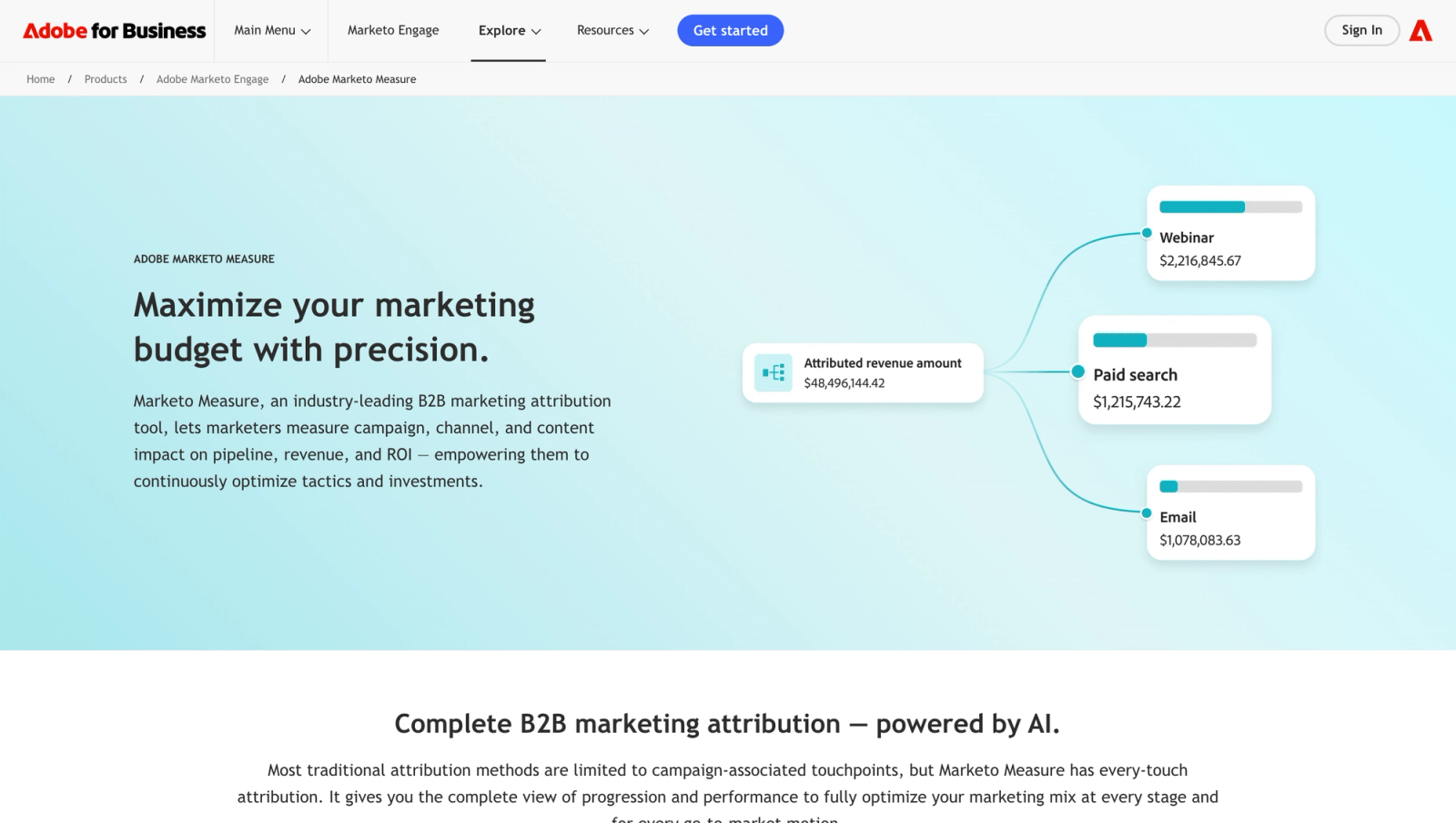
Marketo Measure writes touchpoints into Salesforce and splits pipeline and revenue across them with rule-based and custom models. If your team already lives in Marketo and Salesforce, it slots in without a new data layer.
The catch is the same as CaliberMind's: it's only as good as your CRM hygiene. Users describe leads entered by hand into Salesforce falling outside tracking, and reports that need a technical owner to keep accurate.
Salesforce admins we know describe the first months as cleanup: fixing campaign data and touchpoint rules. Once that's done, reporting holds up well, but someone has to keep it that way.
Key features
- Touchpoints are written directly onto Salesforce leads, contacts and opportunities, so sales and finance read the same attribution data inside the CRM they already use.
- Rule-based and custom models, including W-shaped and full path, split pipeline and revenue across the stages that matter in long, multi-person B2B deals.
- Ad spend and offline channels such as events can be combined in ROI reports, giving enterprise teams one view of cost against influenced revenue.
- It slots into Adobe Experience Cloud, which makes it the natural choice for teams already standardised on Marketo Engage and other Adobe products.
Where it falls short
- It's built around Salesforce opportunities, so teams running HubSpot or another CRM can't use it in any practical way.
- Leads entered by hand into Salesforce can fall outside tracking, which leaves gaps unless sales follows strict data entry habits every day.
- Setup and upkeep usually need a Salesforce admin and often an implementation partner, which adds cost on top of the Adobe contract itself.
What users say
"What I like most about adobe marketo measure is that it clearly shows which marketing efforts actually influence deals and revenue." (Source)
"It also requires clean data and strong technical skills to get the most accurate insights." (Source)
Pricing
- Quoted by Adobe, on an enterprise contract. See our Marketo Measure alternatives for more context.
6. Demandbase One
Best for: account-based marketing teams that need intent data, advertising and sales intelligence alongside measurement.
Demandbase One is an ABM platform first. It identifies accounts, scores them on intent signals, runs account advertising and gives sales a prioritized list, with pipeline measurement on top.
If you're replacing CaliberMind mainly for attribution, Demandbase is more platform than you need. It makes sense when the real goal is finding in-market accounts. Even then, users say the intent scoring can feel like a black box.
Key features
- Account identification and intent data show which companies are researching your category right now, so sales and marketing can focus on accounts that are actually in market.
- Account advertising runs targeted programs to a chosen list of companies, keeping spend on the accounts your sales team wants to win.
- Sales intelligence surfaces buying groups and prioritised account lists, helping reps decide who to call first and what each account has been looking at.
- Pipeline measurement reports on how ABM programs influence opportunities, giving marketing a way to show the effect of account-based spend on deals.
Where it falls short
- If you mainly want attribution, it's far more platform than you need, and the price reflects the full ABM and advertising suite.
- Some users find intent scores hard to explain, because the logic behind an account's score isn't visible or adjustable by your own team.
- Pricing combines a platform fee with per-user fees and is only quoted through sales, which makes early budgeting and comparisons difficult.
What users say
"Intent data shows us exactly which target accounts are actively researching solutions in our space right now" (Source)
"the internal logic behind why an account is scored as \"highly interested\" often feels like a black box algorithm that I can't see or tweak." (Source)
Pricing
- Quoted, as a platform fee plus a flat fee per user. See our Demandbase alternatives guide.
7. LeanData
Best for: Salesforce teams that need lead-to-account matching and routing first, with attribution as a bonus.
LeanData is best known for routing leads to the right rep inside Salesforce. Its attribution product runs natively on Salesforce custom objects and builds on your campaign data, so it reports influence without restructuring your CRM.
Nearly all of its G2 reviews are about routing, which tells you where its strength is. Attribution depends on every touch being logged as a Salesforce campaign, so web visits that never become campaign members won't show up.
Key features
- Lead-to-account matching and routing inside Salesforce is the core product, sending each new lead to the right rep based on rules you control.
- Attribution runs natively on Salesforce campaigns and custom objects, so influence reporting builds on data your team already logs without a separate platform.
- A shared account-level engagement view lets marketing and sales see the same picture of activity at each target company.
- Every routing decision is recorded in an audit trail, which helps operations teams explain why a lead went where it did and fix rules quickly.
Where it falls short
- Attribution depends on every touch being logged as a Salesforce campaign, so anonymous web visits that never become campaign members don't appear at all.
- It only works inside Salesforce, which rules it out for teams that run HubSpot, Pipedrive or another CRM as their system of record.
- Most of its reviews focus on routing, and some users find its attribution reporting hard to interpret without help from an admin.
What users say
"What I like best about LeanData is that it's completely Salesforce native." (Source)
"Reporting with LeanData is a mystery." (Source)
Pricing
- Quoted through LeanData sales.
How to choose
Three questions point to the right one.
1. Do you need account-level analytics, or lead-level revenue?
- Lead-level revenue, set up yourself: SourceLoop. It suits lead generation businesses, agencies and SaaS teams that want every lead tied to pipeline, and good leads sent back to the ad platforms.
- Deep account journeys for ABM: Dreamdata or HockeyStack.
- Phone calls close the deal: Ruler Analytics.
2. What's already in your stack?
- Marketo and Salesforce at enterprise scale: Marketo Measure.
- Salesforce routing problems as well: LeanData.
- An ABM program that needs intent data: Demandbase One.
3. Who will run it?
- No data team: pick a tool with self-serve setup and published pricing.
- A dedicated RevOps owner: the enterprise platforms, CaliberMind included, start to pay off.
For more on choosing a model once you've picked a tool, read our guide to B2B attribution models.
Frequently asked questions
-
What is CaliberMind used for?
CaliberMind is a B2B attribution and GTM intelligence platform. It combines multi-touch attribution, account-level funnels and journey insights on top of its own data warehouse, mainly for enterprise marketing and RevOps teams.
-
How much does CaliberMind cost?
CaliberMind doesn't publish prices. Its pricing is based on data volume rather than seats, includes unlimited users, and is set after a guided scoping process.
-
What is the best CaliberMind alternative?
For lead generation businesses, agencies and SaaS teams that want attribution to CRM revenue with self-serve setup, SourceLoop. For deep account-based analytics, Dreamdata or HockeyStack. For teams on Marketo and Salesforce, Marketo Measure.
-
Do I need a data warehouse for B2B attribution?
No. Platforms like CaliberMind include one, but tools such as SourceLoop and Dreamdata host the data for you. A warehouse helps when you want to join attribution with other company data, and SourceLoop can export to Snowflake, BigQuery, S3 or GCS for that.
-
How long does a CaliberMind alternative take to set up?
Self-serve tools like SourceLoop can run the same day. Platforms with guided onboarding, such as HockeyStack, Marketo Measure or Demandbase, typically take weeks, depending on how clean your CRM data is.

 Paid Social


