








Ecommerce platforms
Ecommerce marketing attribution software
Ecommerce attribution for Shopify and Klaviyo
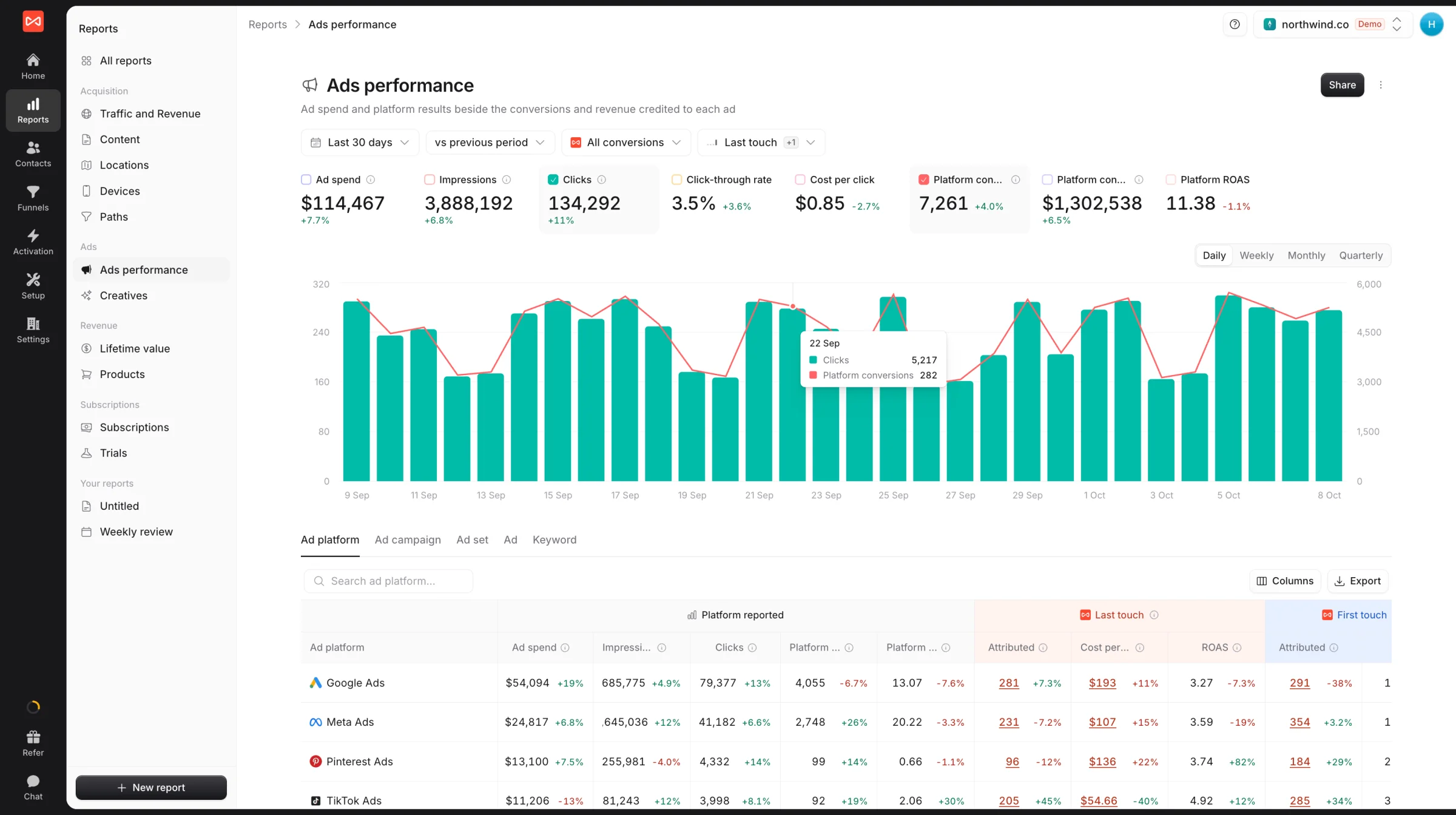
Every Shopify order tied to the ad, creative, and email that drove it. See true ROAS next to what Meta and Google claim, profit by product, and which channels bring customers who buy again.
Free 7-day trial. No credit card required.
Used by 750+ marketing teams, agencies, and DTC brands
Why store reporting disagrees
Every channel claims your Shopify revenue at once
Add up what Meta, Google, Klaviyo, and Shopify each report and you will have sold considerably more than you actually did. Each one counts the orders it believes it caused.
- 01
Four tools claim the same order
Meta counts a view-through, Google counts the click, Klaviyo counts the email, and Shopify counts last click. The same purchase is banked four times.
Reconciles Meta AdsGoogle AdsKlaviyoShopify - 02
Shopify reports last click and stops
Native store analytics credits whatever touched the converting session, so discovery channels look worthless and retargeting looks brilliant.
Affects Last clickShopify Analytics - 03
Post-purchase surveys are a guess
Asking how did you hear about us beats nothing, but response rates are low and shoppers genuinely do not remember the first touch.
Affects Post-purchase surveySelf-reported attribution - 04
Repeat purchases lose the original source
The second and third orders are where store profit lives, and they usually post as direct or email rather than crediting the campaign that won the customer.
Affects Repeat ordersCustomer LTV - 05
Blended ROAS hides the detail
Total revenue over total spend is at least honest, but it cannot tell you which campaign to scale or which product carries the account.
Affects Blended ROASMERProduct margin
With SourceLoop
One order, credited once
Every order attributed to the full journey behind it, deduplicated across platforms, and split by the models you choose rather than by each vendor's own maths.
- 01 Each order counted once, deduplicated across every platform
- 02 Full multi-touch journeys, not last click only
- 03 Measured from real behaviour rather than survey answers
- 04 Repeat orders credited to the campaign that won the customer
- 05 Channel and product level detail underneath blended ROAS
Attribution stack
Order-level attribution from first click to repeat purchase
Stop guessing which channel actually drives profitable orders. SourceLoop ties the source captured on the first visit to the order, LTV, and back to your ad platforms.


Source capture
Every order carries the source that drove it.
Analytics
Revenue and ROAS by channel, with LTV behind each.
Full journey
See every touch before the order was placed.


CRM sync
Orders land in your CRM, attribution mapped.
Ads and creatives
See which creative actually sold, not which one Meta says did
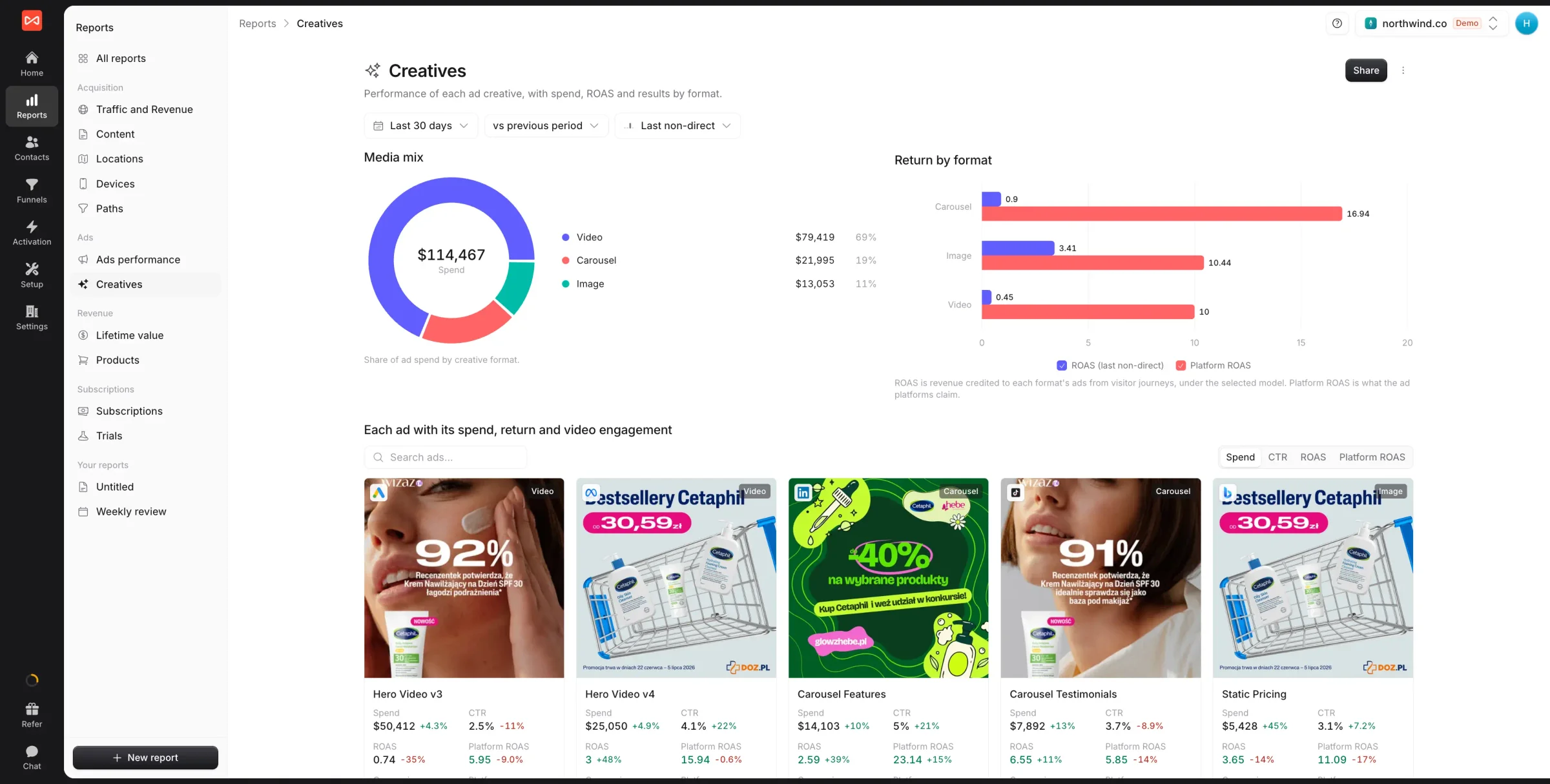
Every image and video from Google, Meta, and ChatGPT Ads side by side, with spend, real Shopify orders, and true ROAS next to what each platform claims. Find the hook that sells, then put more budget behind it.
-
Every creative ranked
Images and videos with spend, orders, and true ROAS.
-
True vs platform ROAS
What really sold next to what each platform claims.
-
Hook and hold rates
See which videos stop the scroll and which get watched.
-
Server-side conversions
Orders sent back to Google, Meta, and ChatGPT Ads.
Product attribution
Know which channel sells each product, and at what margin
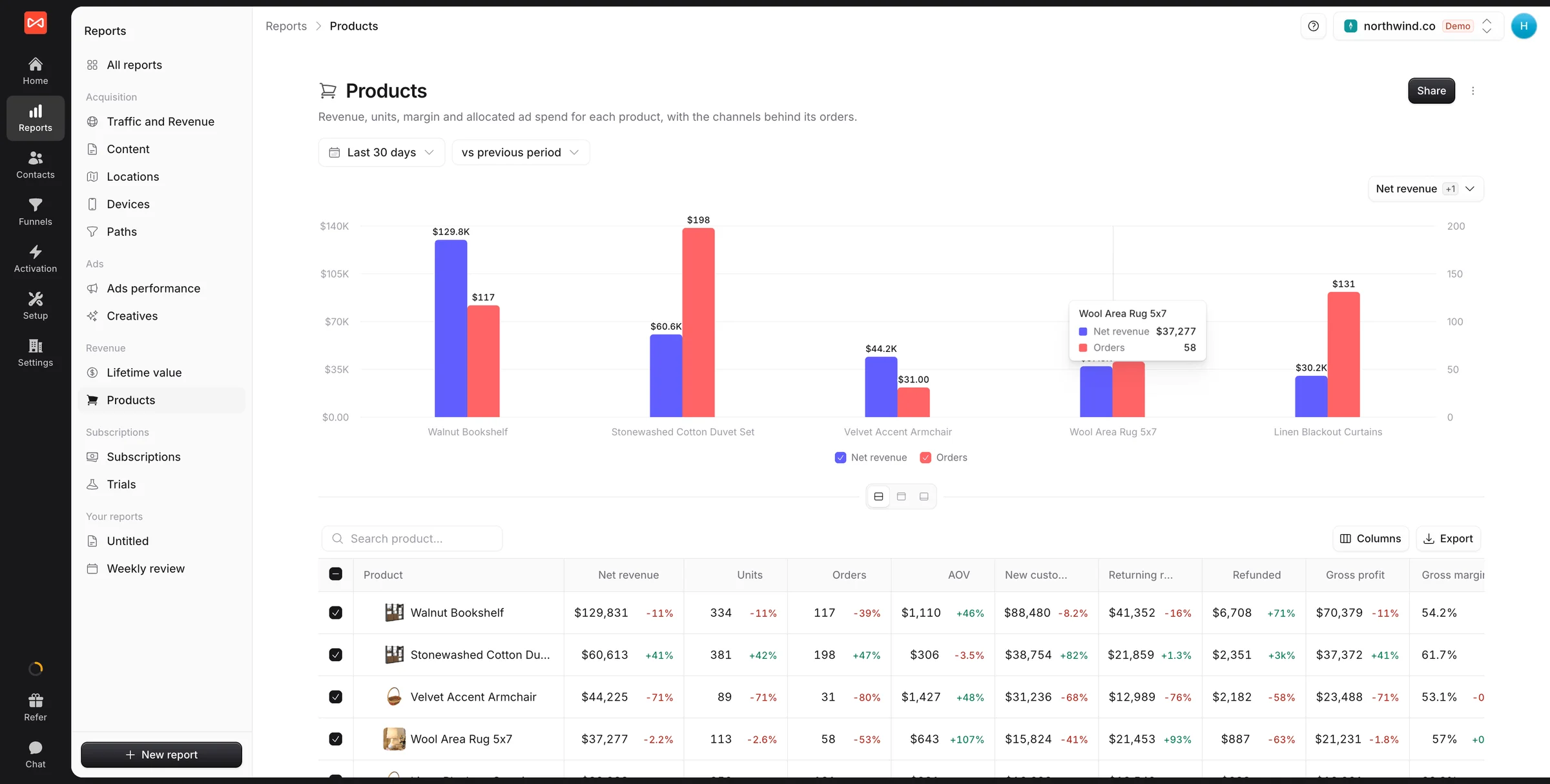
SourceLoop reads each product's cost from Shopify, so you see revenue, units, and profit by product and by the channel that sold it. Some campaigns sell volume, others sell profit. Now you can tell them apart.
-
Revenue and units by product
Each order attributed to the channel that drove it.
-
Profit margin by product
Using the cost per item you already keep in Shopify.
-
Hero vs long-tail products
Find the campaigns that actually sell each one.
-
First-order product mix
What new customers buy first, broken down by channel.
LTV analysis
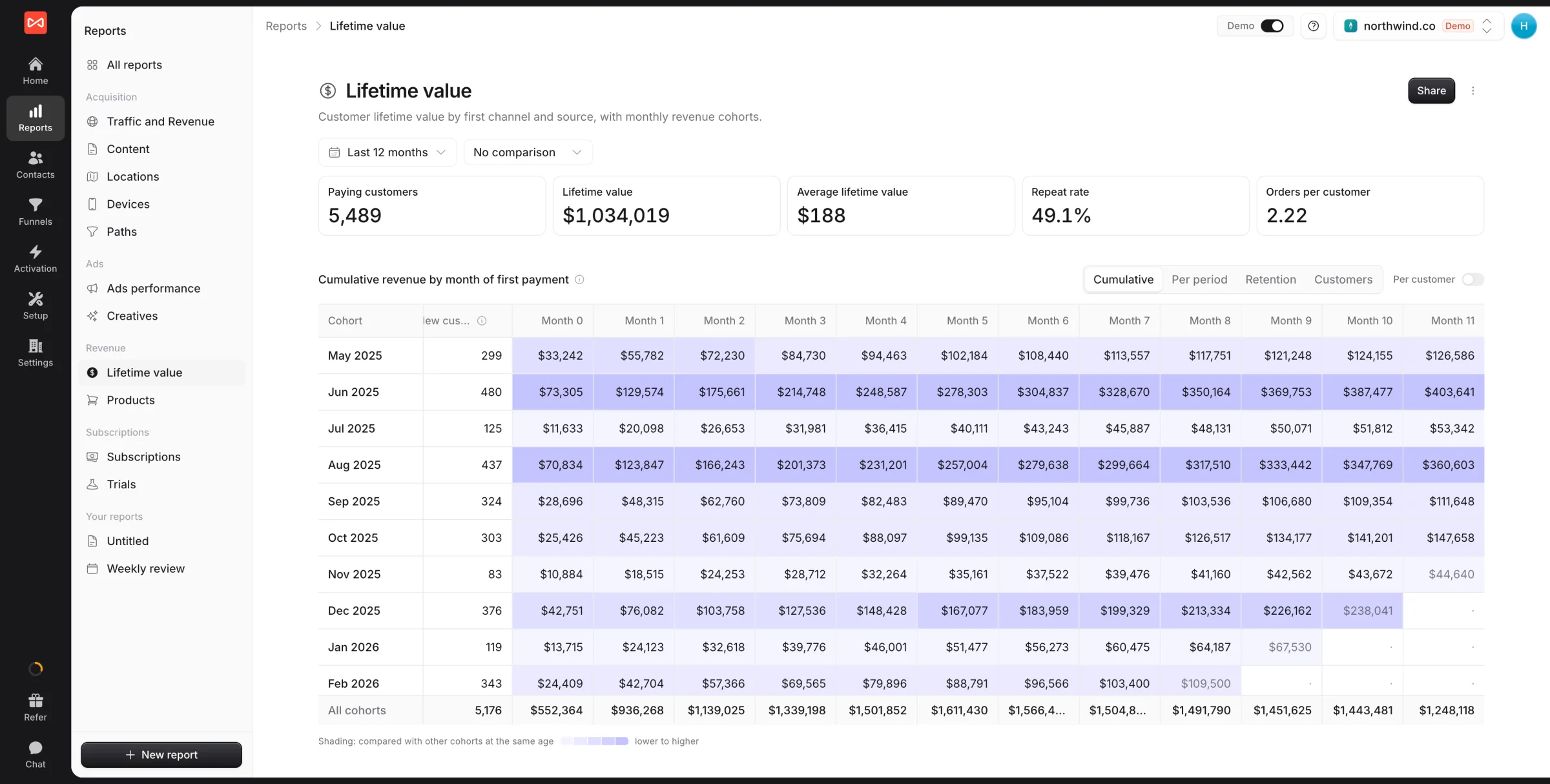
Optimize for customer lifetime value, not just the first sale
Tie repeat purchases, subscriptions, and renewals to the original channel. Compare customer lifetime value (LTV), repeat-purchase rate, and CAC payback by source, then send real order values back to Google and Meta.
-
LTV by acquisition source
See which channels bring your most valuable customers.
-
Repeat-purchase rate
New vs returning customer revenue, split by channel.
-
Payback period and cohorts
Track CAC payback and cohort retention over time.
-
Value-based bidding
Send real order values to Google and Meta.
How it works
Three steps from snippet to revenue tied back to source
One app, one connection, ROAS that reflects reality.
-
<script async src="https://t.sourceloop.ai/tracking-v3.js"></script>
01Install the snippet
On Shopify the app does this for you. On any other store, add one script tag.
-


 02
Connect Shopify and your ads
Install the Shopify app and connect Google and Meta in a click. Orders, products, and spend start flowing.
- A
Order #1043
- Source Meta / Paid
- First touch Google / CPC
- Customer LTV $412
03Revenue ties back to channel
Each order lands in your dashboard with attribution, AOV, and LTV linked. ROAS and repeat-purchase reports work day one.
Ecommerce attribution by platform
Attribute orders and revenue from Shopify, Klaviyo, Stripe, and more
One app, every order attributed. On WooCommerce, BigCommerce, or a custom store, send orders with one line of code.
- Shopify
- Klaviyo
- Stripe
-
 Lemon Squeezy
-
 Polar
-
 Dodo Payments
FAQ
Ecommerce attribution, Shopify and Klaviyo tracking, FAQ
How do I tie Shopify orders back to UTM source?
Install the SourceLoop app from Shopify. It tracks the storefront, carries the visitor onto the cart, and ties each order to the visits that brought the shopper in, with the source, medium, campaign, and full journey attached. On WooCommerce, BigCommerce, or a custom store, add the tracking code and send each order with one line of code.
Why do my Shopify orders arrive without source data?
Shopify sees the checkout, not the shopper's journey. By the time someone clicks an ad, browses products, adds to cart, and checks out (often days later from a different session), the original UTM is long gone from the URL. SourceLoop captures it on the first page view, persists it across the entire buying journey, and ties it to the order the moment it is placed.
Can I attribute Klaviyo revenue to the original acquisition channel?
Yes. SourceLoop captures Klaviyo signup forms and recognizes shoppers who click through from Klaviyo emails, so each subscriber is tied to the channel that first brought them in. You can separate revenue your email program started from revenue it only re-touched, and see which channels bring the most valuable subscribers.
Can I see AOV, ROAS, and LTV by channel automatically?
Yes. SourceLoop ties every order, repeat purchase, and subscription renewal back to the original source, so AOV by source, ROAS by channel, and customer LTV become standard reports. Break them down by source, campaign, content, and landing page.
Does this work with subscriptions and repeat purchases?
Yes. Source data is tied to the customer, not just the first order, so repeat purchases and subscription renewals all roll up by acquisition channel. You see which channels acquire one-time buyers versus high-LTV repeat customers.
Can I send ecommerce revenue back to Google Ads and Meta?
Yes. Conversion sync sends each order, with its value, to Google Ads, Meta, and ChatGPT Ads from our server, so their algorithms optimize for real revenue, not pixel-fired purchases that ad blockers miss. TikTok is coming soon.
Does this work with consent banners and GDPR?
Yes. SourceLoop follows Google Consent Mode, which OneTrust, Cookiebot, Iubenda, Osano, and Shopify's own banner set. When a shopper declines, SourceLoop respects it, and cookieless mode is there if you want no cookies at all. Everything is first-party on your store's domain.
Why do Meta, Google, and Shopify all report different revenue?
Because each counts the orders it believes it caused, using its own window and rules. Meta includes view-throughs, Google credits the click, Klaviyo credits the email, and Shopify credits last click. Added together they exceed your real revenue. SourceLoop counts each order once and splits credit across the touches that actually happened.
Is there a Shopify attribution app that beats post-purchase surveys?
Surveys give a rough read on brand and offline channels, but response rates are low and shoppers rarely remember what first brought them in. SourceLoop measures the actual journey instead, and works alongside a survey rather than replacing the question.
Can I see attribution by product or collection?
Yes. Orders carry their line items, and SourceLoop reads each product's cost from Shopify, so the Products report shows revenue, units, and profit margin by product and by channel. That is how you find the campaign that sells volume and the one that sells profit.
How is this different from blended ROAS or MER?
Blended ROAS is total revenue over total spend, and it is honest at the account level. What it cannot do is tell you which campaign to scale. SourceLoop gives you the channel and campaign detail underneath the blended number, so the two reconcile instead of contradicting each other.