
7 Demandbase Alternatives for Each Part of ABM
Demandbase bundles intent, ads, visitor ID and measurement. Here are seven alternatives matched to the part of ABM you actually use.
Table of contents
When a team tells me they're replacing Demandbase, my first question is which part of it they actually used. The answer is rarely "all of it".
Demandbase One is a suite: intent data, a DSP for account advertising, company identification, sales intelligence and pipeline measurement. If you mainly used one piece, a specialist tool can do that piece cheaper and often better.
In this guide, I'll sort seven alternatives by the ABM job they replace, with my notes from using them, what reviewers say, and what each one costs.
How I approached this
Because Demandbase does several jobs, I judged each alternative against the job it replaces rather than the whole suite. I used Leadfeeder's free plan, Factors.ai's trial, Fibbler's 30-day trial and Dreamdata's free plan directly. 6sense and Metadata are sold through demos, so those sections rely on their product tours, documentation and teams I know who run them.
The brands and agencies we work with, many of them B2B, shaped the criteria, and reviews on G2 and Capterra added the long-term view. For each tool I checked:
- Which part of Demandbase it replaces
- Whether pricing is published or quoted
- How much setup and ops time it needs
- Whether it connects activity to pipeline in the CRM
SourceLoop is ours. I scored it on the same list as the rest and kept its section honest: it measures campaigns and does none of the intent or account advertising work.
Last checked November 2026. Confirm current pricing with each vendor.
What you're actually replacing
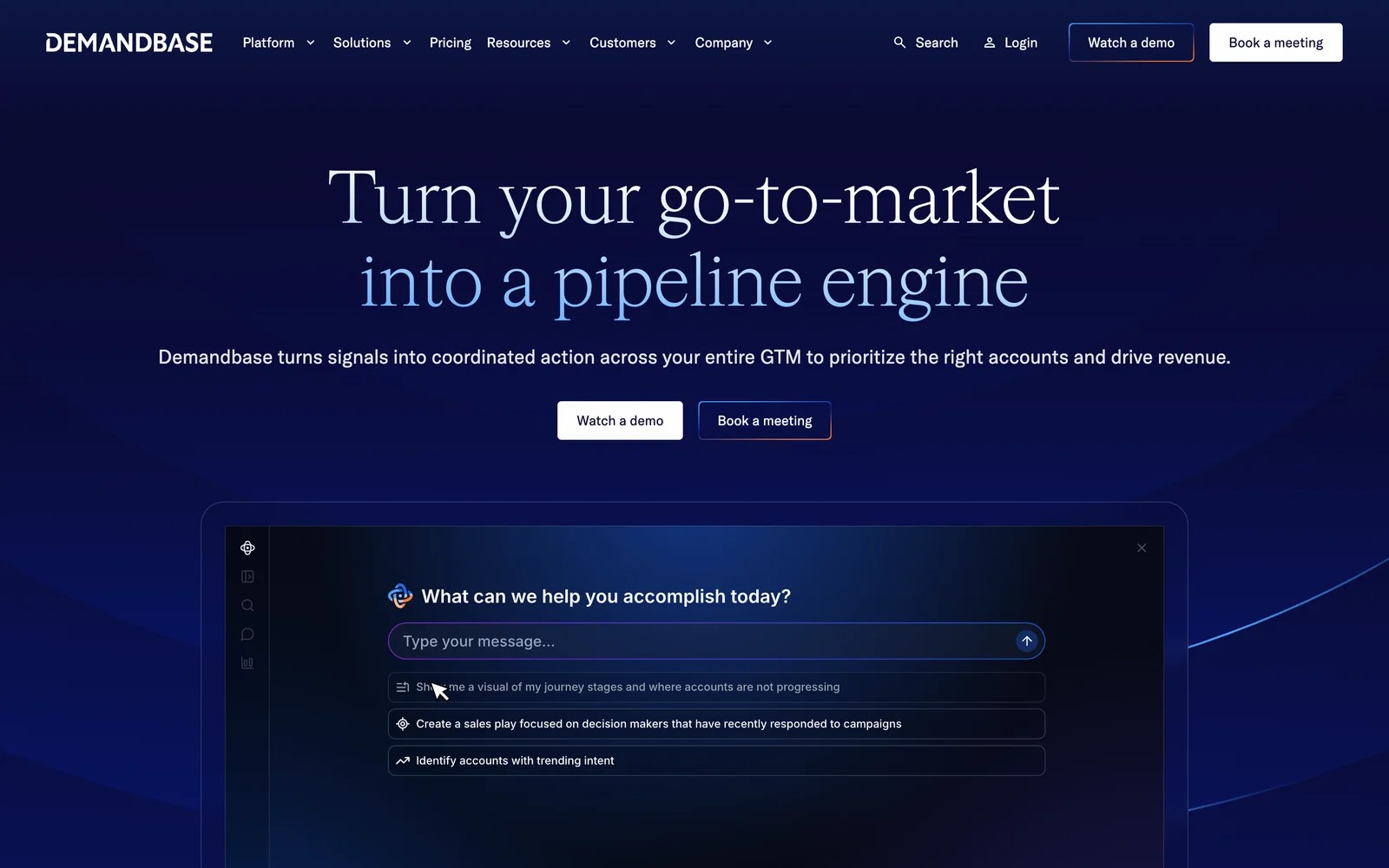
Demandbase One identifies accounts, scores them on intent, runs account-based advertising through its own DSP, and gives sales a prioritized list, with pipeline measurement on top. Pricing is quoted as a platform fee plus a flat fee per user.
Users like the targeting and the Salesforce link:
"DemandBase is easy to use and has some great reporting features to measure trend over time for your target accounts." (Source)
The criticism tends to land on the intent scoring, ad costs and admin effort:
"the internal logic behind why an account is scored as \"highly interested\" often feels like a black box algorithm that I can't see or tweak." (Source)
"The CPM is high for the DSP - I would love to see that come down." (Source)
"It's a bit tedious to setup from the admin perspective if you don't have a very big ops team to do it together with." (Source)
Demandbase alternatives compared
Here's how the 7 Demandbase alternatives compare on the ABM job they cover, pricing and how you can start, as of November 2026.
| Tool | Replaces this part of Demandbase | Intent data | Account ads | Pricing | Free plan or trial |
|---|---|---|---|---|---|
 SourceLoop | Pipeline measurement | No | No | From $49/mo | Yes |
 6sense | The whole suite | Yes | Yes | Quote, annual | No |
 Factors.ai | Visitor ID, account journeys, attribution | Partly | LinkedIn audiences | From $199/mo | Yes |
 Leadfeeder | Visitor identification | No | No | Free, paid from €79/mo | Yes |
 Fibbler | LinkedIn ad influence on accounts | No | Measures LinkedIn | From $89/mo | Yes |
 Dreamdata | Account journeys and attribution | Partly | Audience sync | Free, paid quoted | Yes |
 Metadata | Paid campaign execution | Audience data | Yes | Quote | No |
The 7 best Demandbase alternatives
I start with measurement, since that's the part most teams can't do without, then move through the specialist tools.
1. SourceLoop
Best for: lead-gen businesses, agencies and SaaS teams that used Demandbase mainly to prove which programs produced pipeline.
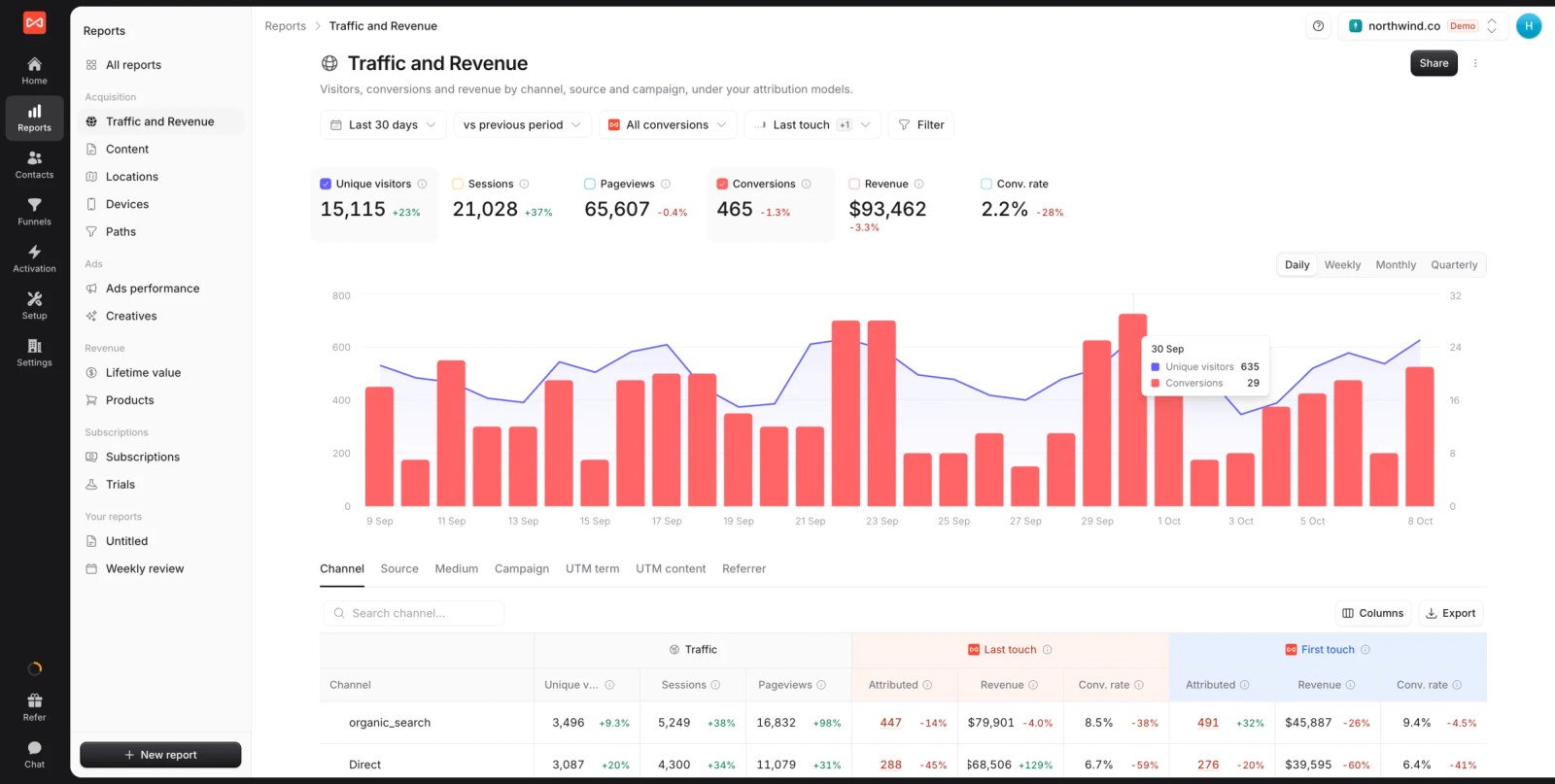
SourceLoop is a lead source and marketing attribution tracking tool. It records the source of every visit, captures each lead from forms, calls, chats and bookings, and credits CRM stages, deals and revenue back to the campaigns behind them.
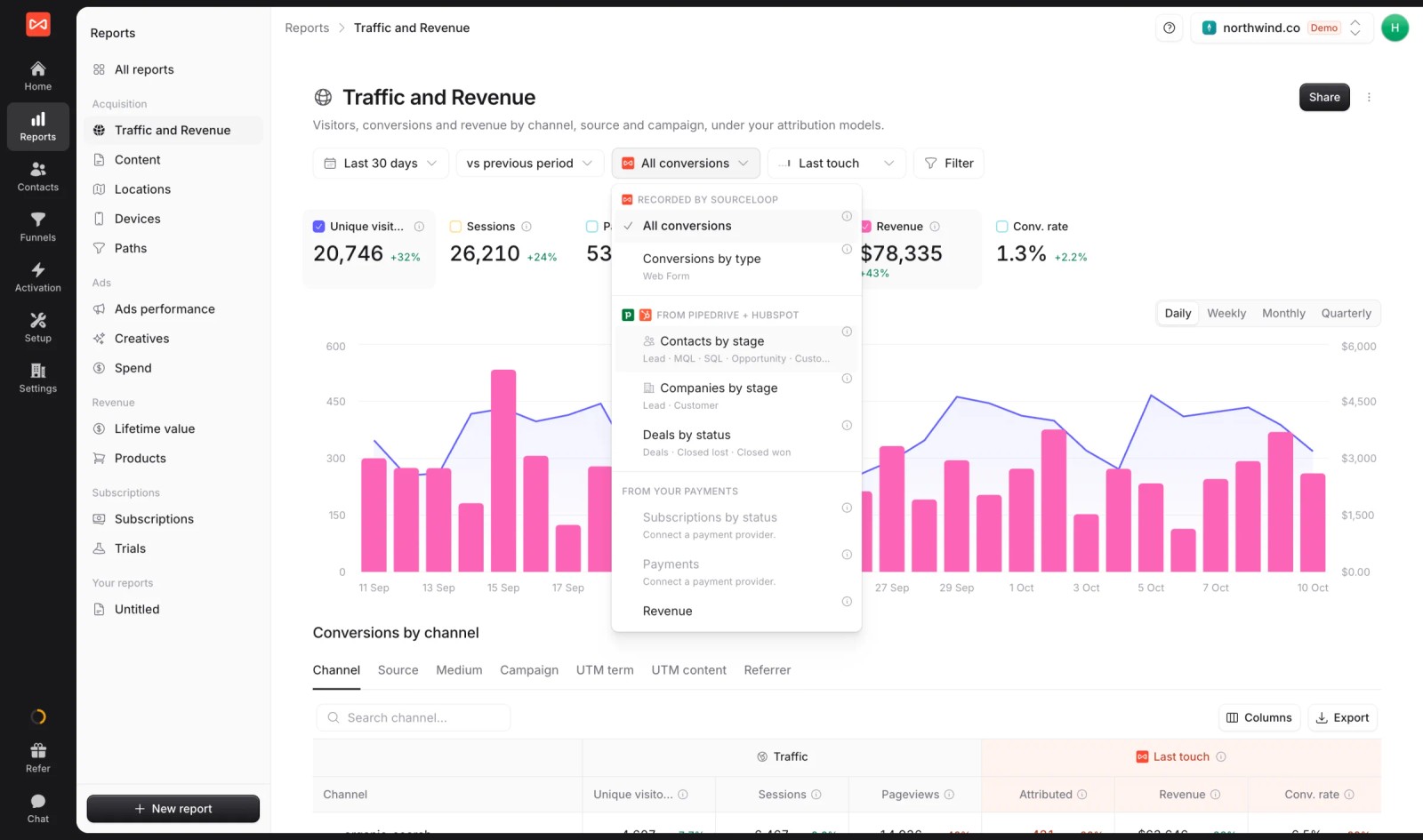
For an ABM team, two things make it useful. Company journeys group colleagues by work email domain and CRM company, so a deal credits the whole buying group's visits. And the outcome picker lets you report on companies by stage, not only contacts.
Key features
- Companies by stage: credit companies reaching each CRM stage, alongside contacts, deals and revenue.
- Journey on every lead: visits, ad clicks and landing pages before each conversion, with company journeys for buying groups.
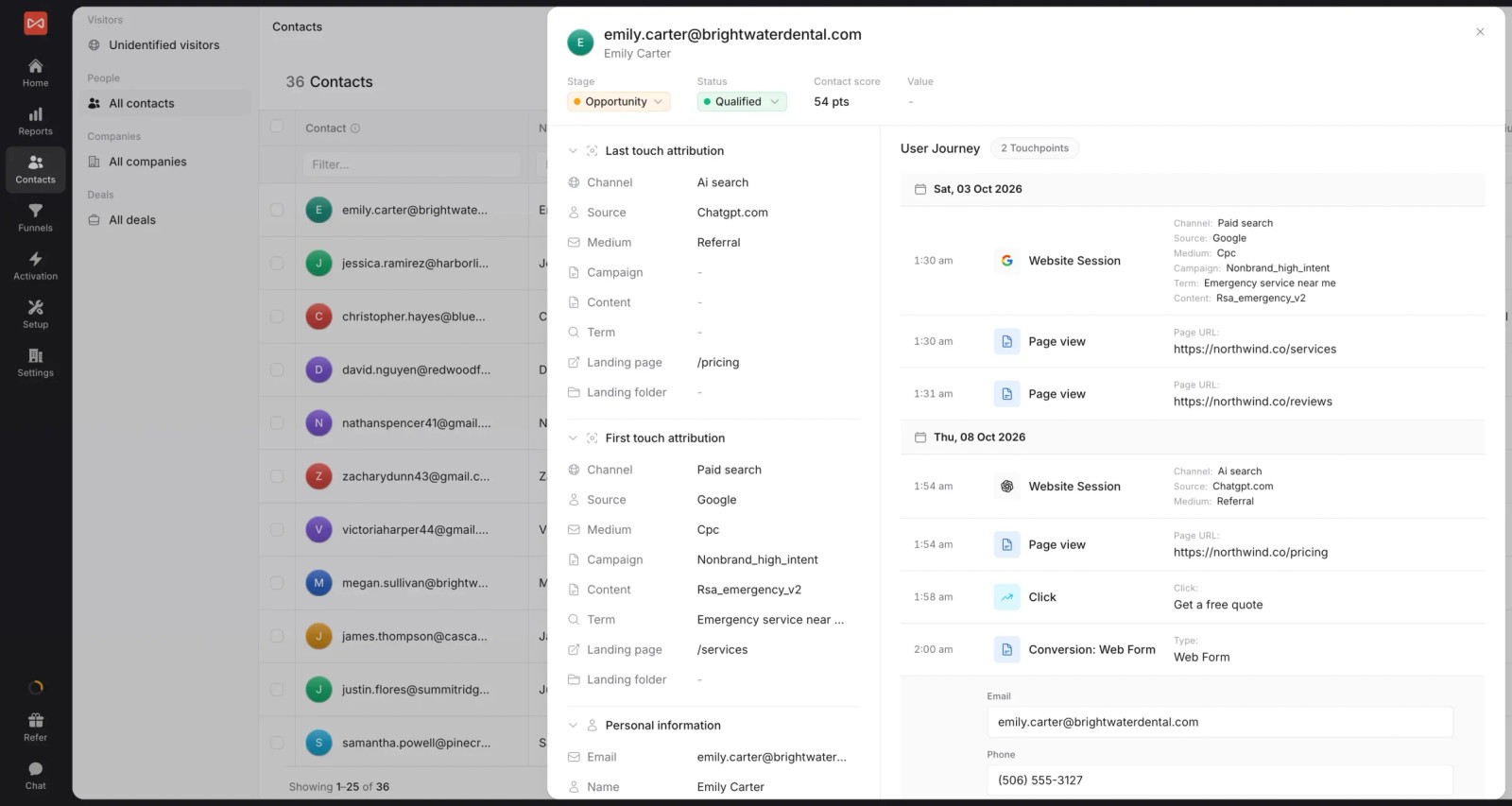
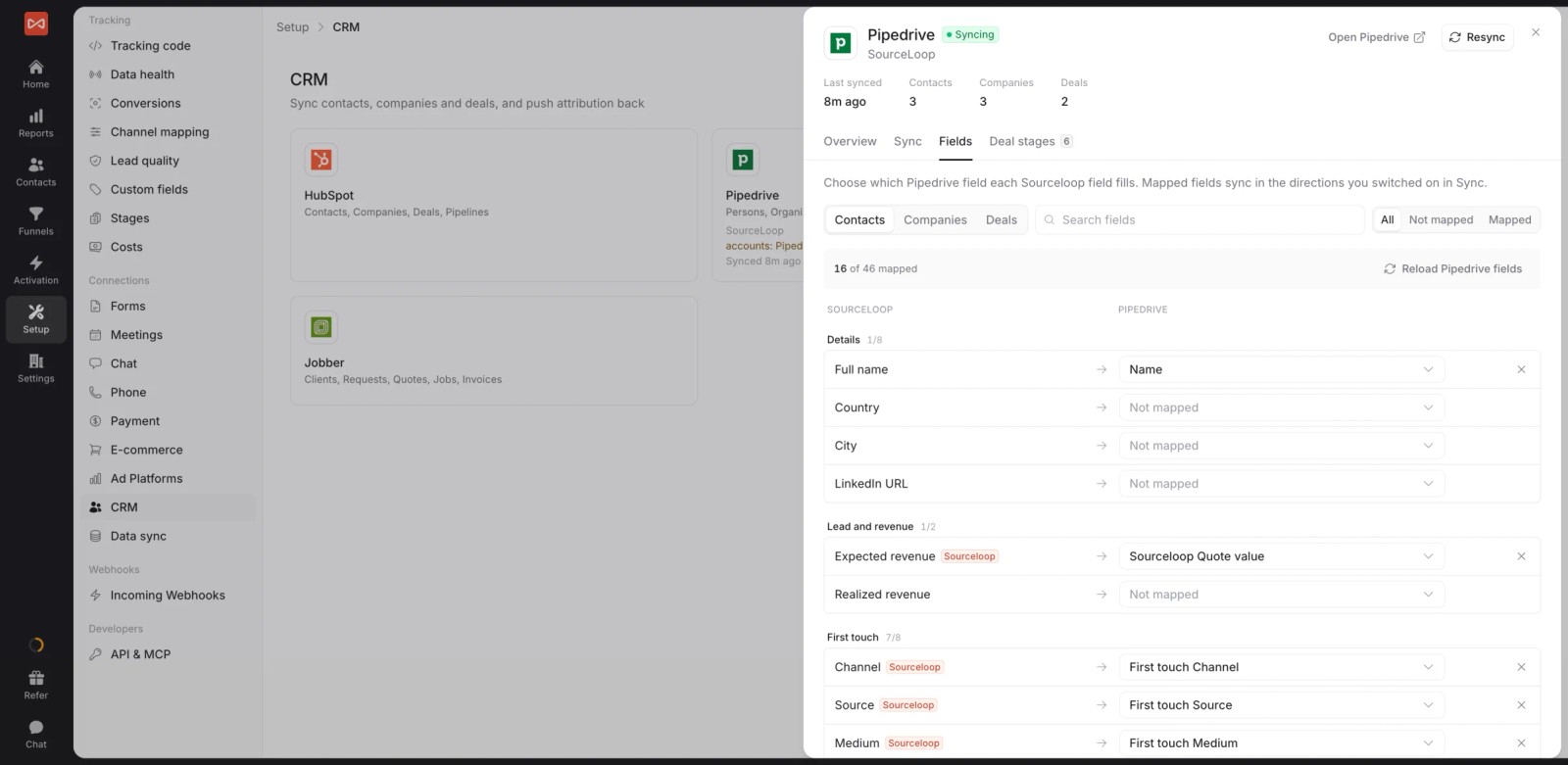
- Two-way CRM sync: HubSpot, Salesforce, Pipedrive and Jobber, with attribution fields on each record.
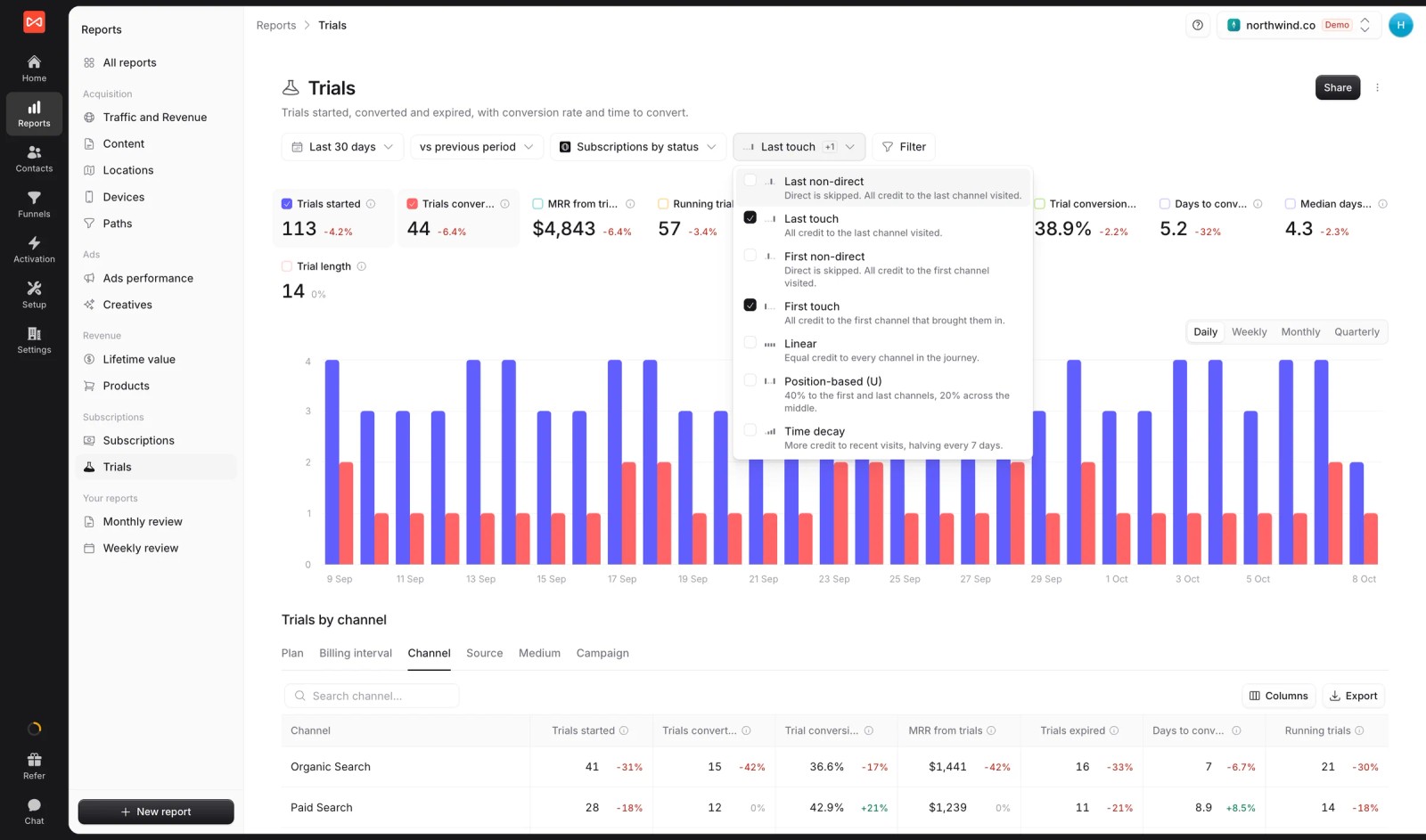
- Seven attribution models: first and last touch, first and last non-direct, linear, U-shaped and time decay.
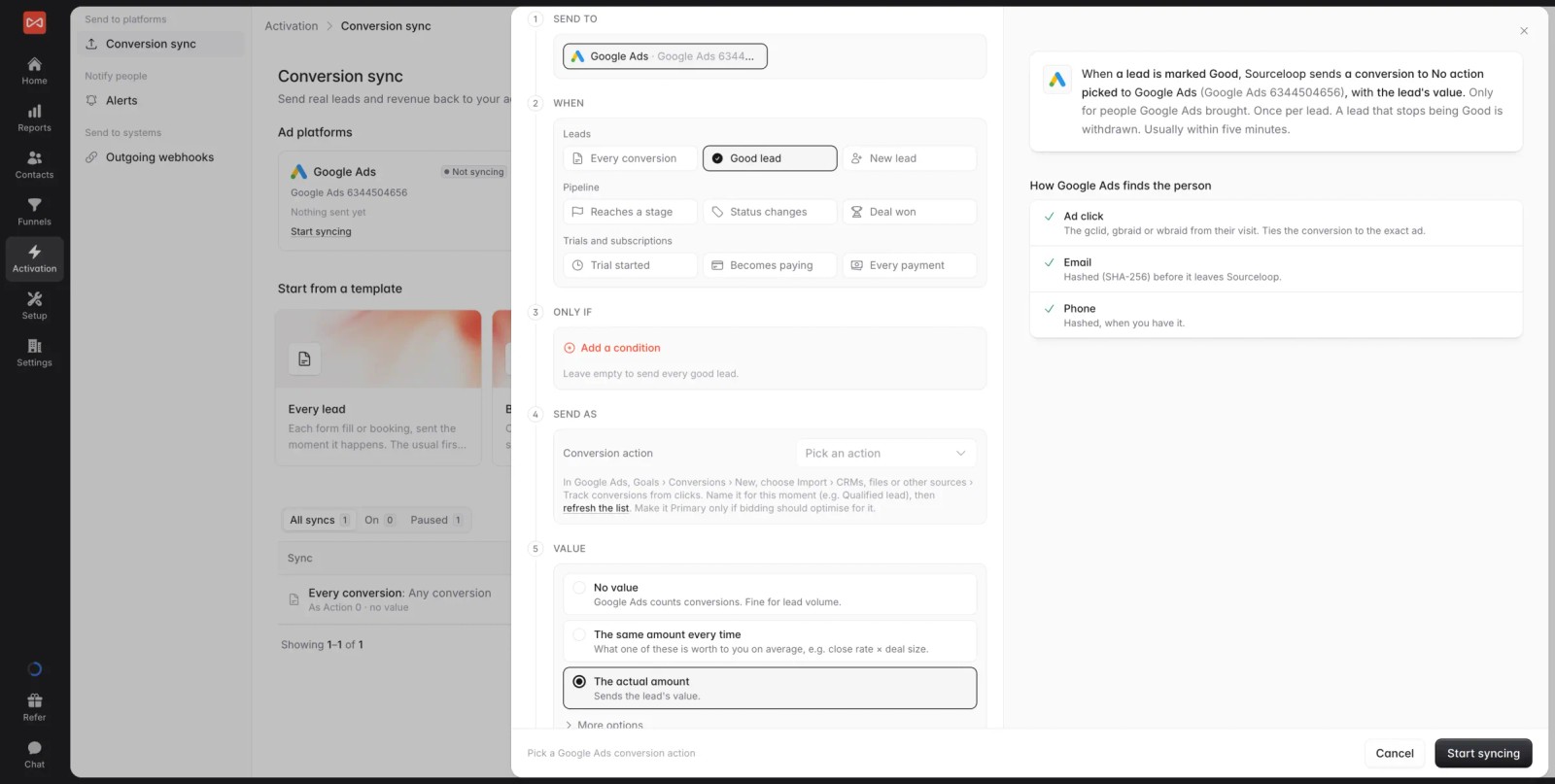
- Conversion sync: qualified leads and won deals go to Google Ads, Meta, Microsoft Ads and ChatGPT Ads with their value.
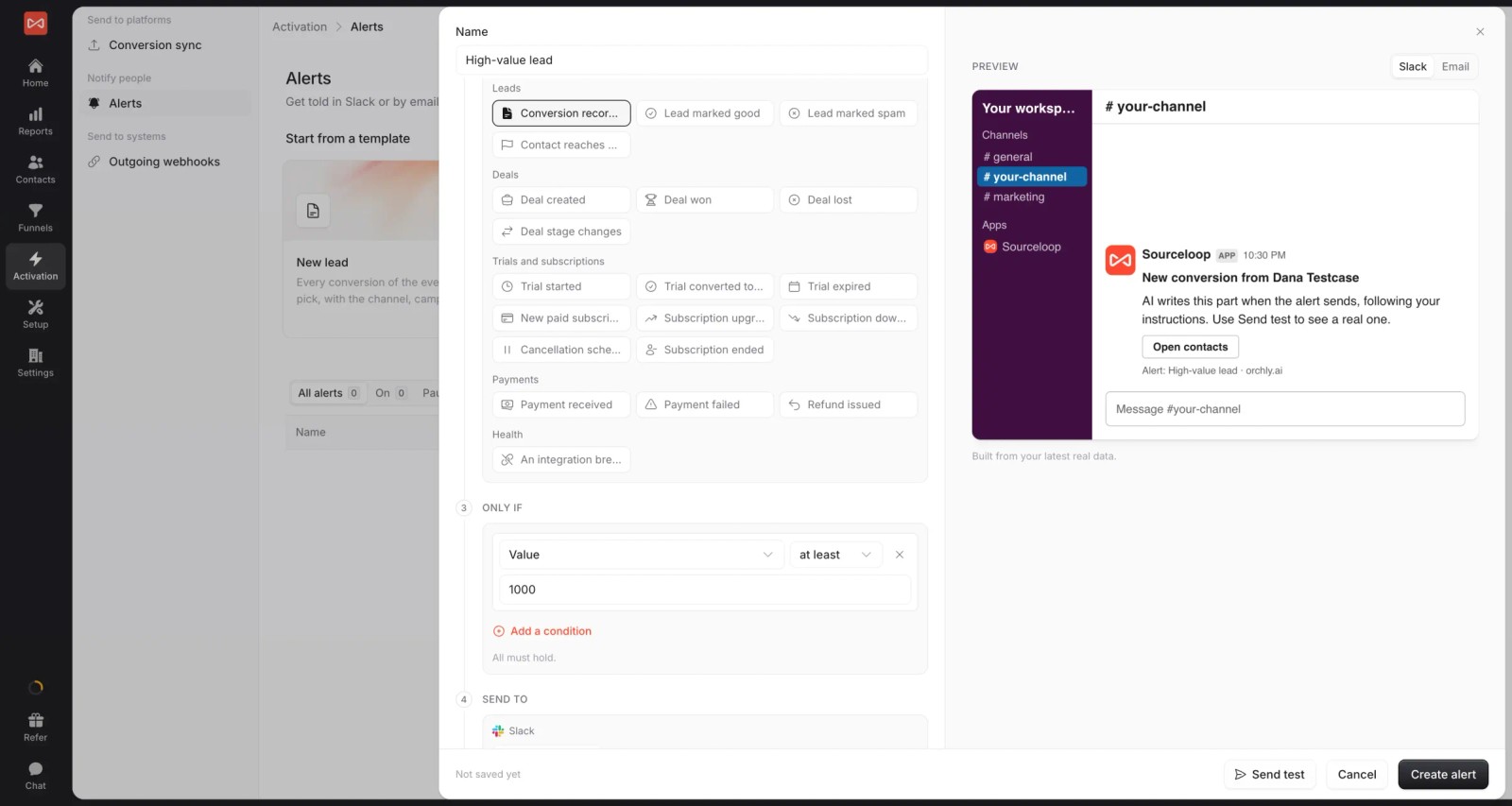
- Alerts: a Slack message when a high-value lead or new opportunity arrives, or a weekly pipeline summary.
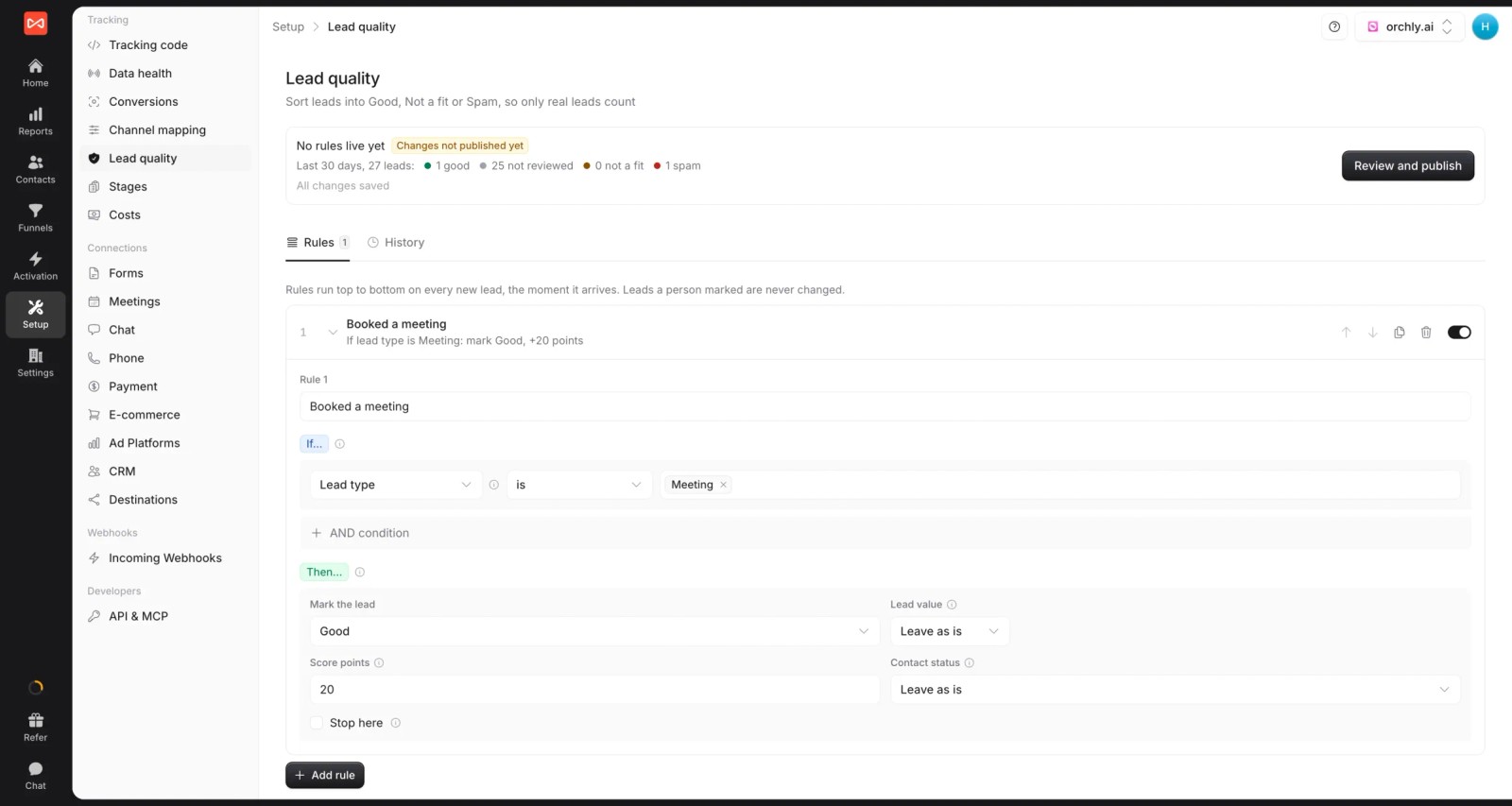
- Lead quality rules: mark leads Good, Not a fit or Spam from form answers, email domain or call length, so pipeline numbers count real buyers only.
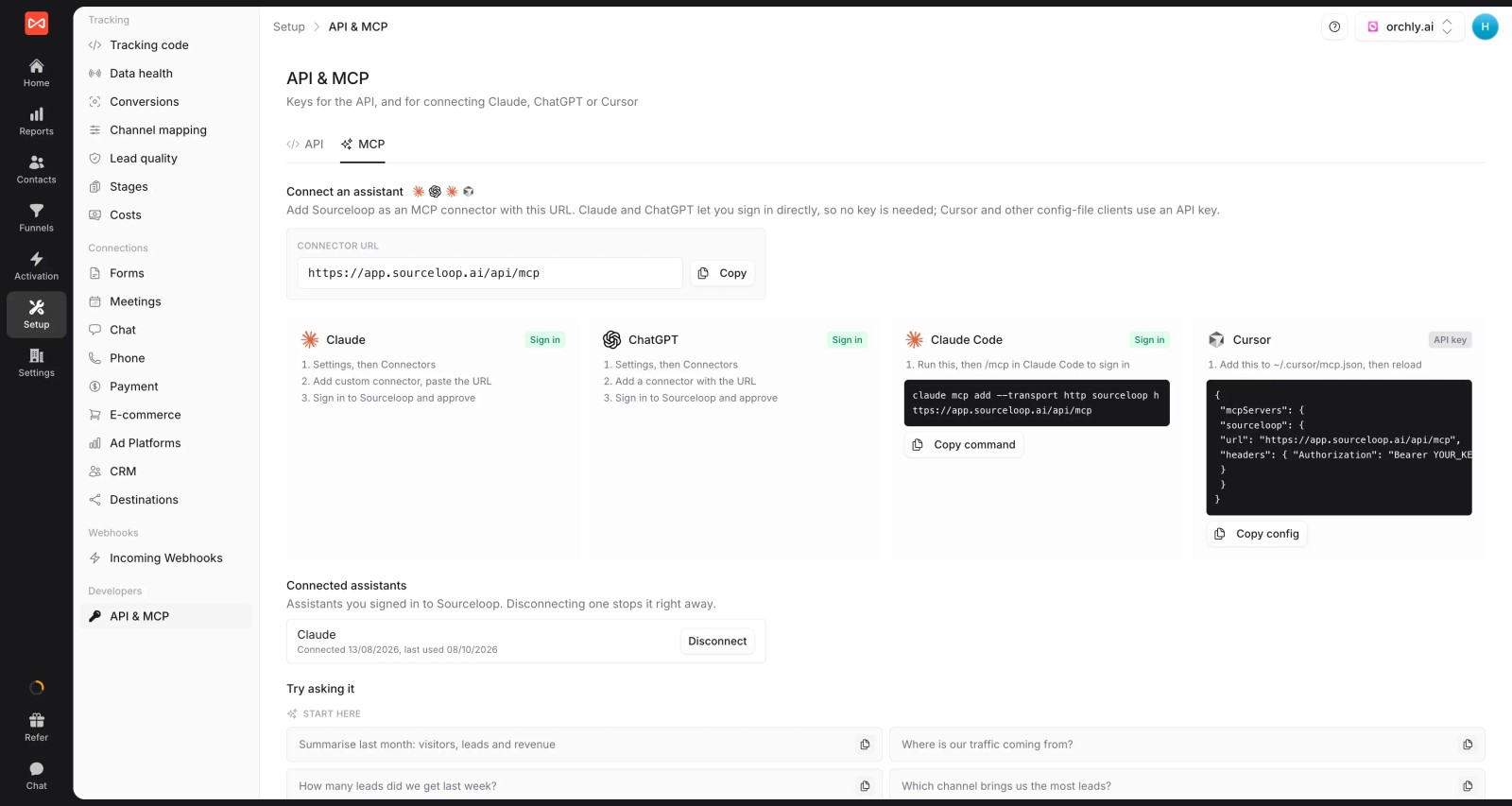
- Custom reports and an MCP server (Professional and up): live pipeline reports for leadership, and an AI assistant that can query attribution or build a report for you.
Where it falls short
- No intent data, IP-based account identification or account advertising. Those are the core of Demandbase, and you'd need another tool for them.
- LinkedIn conversion sync is coming soon, not live yet.
Pricing
- Essential: $49/mo for one site and 30,000 page views, with tracking, attribution reports, lead quality rules and alerts
- Professional: $99/mo for 100,000 page views and unlimited users, adding CRM sync, conversion sync to the ad platforms, the API and MCP
- Agency: $249/mo for three sites and 1.5 million page views, adding white label reporting
- Unlimited conversions and a 7-day trial.
Verdict: a clean replacement for Demandbase's measurement layer. Pair it with a visitor ID or intent tool if you still run account targeting.
2. 6sense
Best for: enterprises that want a full ABM suite and are swapping one platform for another.
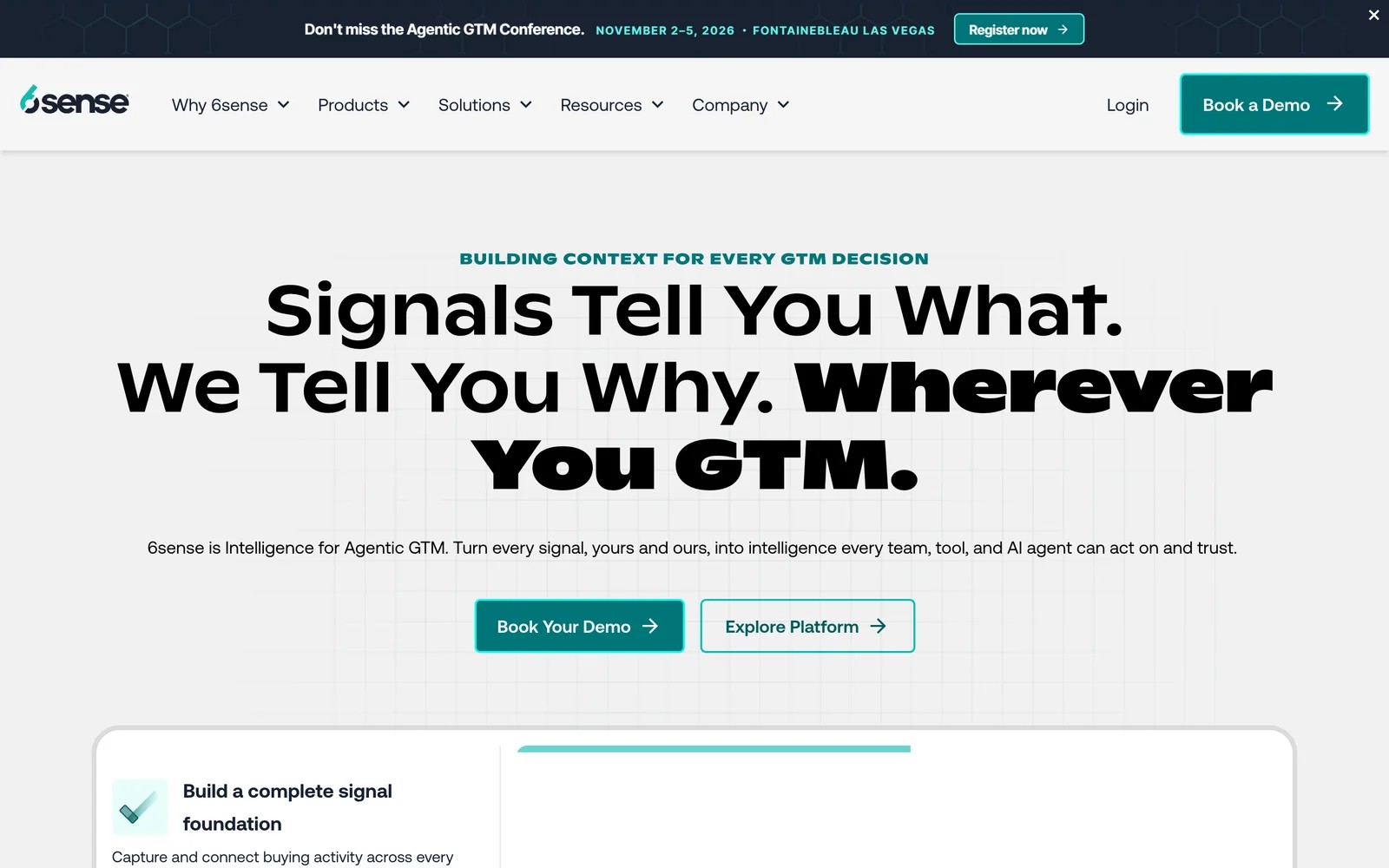
6sense is Demandbase's most direct competitor: predictive intent, buying-stage modeling, account advertising and sales intelligence in one platform.
From the product tour, the buying-stage predictions are the headline. Accounts move through stages based on their research behavior, which gives sales and marketing a shared view of who's in-market.
The teams I know who switched in either direction describe similar trade-offs. The data takes time to trust, reporting can be clunky, and like Demandbase, it needs an owner. If the reason you're leaving is complexity, 6sense won't fix that.
Key features
- Predictive intent and buying-stage models estimate which accounts are in-market, using research signals from across the web.
- Account-based advertising runs display campaigns to target accounts directly from the platform.
- Sales intelligence surfaces contacts and prioritized accounts, giving reps context before outreach.
- Orchestration connects segments to your CRM and marketing automation for coordinated programs.
Where it falls short
- It carries the same complexity as Demandbase, so it rarely solves an ops-capacity problem.
- Intent scores take time to validate, and reviewers describe second-guessing them early on.
- Pricing isn't published, which makes it hard to compare against specialist tools.
What users say
"Knowing which accounts are actively researching before they fill out a form changes how you prioritize budget." (Source)
"The data takes time to trust. Early on you second-guess the intent scores because you don't know if the signal is real or noise." (Source)
"Reporting is clunky." (Source)
Pricing
- Quoted after a demo, on annual contracts.
3. Factors.ai
Best for: mid-sized B2B teams that want visitor identification, account journeys and attribution without an enterprise contract.
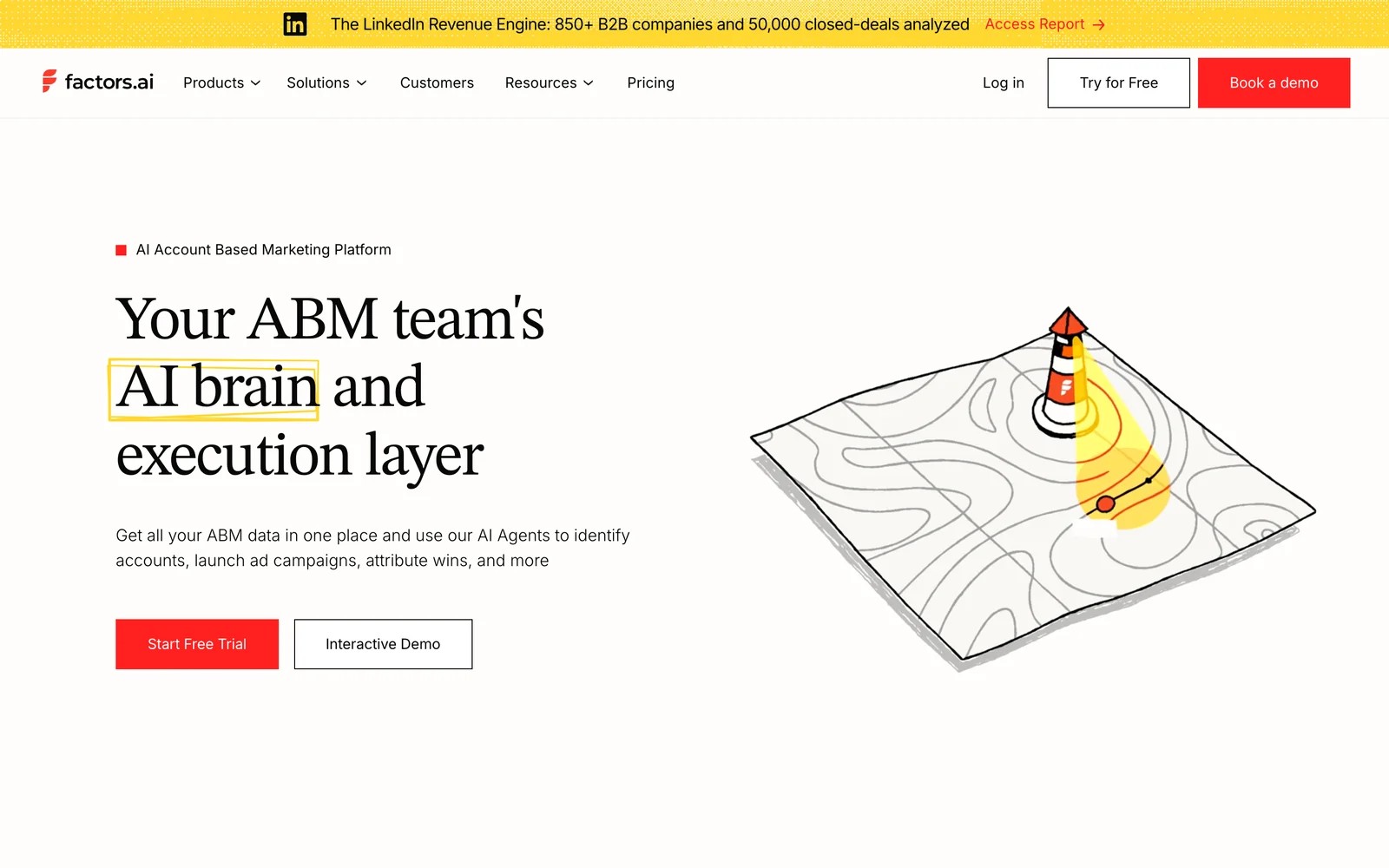
Factors.ai covers several Demandbase jobs at a mid-market price: company identification, engagement scoring, account timelines, attribution to CRM deals, and LinkedIn audience activation.
When I set it up on the trial, I was looking at named accounts within a day. That's the part of Demandbase many teams use most, available for a fraction of the cost.
Its account timeline is the feature I kept going back to. It lists every person and every touch at a company in order, which sales understood without a walkthrough.
The trade-offs showed up at the edges. Smaller companies matched less often, and some reviewers mention sync delays with HubSpot.
Key features
- Companies are identified from website traffic, so you see which accounts engage before anyone converts.
- Engagement scoring ranks accounts by activity, giving sales a shortlist to focus on.
- Account timelines show each person and touch in order, tied to HubSpot or Salesforce deals.
- LinkedIn and Google audiences can be built from engaged accounts for retargeting.
Where it falls short
- It doesn't include its own DSP, so account display advertising still needs another platform.
- Match rates drop for smaller companies, which matters if your ICP includes small businesses.
- Costs grow with usage, so a cheap start can become a larger bill as you scale.
What users say
"Factors shows us which companies are visiting our website and what they're looking at, before they ever fill out a form." (Source)
"Some website visitors don't get matched to a company, especially smaller companies. Pricing can also go up as usage grows." (Source)
Pricing
- Lite: $199/mo, with Basic at $6,000 and Growth at $20,000 a year. Free trial.
4. Leadfeeder
Best for: teams that mainly used Demandbase to see which companies visit the website.
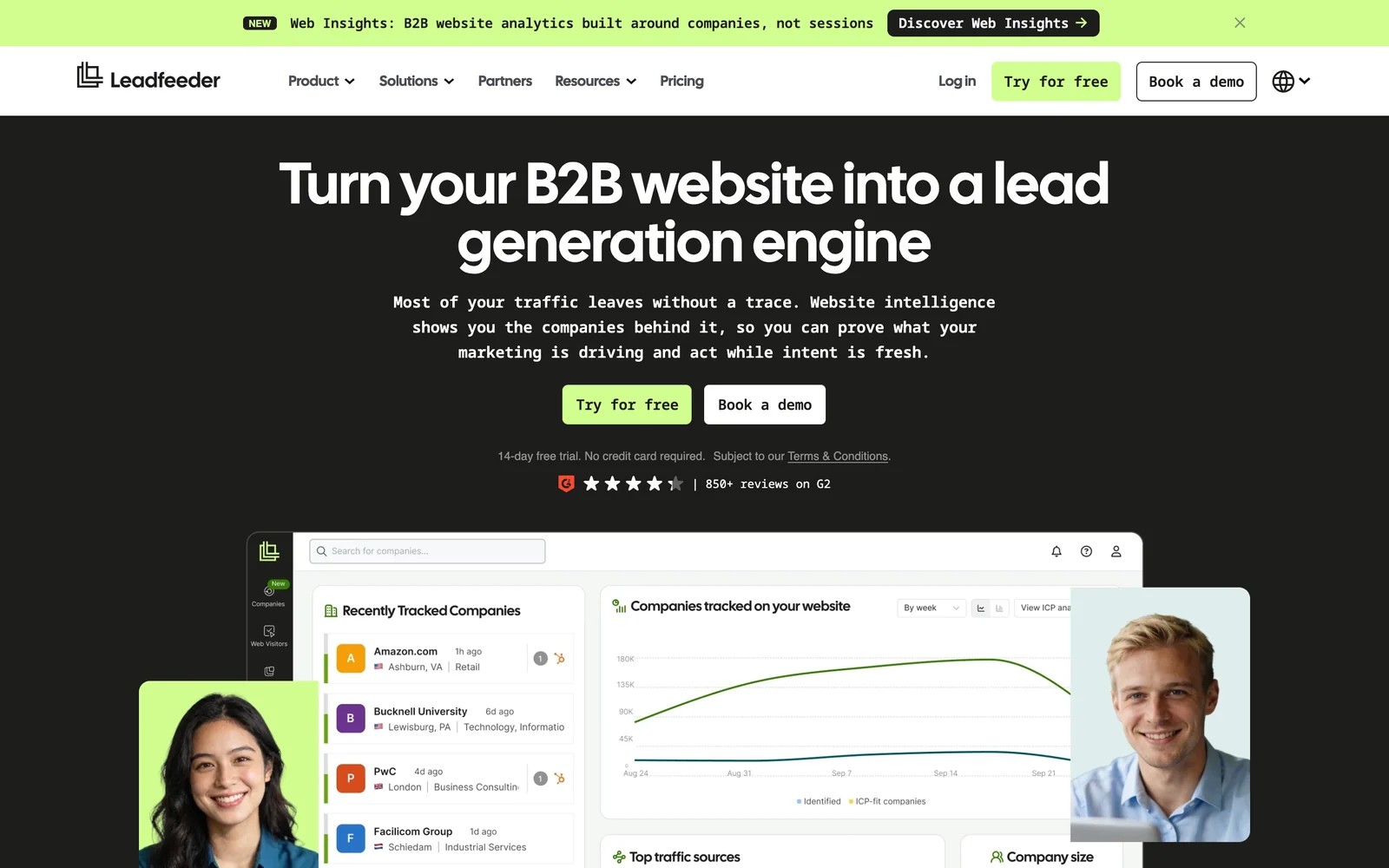
Leadfeeder, now part of Dealfront, does one thing: it identifies companies visiting your site and shows what they viewed, with filters, lead scoring and CRM sync.
I started on the free Lite plan, which shows the last 100 identified companies a month. Within an hour of adding the tracker, the feed had names in it, and filtering out existing customers made it genuinely useful for outbound.
It's narrower than Demandbase by design. There's no intent data from outside your site, no account advertising and no pipeline attribution. And company matching has the usual limits: VPNs and remote workers don't always resolve to the right business.
Key features
- Visiting companies are identified and listed with the pages they viewed and how long they stayed.
- Custom feeds and lead scoring help sales filter for the accounts most worth contacting.
- CRM integrations push identified companies and activity into HubSpot, Salesforce and Pipedrive.
- Contact data with verified emails and phones is available on higher Dealfront plans.
Where it falls short
- It only sees your own website, so there's no third-party intent showing research elsewhere.
- VPNs and remote work reduce identification accuracy, which leaves some visits unnamed.
- It doesn't attribute pipeline or revenue to campaigns, so measurement needs a separate tool.
What users say
"We can now proactively reach out to potential leads that would have otherwise gone unnoticed." (Source)
"Sometimes it can’t identify the correct domain or company, which may be related to using a corporate VPN." (Source)
Pricing
- Lite: free for the last 100 identified companies a month
- Discover: from €79/mo billed yearly
- Activate: from €369/mo, adding verified contacts and CRM automations
5. Fibbler
Best for: B2B teams whose main ABM channel is LinkedIn Ads and who want to show its influence on pipeline.
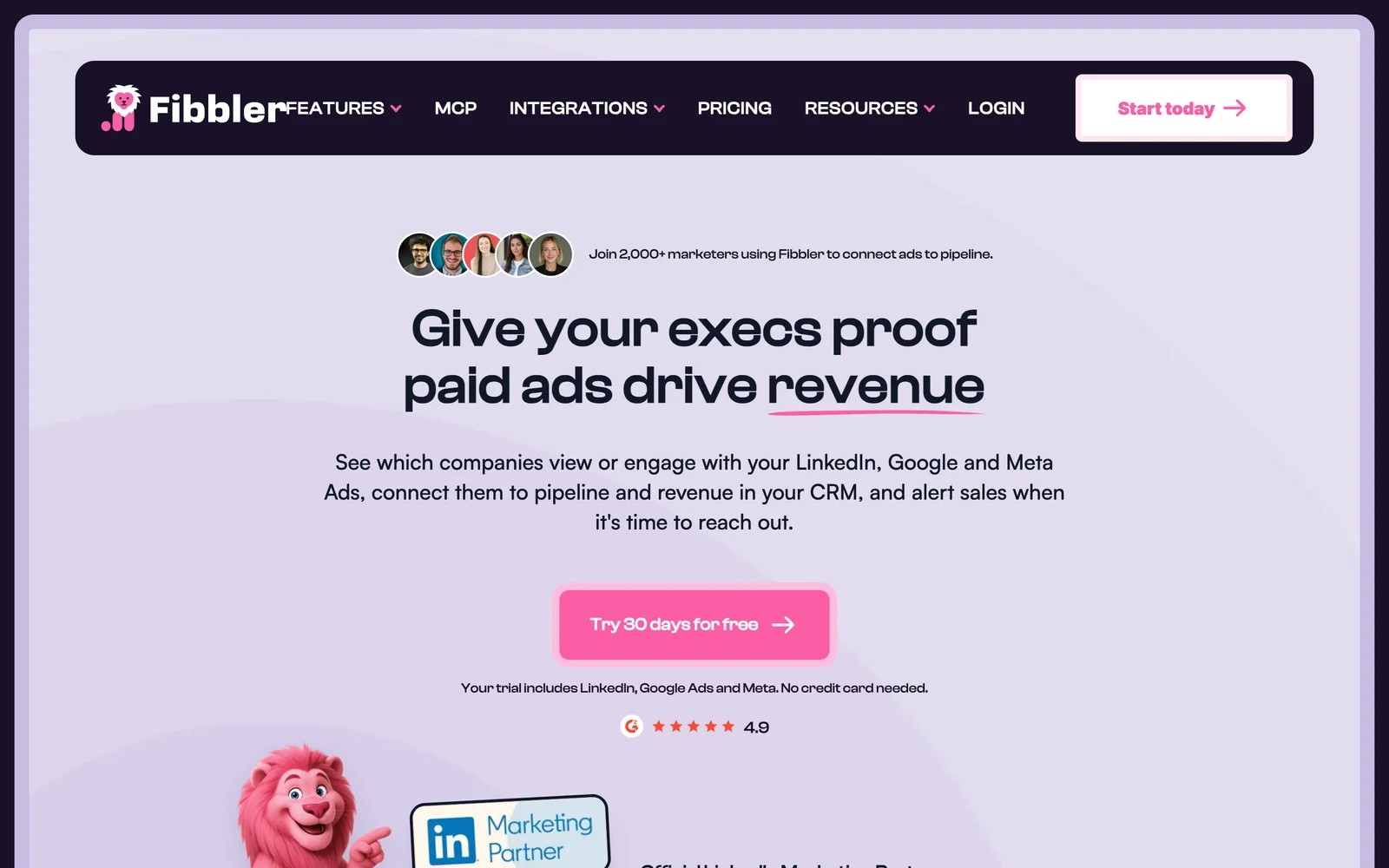
Fibbler connects LinkedIn Ads to your CRM and shows which companies saw or engaged with your ads, then ties those accounts to pipeline and deals. It has since added Google Ads and Meta Ads as paid add-ons.
I connected LinkedIn and HubSpot during the 30-day trial and had company-level ad engagement in front of me the same afternoon. If what you valued in Demandbase was proving that account advertising moved deals, this answers that for LinkedIn very directly.
The simplicity is the point, and it has limits. The lookback window is 90 days and date filters are fixed, which one reviewer found restrictive. It also measures ads rather than running them.
Key features
- Company-level LinkedIn ad impressions and engagement are matched to CRM accounts, showing which targets saw your ads.
- Influenced pipeline is reported by campaign, so you can see which LinkedIn campaigns touched open and won deals.
- Signals notify sales in HubSpot when a prospect account engages with your ads.
- Google Ads and Meta Ads attribution can be added per account for a cross-channel view.
Where it falls short
- It's built around LinkedIn first, so programs led by other channels get less depth.
- The 90-day lookback window can miss earlier touches in long enterprise cycles.
- It measures ad influence but doesn't provide intent data or run campaigns.
Our Fibbler alternatives guide compares other LinkedIn attribution options.
What users say
"I truly appreciate Fibbler's seamless integration with HubSpot, which notifies our SDRs when prospects have seen or interacted with our ads." (Source)
"I would like a longer lookback window than what Fibbler currently provides, which is limited to 90 days." (Source)
Pricing
- Growth: $89/mo for one user
- Unlimited: $129/mo, adding Salesforce
- Google Ads and Meta Ads add-ons at $59 per account per month, 30-day free trial
6. Dreamdata
Best for: B2B SaaS teams that want account journeys and attribution with a free way in.
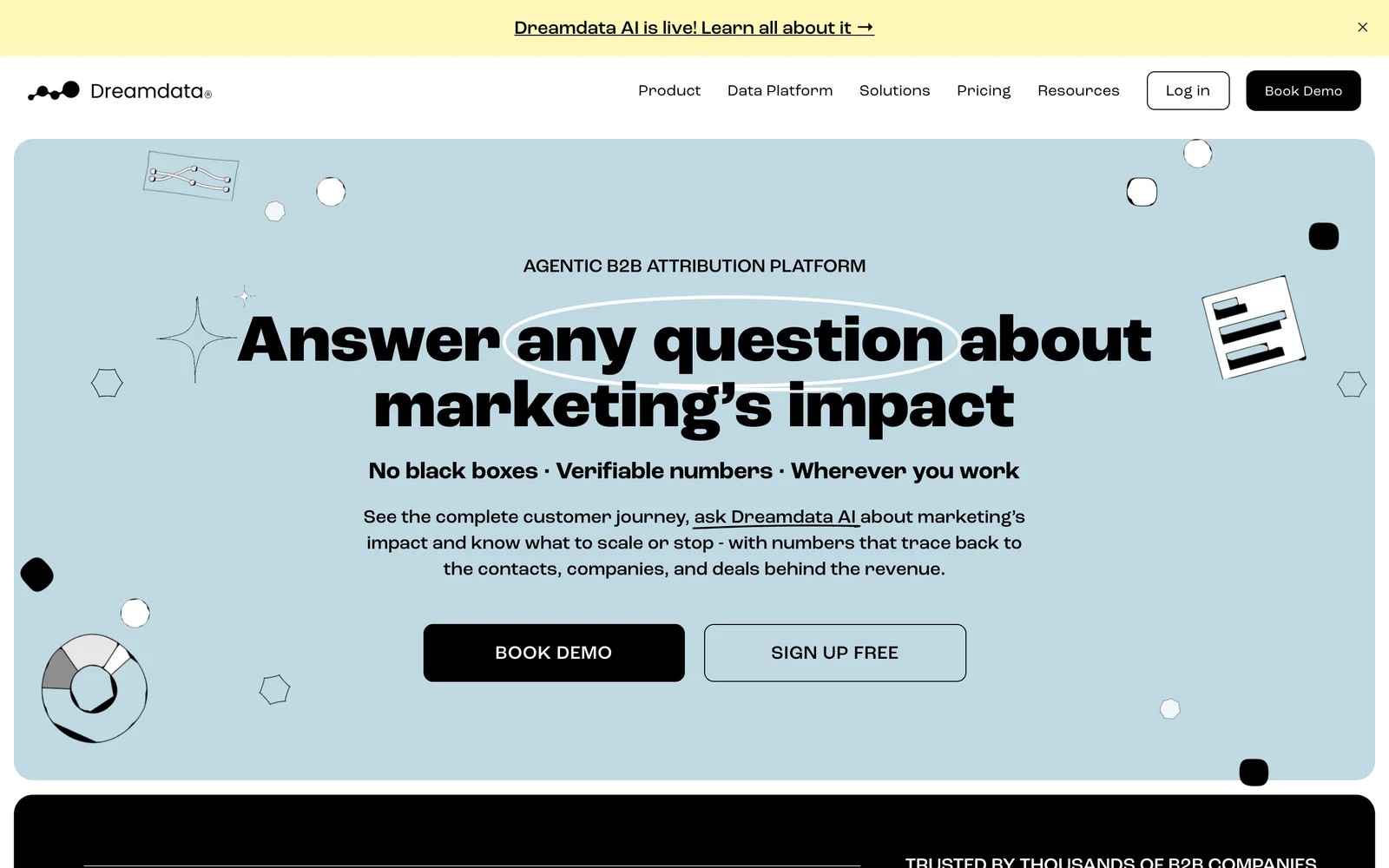
Dreamdata builds company journeys from every contact's touches and credits CRM stages to channels and accounts. It identifies companies and syncs audiences to ad platforms on paid plans.
I've used it on the free plan, and it handles Demandbase's measurement job in a more visual way. The company journey view shows a buying group's path to a deal in one screen, which is easier to share than most ABM dashboards.
What it doesn't do is intent or advertising at Demandbase's scale. And it took me a while to work out which report to use for which question, which reviewers echo when they mention the learning curve.
Key features
- Company journeys combine every contact's ads, visits and meetings into one timeline per account.
- Attribution credits MQL, SQL, opportunity and closed-won stages to the channels that moved them.
- Visiting companies are identified, adding anonymous research to the journey.
- Paid plans sync audiences and conversions to ad platforms for account targeting.
Where it falls short
- Third-party intent data isn't its focus, so in-market signals beyond your own site are limited.
- Full attribution is custom-priced, which makes budgeting harder than a published plan.
- New users report a steep first couple of months while learning the reports.
What users say
"Dreamdata helps me to justify where marketing budget is placed as it is directly tied back to my CRM across MQLs, SQLs, Opps, and Closed Won." (Source)
"Some of the data visualization is not the best" (Source)
Pricing
- Free: $0/mo with 2 months of history and 5 seats
- Attribution and Activation: custom pricing
7. Metadata
Best for: B2B teams that want paid campaigns built, tested and optimized for them, tied to pipeline.
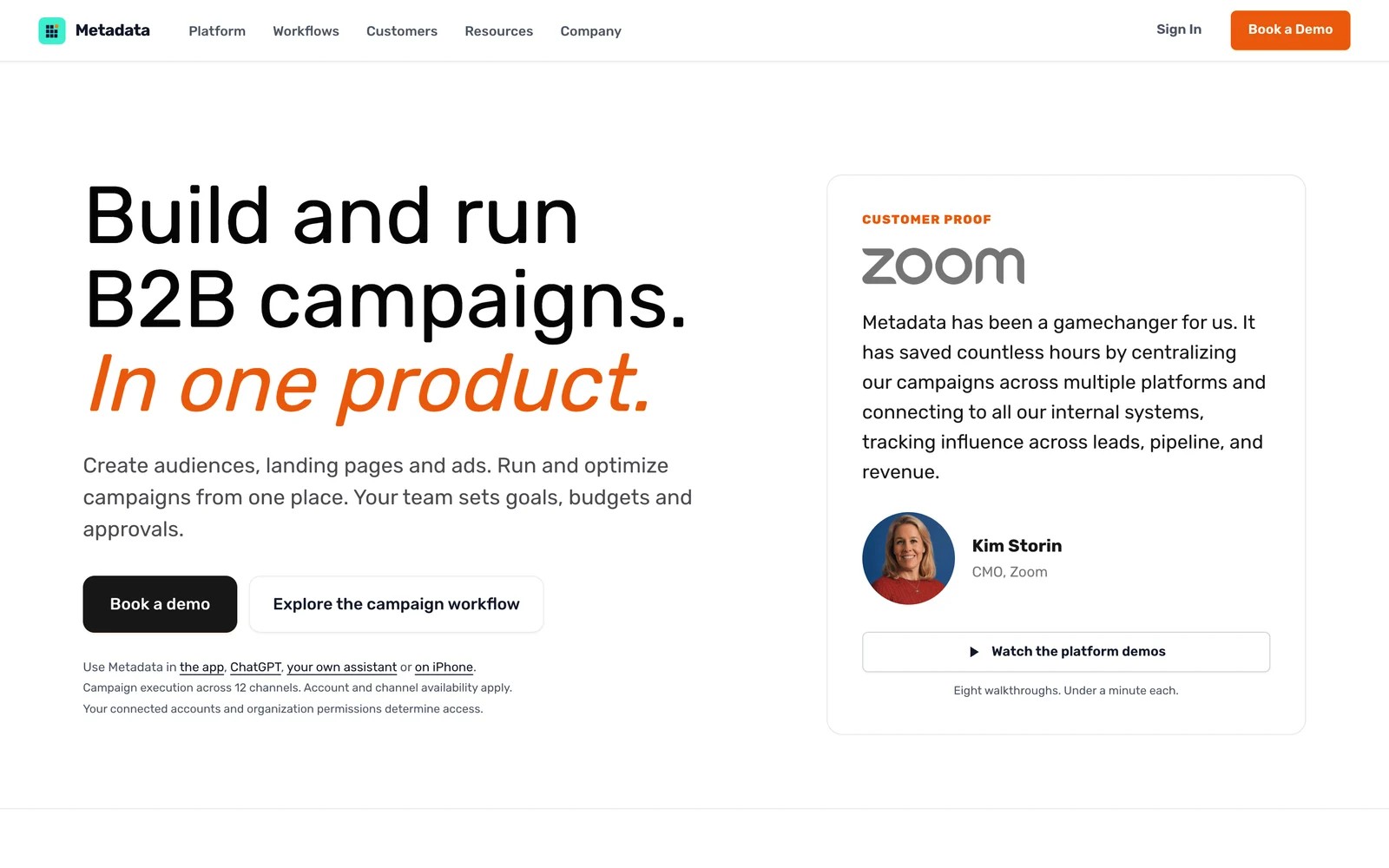
Metadata replaces the advertising side of Demandbase. It builds B2B audiences from firmographic, intent and CRM data, launches campaigns across LinkedIn, Meta, Google and other channels, and optimizes budget toward what drives pipeline.
From its product tour and the teams I know who use it, the appeal is execution. It runs many ad experiments at once and shifts spend to winners, with managed services available.
The catch is budget. Reviewers suggest it works best with meaningful monthly ad spend and patience for testing, and editing campaigns once they're live can be clumsy.
Key features
- Audiences are built from firmographic, technographic, intent and CRM data, then pushed to several ad channels.
- Campaigns launch across LinkedIn, Meta, Google and more from one place, with experiments run in parallel.
- Bid and budget optimization shifts spend toward the audiences and ads that produce pipeline.
- CRM integrations with HubSpot and Salesforce tie clicks to leads and opportunities.
Where it falls short
- It assumes a healthy ad budget, so smaller programs may not see enough data to optimize.
- Live campaigns are hard to edit, and reviewers often clone campaigns instead, losing history.
- It doesn't cover visitor identification or sales intelligence, two other parts of Demandbase.
What users say
"I love the ability of tying a click to a lead and/or an opportunity." (Source)
"To be successful with Metadata, you need to have an advertising budget that's $10k or more per month, and the wherewithal to stick with testing and optimizing campaigns for a few months." (Source)
"Changing campaigns in flight needs more work and needs to be more centralized." (Source)
Pricing
- Scoped on a demo by channels, managed ad spend and services. No public price list.
How to choose
List the Demandbase features your team used in the last quarter, then match them.
1. Measurement and pipeline proof
- SourceLoop, for lead-gen businesses, agencies and SaaS teams that want campaign-to-pipeline attribution with published pricing.
- Dreamdata, if account journeys matter most.
2. Knowing who's on your site
- Leadfeeder for identification on a budget.
- Factors.ai for identification plus journeys and attribution.
3. Account advertising
- Fibbler to measure LinkedIn's influence.
- Metadata to run and optimize campaigns.
- 6sense if you want the whole suite again.
Our list of B2B marketing analytics tools covers the wider stack.
Frequently asked questions
-
What does Demandbase do?
Demandbase One is an account-based marketing platform. It combines account identification, intent data, account advertising through its own DSP, sales intelligence and pipeline measurement.
-
How much does Demandbase cost?
Demandbase doesn't publish prices. It's quoted as a platform fee plus a flat fee per user, after a sales conversation.
-
What is the closest alternative to Demandbase?
6sense is the closest full-suite alternative. Specialist tools like Factors.ai, Leadfeeder, Fibbler and Metadata each replace one part for less.
-
Can I replace Demandbase with cheaper tools?
Often, yes. Many teams pair a visitor identification tool such as Leadfeeder or Factors.ai with an attribution tool such as SourceLoop, and add Fibbler or Metadata for paid account programs.
-
Does SourceLoop identify anonymous companies?
No. SourceLoop groups contacts into companies using work email domains and your CRM. It doesn't use IP-based identification or intent data.

 Paid Social


