
7 Best Attribution App Alternatives for 2026
Seven Attribution App alternatives judged on the thing it does best, showing the real people behind every number, with pricing and reviews.
Table of contents
I like Attribution App for a simple reason. When someone in a meeting asks "where did that number come from?", you can click through to the actual customers behind it. Plenty of attribution tools can't do that.
So when people ask me for alternatives, I start there. The usual triggers are the price as tracked users grow, the lack of call tracking, no history before install, and documentation that lags behind the product.
In this guide, I'll compare seven alternatives on how traceable their numbers are, and on the gaps that push people away.
What I checked, and how
I ran Attribution App on its trial as the baseline. Of the alternatives, I've used Dreamdata's free plan, Cometly and ThoughtMetric's trial directly. Ruler Analytics, Usermaven and Northbeam sell through demos, so those sections rely on walkthroughs, documentation and teams I know who run them.
The brands and agencies we work with are mostly SaaS, lead gen and a few ecommerce teams, and that mix shaped who each pick is for. Quotes come from G2 and Capterra. For each tool I asked:
- Can I see the people behind a reported number?
- Which revenue sources does it read: CRM, billing, calls or orders?
- Does it send results back to the ad platforms?
- How does the price grow with traffic or tracked users?
SourceLoop is our product. I scored it on the same four questions as everyone else and kept its weaknesses in plain view.
Last checked November 2026. Confirm current pricing with each vendor.
Why people move on from Attribution App
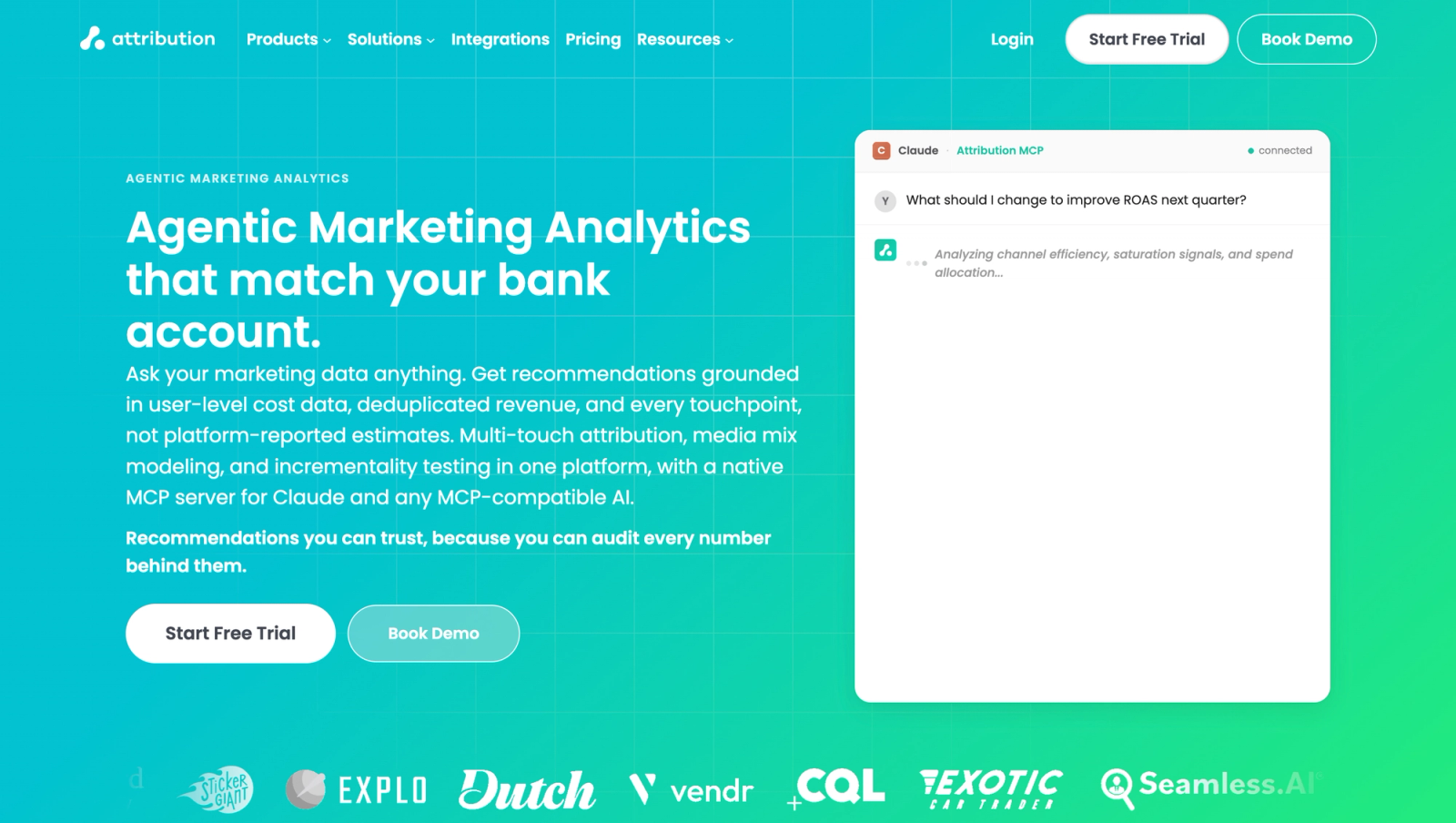
Attribution App now calls itself agentic marketing analytics. Alongside deterministic multi-touch attribution, it offers media mix modeling, incrementality testing and an MCP server for Claude. Its pricing page lists Pro at $399/mo ($335 billed yearly) for 10,000 monthly tracked users, with $10 per extra 1,000 users and a 14-day trial.
Users who stay are emphatic:
"I've worked with every analytics tool out there and Attribution is the only tool that can actually do multi-touch attribution." (Source)
The reasons to leave are consistent across reviews:
"Tracking phone calls would be greatly valuable." (Source)
"it's tough to get retroactive data, so historical attribution prior to standing up attribution was tough" (Source)
"Their documentation is lacking and should be updated." (Source)
Attribution App alternatives compared
Here's how the 7 Attribution App alternatives compare on traceability, revenue sources and price, as of November 2026.
| Tool | Best for | See people behind numbers | Revenue from | Call tracking | Pricing |
|---|---|---|---|---|---|
 SourceLoop | Lead gen, SaaS, agencies | Yes | CRM, billing, calls | Via call tools | From $49/mo |
 Dreamdata | B2B SaaS, account journeys | Yes | CRM deals | No | Free plan, paid quoted |
 Cometly | B2B SaaS paid acquisition | Yes | CRM deals | No | Usage-based |
 Ruler Analytics | Phone-led lead gen | Yes | CRM deals, calls | Built in | From £299/mo |
 Usermaven | SaaS wanting product analytics | Partly | Stripe, Paddle, CRMs | No | Quote |
 ThoughtMetric | Smaller online stores | Partly | Store orders | No | From $99/mo |
 Northbeam | Large DTC ad budgets | No, modeled | Store orders | No | From $1,500/mo |
The 7 best Attribution App alternatives
They're ordered roughly by how close they stay to Attribution App's person-level approach, starting with the most traceable.
1. SourceLoop
Best for: lead generation businesses, SaaS teams and agencies that want person-level attribution covering calls, CRM deals and subscriptions.
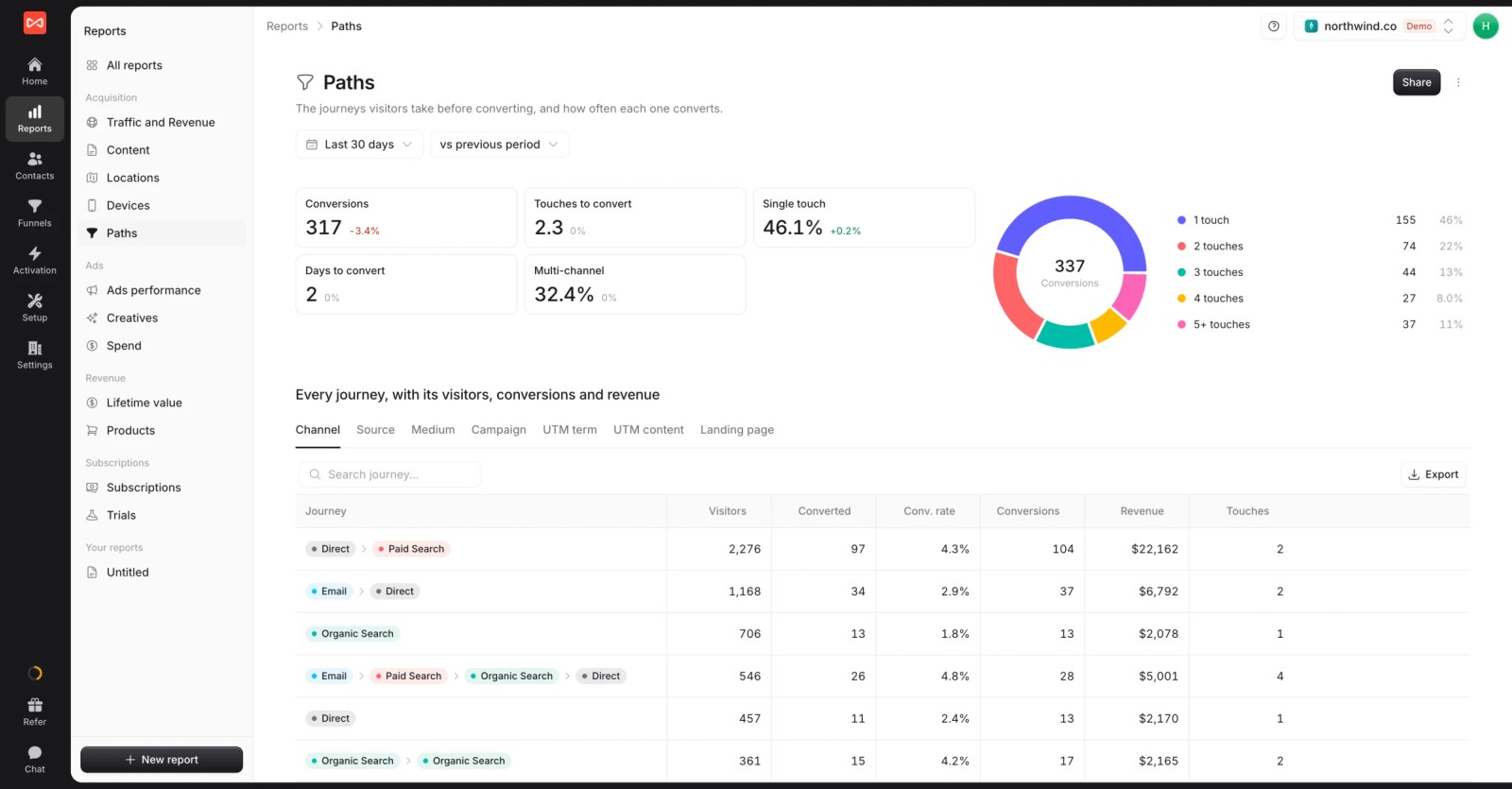
SourceLoop is a first-party marketing attribution tool that keeps the thing Attribution App users value: every reported conversion links to a real contact and the visits behind it. It then fills the gaps reviewers mention, with calls, lead quality and conversion sync.
The rules are published too. Each of the seven models is documented, so you can explain exactly how a deal's revenue was split across touches.
Key features
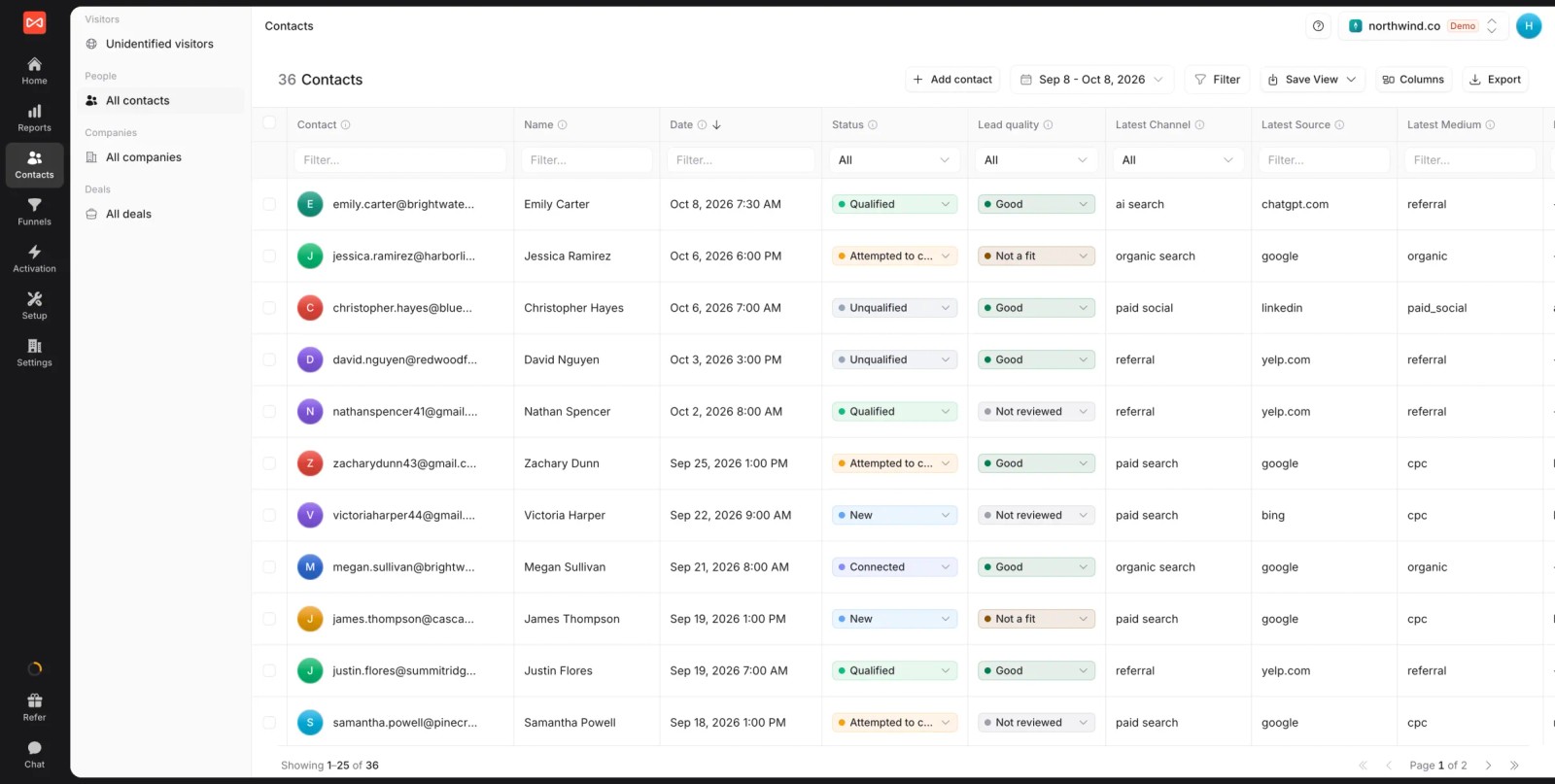
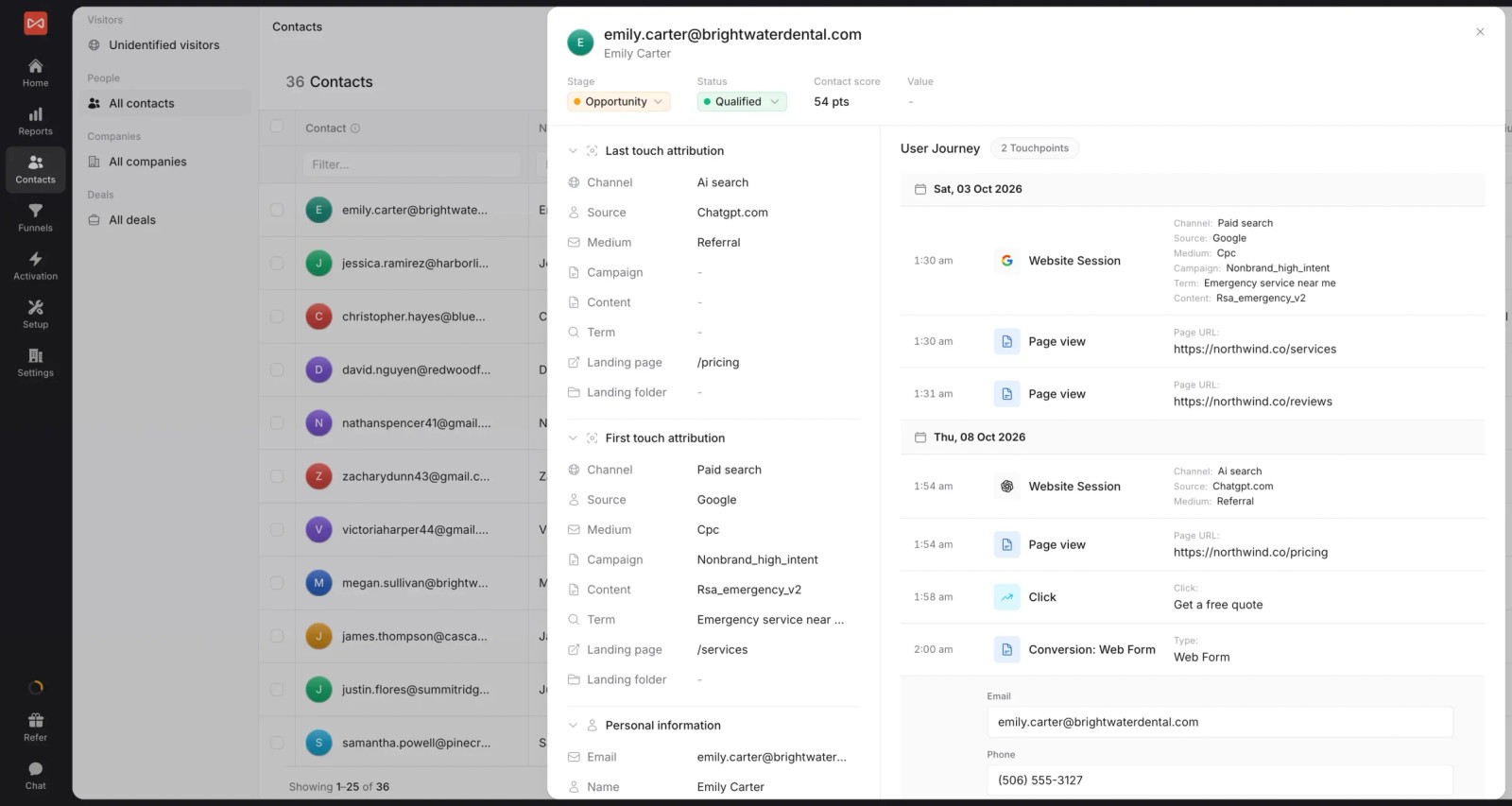
- People behind every number: the contacts list shows each lead with stage, lead quality and latest source, and every row opens into the full journey.
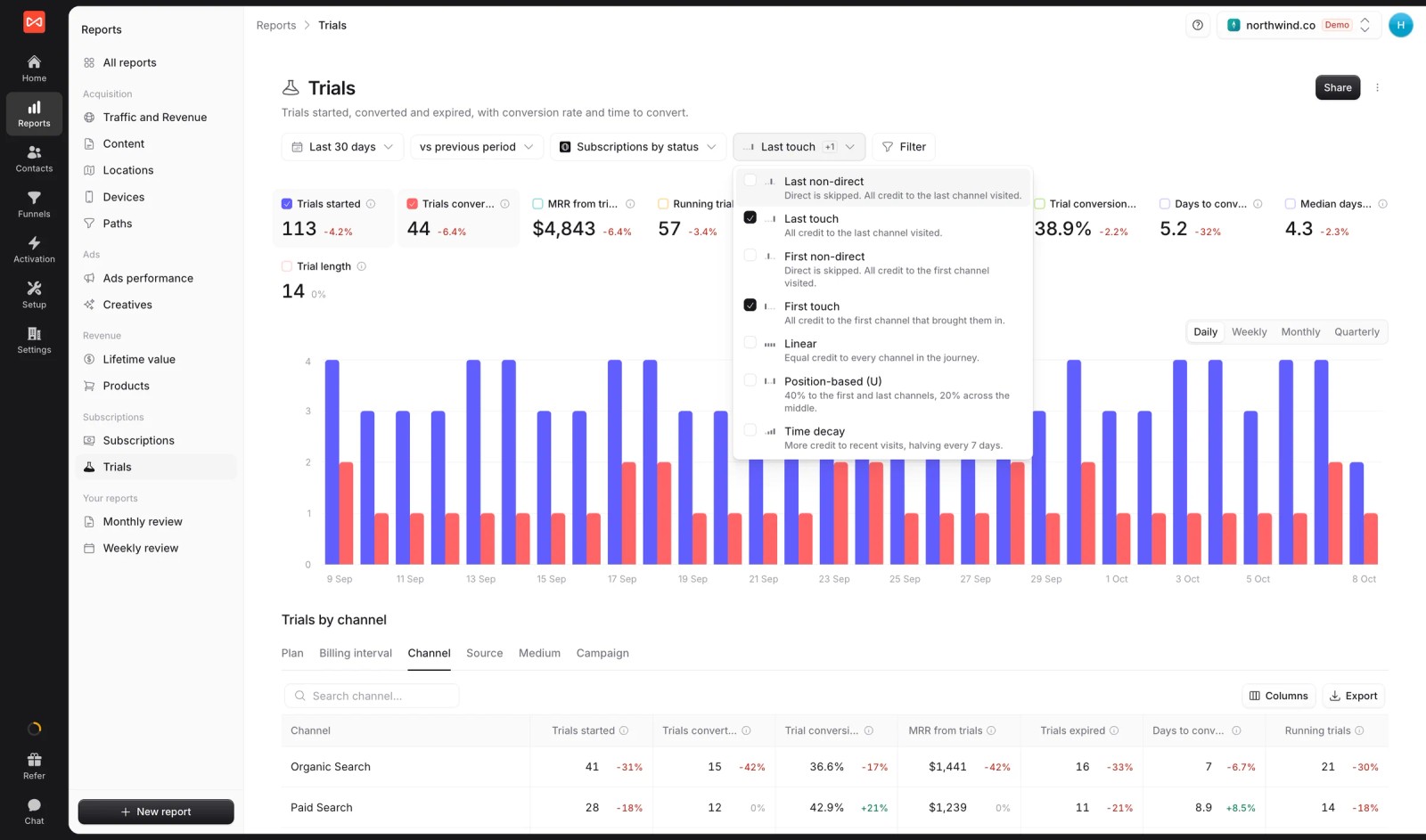
- Seven published models: first and last touch, first and last non-direct, linear, U-shaped and time decay, switchable on any report.
- Calls counted: calls from CallRail, CallTrackingMetrics, Invoca or Mediahawk are tied to the visit that produced them.
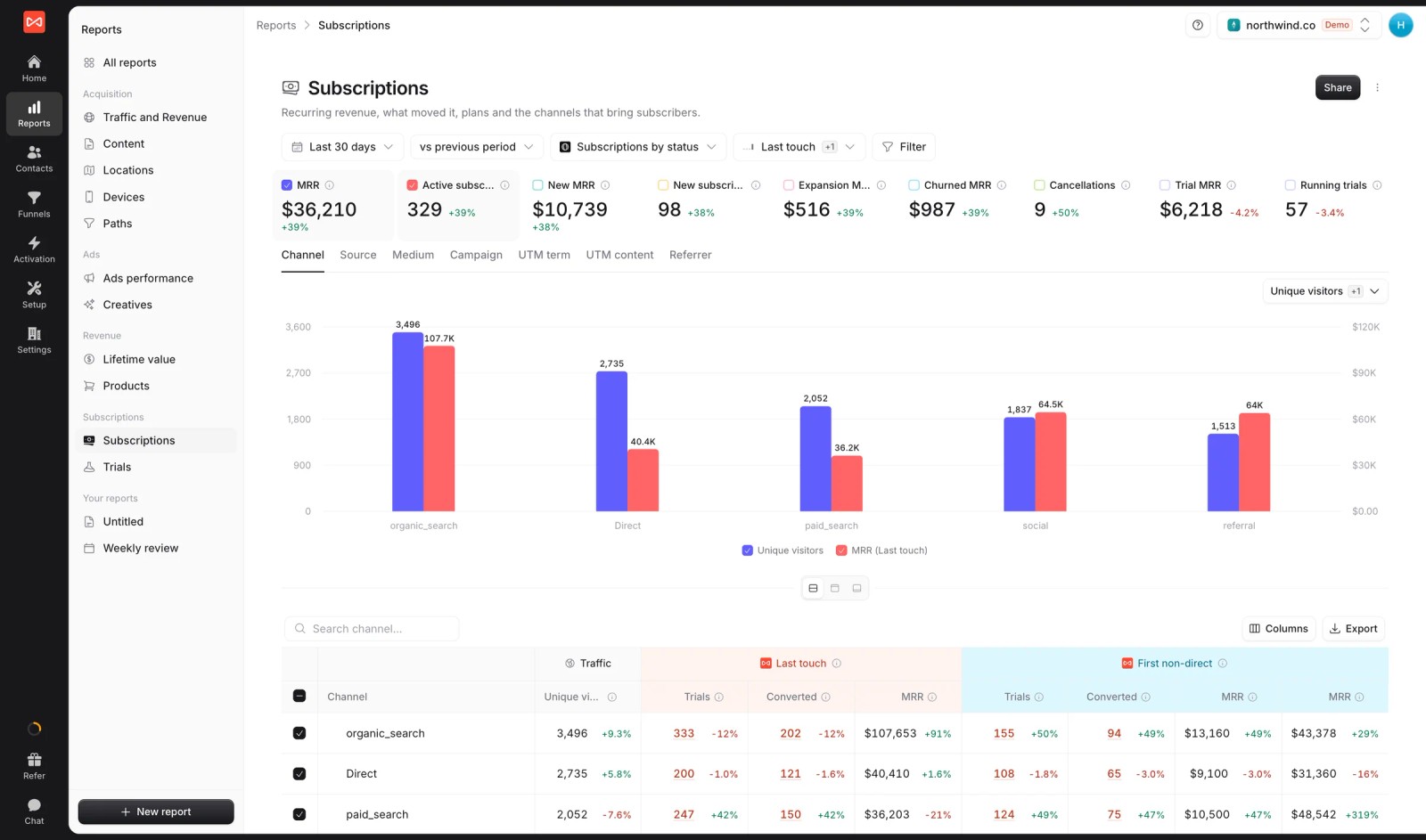
- Revenue from CRM and billing: two-way sync with HubSpot, Salesforce, Pipedrive and Jobber, plus Stripe, Paddle, Polar, Lemon Squeezy and Dodo for subscriptions and LTV. Like Attribution App's Stripe view, each payment traces back to the customer and the campaign that found them.
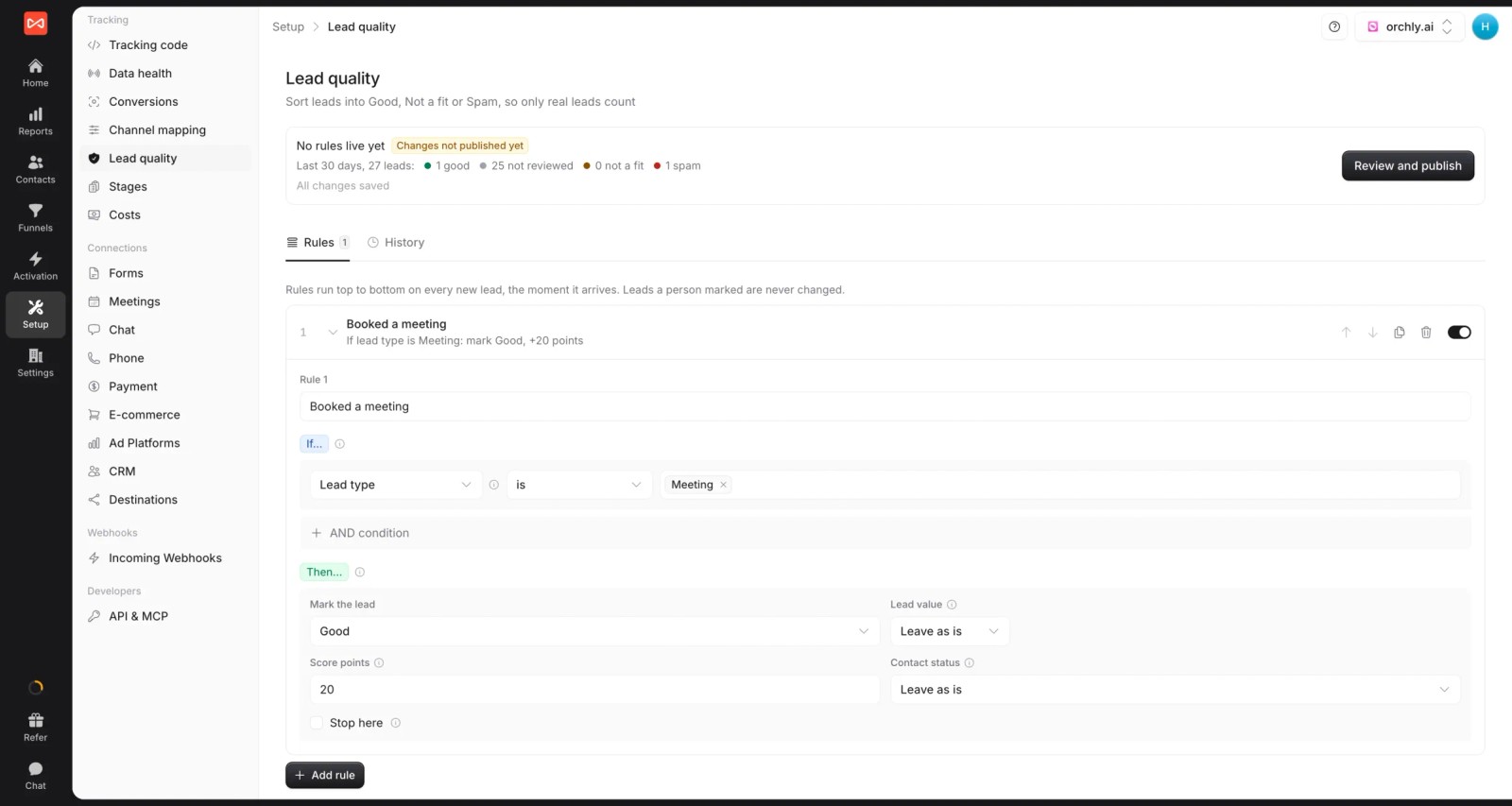
- Lead quality rules: mark leads Good, Not a fit or Spam, so cost per lead and ROAS reflect real prospects.
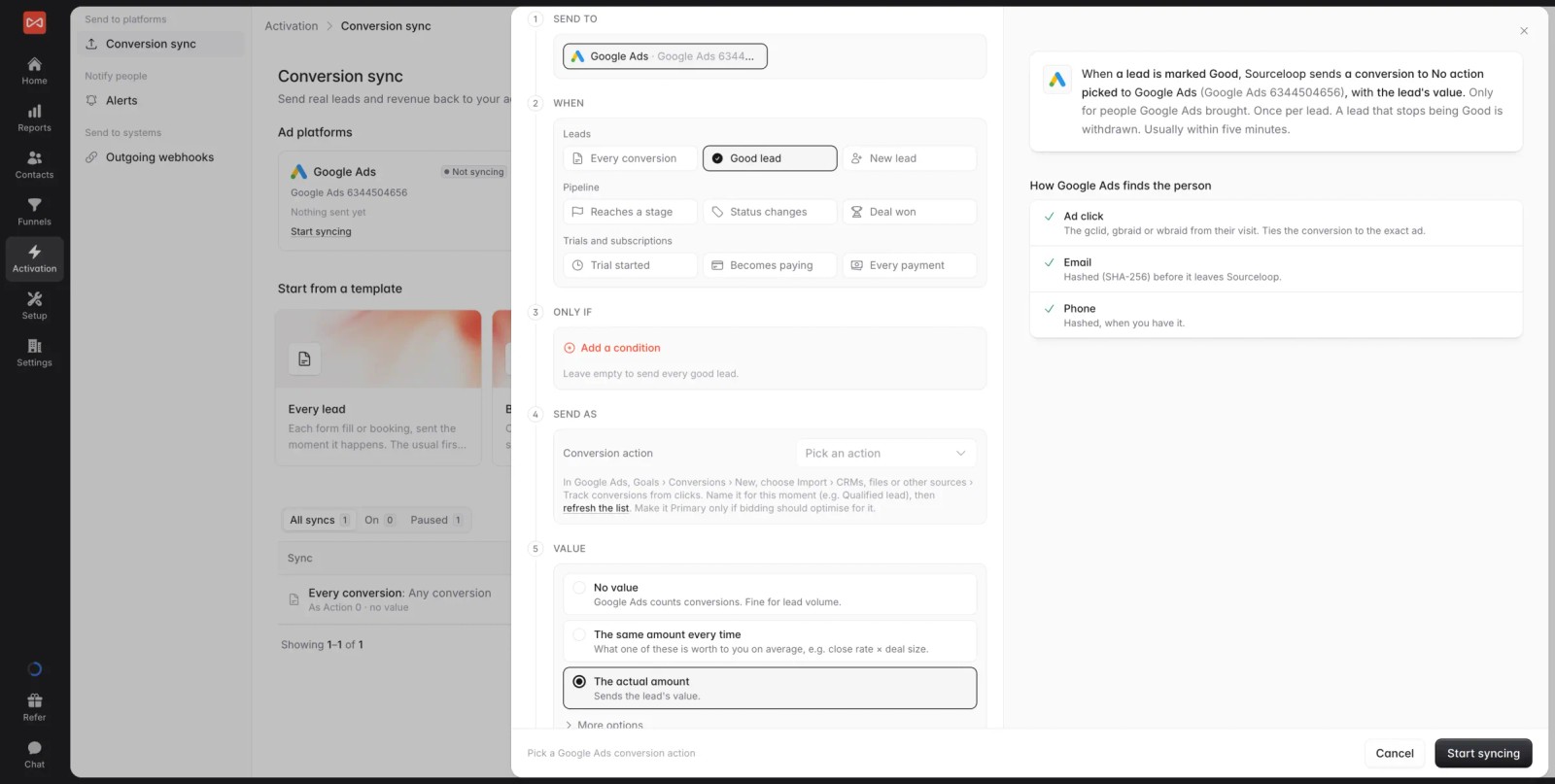
- Conversion sync: good leads, won deals or payments go to Google Ads, Meta, Microsoft Ads and ChatGPT Ads with their value. Attribution App doesn't send conversions back.
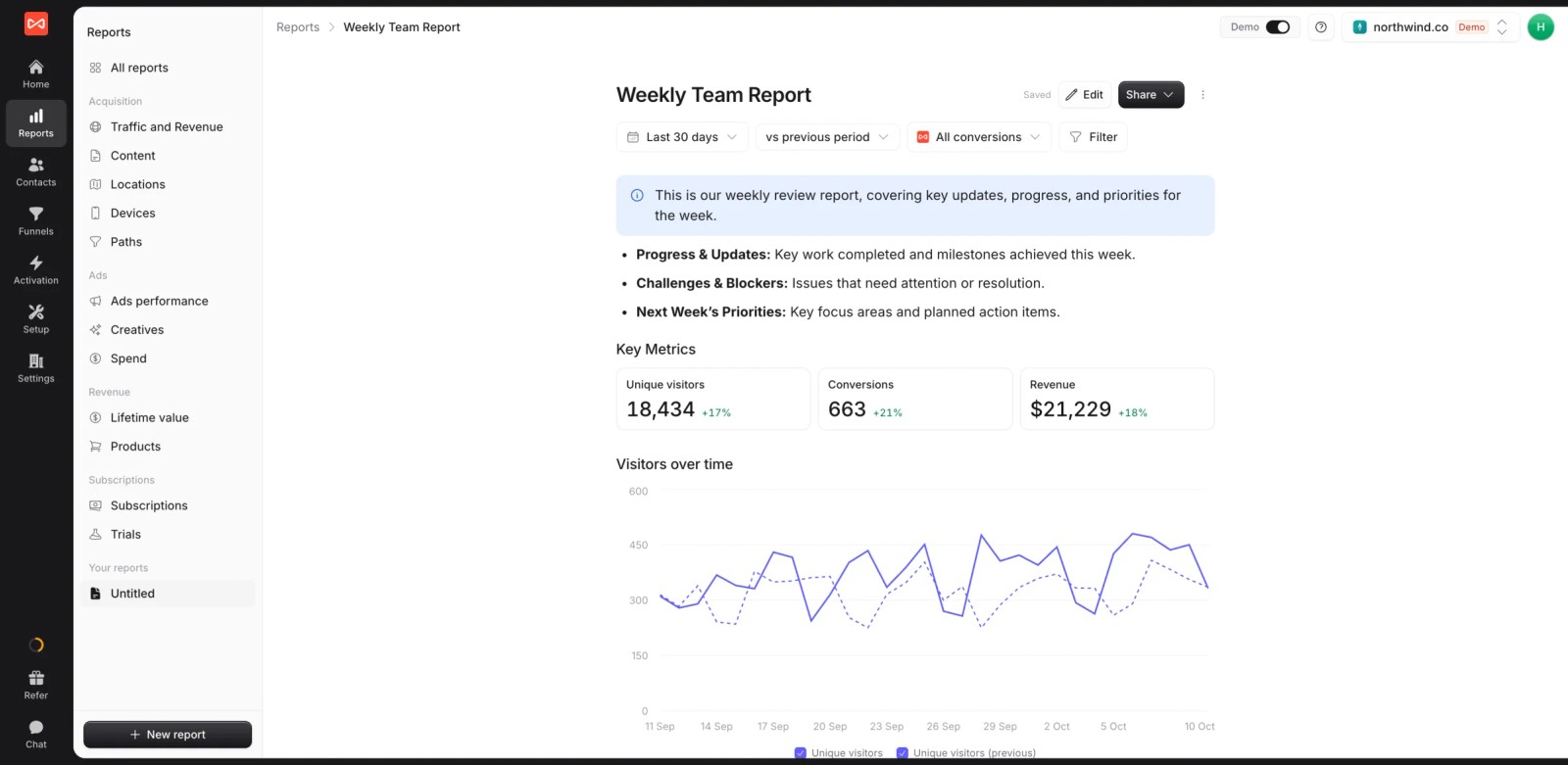
- Custom reports: turn any set of numbers into a live document that updates itself, then share it or export it, with every figure still traceable to contacts.
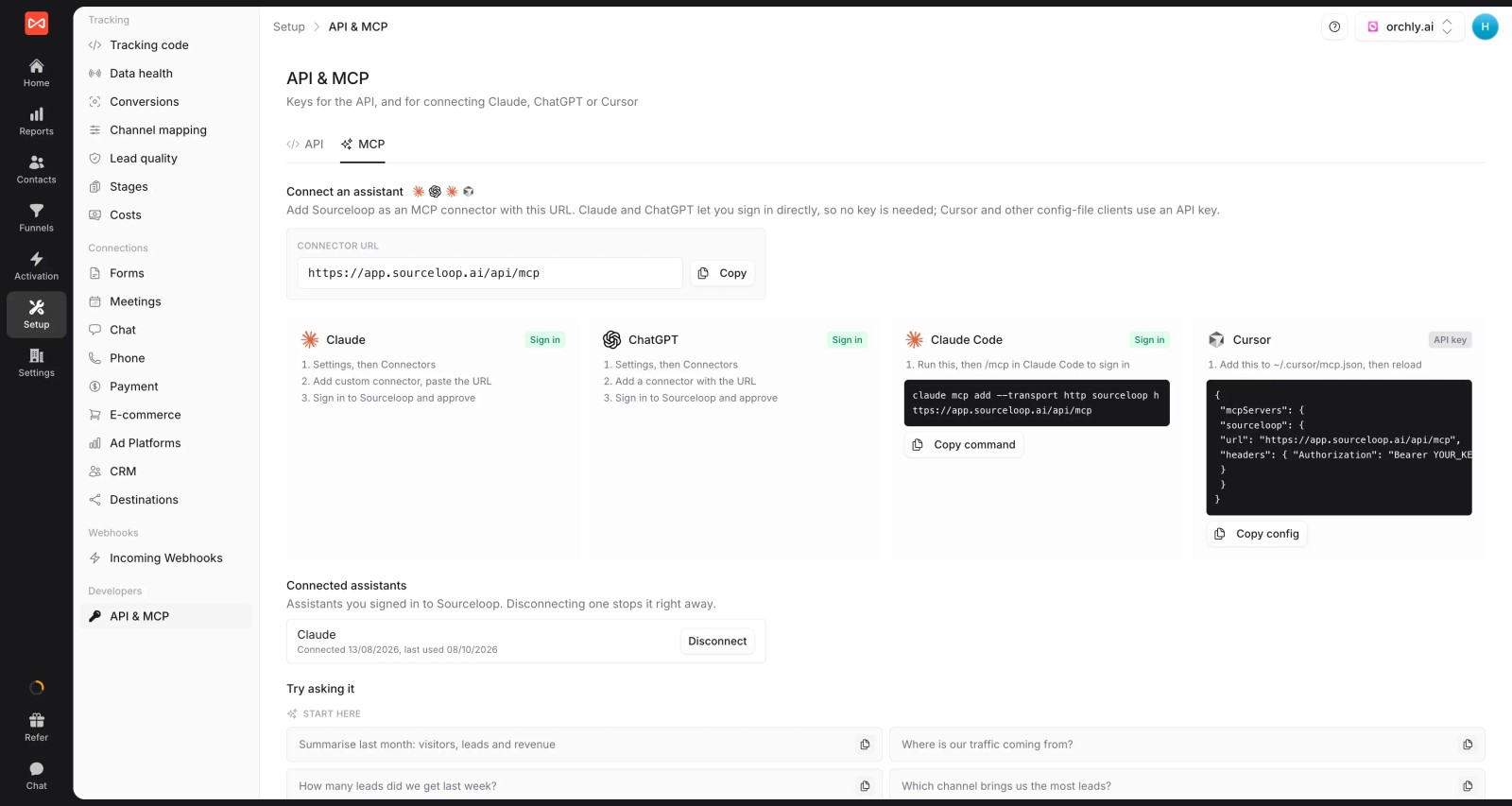
- API and MCP server (Professional and up): connect Claude or another AI assistant to ask which campaigns produced paying customers.
- Alerts and white label: Slack or email alerts on new leads or deals, and full white label for agencies.
Where it falls short
- No media mix modeling or incrementality testing, both of which Attribution App now offers.
- Like Attribution App, history starts at install. There's no backfill from before the script went live.
Pricing
- Essential: $49/mo for one site and 30,000 page views, with tracking, attribution reports, lead quality rules and alerts
- Professional: $99/mo for 100,000 page views and unlimited users, adding CRM sync, conversion sync to the ad platforms, the API and MCP
- Agency: $249/mo for three sites and 1.5 million page views, adding white label reporting
- Unlimited conversions and a 7-day trial. There's no per-user overage like Attribution App's $10 per 1,000.
Verdict: the closest match if traceable, person-level numbers are what you valued, with calls and conversion sync added. Keep Attribution App or pick Northbeam if you need mix modeling.
2. Dreamdata
Best for: B2B SaaS companies that need to see every person at an account, not just individual leads.
Dreamdata builds a journey for each company, joining every contact's visits, ad clicks and meetings, and credits CRM revenue across them. It's person-level like Attribution App, but grouped by account.
On the free plan, opening one company and scrolling through everything its people did over months was the moment it clicked for me. For deals with five stakeholders, a per-person view alone hides half the story.
Finding my way around took longer. There are many ways to look at the same data, and new teammates needed a tour. Reviewers also note it pulls from Salesforce without pushing data back.
Full attribution and ad platform activation sit on custom-priced plans, so the free tier is a test drive, not the full product.
Key features
- Every contact at a company is joined into one timeline, which shows how buying committees research over long cycles.
- Revenue is credited across CRM stages from MQL to closed-won, so you can see what moved a deal, not just what created the lead.
- Anonymous visits are matched to companies from their IP address, adding early research before anyone fills in a form.
- An AI agent and an MCP server let you ask questions of account journeys in plain language.
Where it falls short
- Billing and call revenue aren't covered, since attribution is built around web activity and CRM deals.
- Paid plans aren't priced publicly, so getting beyond the free tier means a sales conversation.
- Accuracy depends heavily on CRM hygiene, and reviewers say messy CRM data shows up quickly in reports.
What users say
"Easy integrations, self-service settings you can modify to fit the company's needs, easy-to-set-up custom reports, attribution modeling, and journey reports are amazing if you want to deep-dive into specific accounts, a great tool to share with the sales team." (Source)
"If your CRM health is poor, then no magic will happen, but Dreamdata is very helpful at revealing the problems." (Source)
"The interface can be tricky, especially when I’m trying to show revenue impact to non-digital marketers." (Source)
Pricing
- Free: $0/mo with 2 months of history and 5 seats
- Attribution and Activation: custom pricing
3. Cometly
Best for: B2B SaaS teams that want ad-level attribution to pipeline and conversion API sync.
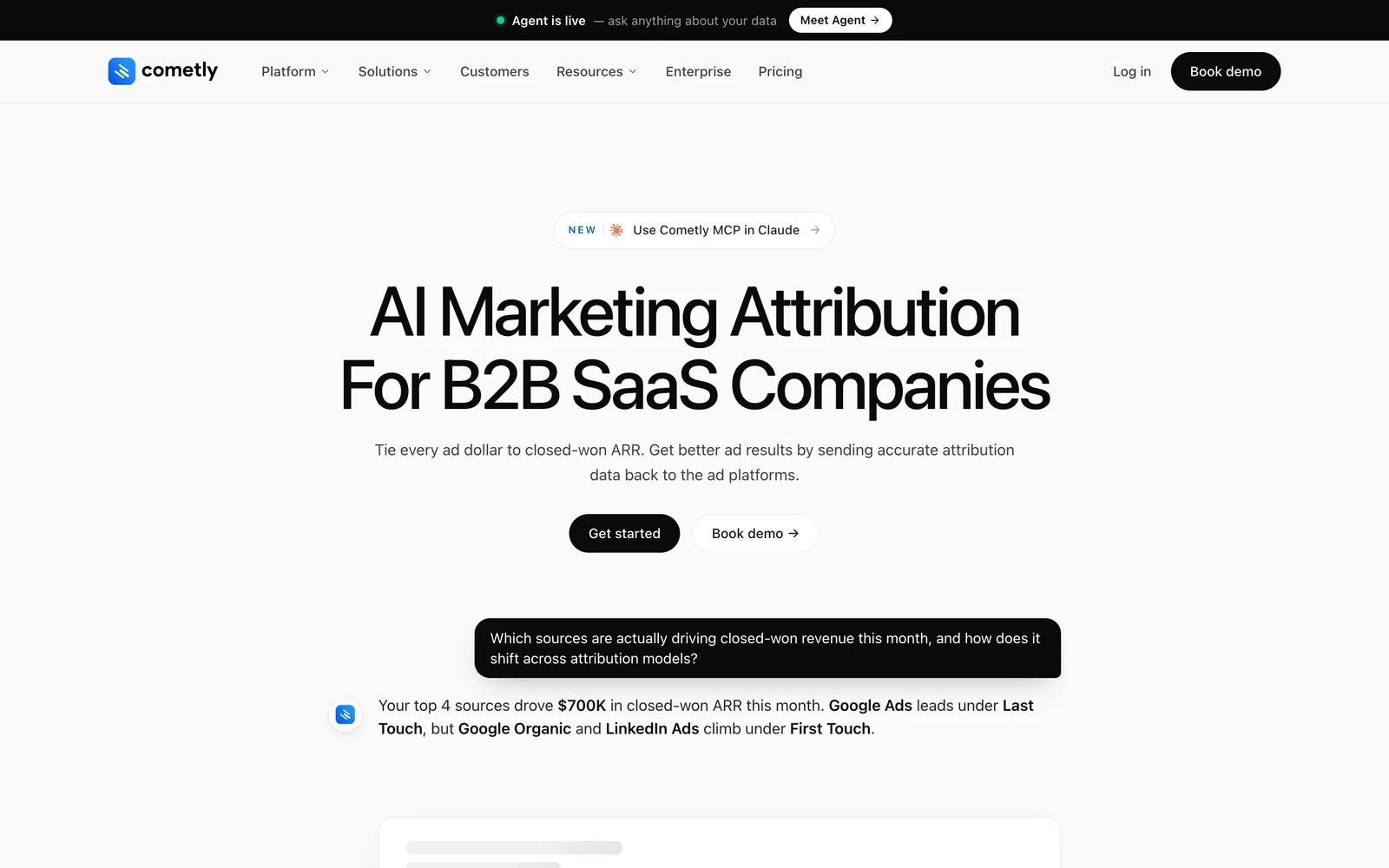
Cometly tracks ad clicks with a first-party pixel, follows leads to closed-won revenue in the CRM, and sends conversions back to Meta and Google. It now positions itself firmly for B2B SaaS.
When I used it, the conversion API sync was the part I'd have missed going to Attribution App. Offline sales reached Meta and Google without custom code, which helps campaigns optimize on deals.
The reporting felt closer to an ads dashboard than Attribution App's audit trail. Some reviewers say it repeats what the ad platforms already show, and setup takes time with a complex stack.
Key features
- A first-party pixel and server-side events capture ad clicks that browser-based tracking misses.
- Multi-touch attribution follows each lead through to pipeline and closed-won revenue in the CRM.
- Conversions, including offline sales, go back to Meta and Google through their conversion APIs.
- An AI agent and MCP server answer questions about performance in plain language.
Where it falls short
- Dollar prices aren't shown on the pricing page, which makes comparing against Attribution App's published rate harder.
- There's no call tracking, so sales-led SaaS teams that close by phone have a gap.
- Its focus on B2B SaaS means ecommerce and info-product features get less attention.
What users say
"it's just so perfect to see all paid channels within same dashboard as a whole" (Source)
"It's just another UI for the same tools that you have with advertisers" (Source)
"Sometimes it takes a bit too long to set it up if you have complex Tech Stack." (Source)
Pricing
- Usage-based Core plan and a quoted Enterprise plan. See our Cometly alternatives for more context.
4. Ruler Analytics
Best for: lead generation businesses where calls close the sale, like legal, finance and home services.
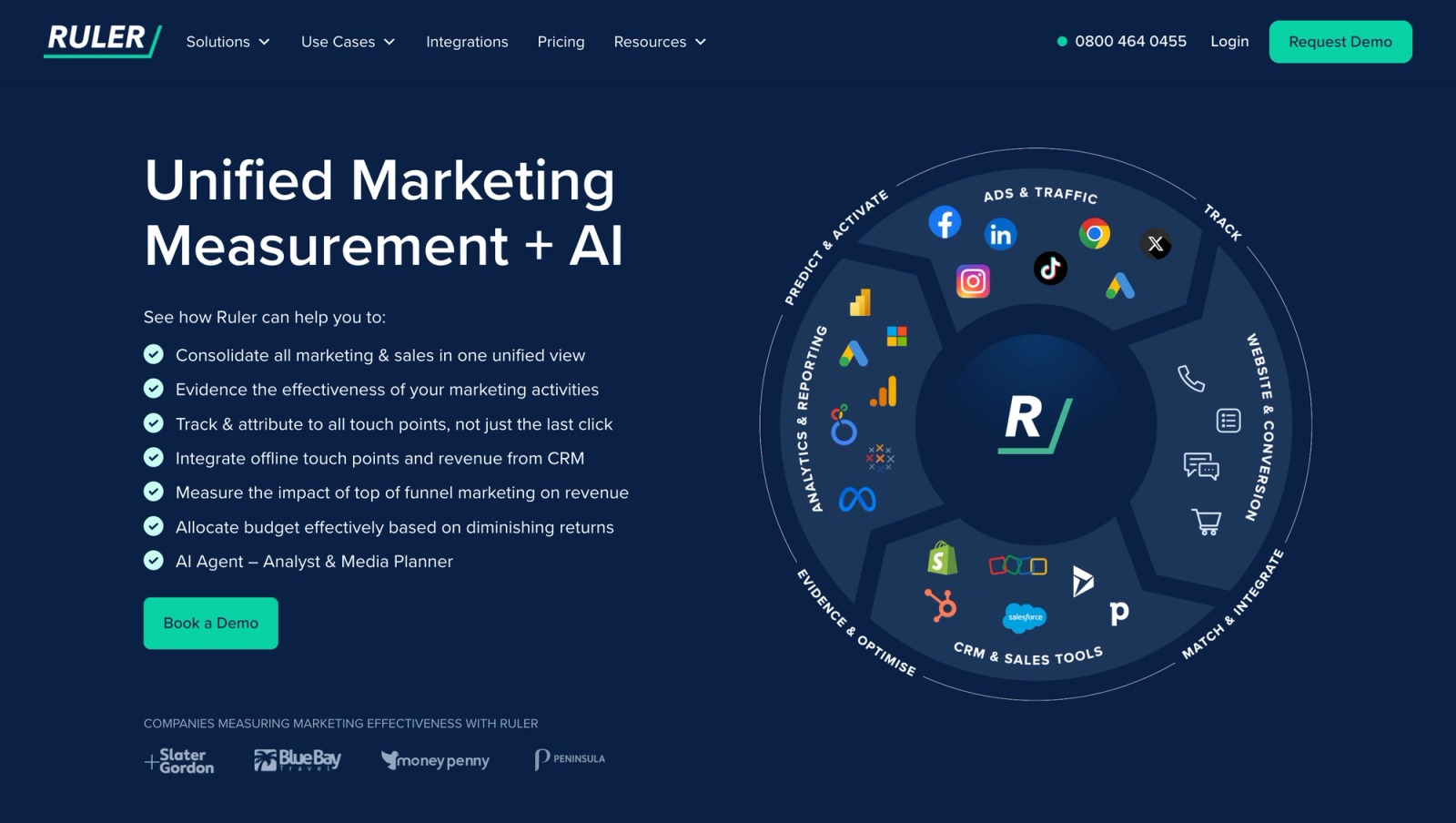
Ruler Analytics tracks each visitor through forms, calls and live chat, pushes the source into the CRM, and pulls closed revenue back. It fixes the most common Attribution App complaint, call tracking, out of the box.
In the demo, seeing a call next to the keyword and pages that produced it was the standout. Agencies I know who run it use exactly that view to show clients every enquiry.
The trade-offs they mention are setup time, a 12-month contract and the need to recheck data after CRM changes. One reviewer says setup took almost three weeks.
Key features
- Built-in call tracking ties every phone call to the visitor's source, keyword and the pages they viewed.
- The source is pushed into the CRM, and closed revenue from Salesforce, HubSpot or Pipedrive is pulled back for reporting.
- Revenue can be sent to Google Ads and Meta, so campaigns optimize toward deals rather than enquiries.
- The Advanced plan adds marketing mix modeling for brands with offline or brand spend.
Where it falls short
- There's no free trial, and reviewers mention 12-month contracts, which raises the cost of getting it wrong.
- Some users can only see first and last click, which is a step back from Attribution App's full journeys.
- CRM changes can break the data until it's checked again, adding ongoing maintenance.
What users say
"Finally being able to match multiple clicks to forms AND calls leads is really valuable for me and my agency." (Source)
"Everytime you change something in your CRM, Ruler will not work and you have to double check the data" (Source)
"you can only see first and last click of the user journey" (Source)
Pricing
- Small: from £299/mo for up to 10,000 monthly visits
- Medium, Large and Advanced: from £499, £999 and £1,499/mo
5. Usermaven
Best for: SaaS teams that want attribution and product analytics in one tool.
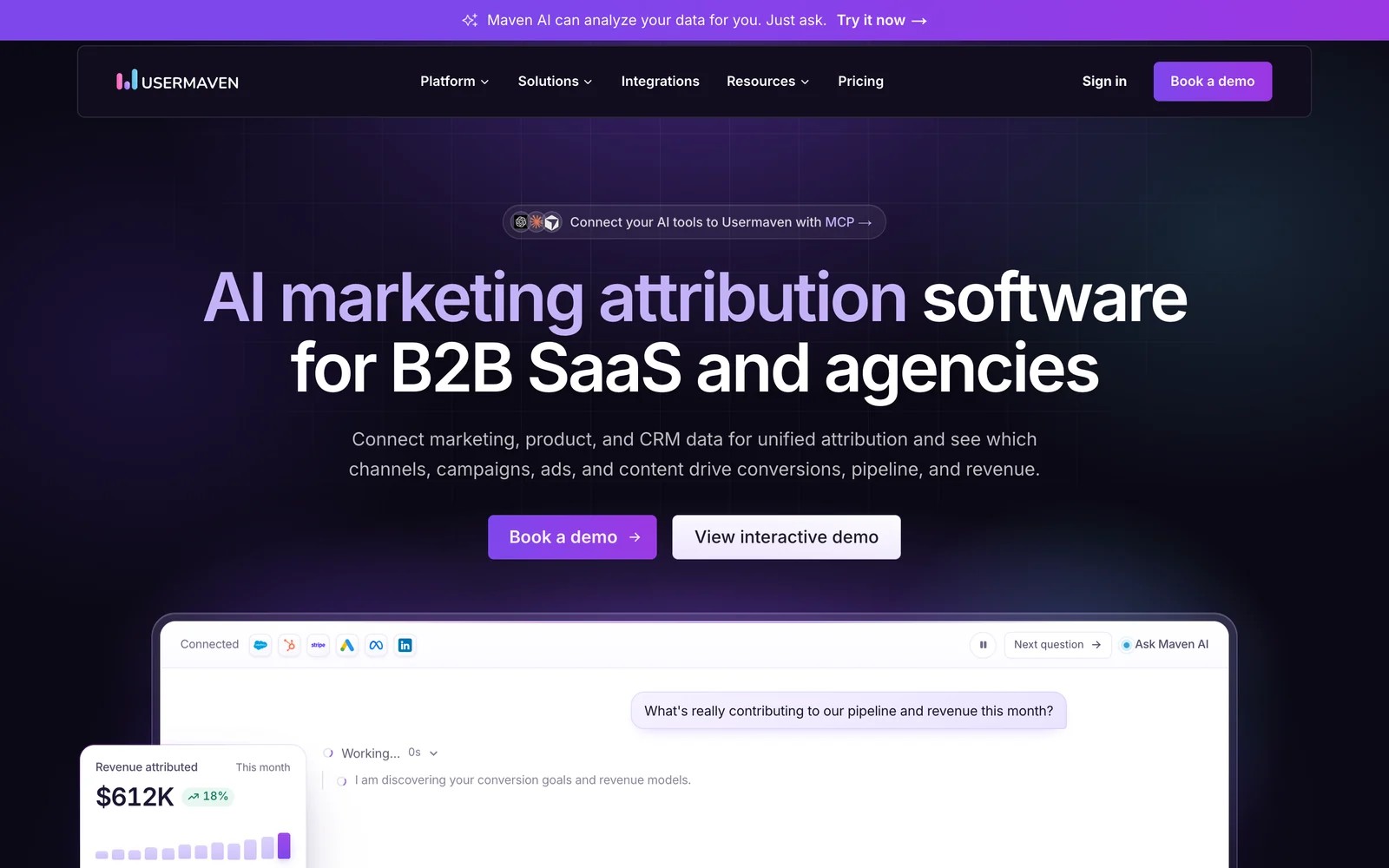
Usermaven auto-captures website and product events, runs multi-touch attribution with windows up to 365 days, and connects to HubSpot, Salesforce, Stripe and Paddle. It tracks without relying on cookies.
In the walkthrough, the appeal for an Attribution App user was getting product usage in the same place. You can see which channels bring signups and how those users behave after they log in.
It's now sold through demos, and reviewers flag thin training material for advanced setups and occasional bot spikes in traffic.
Key features
- Most clicks and page views are captured automatically, so there's little tagging work before data starts flowing.
- Multi-touch attribution supports windows of up to 365 days for long SaaS consideration cycles.
- Product analytics covers engagement, retention and cohorts, so acquisition and activation sit side by side.
- Maven AI and an MCP server answer questions about your data in plain language.
Where it falls short
- Prices aren't published, so you can't compare costs without a sales call.
- There's no call tracking, which leaves a gap for sales-led businesses.
- Reports are less audit-focused than Attribution App's drill-down to individual customers.
What users say
"Robust for customer journey and client attribution so you can see what activities are working and what leads are doing before they buy." (Source)
"I wish there was more training material for the advanced stuff." (Source)
Pricing
- Business and Enterprise plans, quoted after a demo. Our Usermaven alternatives cover more options.
6. ThoughtMetric
Best for: smaller ecommerce brands that liked Attribution App's Shopify plan but want a lower price.
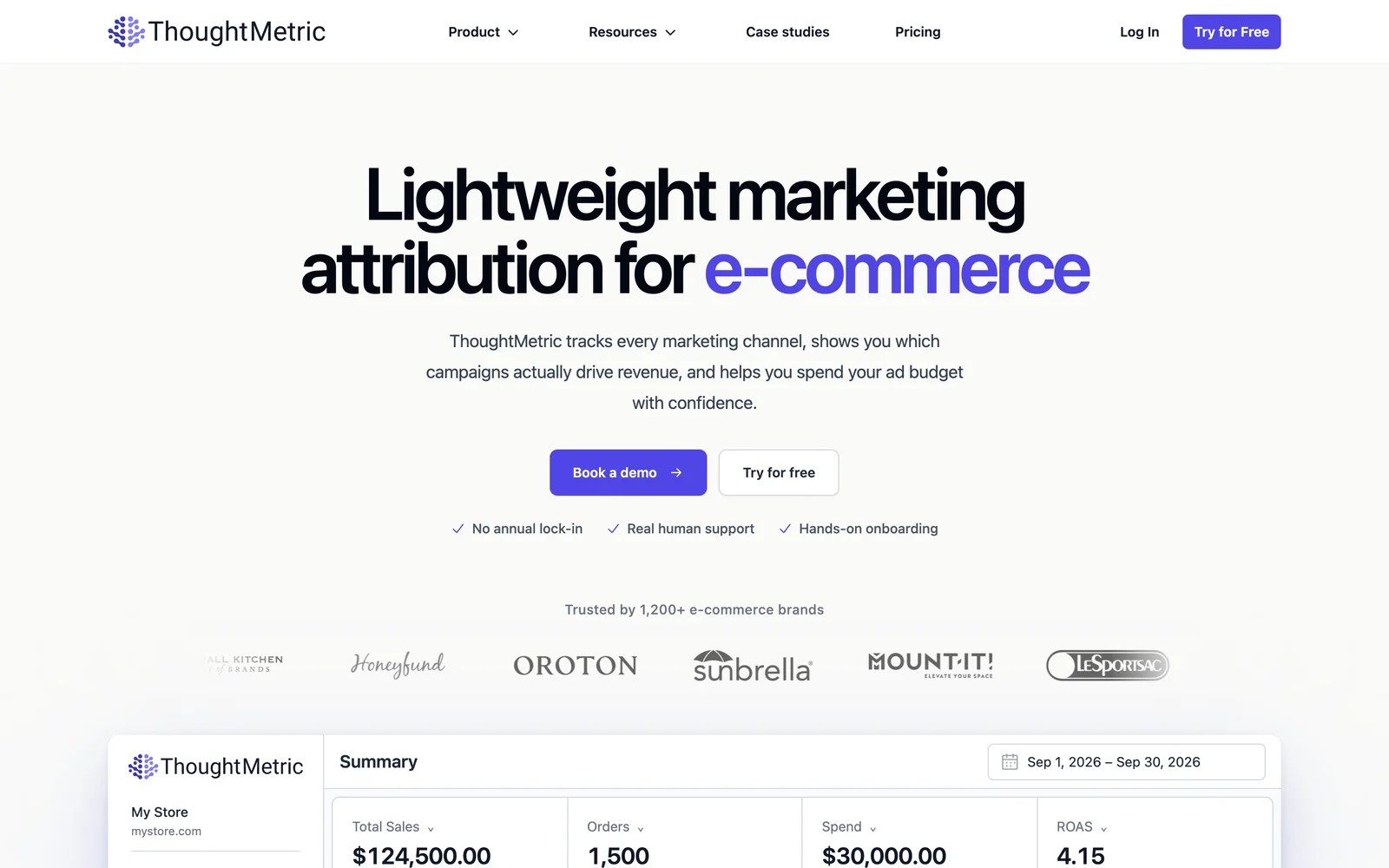
ThoughtMetric is lightweight multi-touch attribution for Shopify, WooCommerce and other stores, with post-purchase surveys and an MCP connector.
On the trial, setup was quick and the reports were easy to read. It's half the price of Attribution App's Shopify plan, and every plan includes every feature.
What you lose is depth. You can't drill as far into individual customers, and reviewers want more LTV insight and ad-level detail.
Key features
- Multi-touch attribution covers the major ad channels on Shopify, WooCommerce and most other store platforms.
- Post-purchase surveys add self-reported answers, which helps credit channels like podcasts that rarely produce clicks.
- An MCP connector brings attribution into Claude and ChatGPT for plain-language questions.
- Every plan includes every feature and is priced by pageviews, which keeps the bill predictable.
Where it falls short
- It only fits stores, since subscriptions billed outside the checkout and CRM deals aren't tracked.
- Drill-down to individual customers is lighter than Attribution App's, which matters if auditability was the draw.
- Custom dashboards are limited, so there are fewer ways to slice results for reporting.
What users say
"It provides the same if not better attribution tracking as Hyros which we paid SIGNIFICANTLY more for." (Source)
"The custom dashboards and charts are somewhat limited, but they’re still functional." (Source)
Pricing
- From $99/mo for 25,000 pageviews, with a 14-day trial
7. Northbeam
Best for: established DTC brands with large paid social budgets that want modeling as well as attribution.
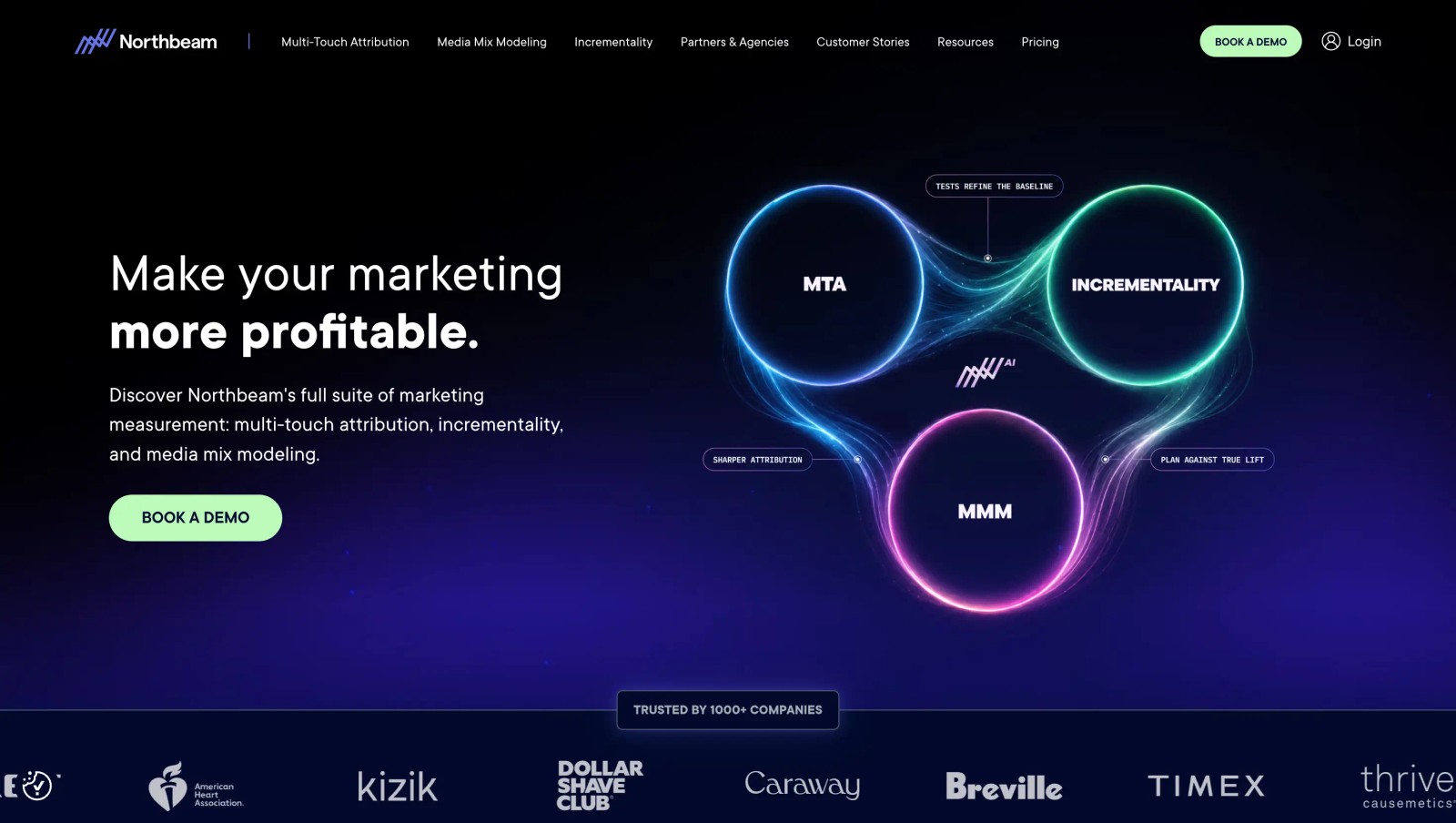
Northbeam attributes orders with clicks plus deterministic views, then adds media mix modeling and incrementality. It's the opposite philosophy to Attribution App: more modeled, less traceable to individuals.
In the walkthrough, view-through credit was the strongest argument. If your spend is mostly video on Meta and TikTok, Attribution App's click-only approach undercounts prospecting.
Operators I know say onboarding is demanding and the modeled numbers need explaining internally. The $1,500 a month entry point is the real filter.
Key features
- Multi-touch attribution counts deterministic ad views as well as clicks, which gives a fairer read on video ads.
- Media mix modeling and incrementality testing on higher tiers check whether channels truly add sales.
- Northbeam Apex sends enriched conversion data back to the ad platforms for better optimization.
- An MCP server gives AI assistants direct access to attribution data.
Where it falls short
- Numbers are modeled, so you can't trace them to individual customers the way Attribution App lets you.
- The entry price is nearly four times Attribution App's Pro plan, which only pays off at high ad spend.
- It's built for ecommerce orders, so SaaS subscriptions and CRM deals aren't its focus.
What users say
"Northbeam is our standard for all attribution now, for paid and owned channels." (Source)
"they used to have amazing support, but as of recent, they have stripped all support from the platform for clients who pay up to 1k/month." (Source)
Pricing
- Starter: from $1,500/mo
- Professional: from $3,500/mo
- Enterprise: custom
How to choose
Start with what you'd miss most from Attribution App.
1. Person-level, auditable numbers?
- SourceLoop for leads, calls and subscriptions, Dreamdata for B2B accounts.
2. Call tracking?
- Ruler Analytics has it built in. SourceLoop attributes calls from CallRail, CallTrackingMetrics, Invoca or Mediahawk.
3. Conversions sent back to ad platforms?
- SourceLoop and Cometly both do this. SourceLoop can send only good leads, won deals or payments, and suits lead generation businesses, SaaS teams and agencies.
4. A store, not a SaaS product?
- ThoughtMetric for a lower price, Northbeam for large budgets and modeling.
If you're weighing models as well as tools, our guide to multi-touch attribution tools explains how each one splits credit.
Frequently asked questions
-
What is Attribution App?
Attribution App is a deterministic, click-based marketing attribution platform. It ties revenue from Stripe, HubSpot or Salesforce to ad clicks, imports ad costs down to the ad, and now adds media mix modeling, incrementality testing and an MCP server.
-
How much does Attribution App cost?
Pro is $399/mo, or $335/mo billed yearly, for up to 10,000 monthly tracked users, with $10 per extra 1,000 users. A Shopify plan and custom pricing are also available, with a 14-day trial.
-
What is the best Attribution App alternative?
For lead generation businesses, SaaS teams and agencies that want person-level attribution with calls and conversion sync, SourceLoop. For B2B account journeys, Dreamdata. For phone-led sales, Ruler Analytics.
-
Does Attribution App track phone calls?
No. Users have asked for it. Ruler Analytics has call tracking built in, and SourceLoop attributes calls from tools like CallRail and CallTrackingMetrics.
-
Is deterministic attribution better than modeled attribution?
Deterministic attribution is easier to audit, since every credit maps to a real click. Modeled tools like Northbeam can credit views and estimate missing data, but their numbers are harder to trace.
-
Can I import historical data when switching?
Most tools start tracking from the day you install them, Attribution App included. Run the old and new tool side by side for a few weeks so you have overlapping data.

 Paid Social


