
How Do I Get an 800 Number? A Step-by-Step Guide
You get an 800 number through a provider, not the FCC, for a few dollars a month. How to pick one, choose a number and track every call.
Table of contents
- What an 800 number is
- 4 rules that shape how you get one
- How to get an 800 number in 6 steps
- Step 1: Decide what the number has to do
- Step 2: Choose a provider
- Step 3: Search for a number
- Step 4: Reserve it and set up routing
- Step 5: Verify it before sending texts
- Step 6: Port a number you already have
- How to track which ads make your 800 number ring
- Step 1: Put tracking numbers on your website
- Step 2: Install SourceLoop and connect the call platform
- Step 3: Decide which calls count
- Step 4: See calls by channel, campaign and keyword
- Step 5: Send good calls back to Google Ads and Meta
- Toll-free or local number?
Getting an 800 number takes about ten minutes. Picking the right one, and knowing which calls your ads actually produced, takes a bit more thought.
In this guide, I'll cover how toll-free numbers work, the steps to get one, what it costs, and how to see which campaigns make it ring.
What an 800 number is
An 800 number is a toll-free number. The caller pays nothing, and the business pays for the minutes.
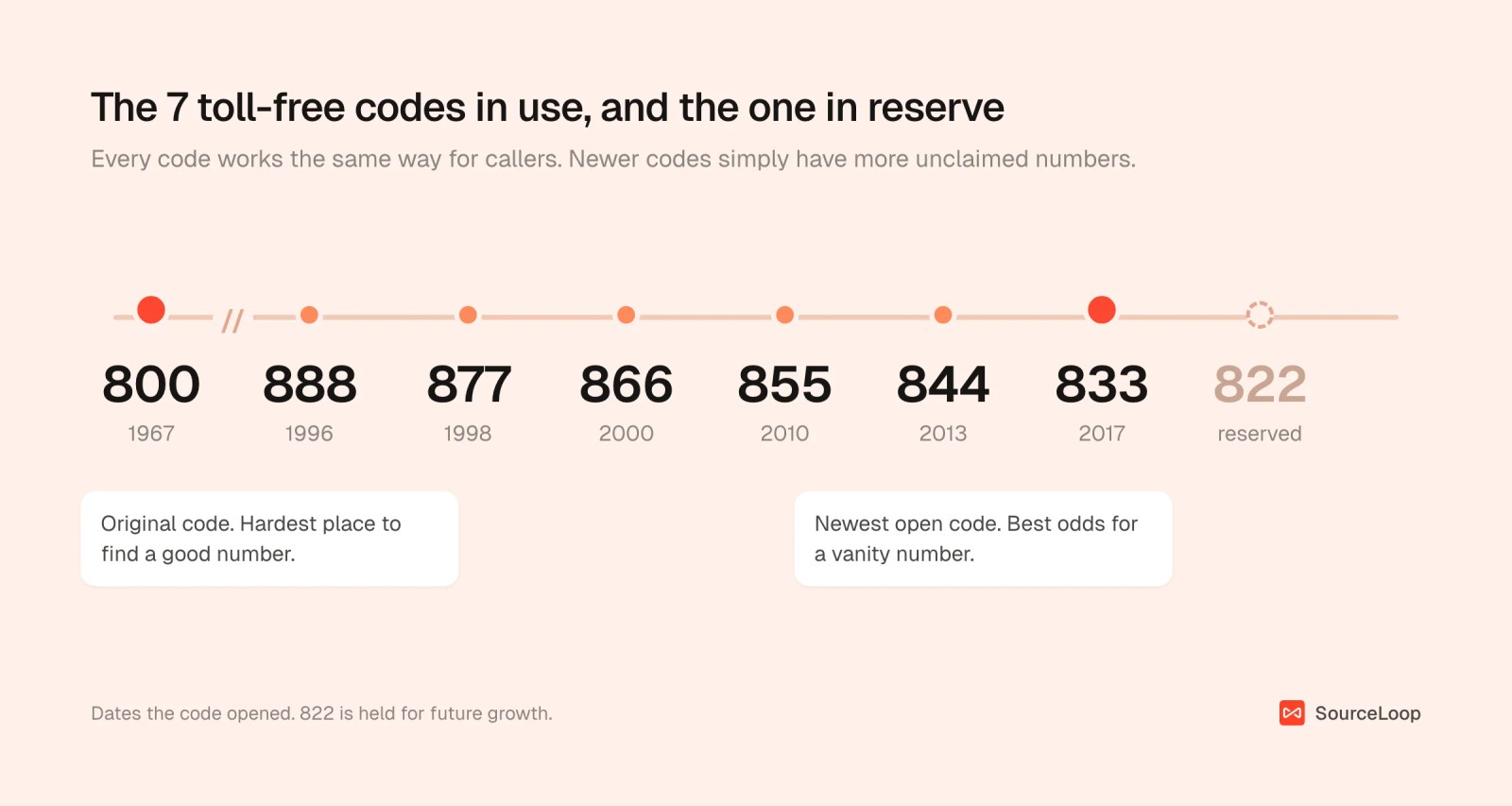
"800" has become shorthand for all of them. In the US and Canada there are seven toll-free codes in use: 800, 888, 877, 866, 855, 844 and 833. They're identical for callers. A further code, 822, is held back for when the others run low.
4 rules that shape how you get one
- No one sells numbers directly to you. Toll-free numbers sit in a national registry run by Somos. Only approved companies called Responsible Organizations, or RespOrgs, can reserve them, and your phone provider either is one or works through one.
- It's first come, first served. A number that's free today can be gone tomorrow. The only exception so far was a 2019 sealed-bid auction of popular 833 numbers, where 39 bidders won 1,659 numbers for $285,075 in total.
- You can't stockpile or resell them. Federal rules ban hoarding numbers you won't use and buying numbers to sell on. Auctioned numbers are the only exception.
- The number is yours to move. Toll-free numbers have been portable between carriers since 1993, so switching providers doesn't mean reprinting your trucks.
How to get an 800 number in 6 steps
The whole process runs through a provider, and most of it can be done in one sitting.
Step 1: Decide what the number has to do
Write down what happens after someone dials. The answer decides which kind of provider you need.
- Ring one cell phone or a small team? Any business phone app will do.
- Menus, queues and business hours? You want a cloud phone system.
- Run it in ads and know which ad drove the call? You need a call tracking platform.
- Send texts from it? Plan for toll-free verification (Step 5).
Step 2: Choose a provider
There are three common routes. Prices below are from each vendor's pricing page.
| Provider type | Examples | What a toll-free number costs | Best for |
|---|---|---|---|
| Cloud phone system | RingCentral, Nextiva, Grasshopper | Included in or added to a monthly plan | Teams that need menus, extensions and voicemail |
| Programmable carrier | Twilio | $2.15 a month plus $0.022 a minute inbound | Developers building their own call flows |
| Call tracking platform | CallRail, CallTrackingMetrics | CallRail: $5 a month plus $0.08 a minute, on a plan from $50 a month | Numbers used in marketing |
Per-minute charges add up faster than the number fee. At 500 inbound minutes a month, Twilio's rate works out to about $11 in minutes, and CallRail's to $40.
If you already pay for a phone system, check whether a toll-free number is included before buying one elsewhere.
Step 3: Search for a number
Every provider has a search box. Type a pattern, a word or the digits you want.
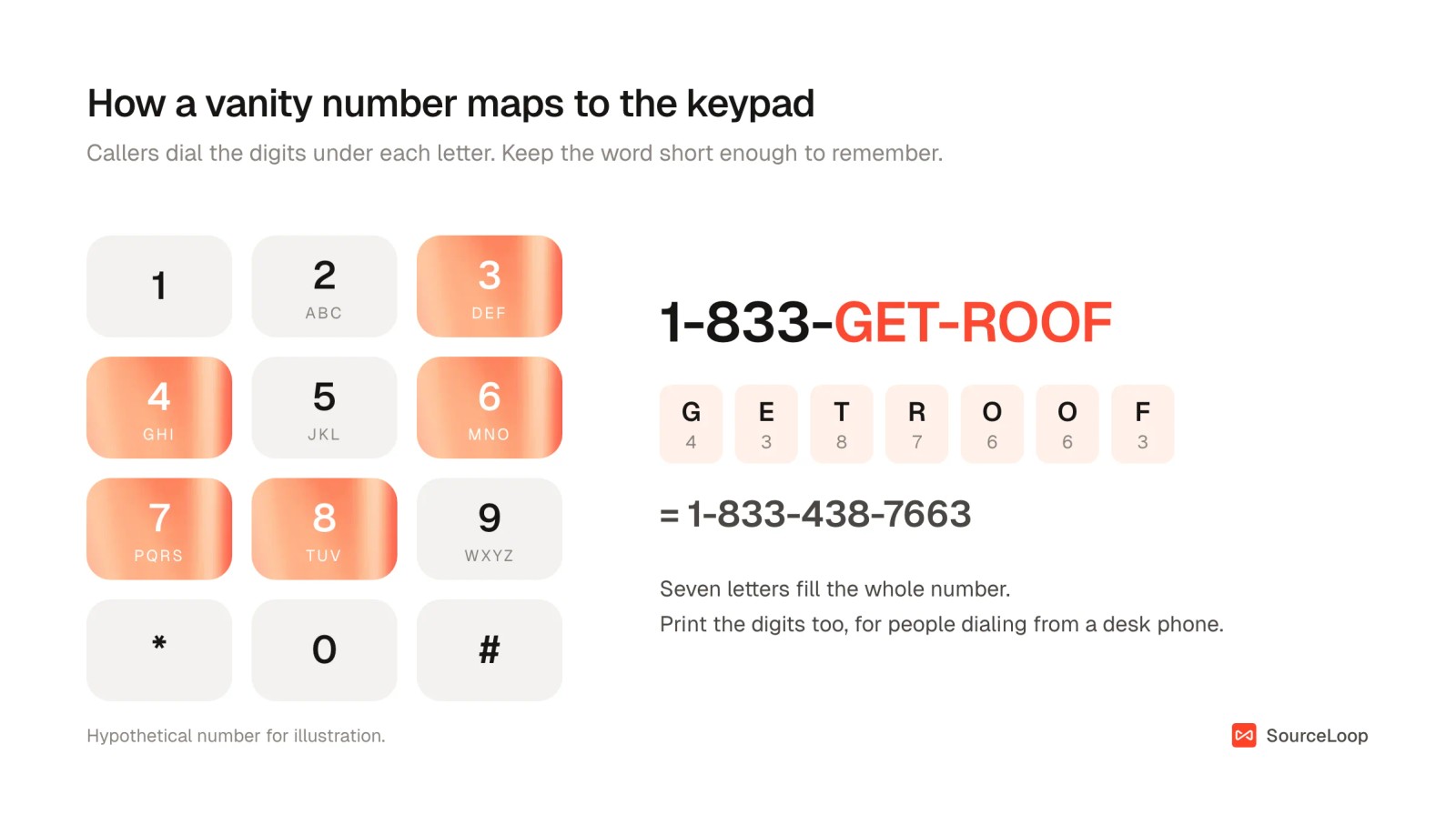
Start with 833 or 844 if you want something memorable. 800 numbers that spell a word are rare because the code has been handing them out for over 50 years.
A few tips for vanity numbers:
- Seven letters fill the number. Anything after the seventh letter isn't part of it.
- Print the digits next to the word. Plenty of people dial from phones without letters on the keys.
- Say it out loud. If you have to spell it on a radio ad, pick another.
You can also check a specific number on the Somos number lookup before you ask a provider for it.
Step 4: Reserve it and set up routing
Once you pick a number, the provider reserves it in the registry for you. It usually works within minutes.
Then set up where calls go:
- Which phones ring, and in what order
- Business hours, and what happens after hours
- Voicemail and a greeting
- A short menu, if callers need to choose a department
Keep the menu short. Every extra option is another chance for a caller to hang up.
Step 5: Verify it before sending texts
Toll-free numbers can send SMS, but carriers now require verification first. Since January 31, 2024, messages from unverified toll-free numbers are blocked in the US and Canada.
Verification asks for your business details, what you'll send, how people opt in, and sample messages. Approval can take days to a few weeks, so start early. Calls aren't affected.
Step 6: Port a number you already have
If you're moving an existing 800 number to a new provider, ask the new provider to port it. You'll sign a Letter of Authorization naming the new RespOrg.
Don't cancel your old service until the port is complete. Most authorization forms ask you to keep it active for about 10 days after the change.
Ports run anywhere from a few days to a few weeks, depending on how quickly the old provider responds.
How to track which ads make your 800 number ring
One toll-free number on your website tells you a call happened. It can't tell you whether that caller came from a Google ad, a Facebook post or a newsletter, which is the core of lead source tracking.
If you spend money on ads, that's the number you need. Calls are the conversions most teams can't attribute.
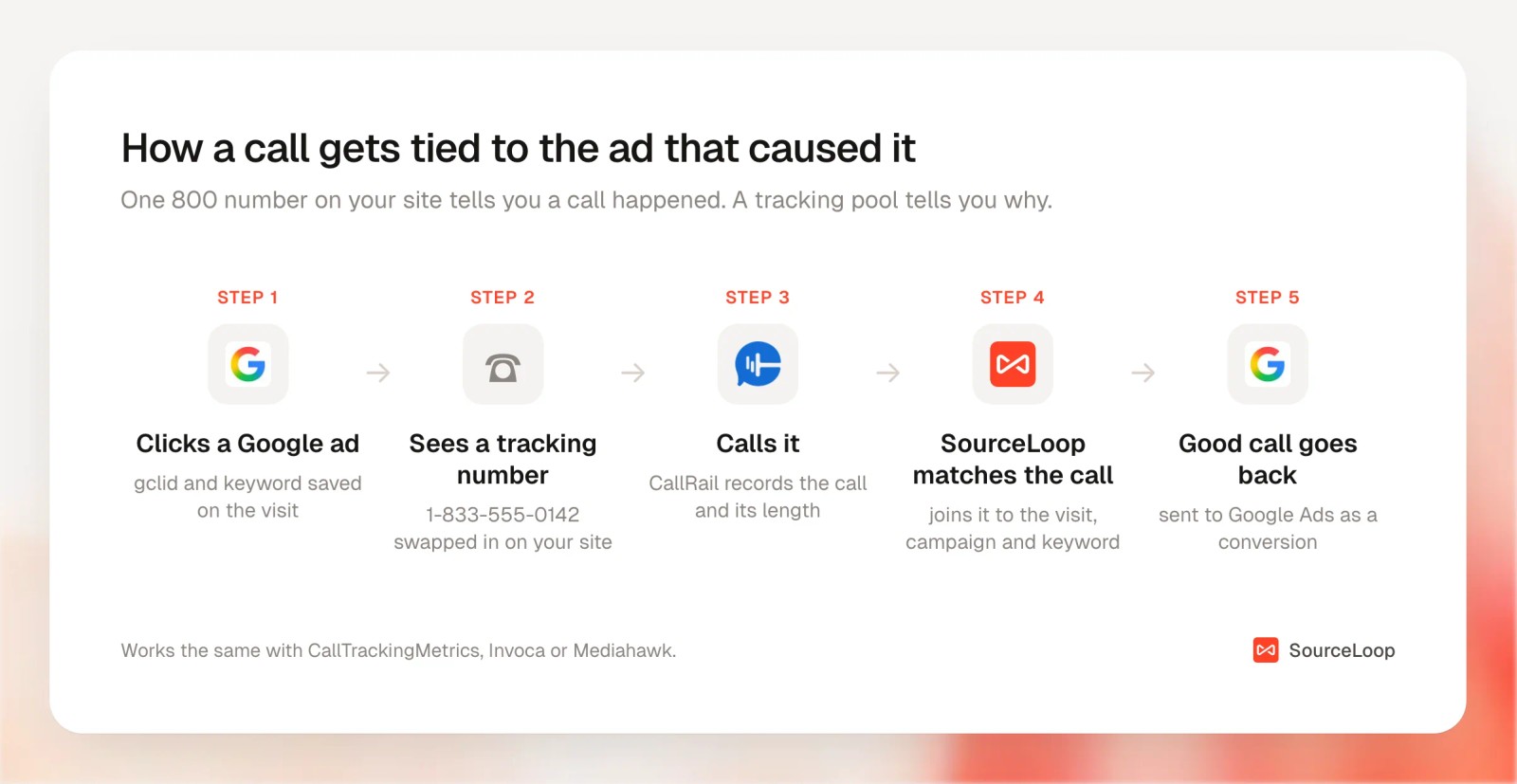
The setup below uses SourceLoop, a marketing attribution and lead source tracking tool. It doesn't sell numbers or route calls. It connects to the call tracking platform you already use (CallRail, CallTrackingMetrics, Invoca or Mediahawk), takes each call it records, and joins it to the visit, campaign and keyword that brought the caller in.
Step 1: Put tracking numbers on your website
Keep your 800 number for print, signage and anywhere a person can't click. On the website, use your call tracking platform's dynamic number insertion. It swaps in a number from a pool for each visitor, so the call can be traced back to that visit.
Both CallRail and CallTrackingMetrics sell toll-free tracking numbers if you want the website number to be toll-free too.
Step 2: Install SourceLoop and connect the call platform
Add the SourceLoop script to every page where the phone number appears. It records the source, campaign and keyword of each visit, which is what a call needs to be attributed.
Then open Setup > Phone and connect your platform. For CallRail you paste an API key and SourceLoop registers call delivery for you. The CallRail guide and the CallTrackingMetrics guide cover the details.
Calls arrive within seconds of hanging up. Calls to the number on a billboard still come through as leads, labeled Direct, because there was no website visit to attach.
Step 3: Decide which calls count
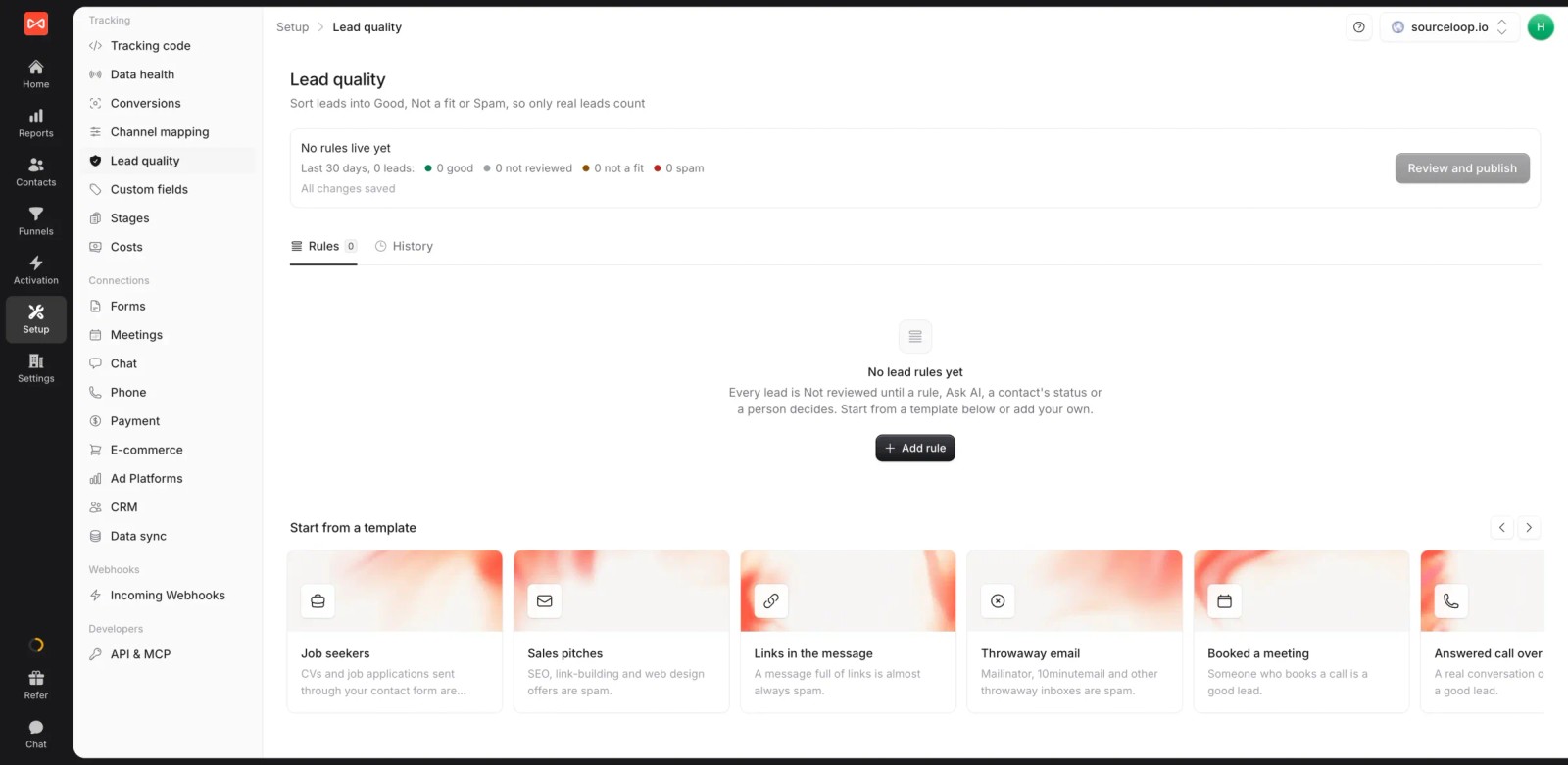
Not every call is a lead, which is why lead quality matters as much for calls as for forms. Wrong numbers, sales pitches and 10-second hang-ups shouldn't count as conversions.
Under Setup > Lead quality, turn on the ready-made rule that marks answered calls over 60 seconds as Good. You can add your own rules on call length, status or anything else the call carries.
Step 4: See calls by channel, campaign and keyword
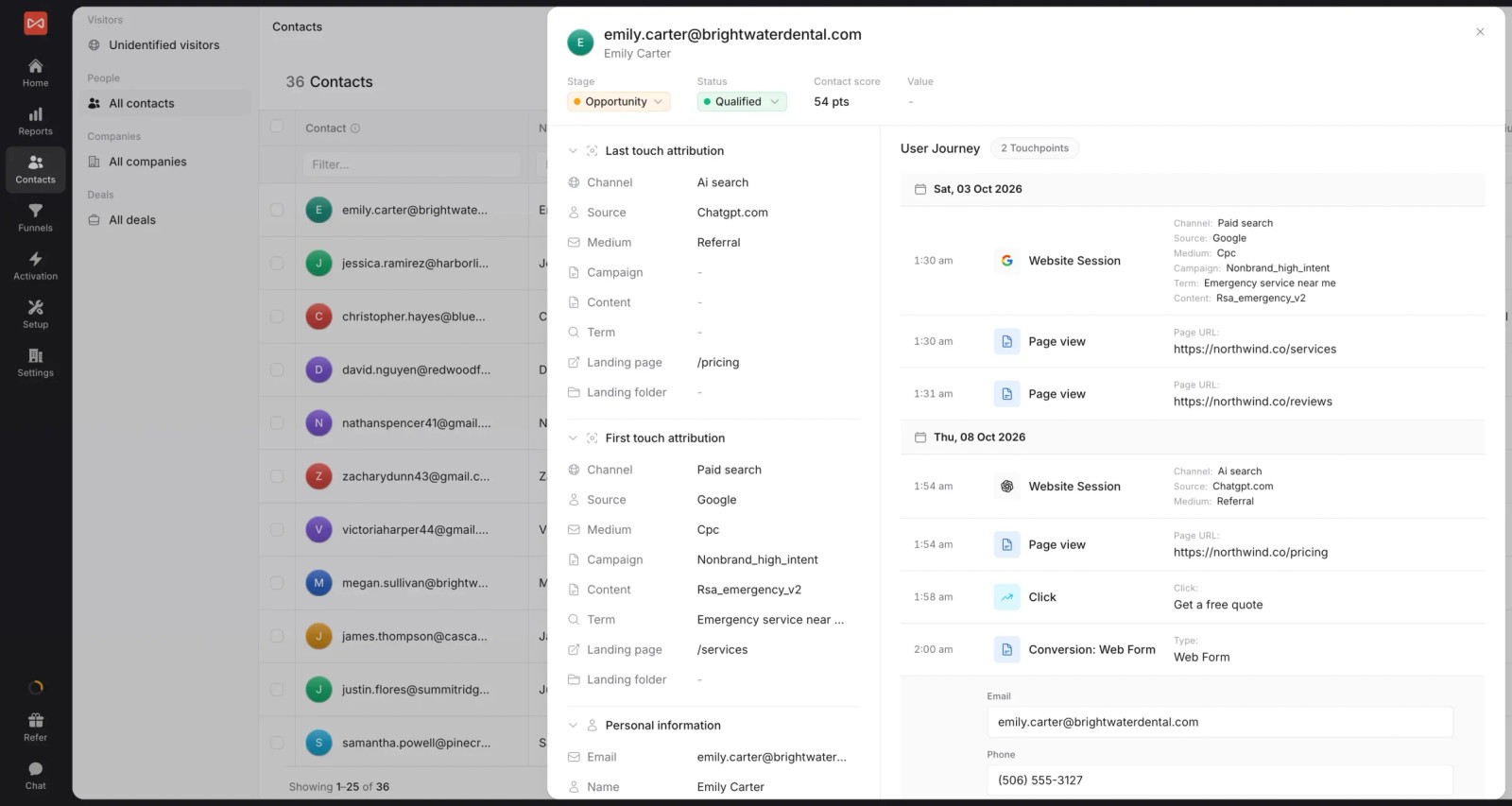
Each call becomes a contact with its full journey: the first visit, the last visit before the call, and every page and ad click in between.
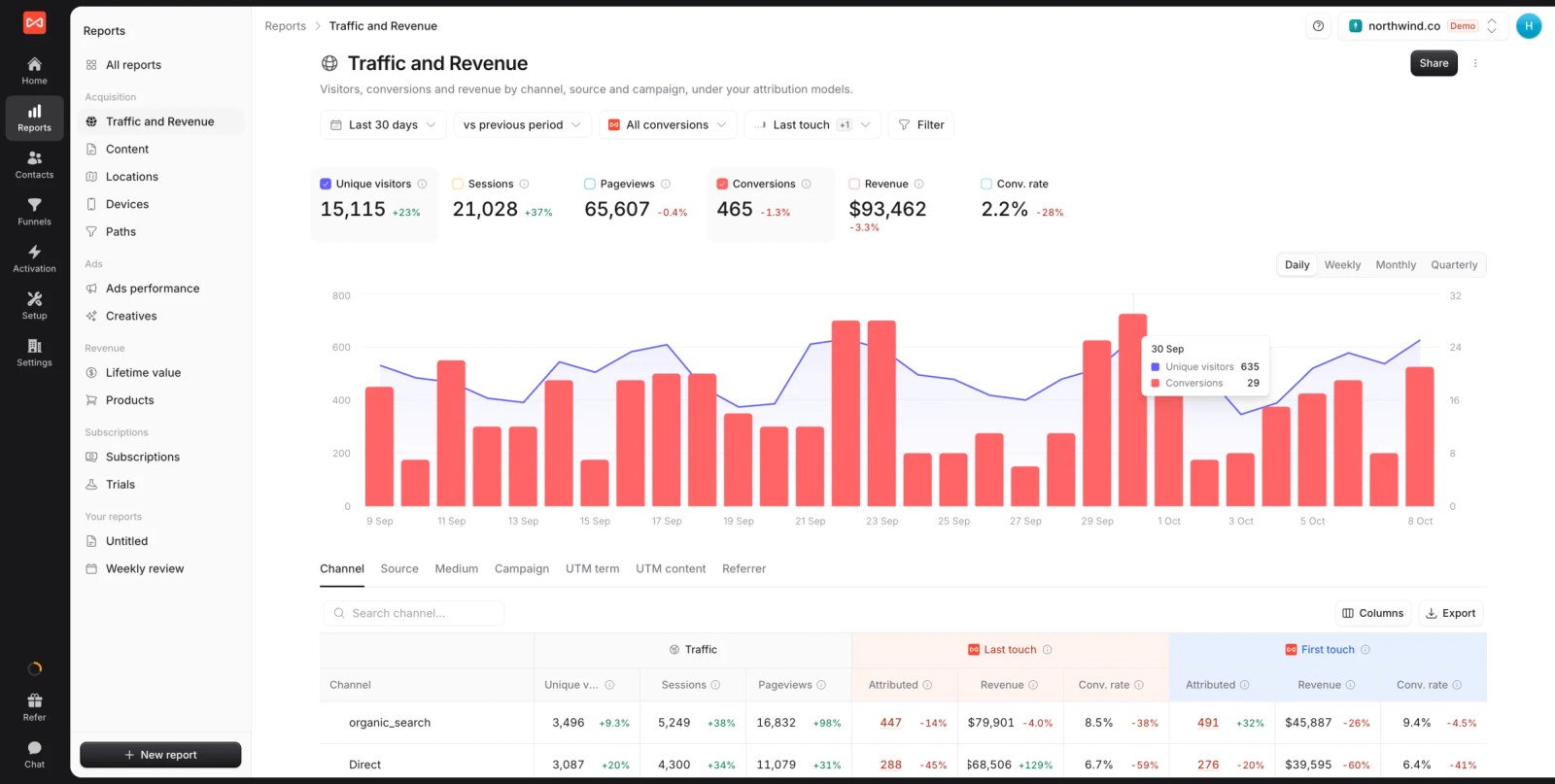
In Reports > Traffic and Revenue, set the outcome to conversions by type to see which channels and campaigns drive calls. If you've connected HubSpot, Salesforce or Pipedrive, you can follow those callers through to deals and revenue.
For keyword-level detail, see our roundup of keyword-level call tracking software.
Step 5: Send good calls back to Google Ads and Meta
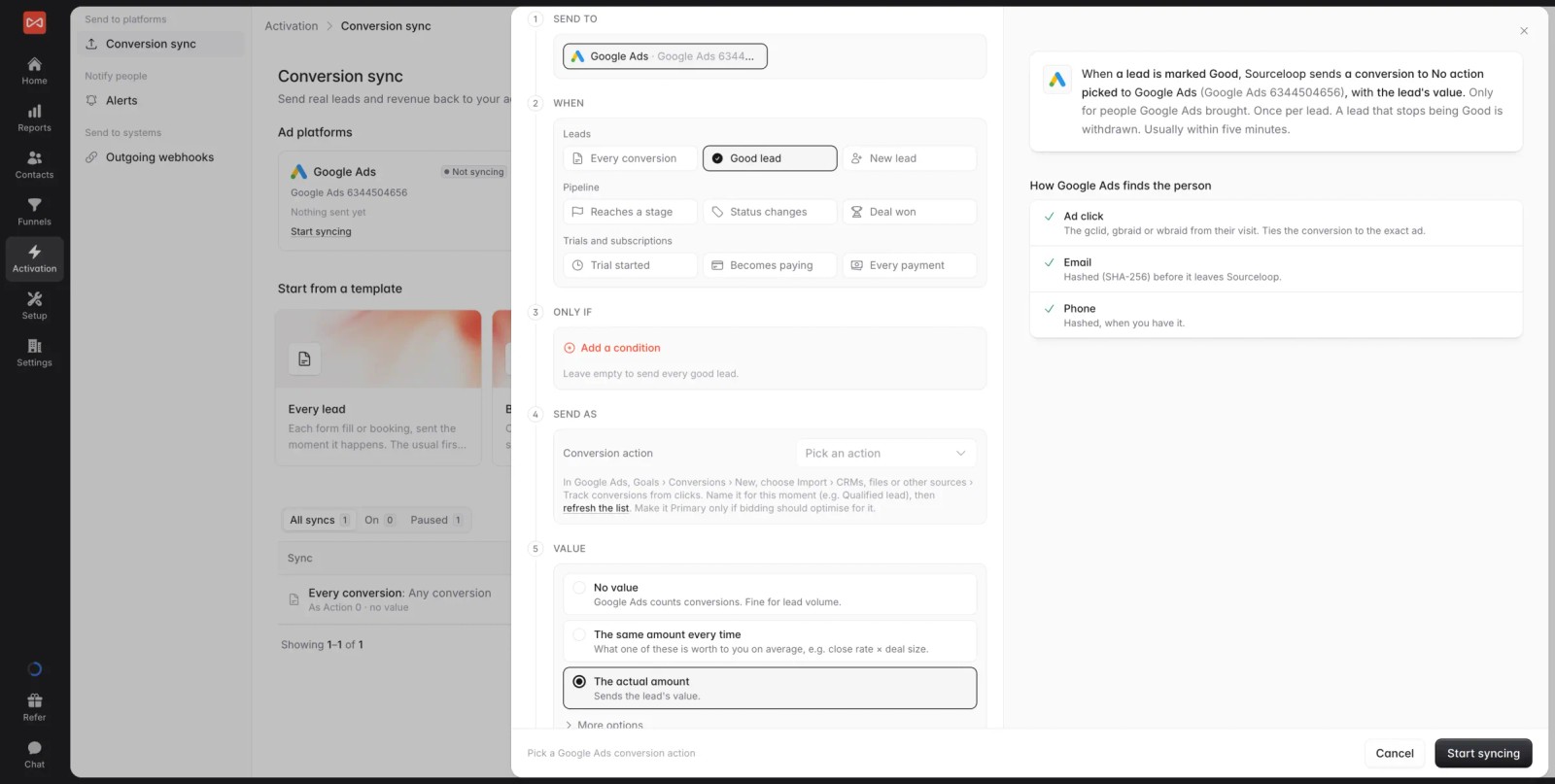
Google Ads only counts a call if it can see it. Send your good calls back and the bidding learns which keywords produce real conversations.
Under Activation > Conversion sync, pick Google Ads, set the trigger to good leads, and choose the conversion action. Meta and ChatGPT Ads work the same way.
Our guide to phone call conversion tracking compares this with Google's own call tracking options.
Toll-free or local number?
Toll-free isn't always the right call. A local number can feel more trustworthy for a business that only serves one city.
| Toll-free (800, 833...) | Local number | |
|---|---|---|
| Who pays for the call | You | The caller's normal plan |
| Feels like | A national brand or support line | A business down the road |
| Vanity options | Good in newer codes | Limited |
| Texting | Needs toll-free verification | Needs 10DLC registration |
| Good fit | Sales and support across many states | Home services, clinics, local retail |
Many businesses run both: a toll-free number for the brand and local tracking numbers for each service area. Our guide to call tracking numbers covers how to set that up.
Frequently asked questions
-
How much does an 800 number cost?
Usually a few dollars a month for the number plus a per-minute rate for incoming calls. Twilio charges $2.15 a month and $0.022 a minute. CallRail charges $5 a month and $0.08 a minute on top of a plan. Cloud phone systems often include one in the plan.
-
Can I get an 800 number for free?
Some phone plans include a toll-free number at no extra charge, but you'll still pay for the minutes callers use. Because the business pays for every call, a truly free toll-free number doesn't really exist.
-
Is an 833 number as good as an 800 number?
For callers, yes. Every toll-free code is free to dial and works the same way. 800 carries a little more familiarity, but 833 and 844 have far more memorable numbers still available.
-
Can I keep my 800 number if I switch providers?
Yes. Toll-free numbers are portable. Your new provider files a change with the registry using a Letter of Authorization you sign. Keep your old service active until the port finishes.
-
Can I buy a specific 800 number from someone else?
Generally no. Federal rules ban buying toll-free numbers to resell them. The exception is numbers won in the 2019 833 auction, which can be transferred.
-
How do I know which ads make my 800 number ring?
Use a call tracking platform to show a tracking number to website visitors, and connect it to an attribution tool like SourceLoop. Each call is then tied to the visit, campaign and keyword that came before it.




 Paid Social


