
7 Factors.ai Alternatives: Identification vs Attribution
Factors.ai mixes company identification with attribution. These seven alternatives split the two, with pricing, match-rate notes and reviews.
Table of contents
Factors.ai sells two things in one box. One is company identification: turning anonymous traffic into a list of named accounts. The other is attribution: crediting pipeline and revenue to the channels and campaigns behind it.
When people look for an alternative, it's usually because they're paying for both and only care about one, or because match rates on their audience are lower than they hoped.
In this guide, I'll sort seven alternatives by which of those two jobs they do best, with notes from setting them up and what they cost.
How I compared them
I split the evaluation in two: identification tools were judged on what they name and how reliably, attribution tools on whether credit lands correctly in the CRM. I set up Leadfeeder and RB2B on their free plans, Dreamdata on its free plan and Fibbler on its trial. HockeyStack and 6sense sell through demos, so those notes come from product tours, documentation and teams I know who use them.
The brands and agencies we work with gave us a good spread of B2B and lead-gen use cases, and G2 and Capterra reviews covered the long run. I checked:
- Company or person-level identification, and how often it matches
- Whether credit reaches CRM deals and revenue
- Flat pricing or pricing that grows with usage
- LinkedIn and ad platform connections
We build SourceLoop, so to be upfront: it's an attribution tool with no identification at all. It was scored against the same list, and its section says where that leaves gaps.
Last checked November 2026. Confirm current pricing with each vendor.
Why teams move off Factors.ai
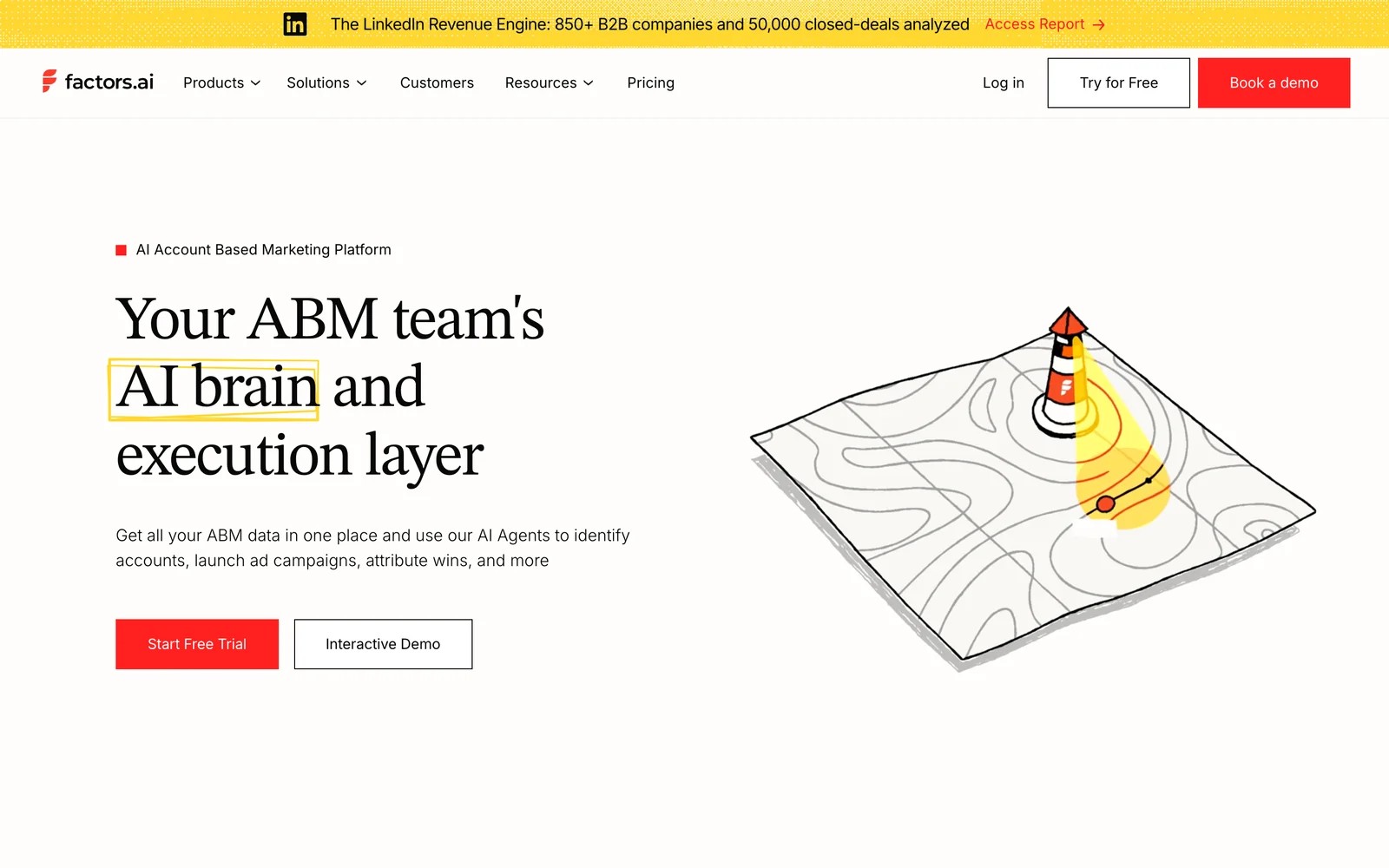
Factors.ai identifies visiting companies, scores engagement and intent, builds account timelines, attributes CRM deals, and activates audiences on LinkedIn and Google. Plans run from $199 a month on Lite to $30,000 a year and up on Enterprise.
Users love the account view:
"Being able to open a company and see every touch in order, across people and across weeks, is what makes the data actually usable instead of just interesting." (Source)
The pushback is about coverage, cost growth and the learning curve:
"Some website visitors don't get matched to a company, especially smaller companies. Pricing can also go up as usage grows." (Source)
"The UI takes longer to learn than it should." (Source)
Factors.ai alternatives compared
Here's how the 7 Factors.ai alternatives compare on identification, attribution and pricing model, as of November 2026.
| Tool | Main job | Identifies | Attribution to CRM deals | Pricing model | Entry price |
|---|---|---|---|---|---|
 SourceLoop | Attribution | No | Yes | Flat, by page views | $49/mo |
 Leadfeeder | Identification | Companies | No | Tiered | Free, then €79/mo |
 RB2B | Identification | People (US) | No | By matches | Free, then $79/mo |
 Dreamdata | Both | Companies | Yes | Free, then quoted | $0 |
 HockeyStack | Both | Companies | Yes | Annual quote | Quote |
 6sense | Identification and intent | Companies, buying stage | Partly | Annual quote | Quote |
 Fibbler | LinkedIn ad attribution | Companies that saw ads | Yes | Flat plus add-ons | $89/mo |
The 7 best Factors.ai alternatives
Attribution first, then identification, then the platforms that try to do both.
1. SourceLoop
Best for: lead-gen businesses, agencies and SaaS teams that used Factors.ai for attribution and want every lead's source on the CRM record.
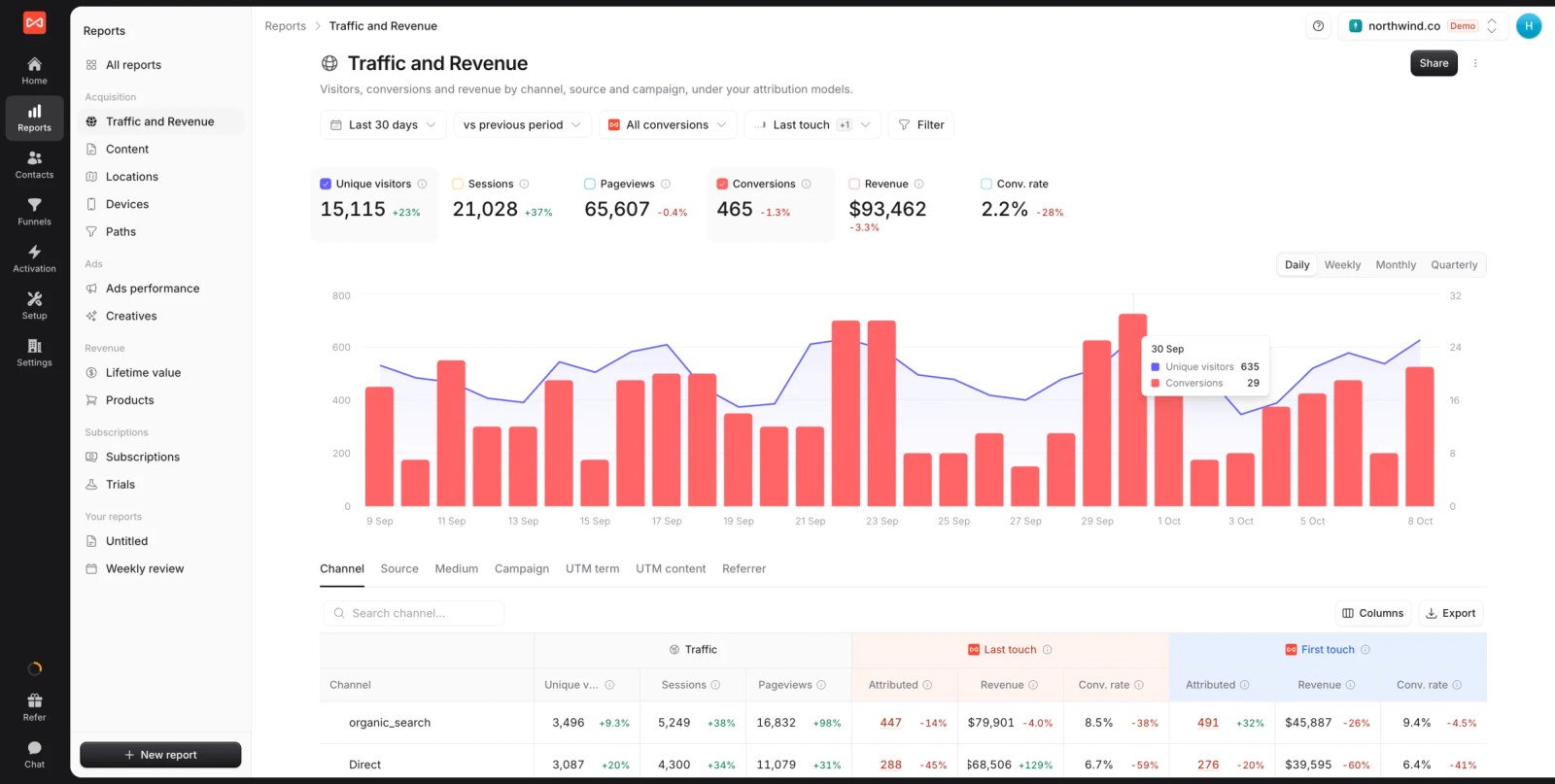
SourceLoop is lead source tracking software built for attribution. It captures where each visitor came from, keeps it on the lead when they fill in a form, call, chat or book, and credits CRM stages, deals and revenue back to the campaign.
It doesn't try to name anonymous visitors. Instead, it gets the known side right: every lead carries its full journey, companies are grouped from email domains and the CRM, and the ad platforms are told which leads turned into pipeline.
Key features
- Source on every lead: first and last touch, campaign, keyword and landing page, written into HubSpot, Salesforce, Pipedrive or Jobber.
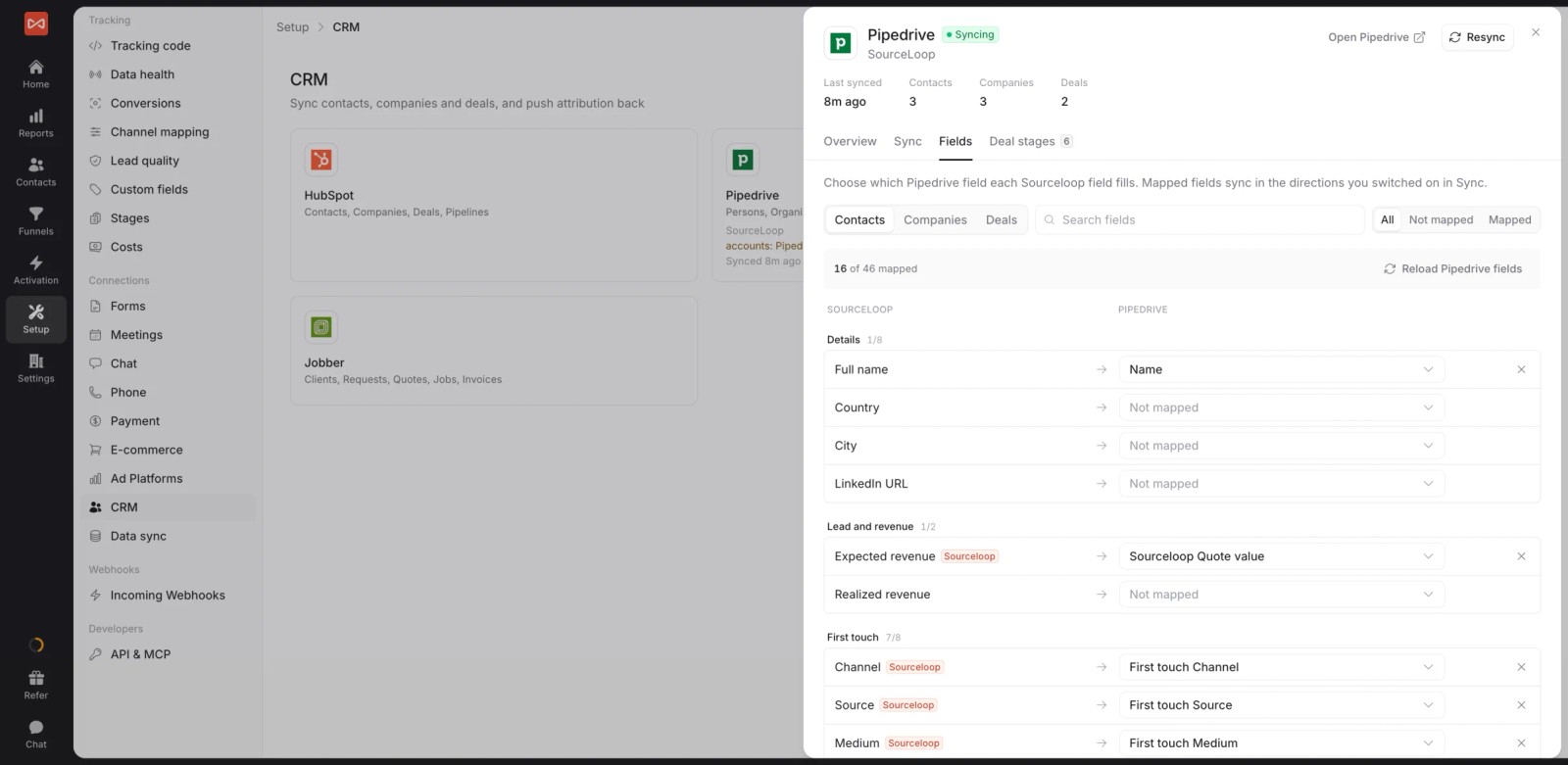
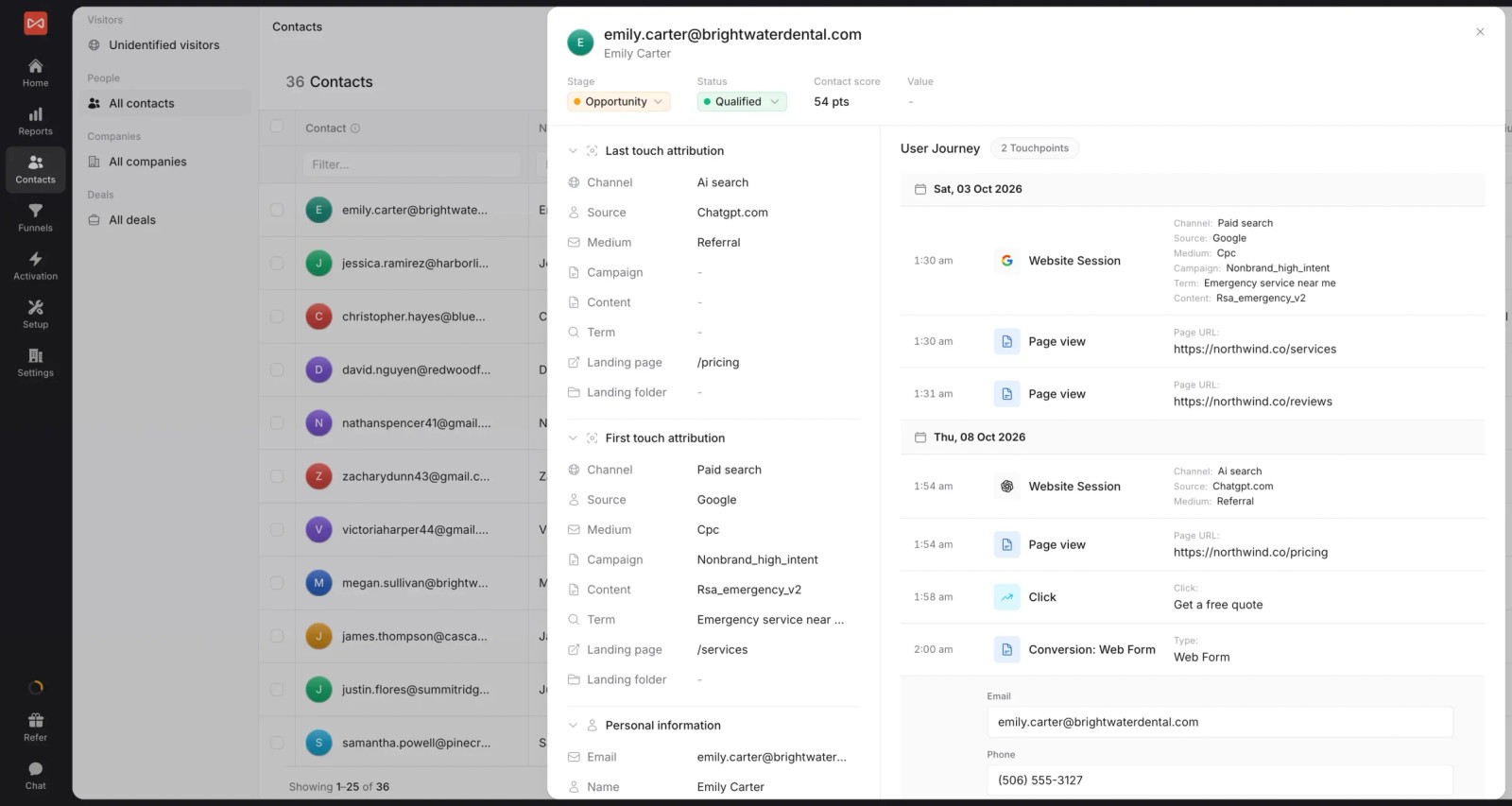
- Full journey per contact: every visit and ad click before the conversion, with company journeys for buying groups.
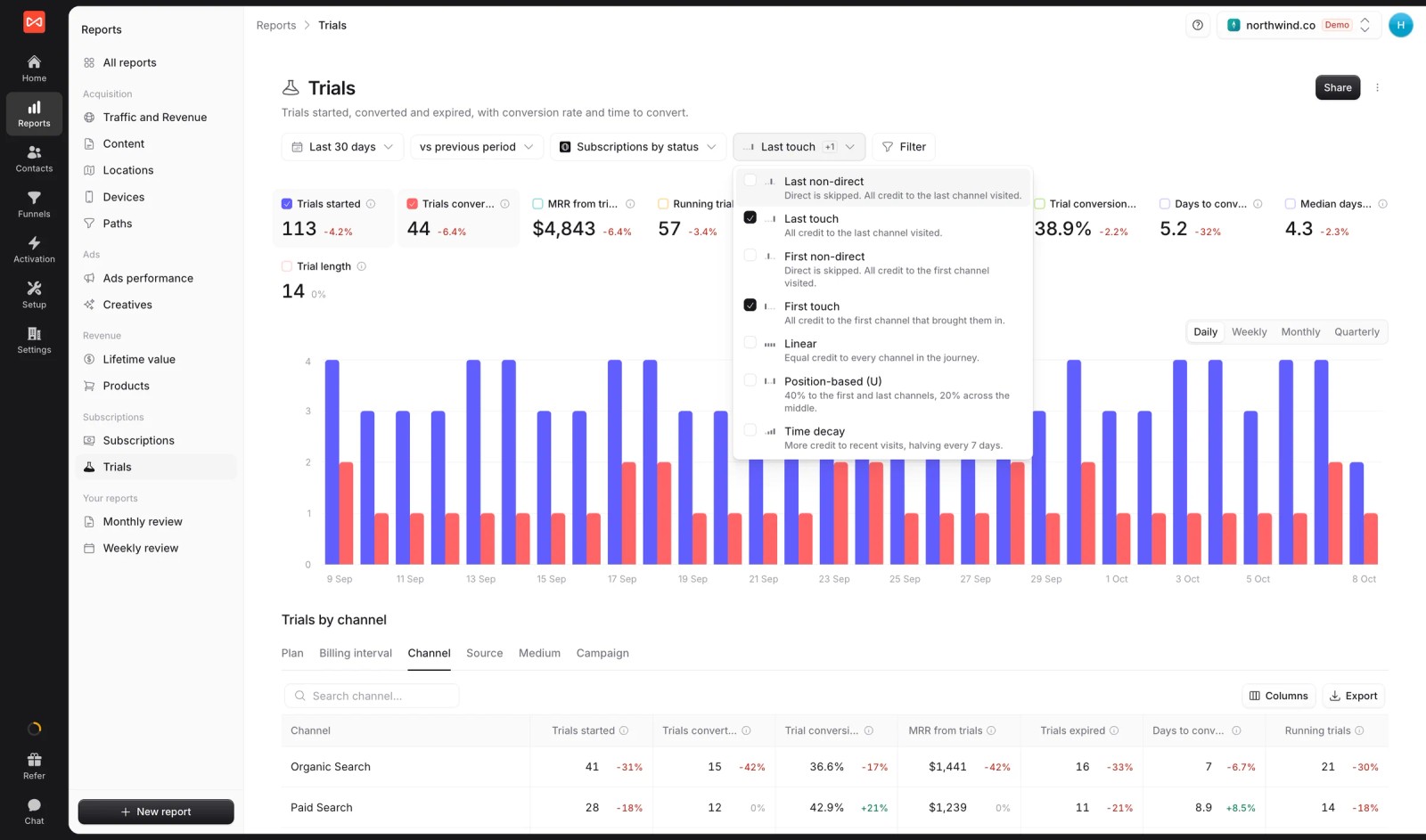
- Seven attribution models on leads, stages, deals or revenue.
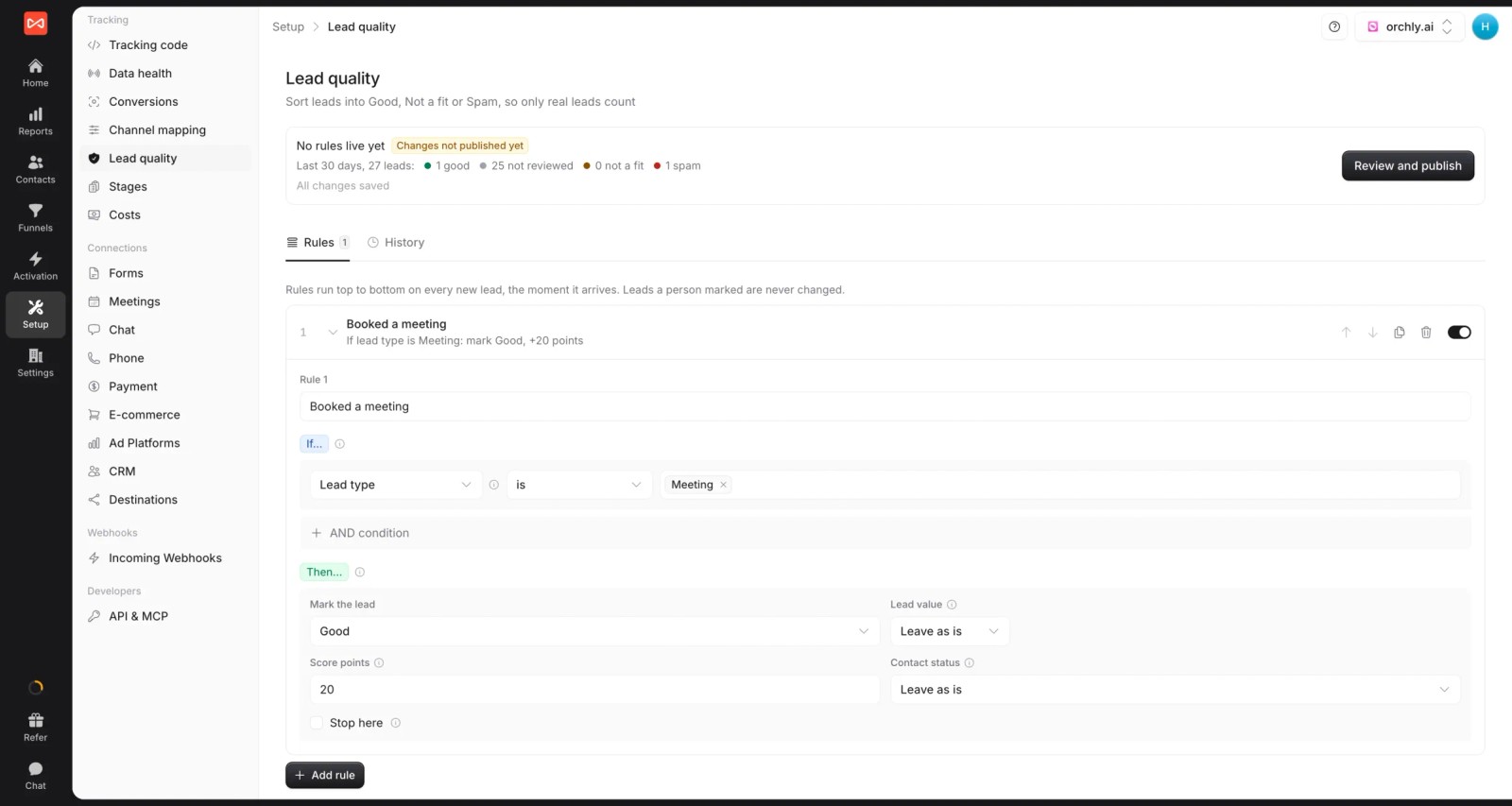
- Lead quality rules: Good, Not a fit or Spam, so attribution reflects real pipeline.
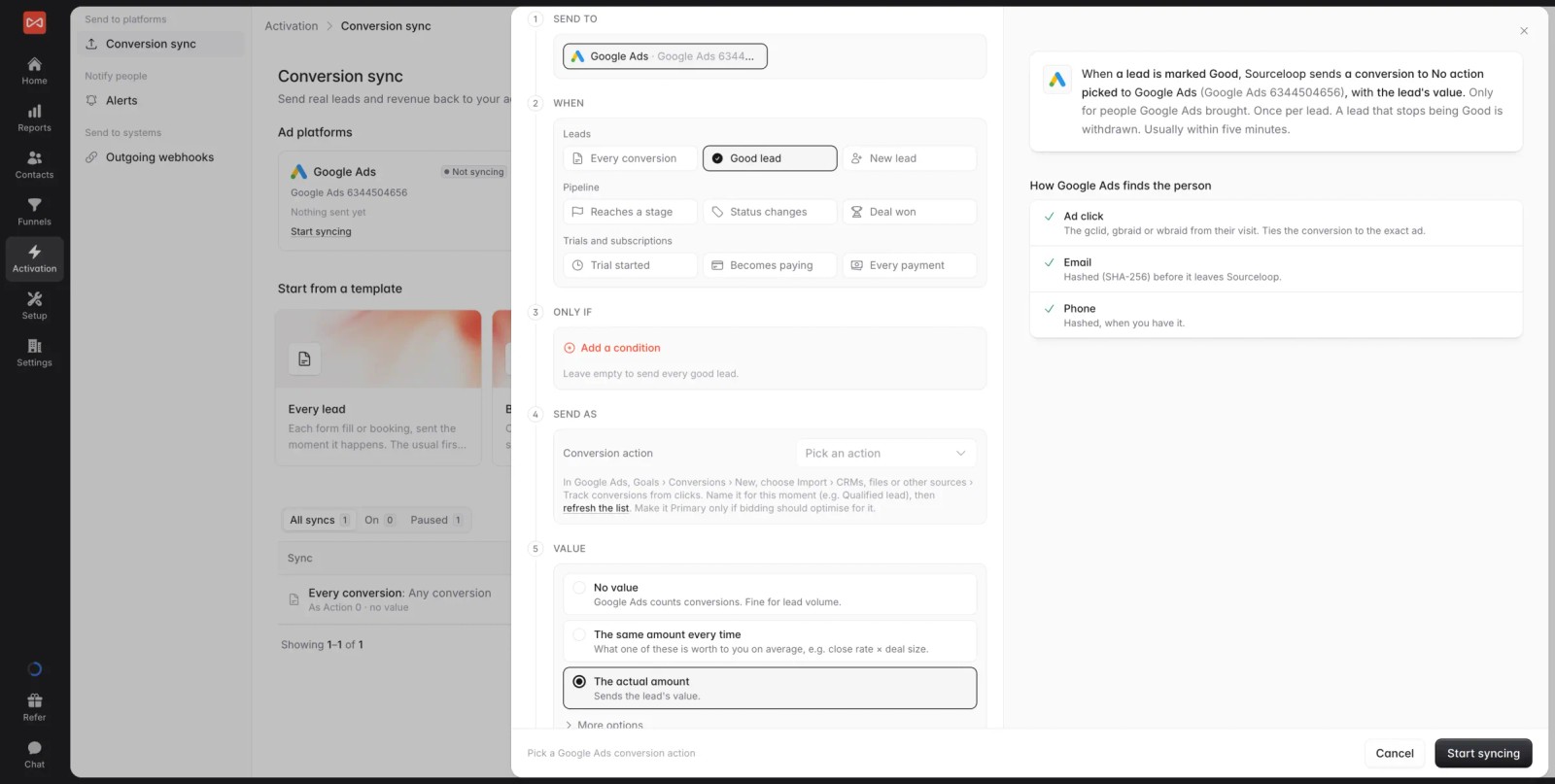
- Conversion sync: good leads and won deals sent to Google Ads, Meta, Microsoft Ads and ChatGPT Ads with value and hashed contact matching.
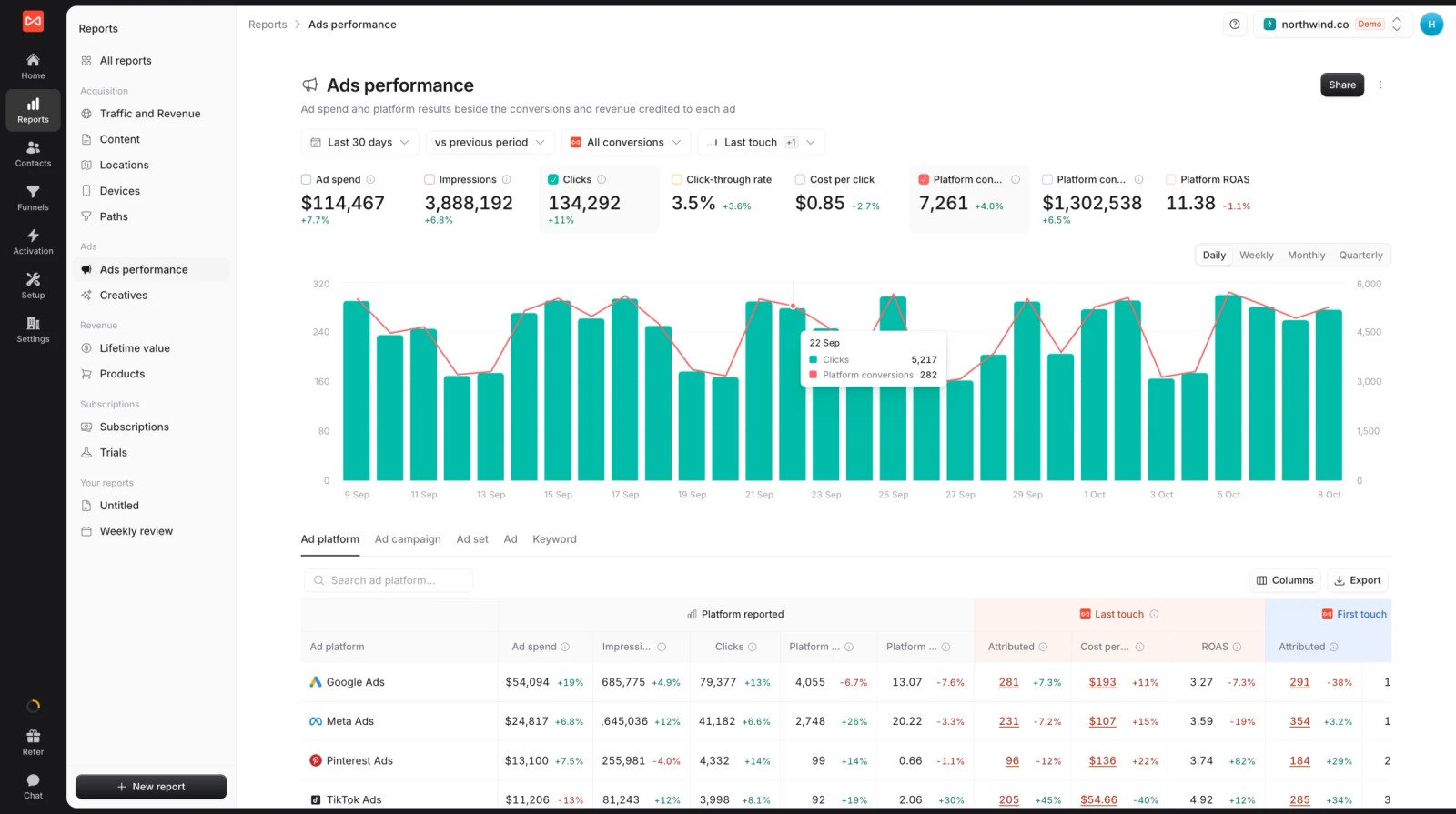
- Ads report: spend and platform-reported results beside what SourceLoop credits each platform.
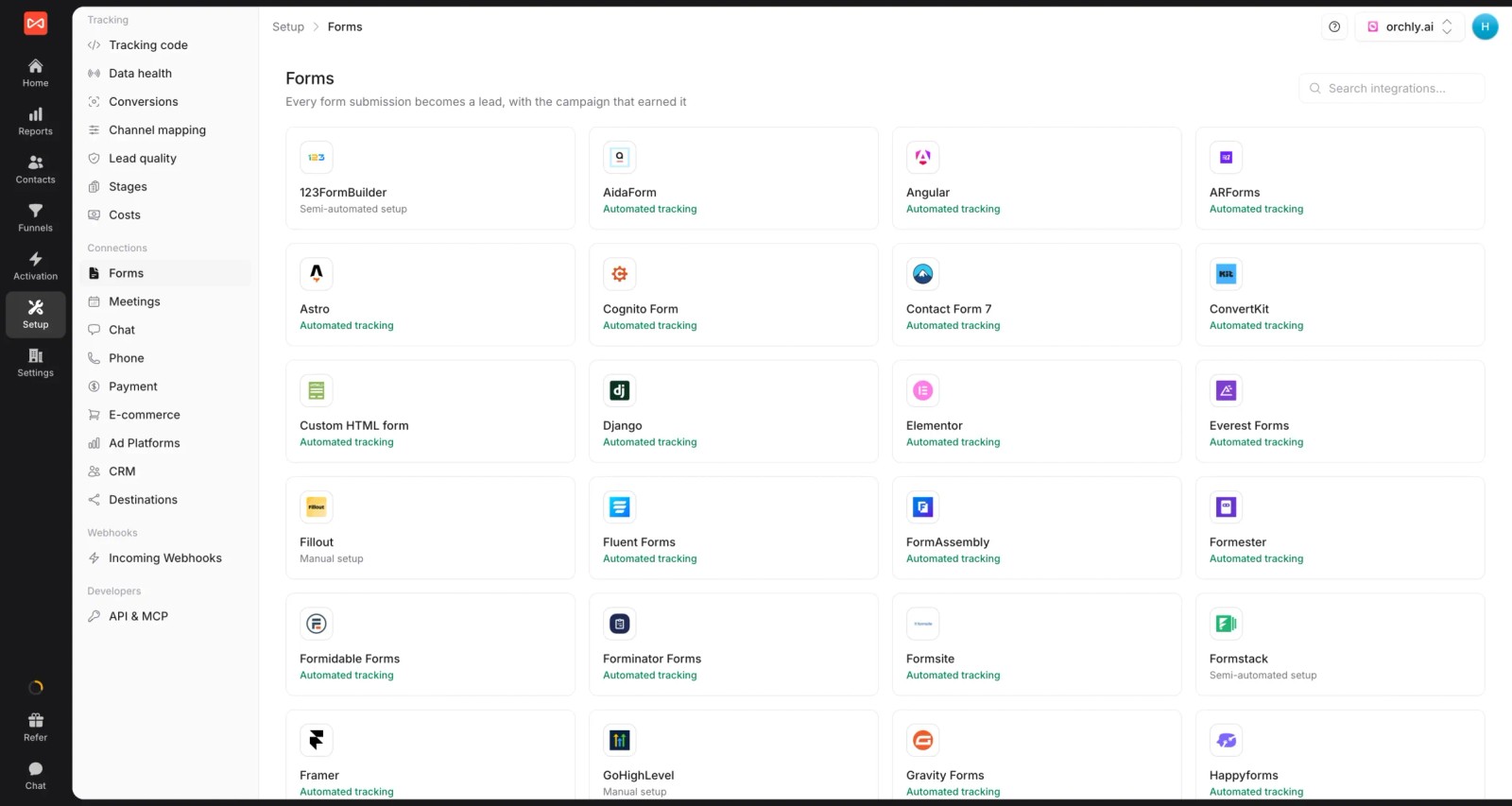
- Calls, forms, chats and bookings: around 70 integrations, including CallRail and CallTrackingMetrics.
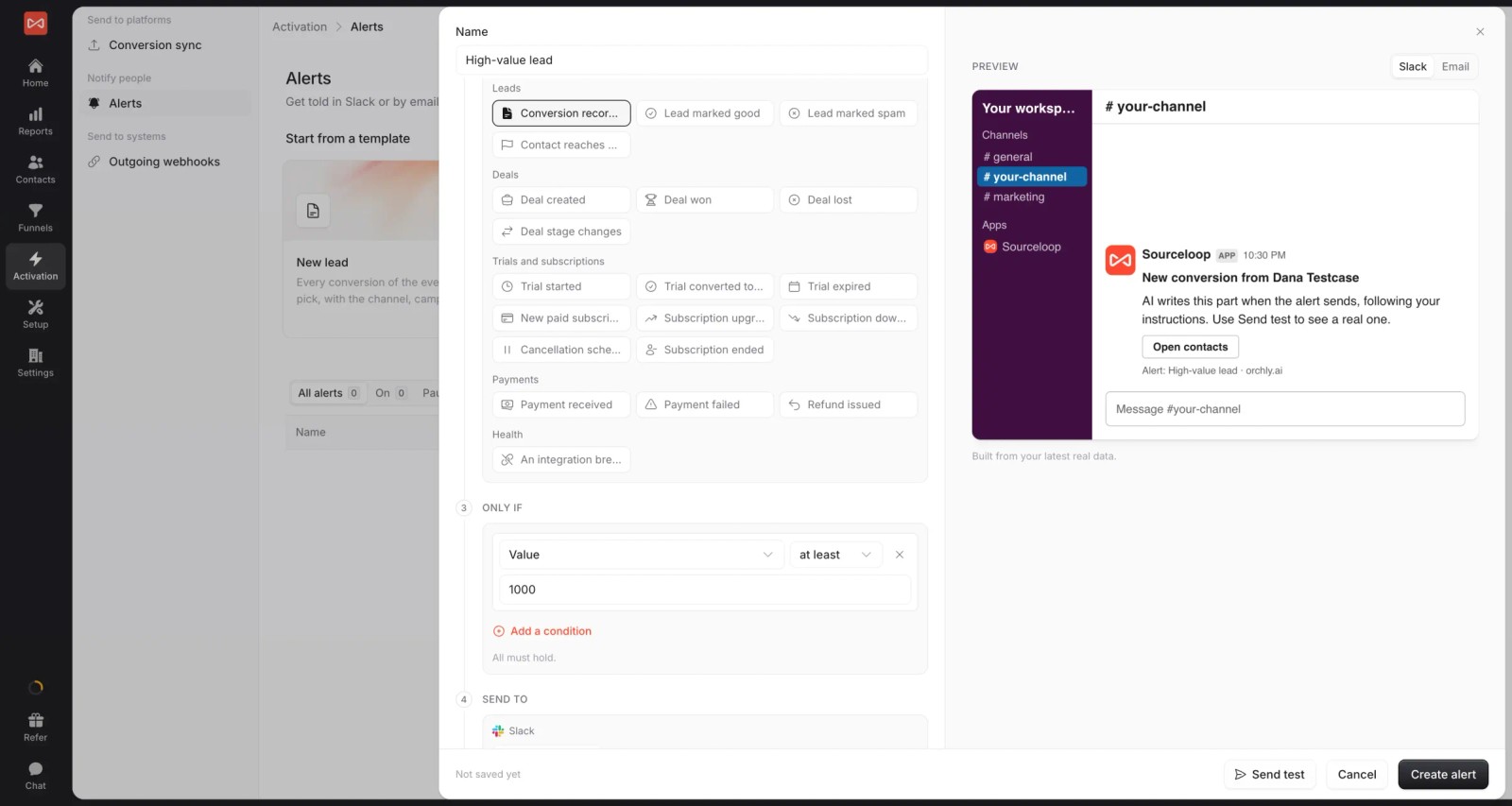
- Alerts and custom reports: a Slack or email message when a high-value lead lands, plus live reports that refresh on their own.
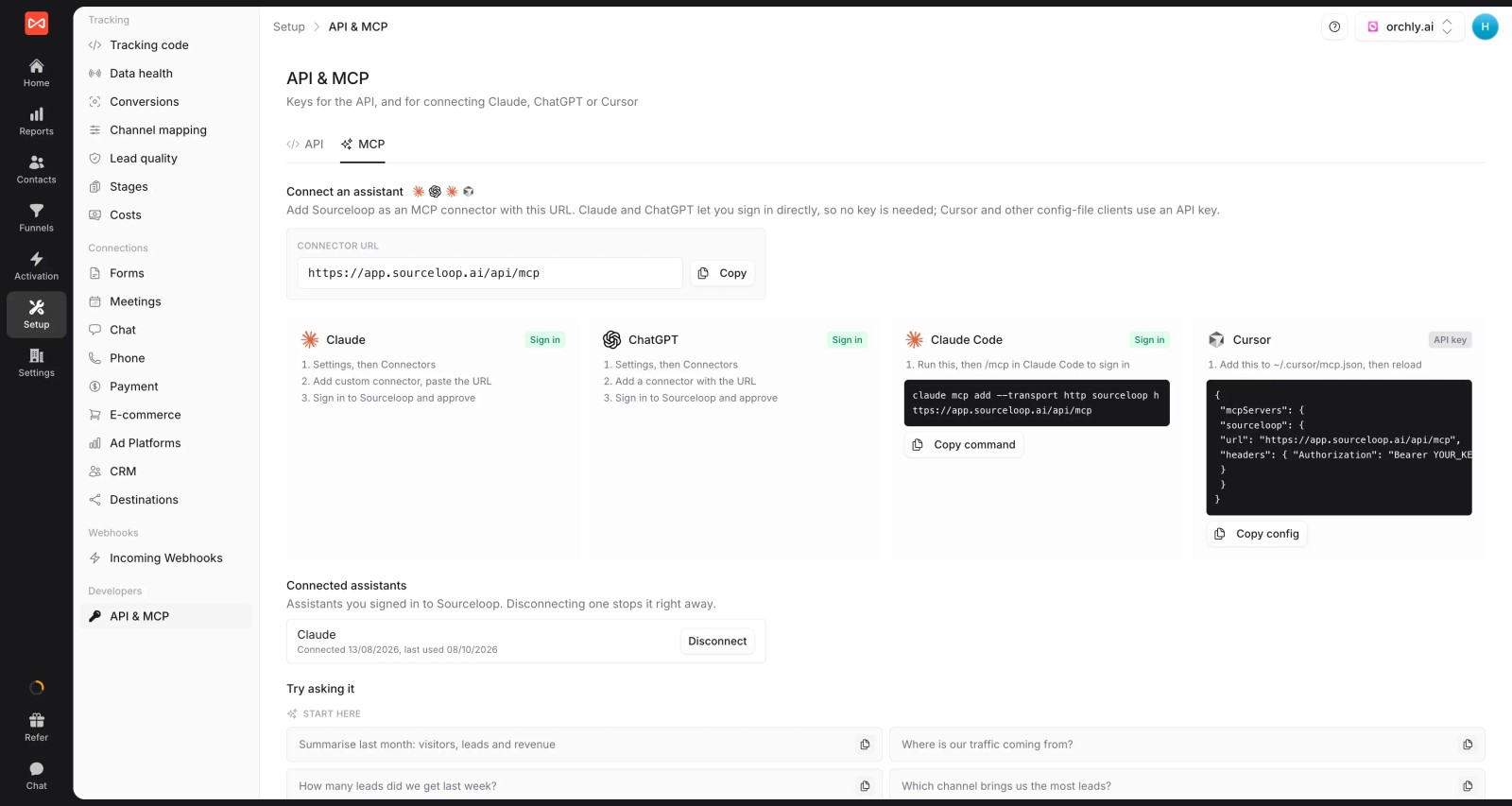
- MCP server and white label: let an AI assistant query leads and deals directly (Professional and up), and share reports under your own brand on the Agency plan.
Where it falls short
- No company or person identification of anonymous visitors, and no intent data. That's Factors.ai's other half.
- LinkedIn audience activation and conversion sync aren't available yet (LinkedIn sync is coming soon).
Pricing
- Essential: $49/mo for one site and 30,000 page views, with tracking, attribution reports, lead quality rules and alerts
- Professional: $99/mo for 100,000 page views and unlimited users, adding CRM sync, conversion sync to the ad platforms, the API and MCP
- Agency: $249/mo for three sites and 1.5 million page views, adding white label reporting
- Unlimited conversions on every plan. Pricing doesn't rise with identified accounts, because it doesn't charge per account or per lead.
Verdict: the attribution half of Factors.ai, done thoroughly and priced flat. Add an identification tool if named anonymous accounts matter to your sales team.
2. Leadfeeder
Best for: teams that only used Factors.ai to see which companies visit the site.
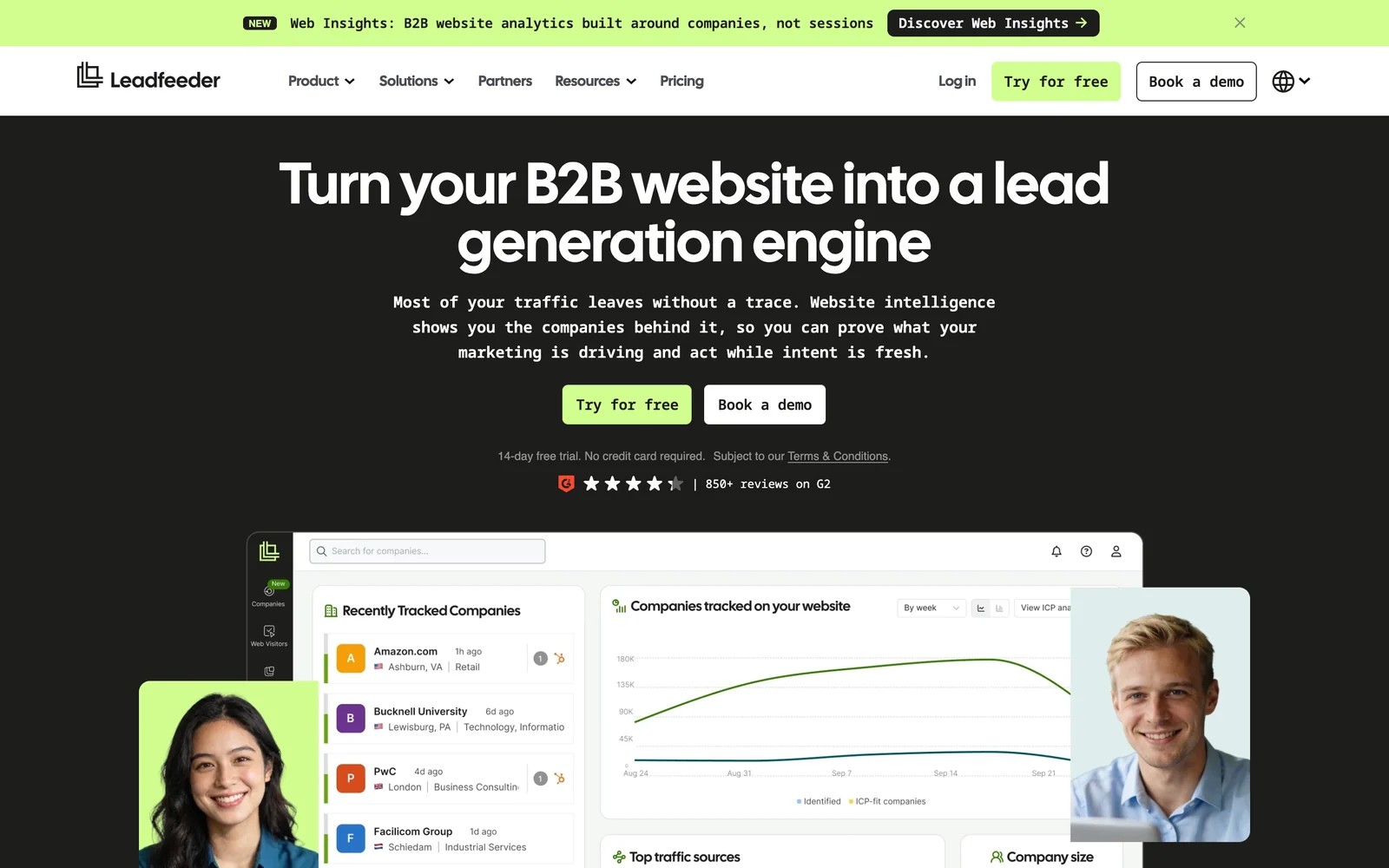
Leadfeeder, part of Dealfront, identifies companies from website visits and shows what they looked at, with feeds, scoring and CRM sync.
I ran it on the free plan alongside Factors.ai for a comparison. The company lists overlapped heavily, and Leadfeeder's feed filters were quicker to set up for sales: hide customers, show only target industries, alert on pricing-page visits.
What it won't do is tell you which campaign produced a deal. And it shares Factors.ai's main limitation: corporate VPNs and remote workers don't always resolve to the right business.
Key features
- Companies visiting the site are listed with pages viewed, visit count and time on site.
- Custom feeds and scoring filter visitors down to the accounts sales should contact.
- CRM integrations push identified companies into HubSpot, Salesforce and Pipedrive.
- Verified contact details are available on Dealfront's higher plans.
Where it falls short
- It doesn't attribute pipeline or revenue, so you still need an attribution tool for reporting.
- Identification only covers your own site, with no third-party research signals.
- VPN and remote traffic lower match rates, the same issue many Factors.ai users report.
What users say
"seeing the list of potential customer companies visiting our website helps us in sales and marketing performance" (Source)
"Additionally, pricing may be a consideration for smaller businesses as its pretty pricey" (Source)
Pricing
- Lite: free for the last 100 companies a month
- Discover: from €79/mo billed yearly
- Activate: from €369/mo
3. RB2B
Best for: US-focused teams that want person-level visitor identification for outbound.
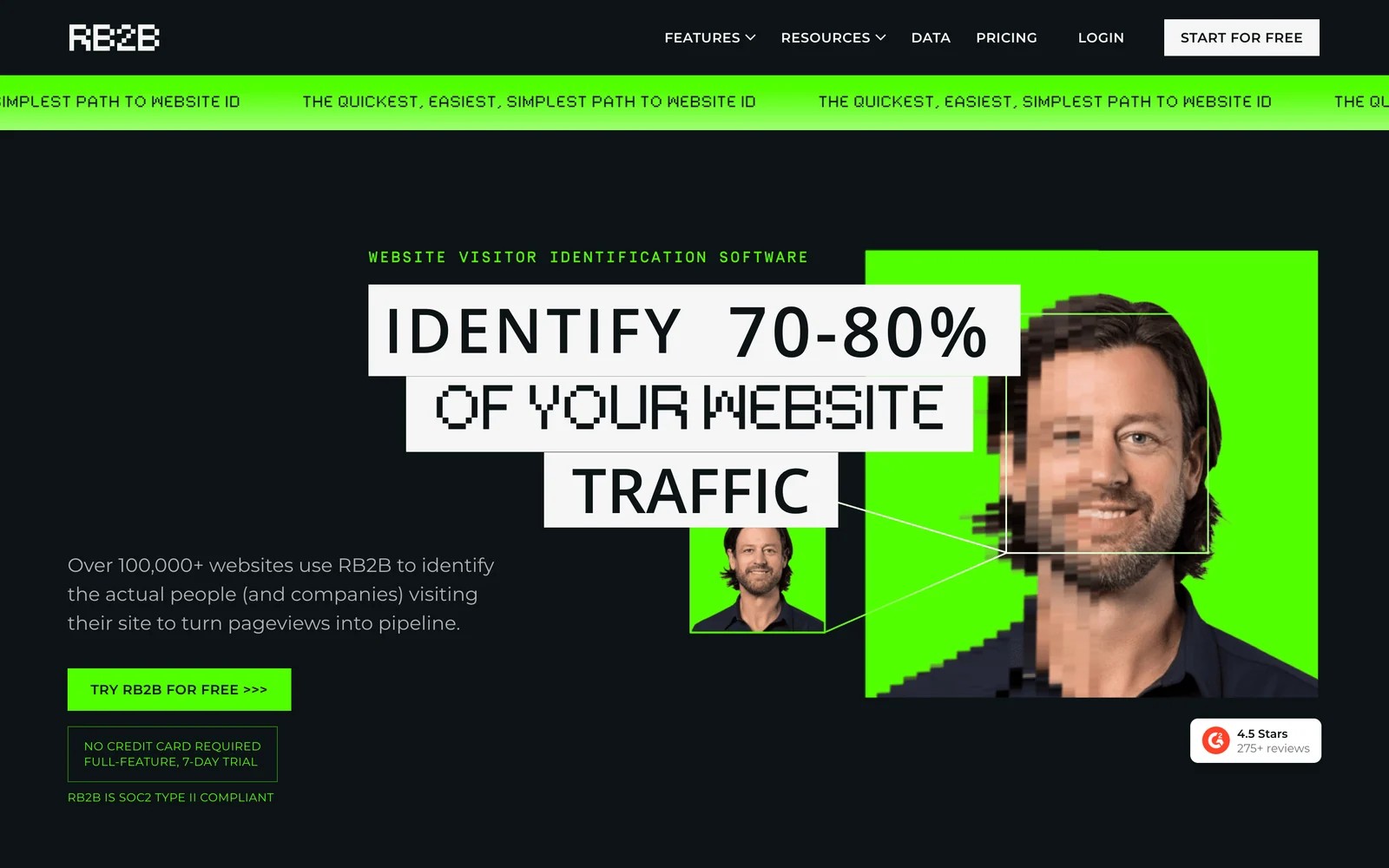
RB2B goes a step further than company identification. For US traffic, it tries to match visitors to individual LinkedIn profiles and sends them to Slack or your CRM.
I set it up on the free plan, which gives company-level matches. The Slack alerts are what make it feel different: a named visitor shows up in a channel minutes after viewing a page, and reps act on it straight away.
It's narrow by design. There's no attribution or account timeline, the identified share of traffic is modest, and person-level matching only works for US visitors.
Key features
- US visitors are matched to individual profiles where possible, giving sales a person to contact, not just a company.
- Identified visitors are posted to Slack in near real time, which suits fast outbound follow-up.
- CRM and outreach integrations push identified visitors into existing sales workflows.
- A free plan covers company-level matches, so you can test it before paying.
Where it falls short
- Person-level identification only covers US visitors, which limits it for international teams.
- The share of traffic it identifies is low, so most visits stay anonymous.
- It has no attribution, so it can't tell you which campaigns produced pipeline.
What users say
"It reliably extracts the info of our website visitors, which in B2B amounts to a quality lead for sales teams." (Source)
"The percentage identified is low, however, I do not believe this is a RB2B specific issue given the privacy standards in the US" (Source)
"The paid versions are expensive for a solo founder." (Source)
Pricing
- Free: 150 company-level matches a month
- Starter: $79/mo for 300 person-level matches
- Pro and Pro+: from $149 and $199/mo
4. Dreamdata
Best for: B2B SaaS teams that want Factors.ai's account view with attribution to revenue, and a free plan to start.
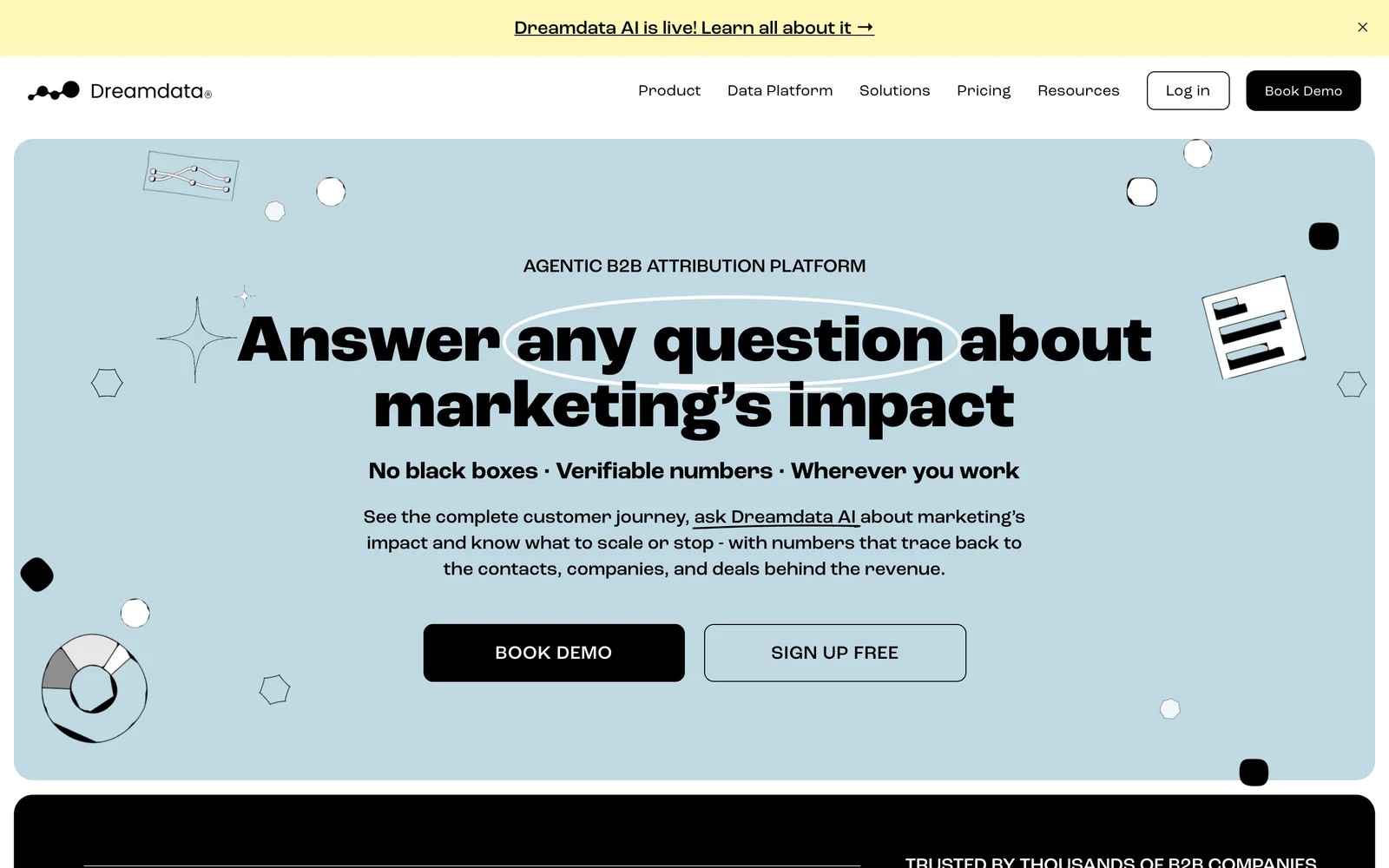
Dreamdata does both jobs, like Factors.ai: it identifies companies and builds account journeys, then credits CRM stages and revenue to channels.
On the free plan, the journey views felt more polished than Factors.ai's to me, especially for showing a closed deal's full history to leadership. Its attribution reporting is also deeper on stage-by-stage credit.
Where Factors.ai is stronger is LinkedIn activation and the speed of the identification feed. Dreamdata's full attribution also sits on custom-priced plans, and reviewers mention a steep first month or two.
Key features
- Account journeys combine all contacts' ads, visits, meetings and CRM activity into one timeline per company.
- Stage attribution credits MQL, SQL, opportunity and closed-won to the channels that moved each deal.
- Anonymous visits are matched to companies to fill in early research.
- An AI agent and an MCP server support questions from your own tools.
Where it falls short
- Attribution and activation need a custom-priced plan, so costs aren't clear up front.
- LinkedIn activation is less central than in Factors.ai.
- New users take time to learn which report answers which question.
What users say
"After we implemented dreamdata we finally were able to show how all the marketing touch points contribute to sales/revenue." (Source)
"Learning curve is rather steep in the first 1-2 months." (Source)
Pricing
- Free: $0/mo with 2 months of history and 5 seats
- Attribution and Activation: custom pricing
5. HockeyStack
Best for: larger B2B teams that want identification and attribution inside a broader GTM data platform.
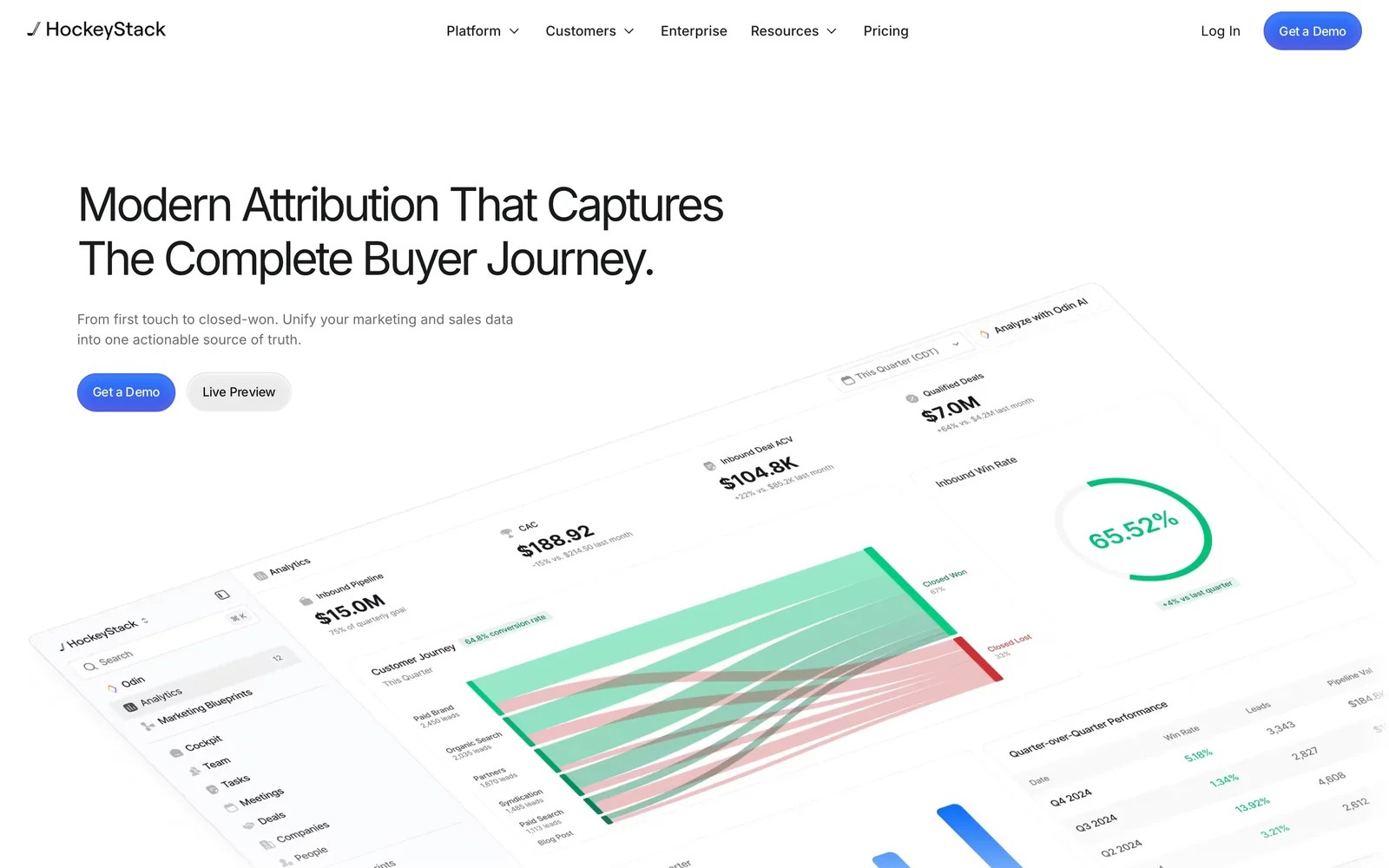
HockeyStack combines company identification, multi-touch attribution, product data and AI agents. It's what Factors.ai could look like at enterprise scale.
From the demo, the journey and model-switching views are excellent, and the AI agents add a layer Factors.ai doesn't have. It's a natural step up for teams that outgrew Factors.ai's depth.
The teams I know who run it are clear about the commitment: annual contracts, a substantial onboarding, and data that has to connect cleanly. Recent reviews include implementations that never got there.
Key features
- Company identification feeds a unified model of CRM, ad, website and product data.
- Attribution models switch on the same report, letting teams compare views of credit quickly.
- Journey mapping covers anonymous research through closed-won.
- AI agents support analysis and sales prioritization.
Where it falls short
- There's no trial, so you can't confirm data quality before the contract.
- Implementation depends on clean CRM data and can take months.
- It's a bigger investment than Factors.ai, in both cost and ops time.
What users say
"HockeyStack allows us to follow journeys in a more complex way than our previous method, which is especially valuable with paid ads to see how they influence our funnel." (Source)
"The core failure: they couldn't connect our data." (Source)
Pricing
- Quoted, on annual contracts. See our HockeyStack alternatives.
6. 6sense
Best for: enterprises that want third-party intent data and buying-stage predictions on top of identification.
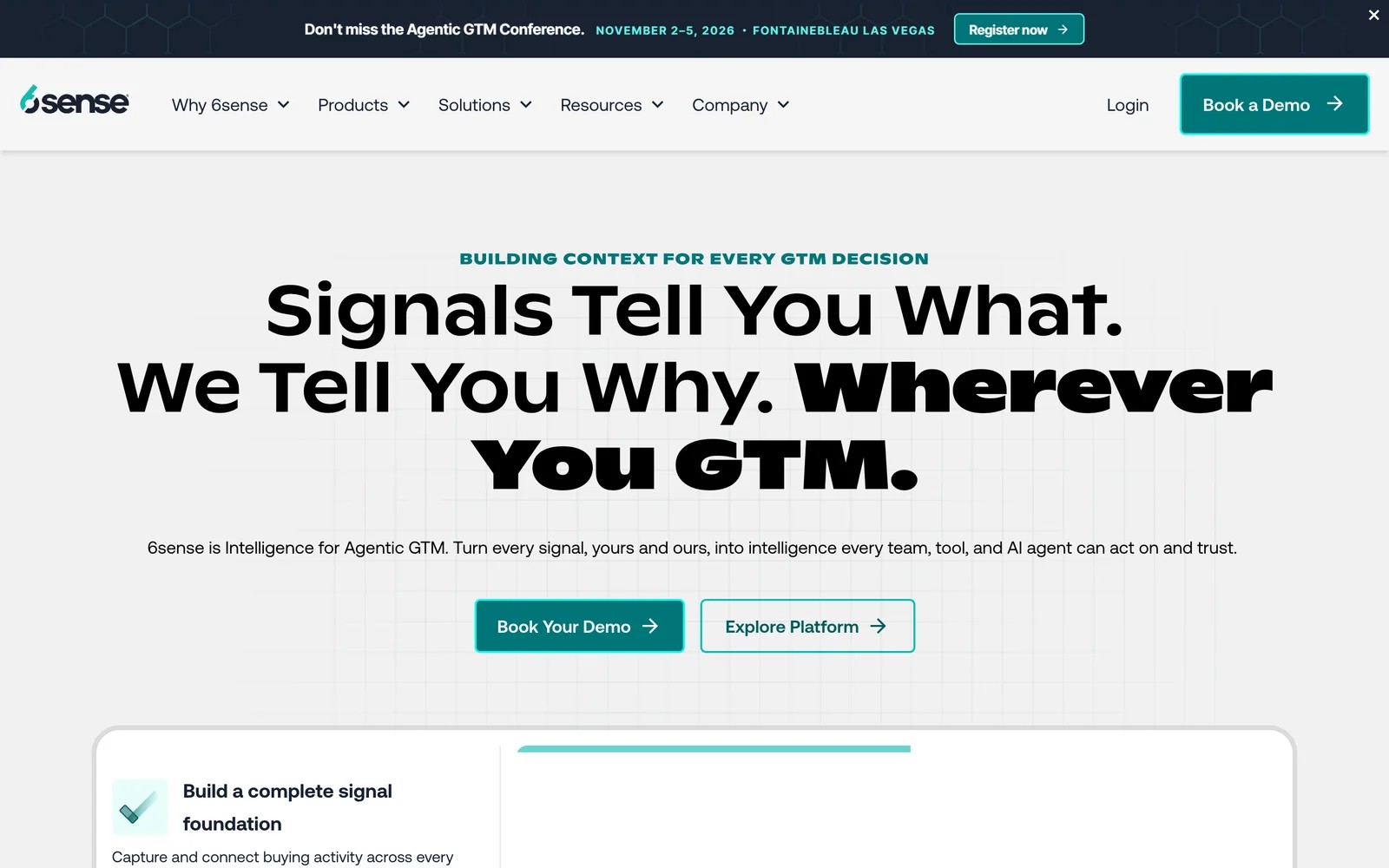
6sense identifies accounts, adds intent signals from research across the web, and predicts which buying stage each account is in. Advertising and sales intelligence sit alongside.
It's the right move if Factors.ai's on-site signals weren't enough and you want to know who's researching your category elsewhere. The product tour makes the buying-stage view look like a natural planning tool for sales and marketing.
Teams that run it say the data takes time to trust, and reporting isn't its strongest area. For pure attribution, it's less direct than Factors.ai.
Key features
- Third-party intent data shows which accounts are researching your category beyond your own website.
- Buying-stage predictions group accounts by readiness, helping prioritize spend and outreach.
- Account advertising targets in-market accounts directly from the platform.
- Sales intelligence gives reps contacts and context for each account.
Where it falls short
- Reporting and attribution are weaker than its intent features, according to several reviewers.
- Intent scores need time to validate before teams act on them confidently.
- It's an enterprise purchase with no published pricing.
What users say
"Knowing which accounts are actively researching before they fill out a form changes how you prioritize budget." (Source)
"One area where 6sense could improve is reporting and analytics." (Source)
Pricing
- Quoted after a demo, on annual contracts.
7. Fibbler
Best for: teams that relied on Factors.ai mainly for LinkedIn ad attribution.
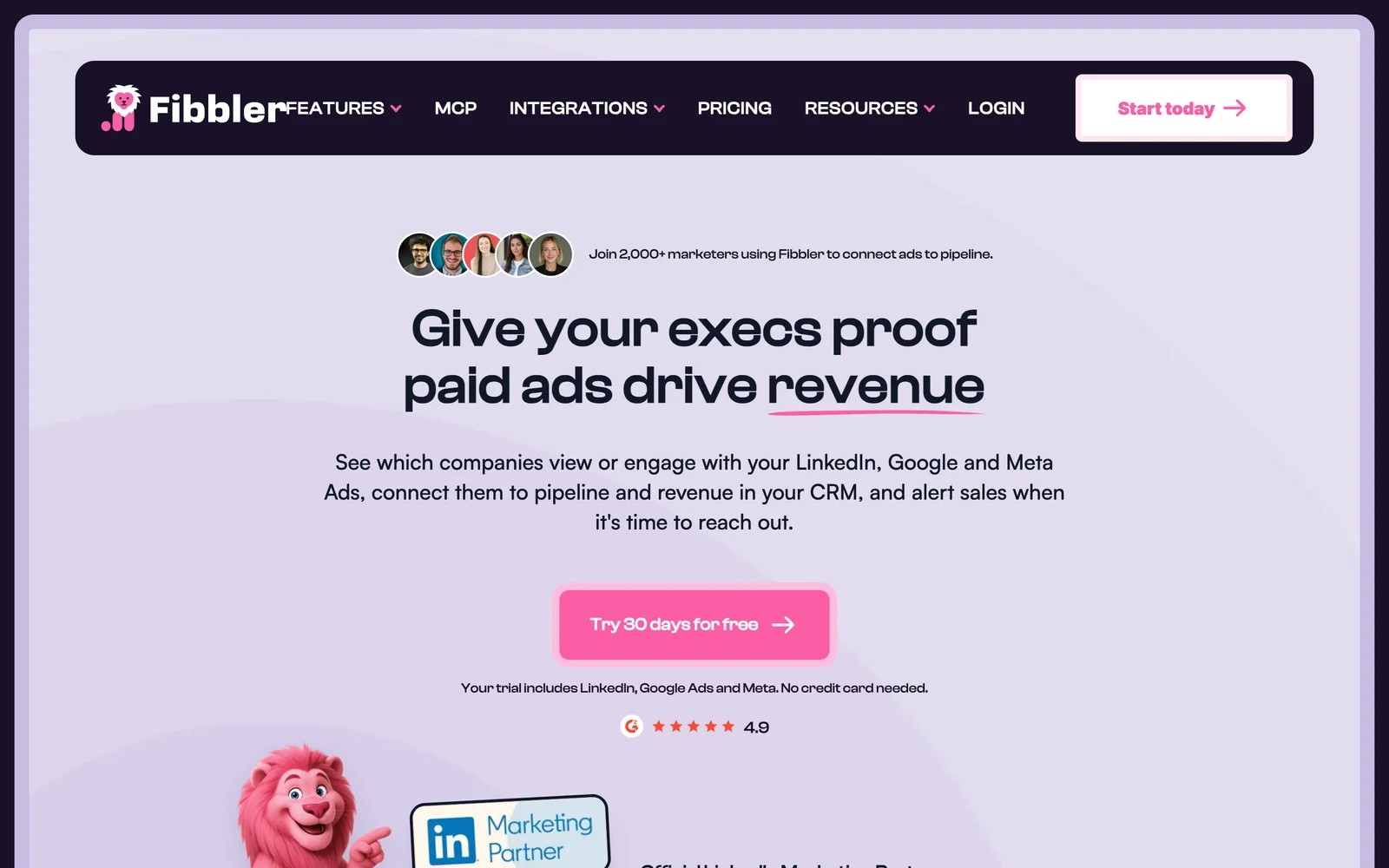
Fibbler connects LinkedIn Ads to the CRM and shows which companies saw or clicked your ads, then which of those became pipeline. Google Ads and Meta Ads are available as add-ons.
I connected it on the trial, and the setup was the quickest of anything on this list: LinkedIn, then HubSpot, and the company-level view was there the same day. The influenced-pipeline report is the clearest answer I've seen to "is LinkedIn working?"
It's deliberately focused. The lookback is 90 days, date ranges are preset, and it doesn't identify general website visitors the way Factors.ai does.
Key features
- LinkedIn ad impressions and clicks are matched to companies, showing which target accounts saw your campaigns.
- Influenced pipeline and revenue are reported per campaign using CRM deal data.
- Audience exclusions and campaign scheduling help control LinkedIn spend.
- Google Ads and Meta Ads attribution can be added per account for a broader view.
Where it falls short
- It identifies companies through ad engagement, not general website visits.
- A 90-day lookback can miss early touches in long deals.
- Date filters are preset, which limits custom reporting periods.
What users say
"The product was super easy to setup and I was able to plug in both our LinkedIn Ads account and Hubspot account with no issue." (Source)
"Currently, the date filtering is too limited, with options like 30, 90 days, or by last quarter only, which restricts my ability to set precise date ranges for more detailed analysis." (Source)
Pricing
- Growth: $89/mo; Unlimited: $129/mo. Ad channel add-ons $59 per account. 30-day trial.
How to choose
Decide which half of Factors.ai you need.
1. Attribution only
- SourceLoop for lead-gen businesses, agencies and SaaS teams that want lead sources in the CRM and good leads sent to the ad platforms, priced flat.
- Fibbler if LinkedIn is the channel you need to prove.
2. Identification only
- Leadfeeder for company lists, RB2B for US person-level matches.
3. Both, with more depth
- Dreamdata to start free, HockeyStack for a full GTM platform, 6sense for third-party intent.
Many teams end up pairing one identification tool with one attribution tool. It's often cheaper than a single platform, and each part does its job better.
Frequently asked questions
-
What does Factors.ai do?
Factors.ai identifies companies visiting your website, scores their engagement, builds account timelines, attributes CRM deals to channels, and activates audiences on LinkedIn and Google.
-
How much does Factors.ai cost?
As of November 2026, Lite is $199 a month, Basic is $6,000 a year, Growth is $20,000 a year and Enterprise starts at $30,000 a year. A free trial is available.
-
What is a cheaper alternative to Factors.ai?
For identification, Leadfeeder and RB2B have free plans. For attribution, SourceLoop starts at $49 a month and Fibbler at $89 a month for LinkedIn.
-
Does SourceLoop identify website visitors?
No. SourceLoop attributes known leads and groups them into companies using email domains and the CRM. It doesn't identify anonymous visitors by IP.
-
Why are company match rates low?
IP-based identification struggles with remote workers, VPNs, mobile networks and small companies without dedicated IP ranges. Every identification tool faces this, so test on your own traffic.

 Paid Social


