
7 Best Lifesight Alternatives in 2026: [Compared & Ranked]
Seven Lifesight alternatives compared on who they suit, how they measure, what they cost and how long setup takes.

Table of contents
- Lifesight alternatives compared
- Why teams look beyond Lifesight
- The 7 best Lifesight alternatives
- 1. SourceLoop: Best Lifesight Alternative for Lead Generation, Agencies and SaaS
- 2. Triple Whale: Best Lifesight Alternative for Shopify and DTC Brands
- 3. Rockerbox: Best Lifesight Alternative for Multichannel Performance Teams
- 4. SegmentStream: Best Lifesight Alternative for Enterprise Measurement and Optimization
- 5. Attribution.app: Lifesight Alternative for Transparent B2B Attribution
- 6. Dreamdata: Lifesight Alternative for B2B Account-Based Attribution
- 7. Ruler Analytics: Lifesight Alternative for Lead-Gen and Call Tracking
The best Lifesight alternative depends on how you sell. SourceLoop fits lead generation businesses, agencies and SaaS teams, Triple Whale fits Shopify brands, and SegmentStream fits enterprise teams that want automated budget optimization.
Lifesight combines multi-touch attribution, marketing mix modeling and incrementality testing in one enterprise platform. If you're leaving because of pricing, implementation time or a business model mismatch, I've compared seven alternatives below by who they suit and how they measure.
How we compared these alternatives
We signed up for the tools with trials or free plans (SourceLoop, Triple Whale, Attribution.app and Dreamdata). Rockerbox, SegmentStream, Ruler and Lifesight itself are sold through demos, so for those we used product documentation, public pricing pages and what teams who switched told us.
Much of this list comes from conversations with the brands and agencies we work with that moved off enterprise measurement tools, plus user reviews on G2 and Reddit. For each alternative we looked at:
- Lead-level journeys or aggregate modeling
- How deeply it connects to the CRM and revenue
- Whether it sends results back to ad platforms
- Published pricing and setup time
SourceLoop is our product. We rank it first for businesses that sell through leads, and say where Triple Whale or SegmentStream is the better fit.
Last checked November 2026. Confirm current pricing with each vendor.
Lifesight alternatives compared
Here's how the 7 Lifesight alternatives compare on who they suit, price, approach and setup effort, as of November 2026.
| Tool | Best for | Pricing | Key differentiator | Setup effort |
|---|---|---|---|---|
 SourceLoop | Lead generation businesses, agencies, SaaS | From $49/mo | Lead-level journeys, CRM revenue, conversion sync | Low, self-serve |
 Triple Whale | Shopify and DTC brands | Free plan, paid from $219/mo | Ecommerce dashboards and first-party pixel | Low to moderate |
 Rockerbox | Multichannel performance teams | Quote | MTA, MMM and incrementality testing | Moderate |
 SegmentStream | Enterprise teams with large paid budgets | Quote | Automated budget optimization, warehouse-native | High |
 Attribution.app | Small to mid-market B2B | From $399/mo | Deterministic click tracking with drill-down | Moderate |
 Dreamdata | B2B SaaS with account-based marketing | Free plan, paid plans quoted | Account-level journeys | Moderate to high |
 Ruler Analytics | Lead generation with phone sales | From £299/mo | Call tracking and closed-loop revenue | Moderate |
Why teams look beyond Lifesight
Lifesight is a serious measurement platform. Users credit it with combining MMM and causal attribution in one place.
"Its unified measurement approach combines MMM and causal attribution, making it a comprehensive solution." (Source)
The reasons teams look elsewhere come up again and again: the learning curve, quote-only pricing, and aggregate models when they need lead-level answers.
"The learning curve is somewhat steep, and the pricing tends to be on the higher side." (Source)
"Some advanced features require a learning curve, and the pricing structure could be more transparent." (Source)
The 7 best Lifesight alternatives
Here's each alternative, where it beats Lifesight, and what it costs.
1. SourceLoop: Best Lifesight Alternative for Lead Generation, Agencies and SaaS
Best for: lead generation businesses, the agencies running their ads, and SaaS teams that need lead-level attribution and CRM revenue, not aggregate models.
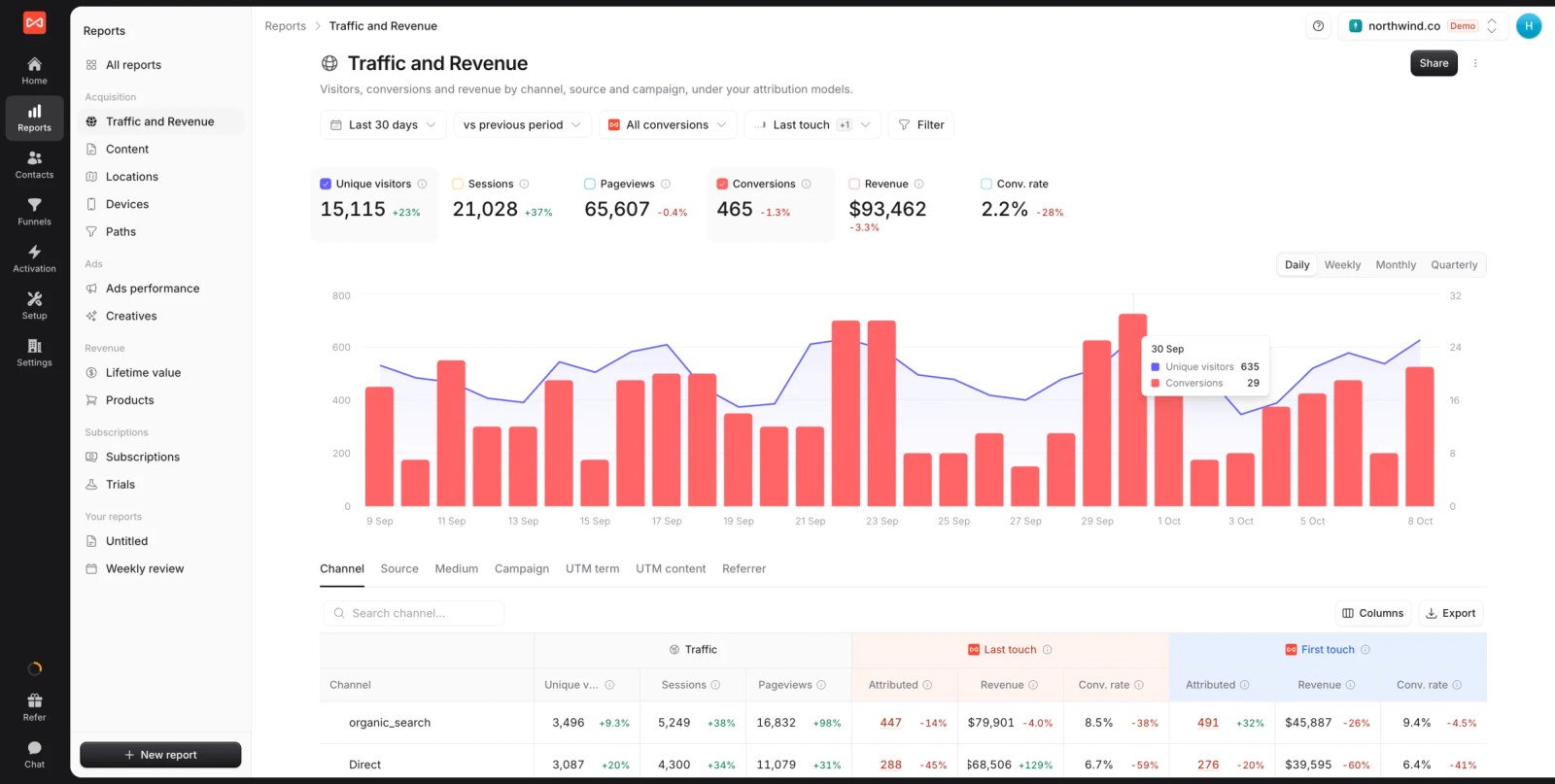
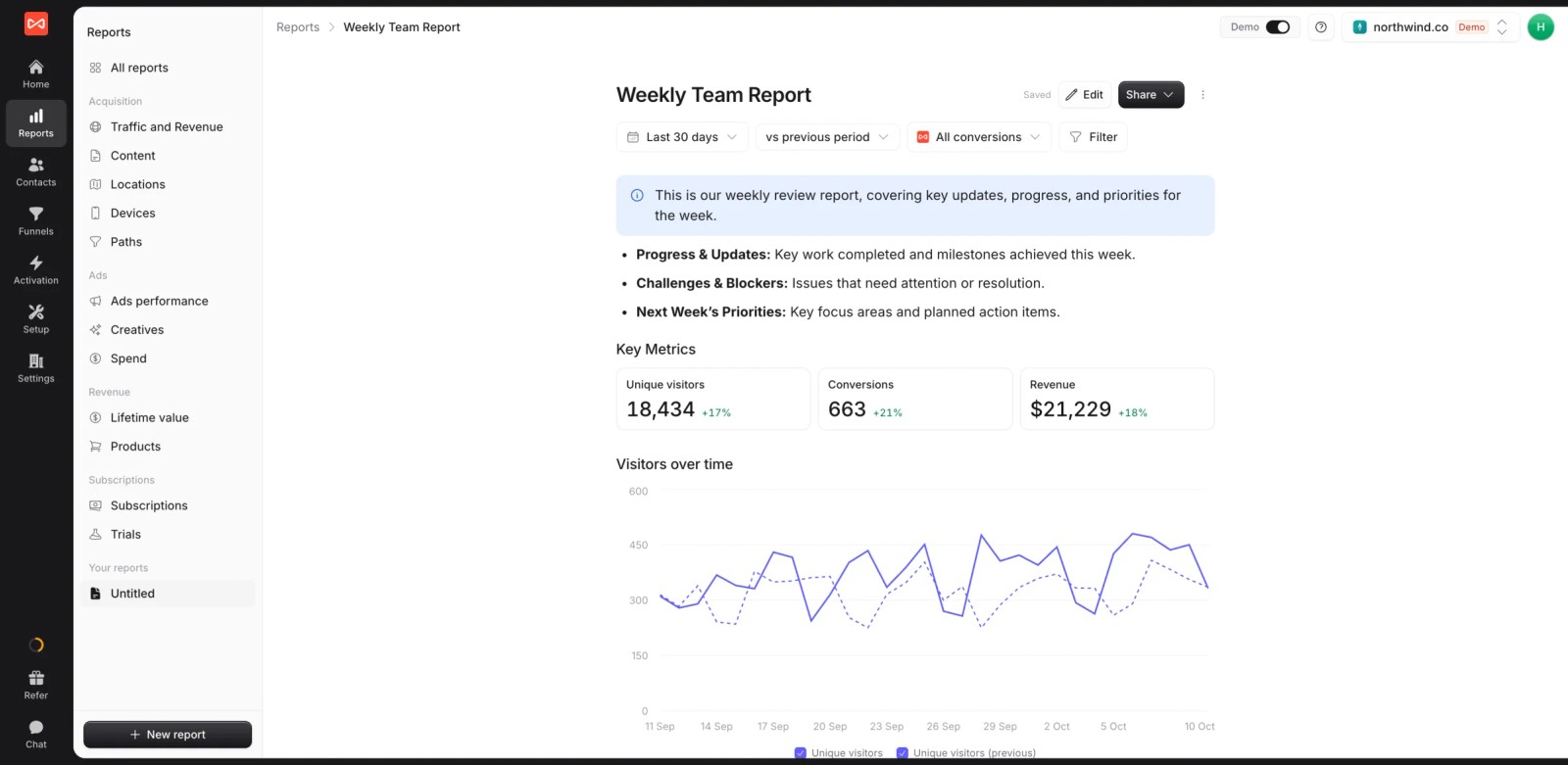
SourceLoop is a marketing attribution and lead source tracking tool. Lifesight models channels in aggregate. SourceLoop works the other way round: it follows each lead from the first ad click to the deal in your CRM, then adds those journeys up into channel numbers.
Most teams we talk to who leave Lifesight aren't short of models. They want to see which campaign produced which customers, and to get there without a months-long implementation.
Key features
- Every journey kept. Each visit's source, ad click ID and landing page stays attached to the person, across forms, calls, chats and bookings.
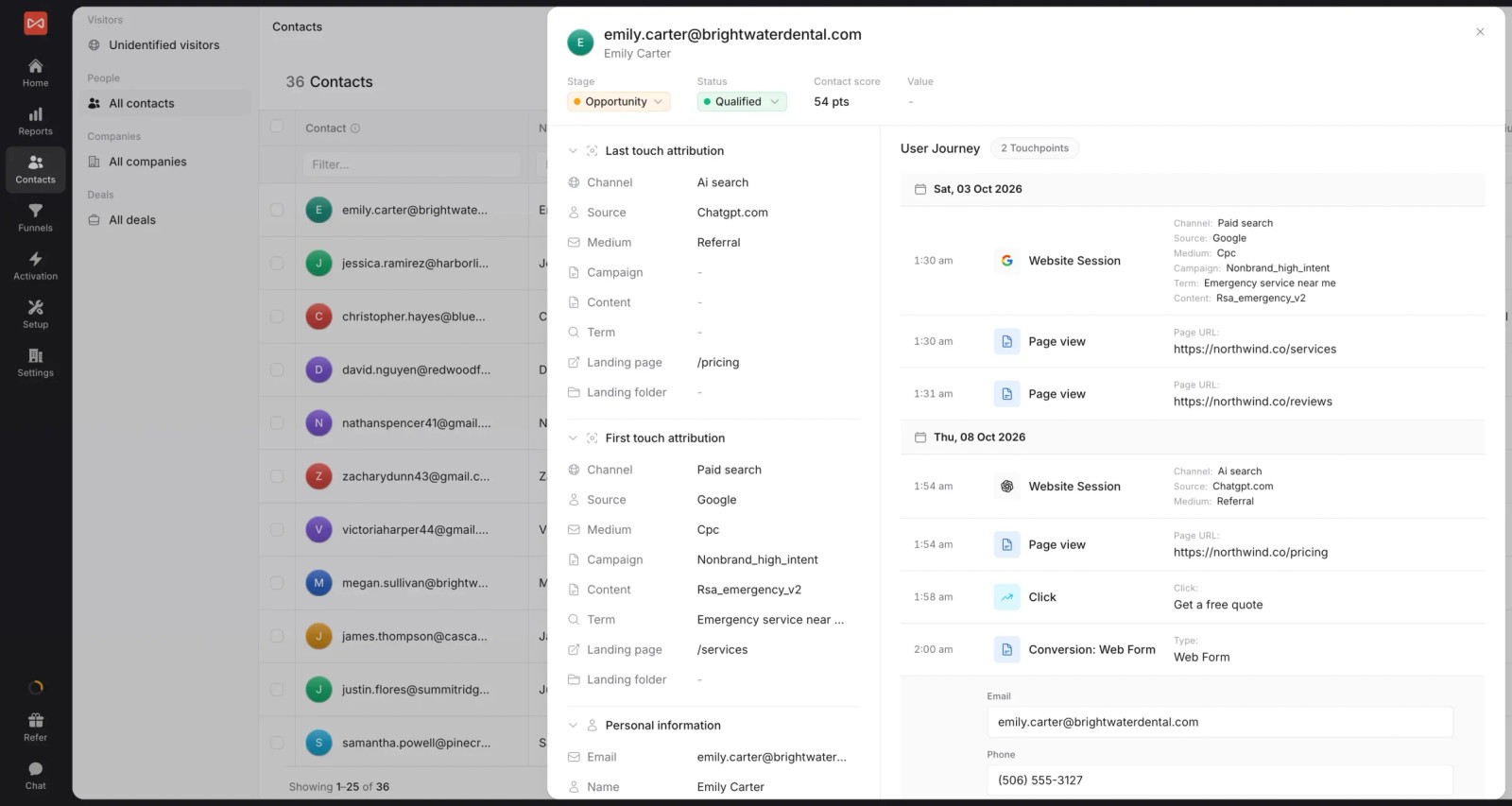
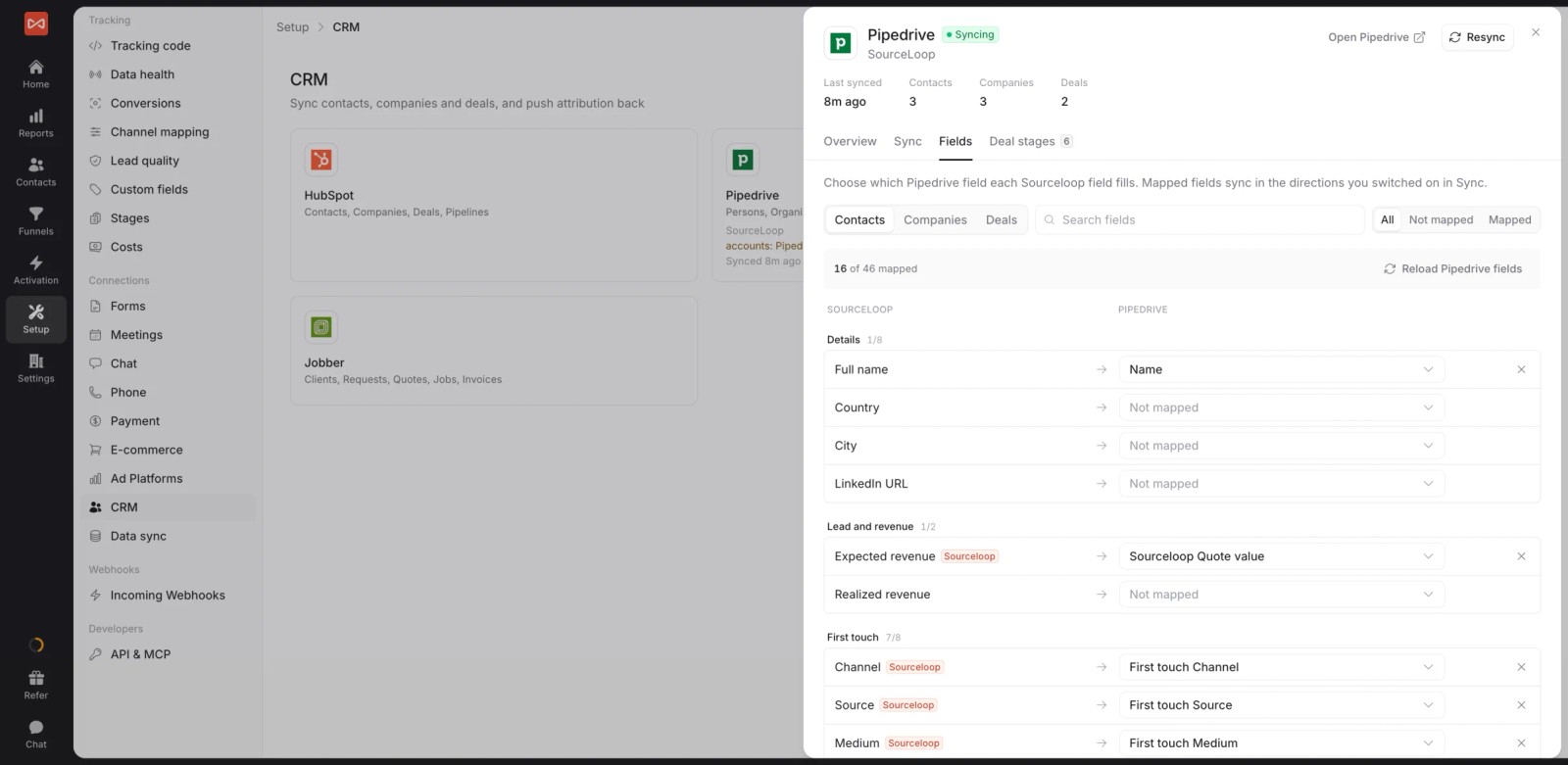
- CRM revenue in the loop. HubSpot, Salesforce and Pipedrive sync both ways, plus Jobber for home services, and payments come in from Stripe or Paddle.
- Lead quality rules. Leads are marked Good, Not a fit or Spam from form answers, email domain, call length or the journey, so reports and ad platforms only count real ones.
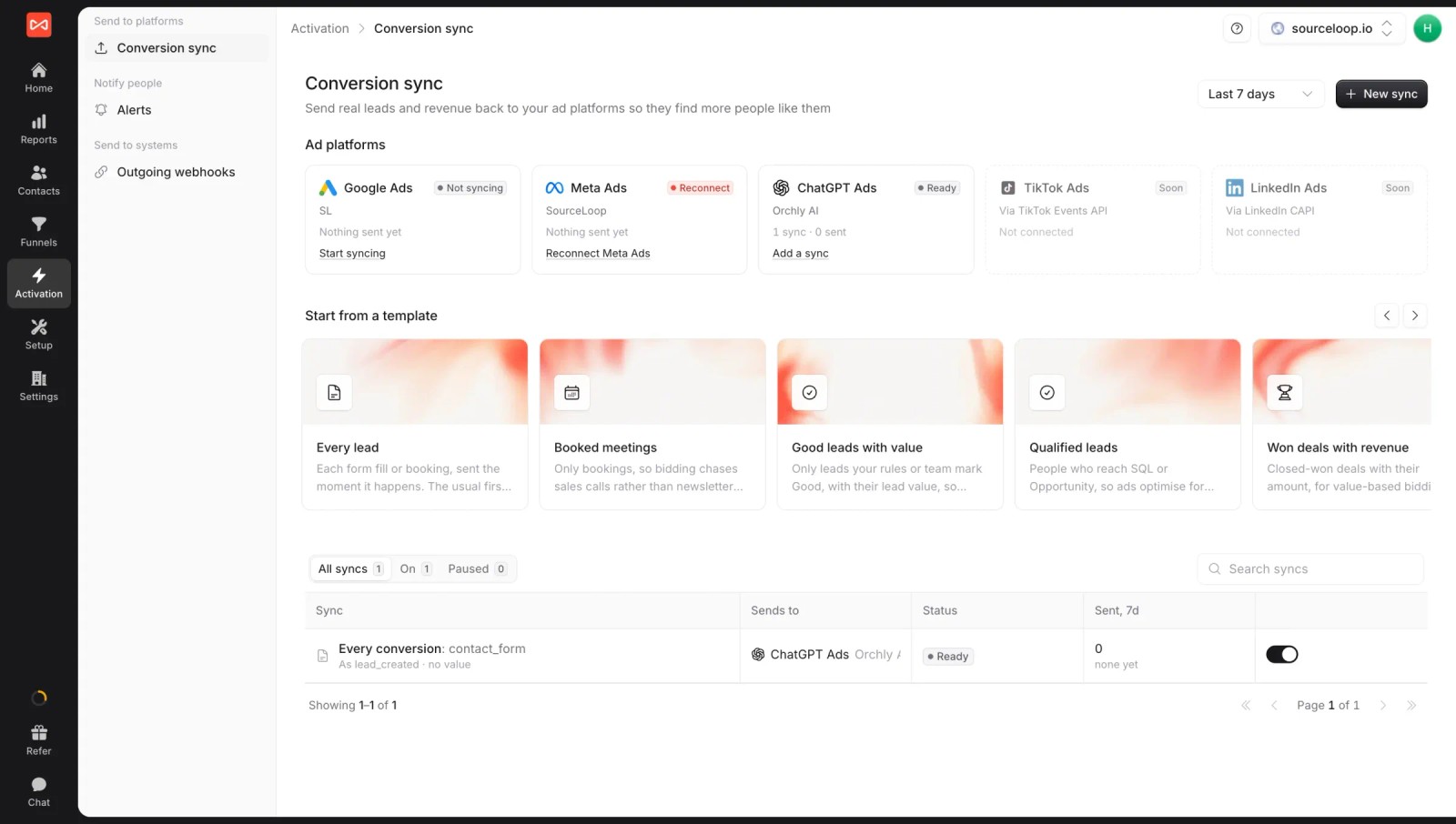
- Conversion sync. Good leads, stages and won deals go back to Google Ads, Meta, Microsoft Ads and ChatGPT Ads with their value, through server-side conversion sync.
- Custom reports, alerts and white label. Build client reports with live numbers, post good leads or weekly numbers to Slack or email, and brand everything with your agency's or client's logo.
SourceLoop vs Lifesight
| Feature | SourceLoop | Lifesight |
|---|---|---|
| Primary use case | Lead-level attribution, CRM revenue, conversion sync | Enterprise unified measurement |
| Attribution granularity | Lead-level journey tracking | Aggregate channel modeling |
| CRM integration depth | Native fields, two-way sync | Data export and import |
| Offline conversion sync | Google Ads, Meta, Microsoft Ads, ChatGPT Ads | Multiple platforms via API |
| Setup time | 10-15 min, mostly self-serve | Weeks to months, requires analytics team |
| Pricing transparency | Starting at $49/mo | Quote-based |
Where it's not the right pick
SourceLoop doesn't do marketing mix modeling or run incrementality tests for you. If MMM is the reason you bought Lifesight, keep a modeling tool, or read how to run your own holdout test on SourceLoop data.
Pricing
- Essential: $49/mo for one site and 30,000 page views, with tracking, attribution reports, lead quality rules and alerts
- Professional: $99/mo for 100,000 page views and unlimited users, adding CRM sync, conversion sync to the ad platforms, the API and MCP
- Agency: $249/mo for three sites and 1.5 million page views, adding white label reporting
- Unlimited conversions on every plan, 7-day trial.
2. Triple Whale: Best Lifesight Alternative for Shopify and DTC Brands
Best for: Shopify and DTC brands that want ecommerce attribution running in days.
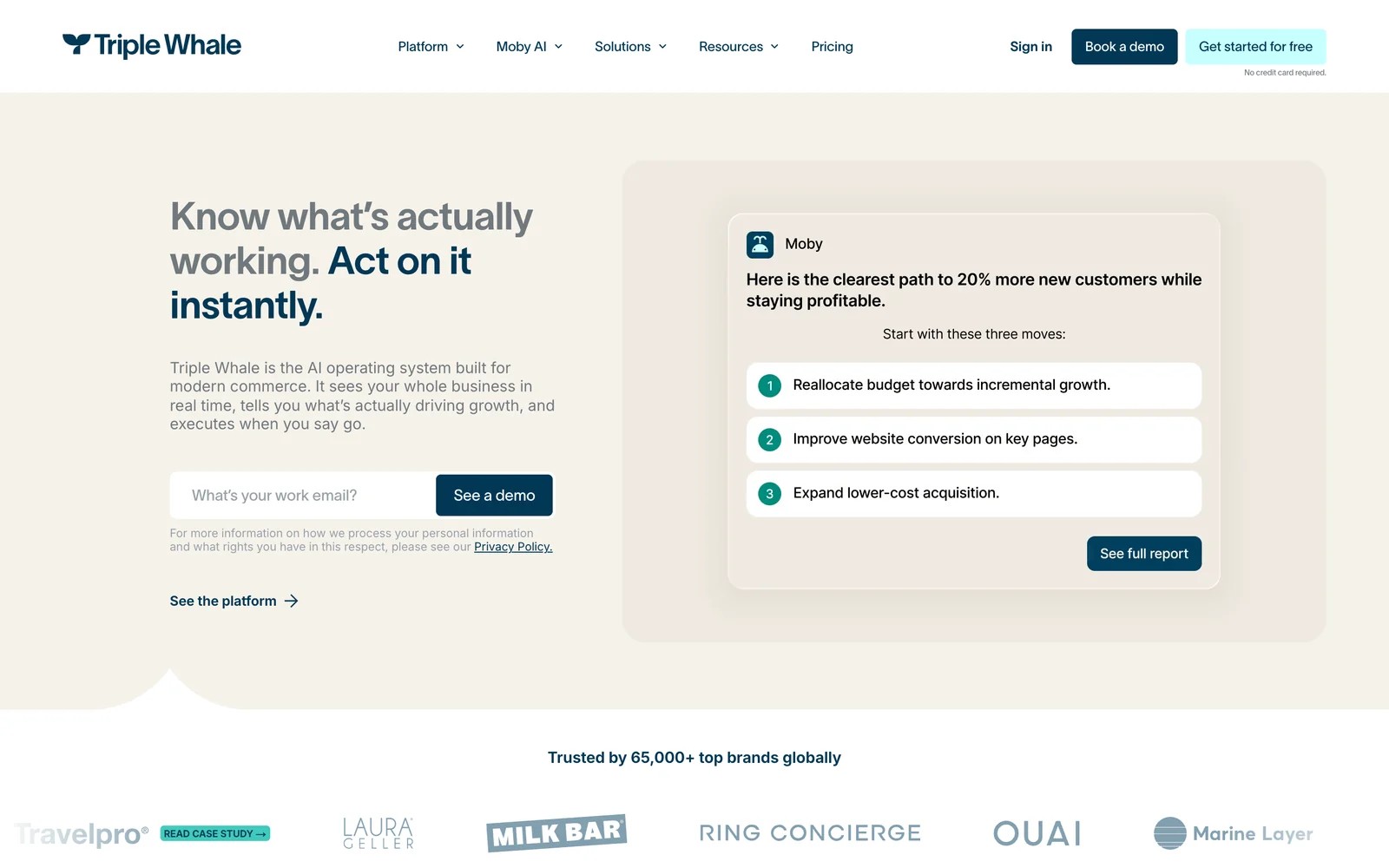
Triple Whale is built around Shopify. It pulls orders, products, cohorts and LTV from your store, tracks visitors with its own pixel, and lays ad spend over all of it.
Lifesight is platform-agnostic and model-heavy. Triple Whale is narrower and faster to start. Reviews are split, though: some teams call it their source of truth, while others report attribution gaps and support problems.
On a test Shopify store, it was running in an afternoon: orders, products and spend appeared with no custom setup. Compared with Lifesight's implementation, that difference alone is why many DTC teams switch.
The catch for us was explaining the gap between its numbers and Meta's. Plan time to learn the model before you take it to a budget meeting.
Key features
- Native Shopify connection with order, product and LTV data
- First-party pixel with several attribution views, including its own Triple Attribution
- Creative and product-level performance
- Post-purchase surveys, with MMM on higher tiers
Triple Whale vs Lifesight
| Feature | Triple Whale | Lifesight |
|---|---|---|
| Primary platform | Shopify, ecommerce | Platform-agnostic |
| Attribution models | 7 rule-based and blended | Incrementality-adjusted, causal |
| Creative analytics | Native ad creative breakdown | Not emphasized |
| Post-purchase surveys | Built-in | Not offered |
| MMM availability | Professional tier and above | Core capability |
| Starting price | $219/month (Foundation) | Quote-based |
What users say
"I like that Triple Whale brings key ecommerce and marketing metrics into a single dashboard, making it much easier to understand performance across channels." (Source)
"Triple Whale is our source of truth for marketing data." (Source)
"The pricing can also feel high, especially for smaller teams." (Source)
"Also, the attribution of imported marketplace orders is not working." (Source)
Pricing
- Free plan with basic attribution
- Foundation: from $219/mo for smaller stores
- Higher tiers are priced by GMV. Check Triple Whale pricing for your band.
3. Rockerbox: Best Lifesight Alternative for Multichannel Performance Teams
Best for: brands spending across many online and offline channels that want MTA, MMM and testing in one place.
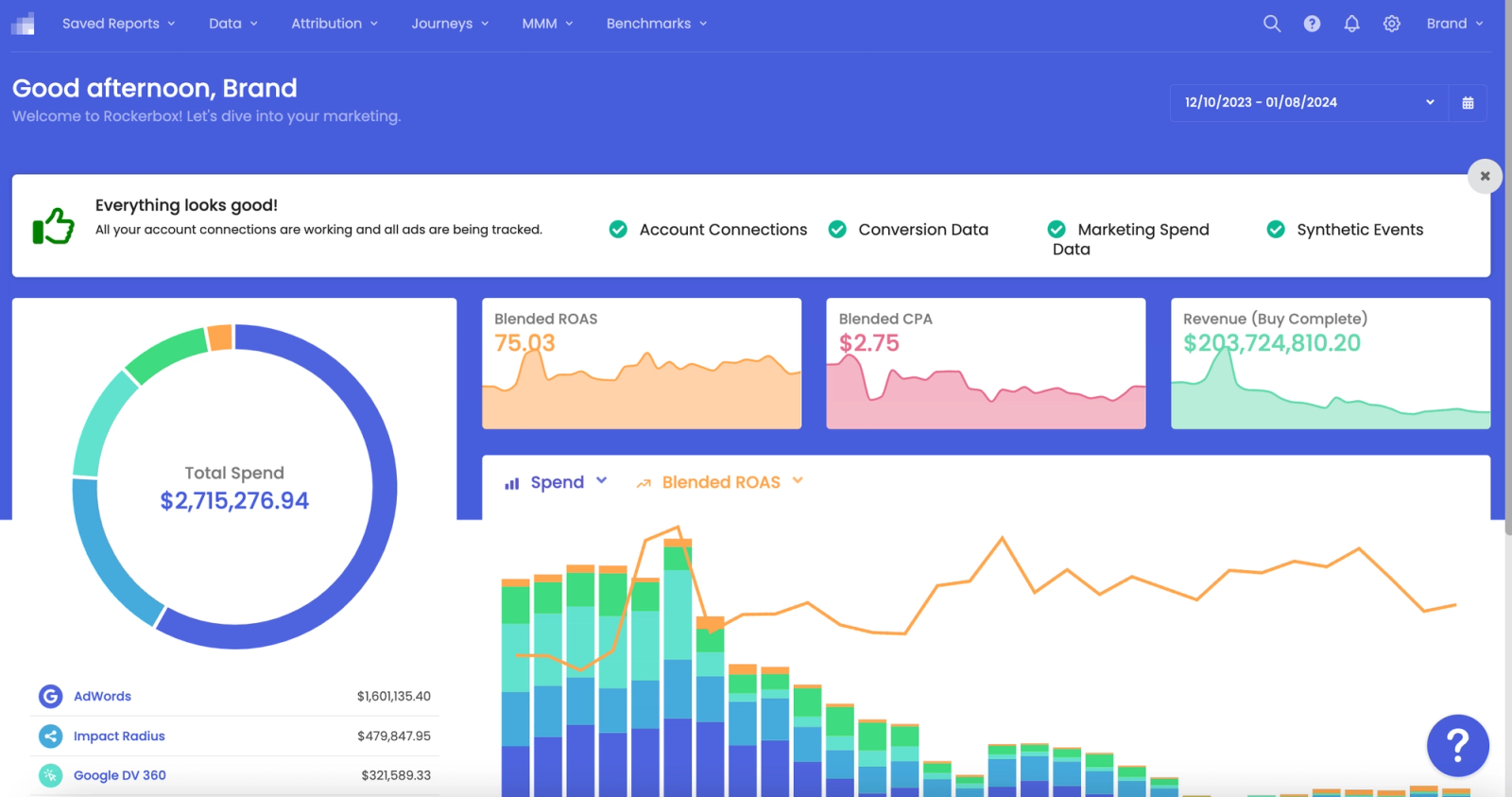
Rockerbox is the closest like-for-like swap. It combines multi-touch attribution, marketing mix modeling and incrementality testing, and tracks channels from paid social to TV, direct mail and podcasts.
The catch is effort. Users praise what it reveals, but setup can need developer time, and it takes months of data before the insights are solid.
Key features
- MTA, MMM and incrementality testing on one data foundation
- 200+ integrations, including offline channels
- Exports to BigQuery, Redshift and Snowflake
- Geo lift testing
Rockerbox vs Lifesight
| Feature | Rockerbox | Lifesight |
|---|---|---|
| Measurement methods | MTA, MMM, incrementality testing | Causal attribution, MMM, incrementality |
| Data warehouse support | BigQuery, Redshift, Snowflake | Export options |
| Channel coverage | 200+ integrations | Broad platform support |
| Geo testing | Self-service configuration | Available |
| Implementation | Moderate, marketing ops friendly | High, requires data science |
| Pricing model | Quote-based, tier by company size | Quote-based |
What users say
"We've been able to cut our paid ads budget 40% and maintain revenues while using this platform." (Source)
"The ability to track customers across all different touch points is amazing, not just ads." (Source)
"The first initial set up of Rockerbox can be very tedious it takes a full-time developer to have this done as well as continuous support on the Rockerbox side." (Source)
Pricing
- Quote-based, by company size and channel mix. Contact Rockerbox.
4. SegmentStream: Best Lifesight Alternative for Enterprise Measurement and Optimization
Best for: enterprise teams with large paid budgets that want measurement to move budget automatically.
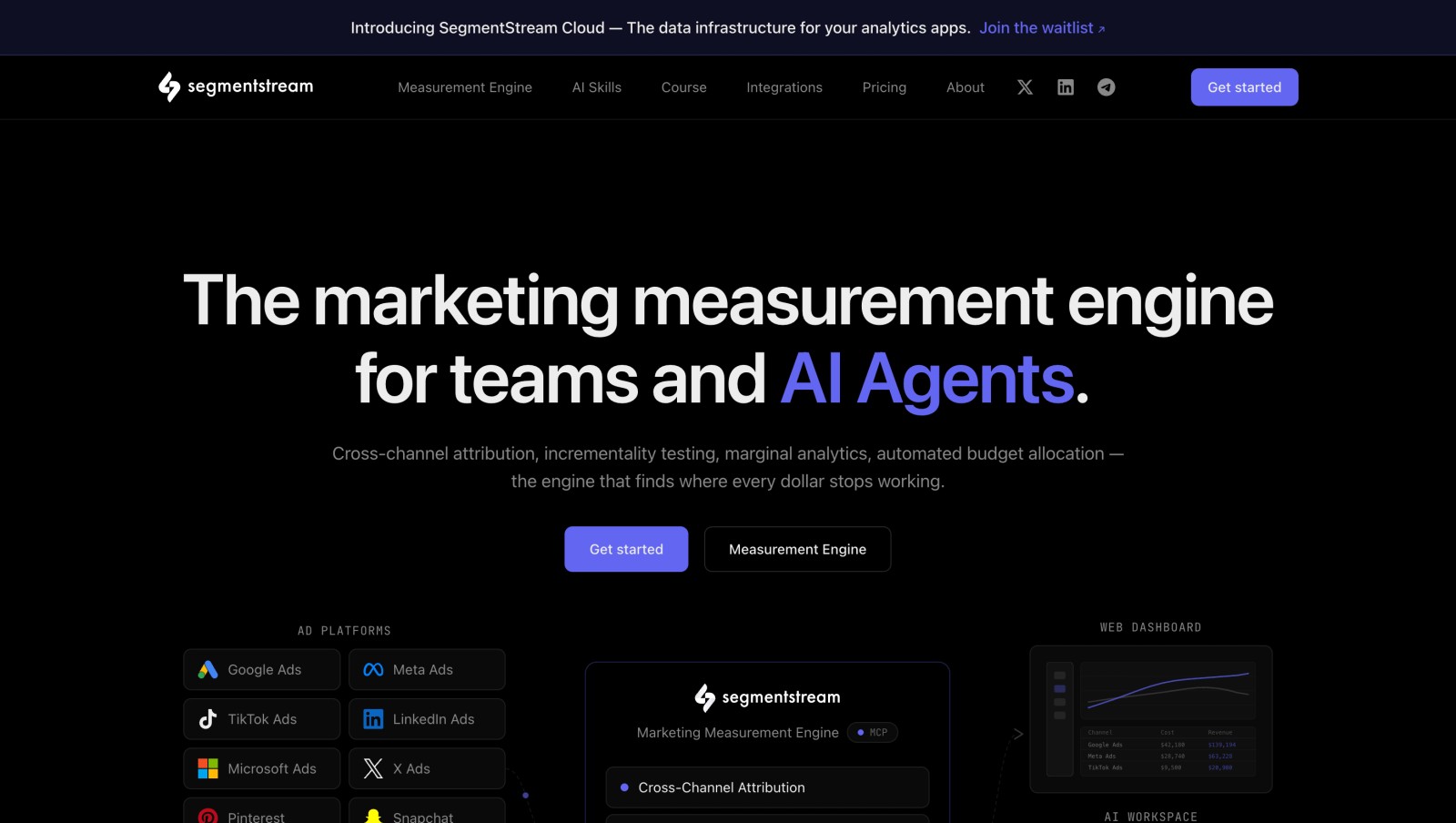
SegmentStream scores every site visit to estimate each channel's contribution, then recommends and applies budget shifts across platforms. It runs inside your own warehouse and ships an MCP server.
Users value the visit scoring and the budget guidance. The weaker side, by their account, is media that never produces a click, where its MMM is less distinctive.
Key features
- Visit-level scoring and custom attribution models
- Automated budget optimization across ad platforms
- Expert-led geo holdout experiments
- Warehouse-native (BigQuery, Snowflake, Databricks), with an MCP server
SegmentStream vs Lifesight
| Feature | SegmentStream | Lifesight |
|---|---|---|
| Core differentiator | Automated budget execution | Unified measurement platform |
| Attribution approach | Multi-model + ML custom | Incrementality-adjusted causal |
| Incrementality testing | Expert-led geo experiments | Available |
| Budget optimization | Automated with one-click apply | Forecasting and recommendations |
| Data architecture | Warehouse-native (BigQuery, Snowflake, Databricks) | Cloud platform |
| AI integration | Native MCP server for assistants | AI-powered insights |
| Minimum spend | $100K+/month recommended | Enterprise pricing tier |
What users say
"SegmentStream's approach of scoring every single site visit is something I haven't seen from any other marketing measurement vendor and makes a ton of sense." (Source)
"The portfolio optimisation feature also guides our forecasting by giving examples of where we should spend our budgets, based on strong performance, as granular as campaign-level." (Source)
"They have an MMM for no-click media but that aspect of their solution is less differentiated vs alternatives" (Source)
Pricing
- Quote-based, aimed at brands spending $100K+ a month on paid media, according to SegmentStream's pricing page.
5. Attribution.app: Lifesight Alternative for Transparent B2B Attribution
Best for: small and mid-market B2B teams that want auditable, click-based attribution with published pricing.
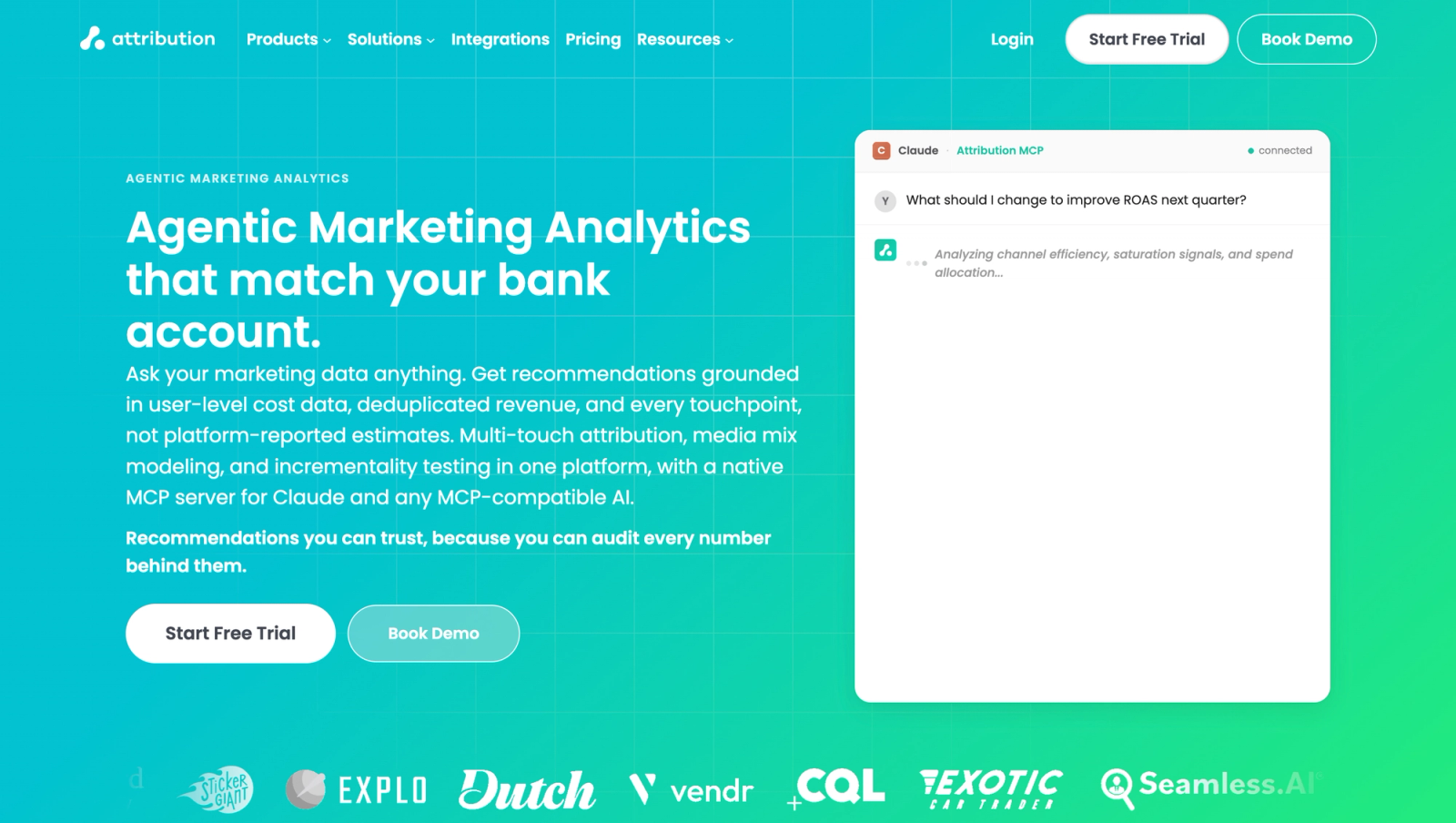
Attribution.app traces every conversion to a documented click, with no modeled view-through. You can drill from a channel down to the individual person, and ad spend is imported down to the ad.
Users like the depth of drill-down. The gaps they mention are thin documentation, no phone call tracking, and no way to backfill attribution from before you installed it.
On the trial, the drill-down was the highlight. We could click from a channel to a campaign to the actual people behind the conversions, which makes the numbers easy to audit.
Setup needed more care. Connecting the data sources took some coordination, and there was no history from before the install, so the first weeks of reports were thin.
Key features
- Deterministic, click-based multi-touch attribution
- Configurable models and lookback windows
- Ad spend imported down to the ad level
- Integrations with Segment, Stripe, HubSpot and Salesforce
Attribution.app vs Lifesight
| Feature | Attribution.app | Lifesight |
|---|---|---|
| Attribution method | Deterministic click-based | Incrementality-adjusted, causal |
| Model customization | Fully configurable rules | Fixed causal models |
| User-level auditability | Complete drill-down | Aggregate reporting |
| Account-based support | Native | Not emphasized |
| Pricing | From $399/month (Pro) | Quote-based |
| Best fit | Mid-market B2B | Enterprise multichannel |
What users say
"I've worked with every analytics tool out there and Attribution is the only tool that can actually do multi-touch attribution." (Source)
"Their documentation is lacking and should be updated." (Source)
"Tracking phone calls would be greatly valuable." (Source)
Pricing
- Pro: $399/mo ($335 billed yearly) for up to 10,000 monthly tracked users
- Shopify: $199/mo
- Custom: quoted above 10,000 tracked users. Extra users cost $10 per 1,000. 14-day trial.
6. Dreamdata: Lifesight Alternative for B2B Account-Based Attribution
Best for: B2B SaaS companies running account-based marketing with long sales cycles.
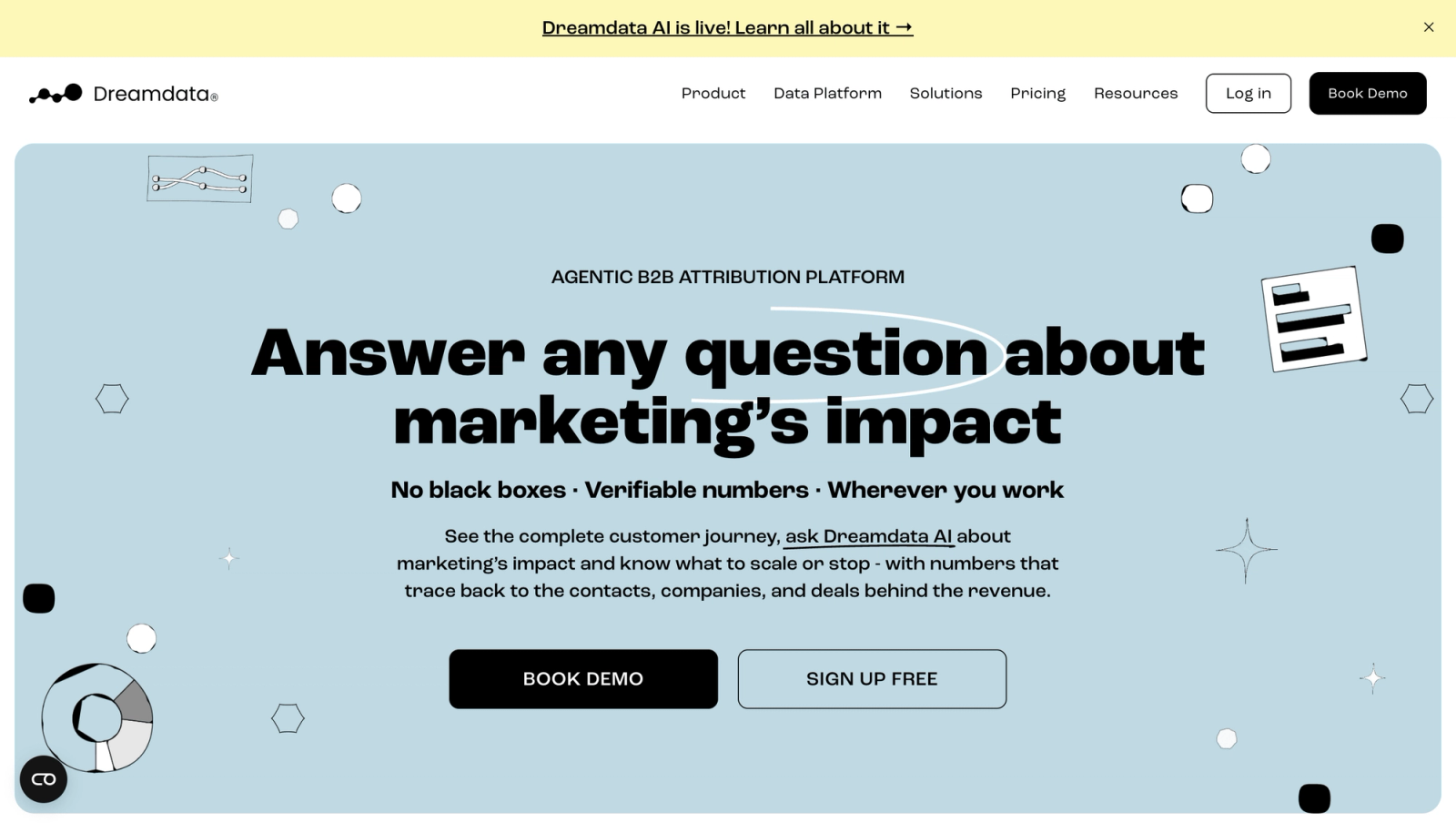
Dreamdata maps journeys at the account level, joining every contact's visits, ads, content and sales touches into one company timeline, and ties them to CRM stages from MQL to closed-won.
I've used it, and the journey views are where it shines. The trade-off is complexity: the reporting takes time to learn, and full attribution sits on custom-priced plans.
Key features
- Account-level journeys and company identification
- Attribution to CRM stages and revenue
- AI analytics agent and MCP server
- Free plan to start
Dreamdata vs Lifesight
| Feature | Dreamdata | Lifesight |
|---|---|---|
| Primary use case | B2B account-based attribution | Enterprise multichannel measurement |
| Attribution level | Account and contact | Aggregate channel |
| Sales cycle support | Long B2B cycles | Broad use cases |
| Anonymous tracking | Account identification | Standard tracking |
| CRM integration | Deep two-way sync | Export and import |
| Best fit | B2B SaaS, ABM programs | Enterprise DTC and multichannel |
What users say
"Dreamdata helps me to justify where marketing budget is placed as it is directly tied back to my CRM across MQLs, SQLs, Opps, and Closed Won." (Source)
"the reporting can sometimes be confusing because it’s real-time, and there isn’t a way to lock in or “stamp” a specific dataset at a given point in time." (Source)
Pricing
- Free: $0/mo with 2 months of history and 5 seats
- Attribution & Activation: custom pricing, with a guided trial
7. Ruler Analytics: Lifesight Alternative for Lead-Gen and Call Tracking
Best for: lead generation businesses where phone calls drive revenue, such as home services, legal and finance.
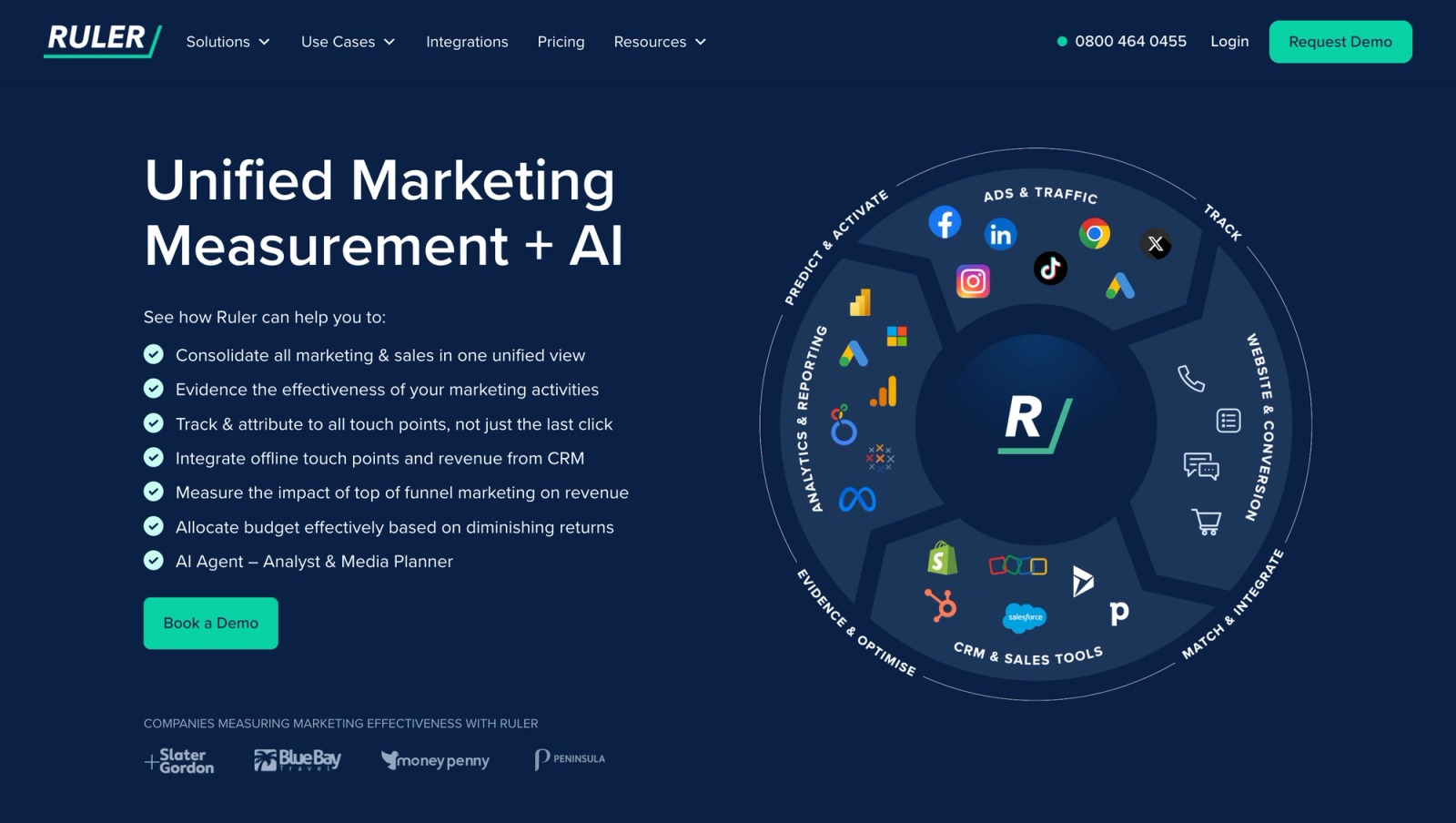
Ruler Analytics combines call tracking with closed-loop attribution. Calls, forms and chats are tied to their source, and CRM revenue is credited back to the campaign and keyword.
Users rate the lead-level detail highly. The common complaints are a complex setup, a slow interface at times, and an API limited to webhooks.
Key features
- Dynamic call tracking built in
- Form and live chat attribution
- Closed-loop revenue from Salesforce, HubSpot, Pipedrive and others
- MMM on the Advanced tier
Ruler Analytics vs Lifesight
| Feature | Ruler Analytics | Lifesight |
|---|---|---|
| Primary use case | Lead-gen with call tracking | Enterprise multichannel measurement |
| Call tracking | Dynamic number insertion, recordings | Not offered |
| Form and chat attribution | Native | Standard tracking |
| Revenue attribution | Closed-loop CRM sync | Available through integrations |
| Pricing | From £299/month | Quote-based |
| Best fit | Contractors, clinics, legal, financial services | Enterprise DTC and ecommerce |
What users say
"It tracks Form fills, Phone Calls (Online & Offline) and even Web Chat conversations!" (Source)
"Some minor mapping issues, initial setup can be complex" (Source)
"Access to a full API - not just the webhooks - would be useful." (Source)
Pricing
- Small: from £299/mo for up to 10,000 monthly visits
- Medium / Large: from £499 and £999/mo
- Advanced: from £1,499/mo with MMM. Final pricing after a demo.
Frequently asked questions
-
What is the best Lifesight alternative?
The best alternative depends on your use case. SourceLoop is a strong choice for first-party, full-funnel attribution and lead-level tracking; Triple Whale is better suited to ecommerce brands; and SegmentStream and Rockerbox are better fits for advanced measurement and incrementality.
-
Is SourceLoop a good alternative to Lifesight?
Yes. SourceLoop is a strong alternative for teams that need first-party marketing attribution, multi-touch attribution, conversion tracking, and CRM integration. It connects marketing touchpoints to leads, opportunities, customers, and revenue, while also syncing conversion data back to platforms like Google Ads and Meta.
-
What is the difference between SourceLoop and Lifesight?
Lifesight focuses heavily on aggregate measurement, attribution, MMM, and incrementality, while SourceLoop focuses on tracking individual customer journeys and connecting marketing touchpoints to conversions and revenue. SourceLoop is particularly useful when you need attribution data inside your CRM and actionable lead-level insights.
-
Which Lifesight alternative is best for ecommerce?
Triple Whale is a strong option for Shopify and DTC brands that want ecommerce-focused attribution, analytics, and creative performance insights. For businesses with more complex measurement requirements, SegmentStream and Rockerbox offer broader attribution and incrementality capabilities.
-
What is the best Lifesight alternative for B2B and lead generation?
SourceLoop is a strong fit for B2B and lead-based businesses because it tracks journeys across website visits, forms, calls, meetings, and other conversions, then connects attribution data with CRM records and revenue.
-
Do Lifesight alternatives support multi-touch attribution?
Yes. Several alternatives support multi-touch attribution, but their approaches differ. SourceLoop provides multiple attribution models for tracking the customer journey, while platforms such as SegmentStream, Rockerbox, and Triple Whale combine attribution with broader measurement capabilities.
-
How quickly can I switch from Lifesight?
Implementation time varies by platform and data complexity. SourceLoop is designed for fast, self-serve setup, while enterprise-focused platforms may require more technical configuration, data integration, and implementation support.
-
Should I choose attribution, MMM, or incrementality?
They answer different questions. Attribution helps identify which touchpoints contributed to conversions, MMM measures channel performance at an aggregate level, and incrementality tests whether marketing actually caused additional conversions. Many larger teams use a combination, while teams focused on lead-level campaign optimization may get more value from attribution first.


 Paid Social


