
7 Best Heeet Alternatives for CRM-Based Attribution
Seven Heeet alternatives compared: tools that store attribution inside Salesforce or HubSpot, and tools that work beside your CRM.
Table of contents
Heeet has a clear philosophy: marketing attribution should live inside your CRM, next to the contacts and opportunities sales already works on.
That idea is sound. What sends people looking is usually the bill, because Heeet charges per net new lead, and the price climbs as marketing gets better at its job.
In this guide, I'll split the alternatives into two camps, tools that live inside the CRM and tools that sit beside it, and say who each one suits.
How I evaluated them
I connected the tools that offer a trial or free plan to a test CRM and checked what landed on contacts and opportunities: GA Connector on its trial and Dreamdata on its free plan, plus Factors.ai's trial. Marketo Measure, LeanData and HockeyStack sell through demos, so I leaned on walkthroughs, documentation and Salesforce admins we know.
The brands and agencies we work with run Salesforce, HubSpot and Pipedrive in roughly equal measure, which is why CRM coverage weighs heavily here. Quotes come from G2 and Capterra. I compared:
- Where attribution data is stored: on CRM records or in a separate app
- Which CRMs are supported natively
- How pricing grows: per lead, per page view or by quote
- Whether calls and offline leads are covered
Full disclosure: SourceLoop is our product. It was measured against these same criteria, and its section notes where it falls short.
Last checked November 2026. Confirm current pricing with each vendor.
Why teams look past Heeet
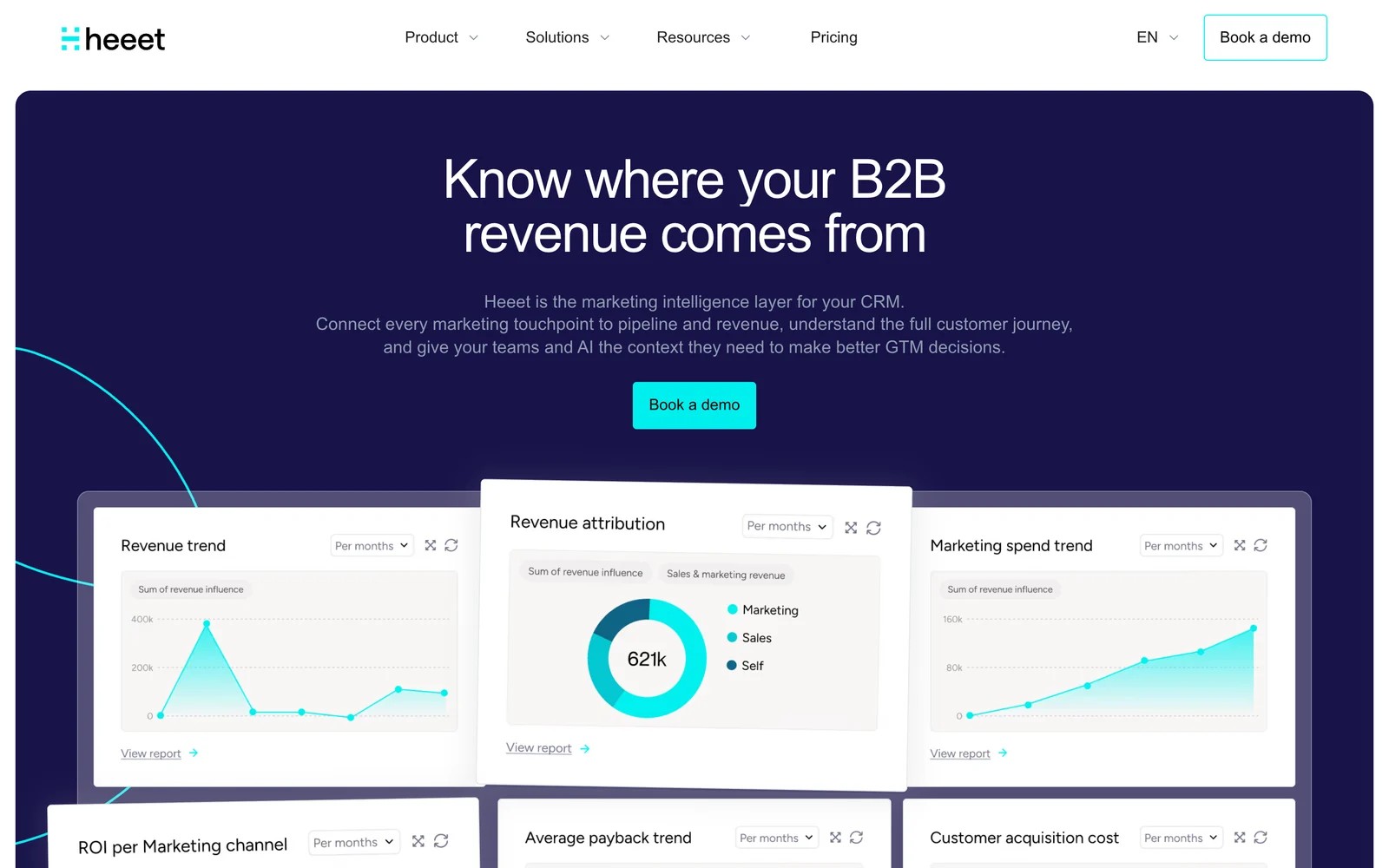
Heeet connects every marketing touchpoint to pipeline and revenue inside the CRM. Its Native plan runs as a Salesforce managed package or a HubSpot app, and its Platform plan now connects other CRMs like Pipedrive, Zoho and Attio. It markets itself as cookieless and GDPR compliant.
The users who review it are happy:
"In the education sector, our sales cycle tends to be lengthy and involves many different touchpoints." (Source)
"It does what it say it will do and collects data without the need for cookies. The support is also stellar." (Source)
I couldn't find a critical review on G2 or Capterra. The reasons people look elsewhere come from the pricing page instead:
- Entry price: Platform starts at $790 a month billed yearly, and Native at $1,490.
- Lead caps: plans include 3,000 or 6,000 net new leads a year, then $95 per extra 100 leads.
- AI features: the Analyst Agent runs on Salesforce Agentforce, so HubSpot users don't get it.
Heeet alternatives compared
Here's how the 7 Heeet alternatives compare on where data lives, CRM support and pricing model, as of November 2026.
| Tool | Where attribution lives | Native CRMs | Pricing grows with | Calls covered | Paid plan from |
|---|---|---|---|---|---|
 SourceLoop | On CRM records and in the app | HubSpot, Salesforce, Pipedrive, Jobber | Page views | Via CallRail, CTM, Invoca | $49/mo |
 Adobe Marketo Measure | On Salesforce records | Salesforce | Quote | Partly | Quote |
 LeanData | On Salesforce records | Salesforce | Quote | No | Quote |
 GA Connector | On CRM records and in GA4 | Salesforce, Zoho and others | Page views | No | $97/mo, yearly |
 Dreamdata | In the app | Salesforce, HubSpot | Quote | No | Free plan, paid quoted |
 Factors.ai | In the app, synced to CRM | Salesforce, HubSpot | Usage | No | $199/mo |
 HockeyStack | In the app | Salesforce, HubSpot | Quote | No | Quote |
The 7 best Heeet alternatives
SourceLoop first, then the Salesforce-native tools, then the platforms that sit beside your CRM.
1. SourceLoop
Best for: lead generation businesses, agencies and SaaS teams that want attribution on their CRM records without paying per lead.
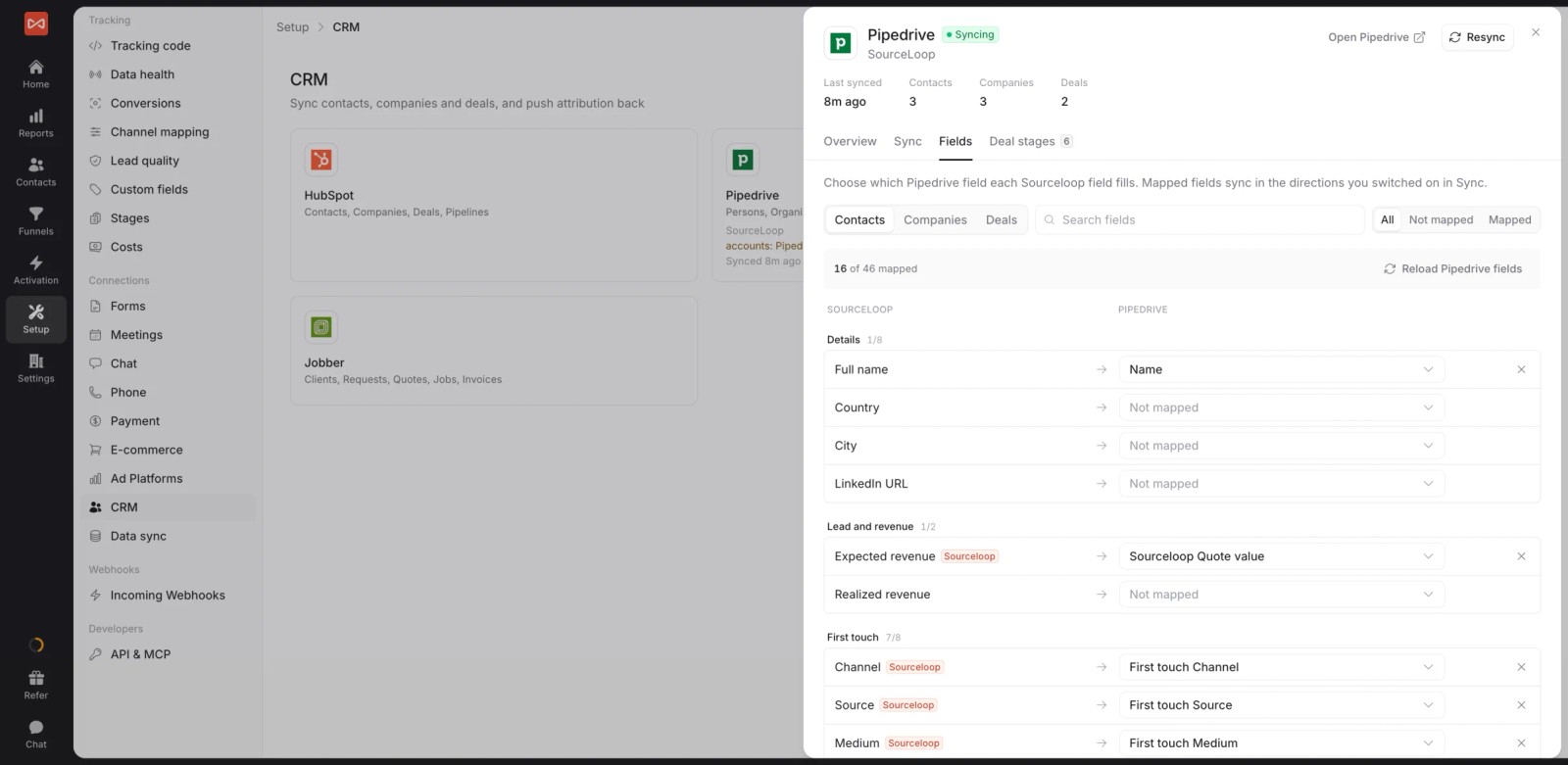
SourceLoop is lead source tracking software with multi-touch attribution built in. Like Heeet, it puts the answer on the CRM record: first and last touch, source, medium, campaign and lead quality on each contact. It also keeps the full journey in its own reports and reads stages and won deals back.
The pricing model is the opposite of Heeet's. You pay by page views, and conversions are unlimited, so a quarter with twice as many leads costs the same.
Key features
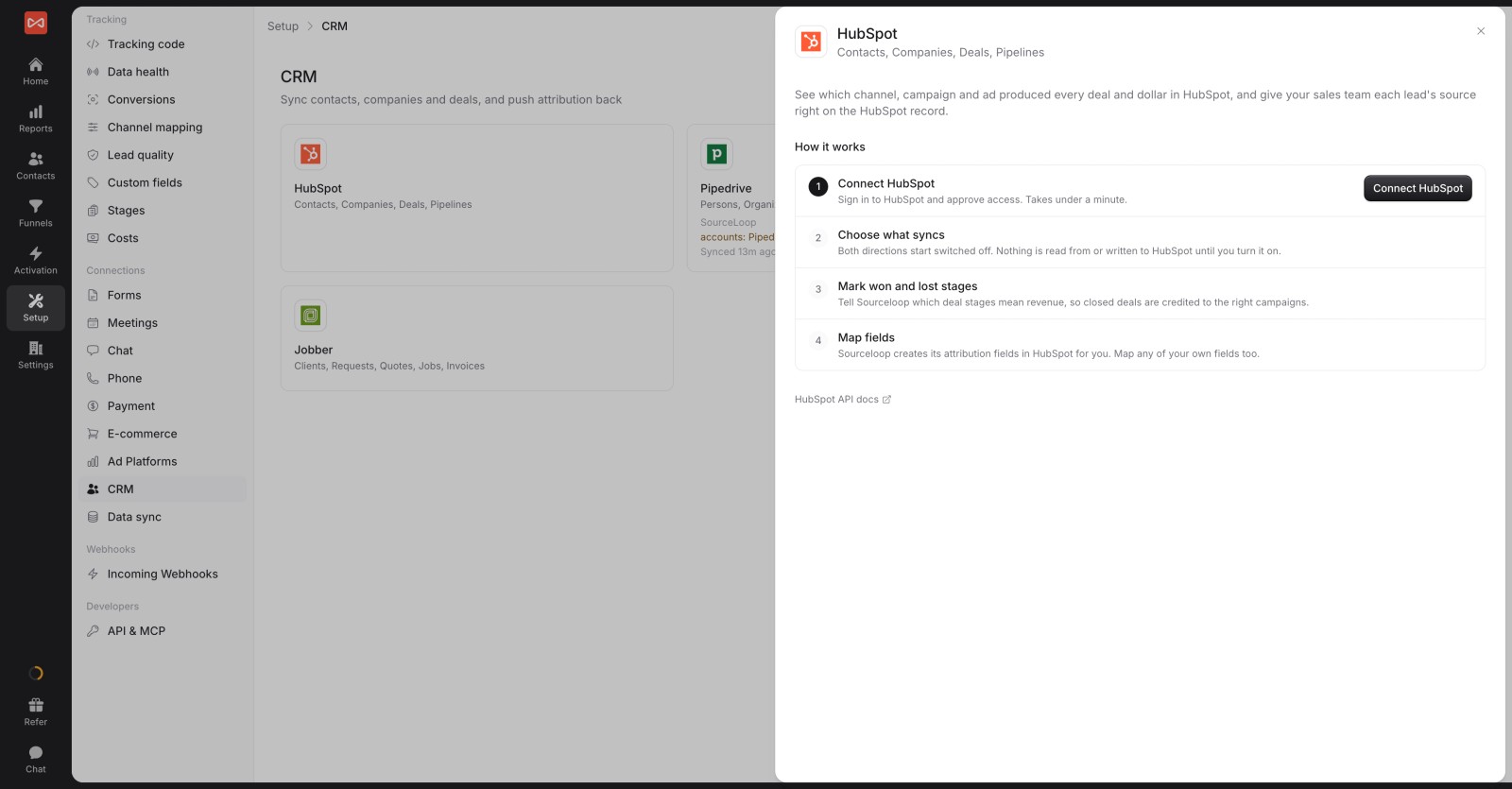
- Native CRM connections: HubSpot, Salesforce, Pipedrive and Jobber over OAuth, with Close, Attio and Copper by webhook. HubSpot users also get a panel inside HubSpot with each contact's journey.
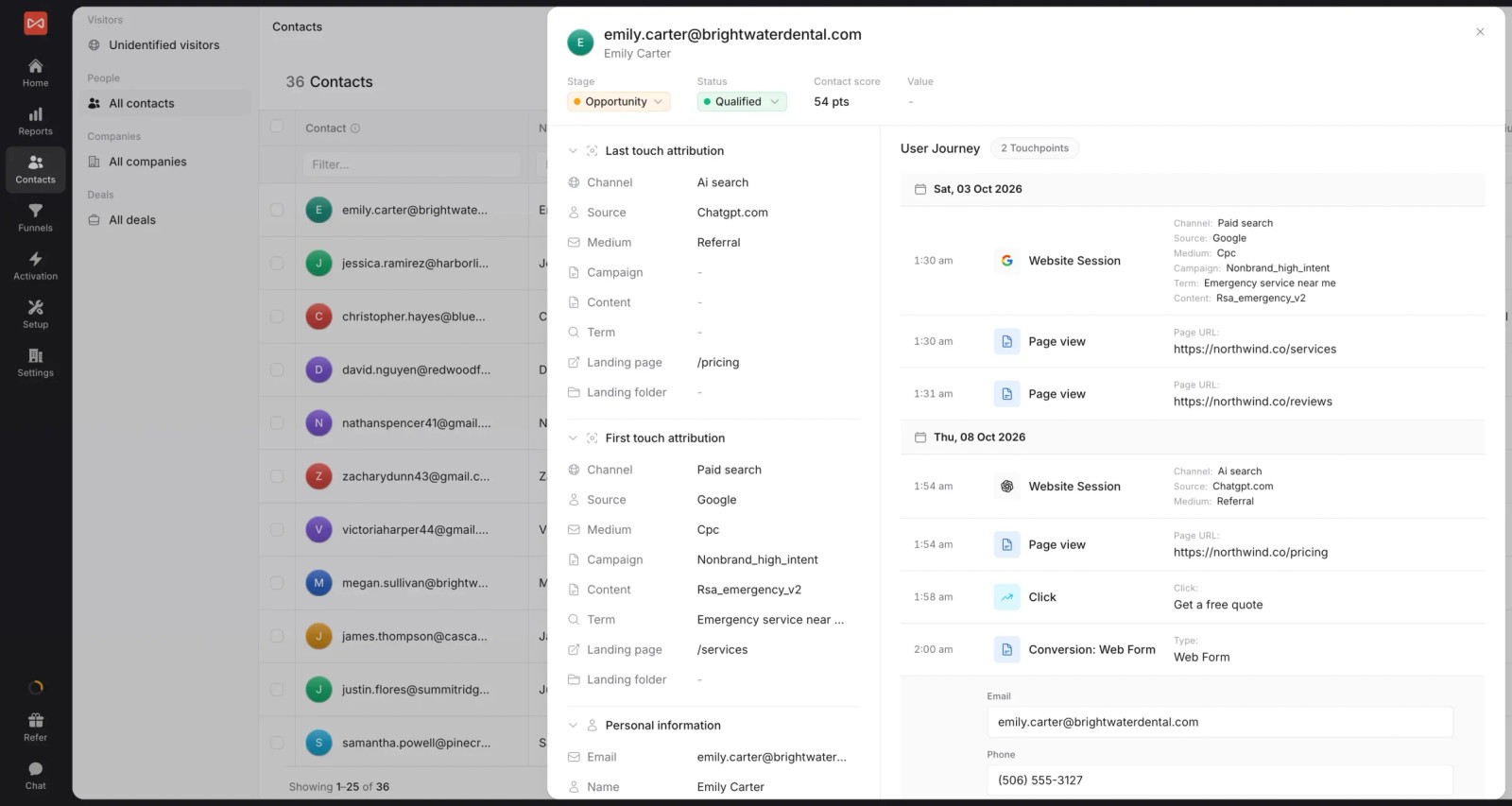
- Journey on every contact: each visit, ad click and landing page before conversion.
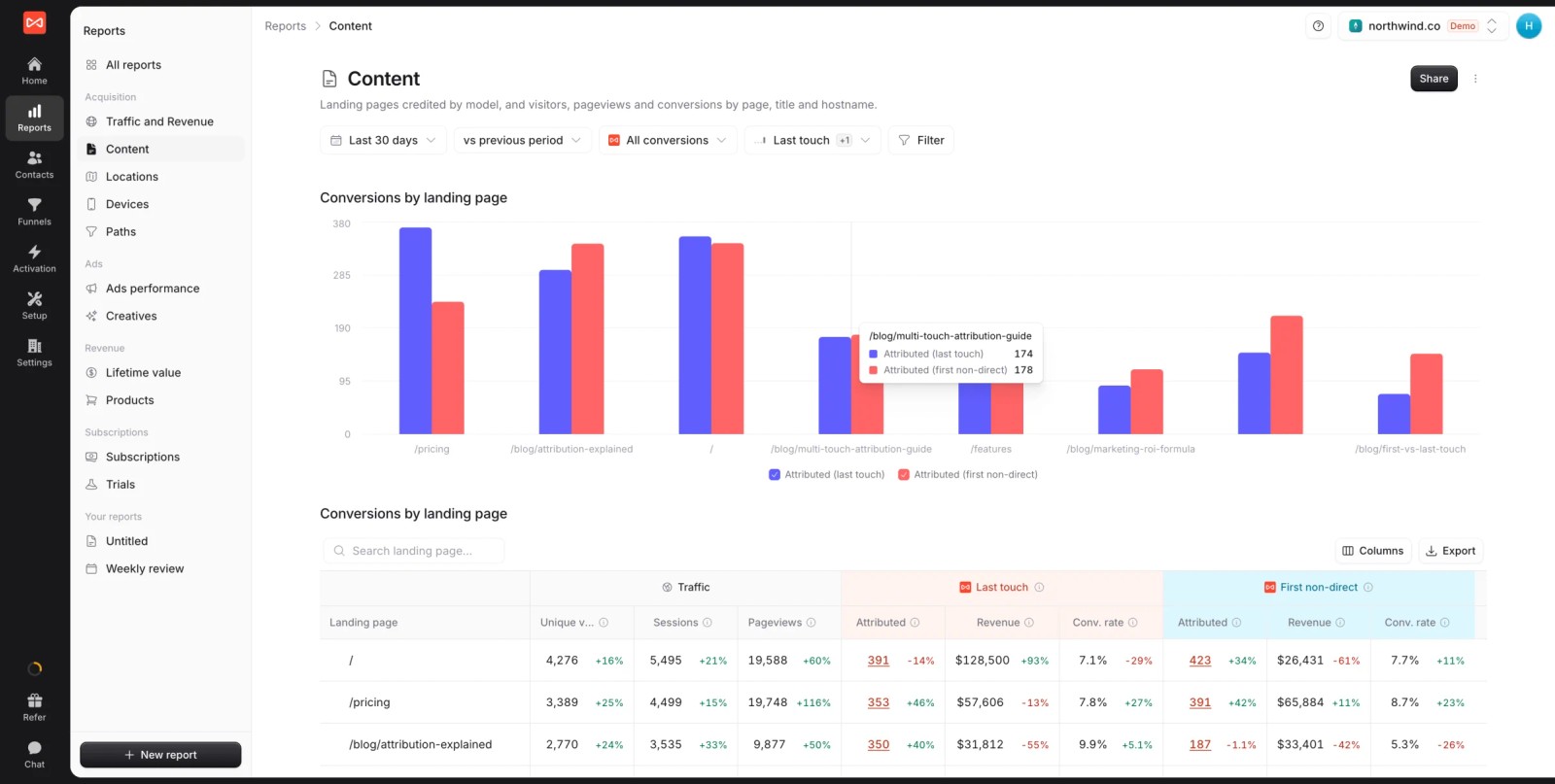
- Content and SEO credit: a content report shows which landing pages and articles start journeys and which close them, a job Heeet sells hard on.
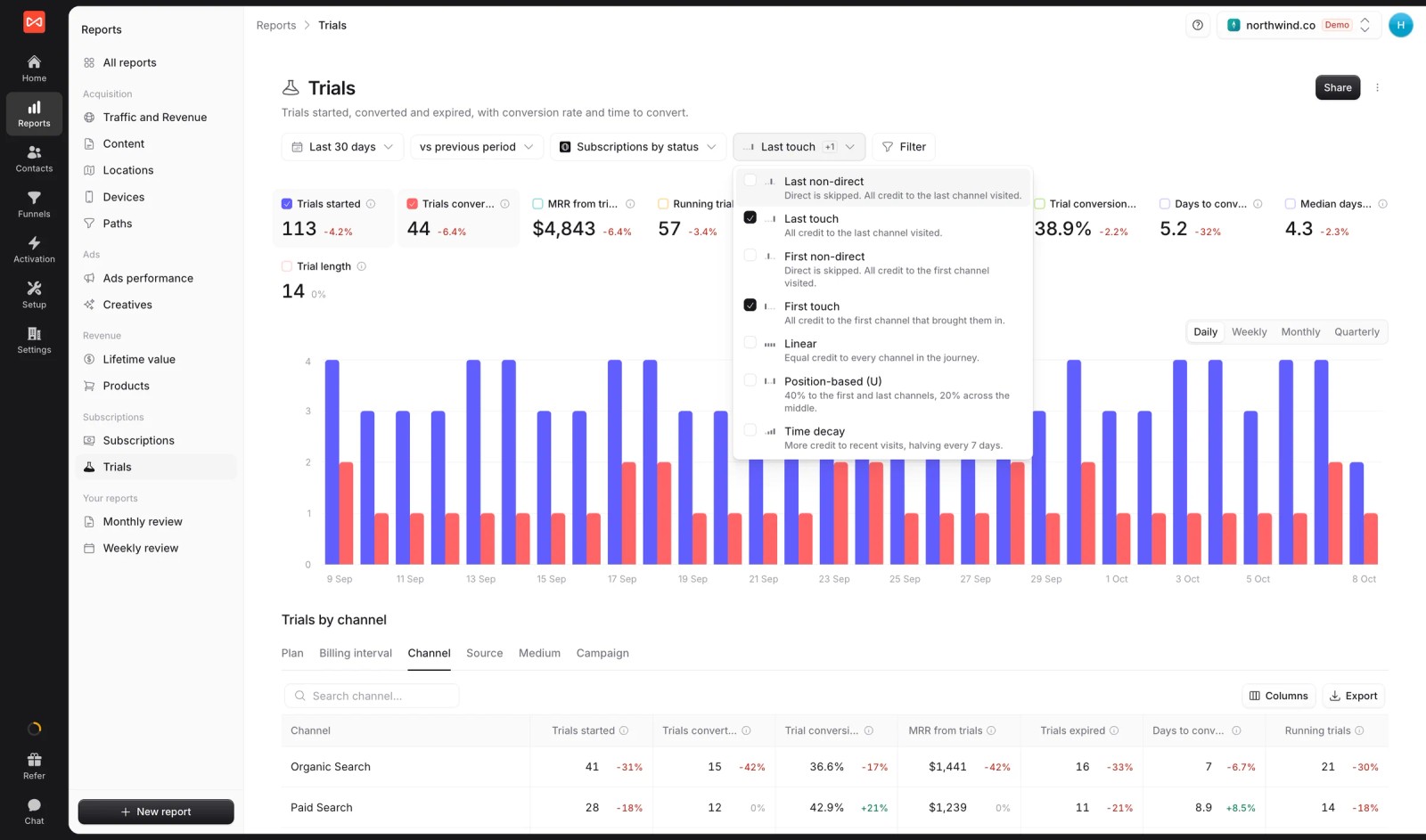
- Seven attribution models: first and last touch, first and last non-direct, linear, U-shaped and time decay, on leads, stages, deals or revenue.
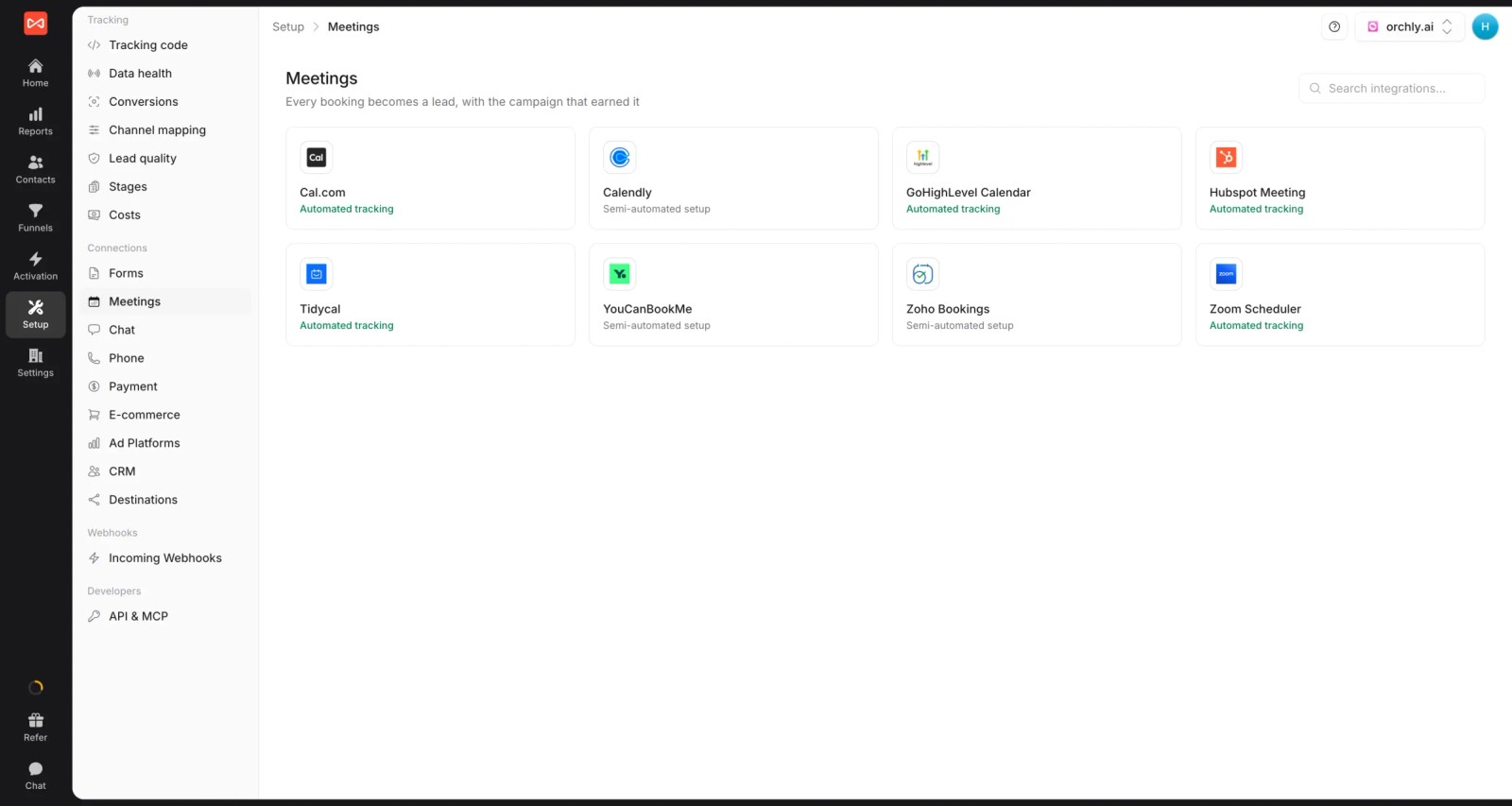
- Calls, forms and meetings: around 70 integrations, including CallRail, CTM, Invoca and HubSpot Meetings, so offline-looking leads still carry their source into the CRM.
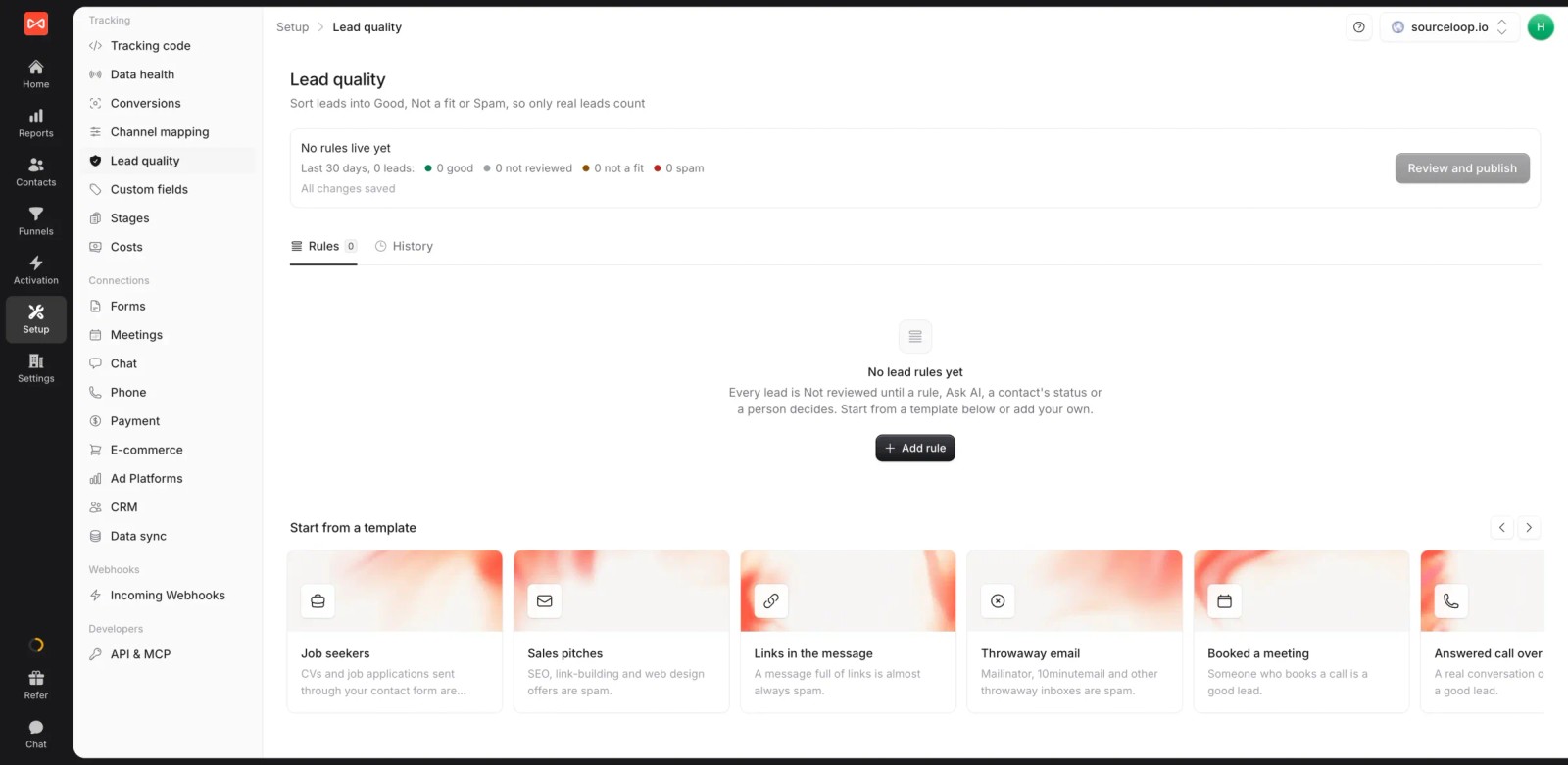
- Lead quality rules: templates for job seekers, sales pitches, throwaway emails, booked meetings and answered calls get you started, so the CRM only receives leads worth working.
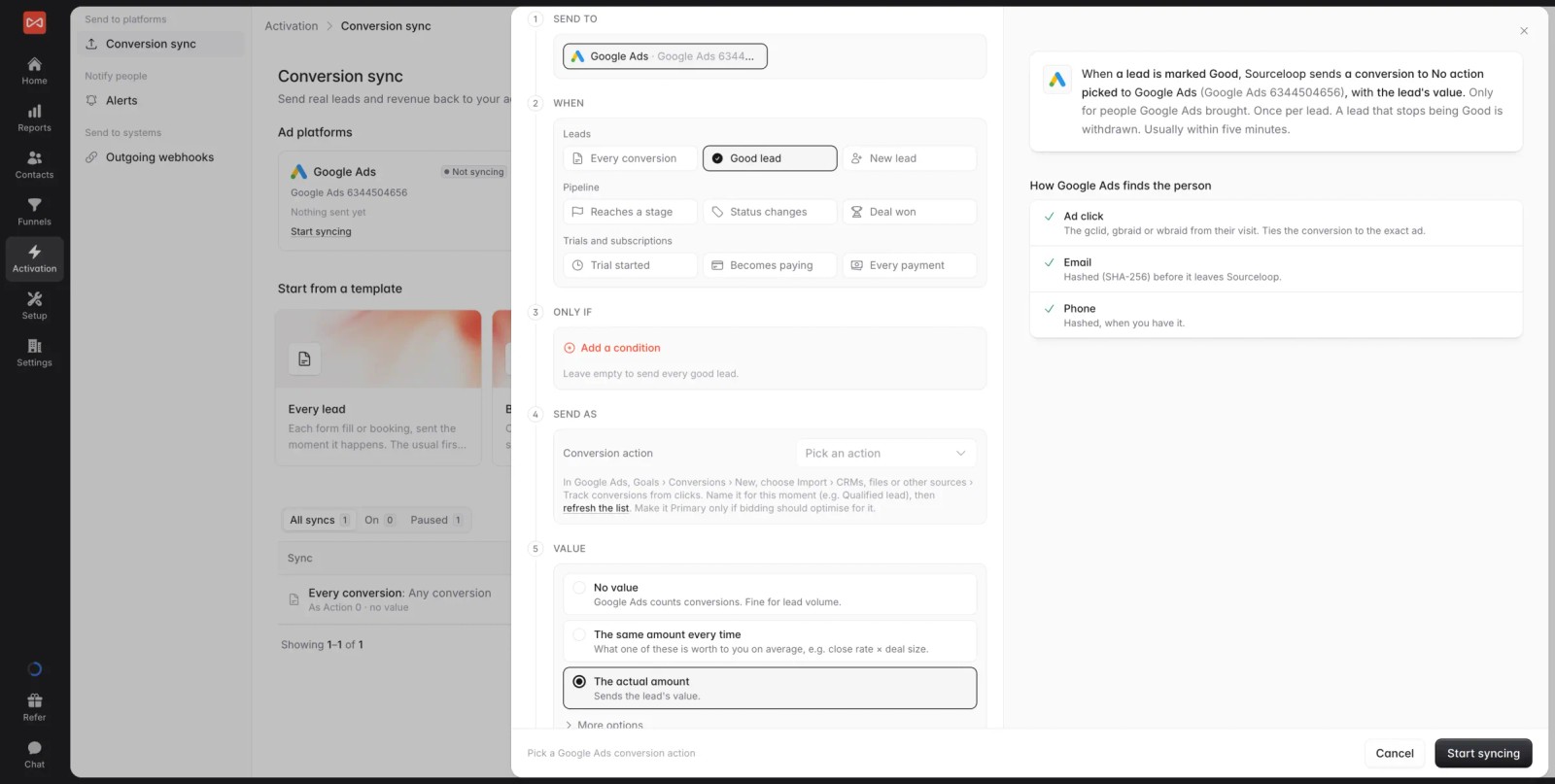
- Conversion sync: good leads and won deals go to Google Ads, Meta, Microsoft Ads and ChatGPT Ads with their value.
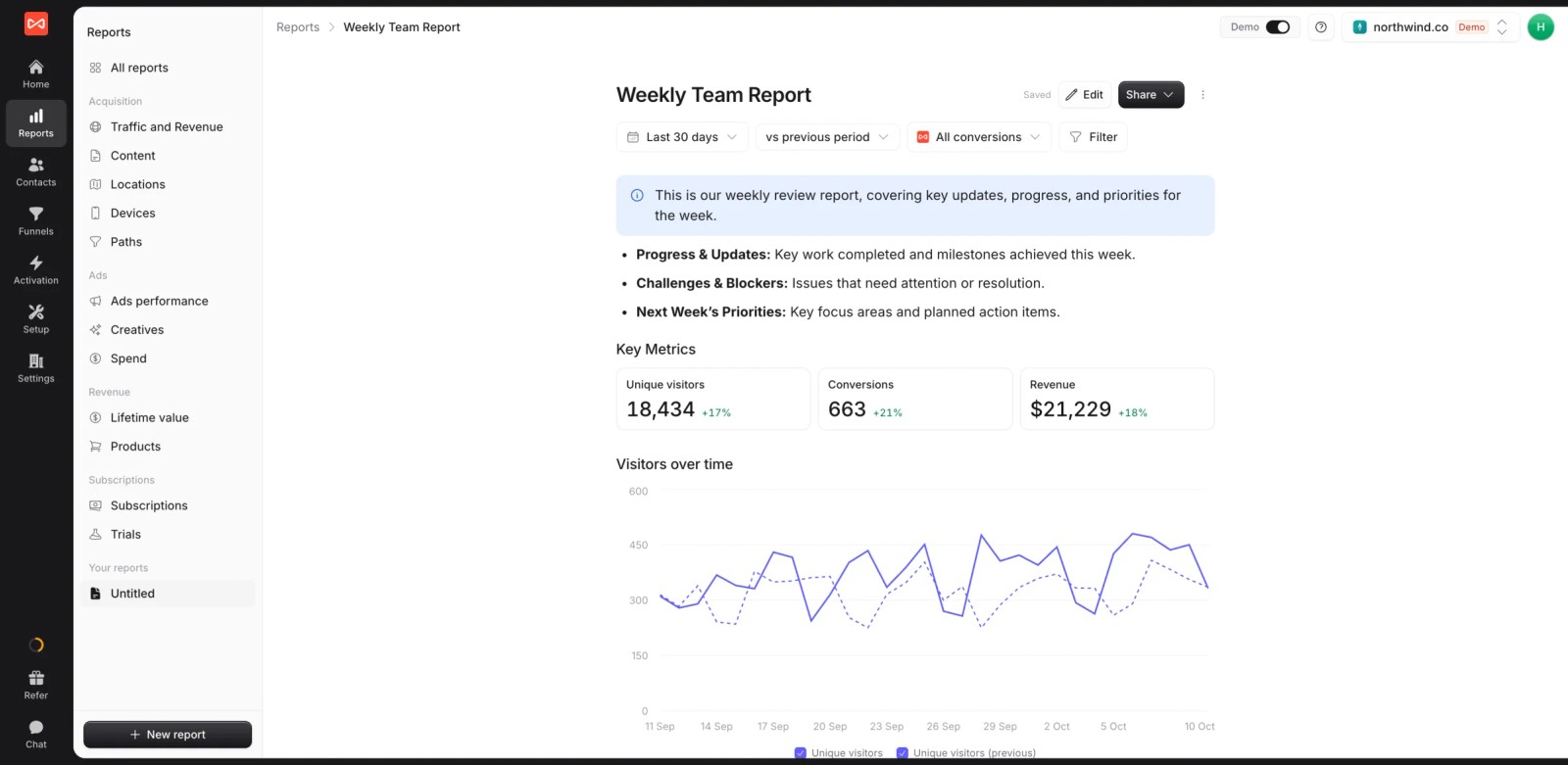
- Custom reports: leadership reports with live numbers, shared as a link or exported, without building dashboards inside the CRM.
- Alerts and an MCP server (Professional and up): Slack or email alerts on new deals, and AI assistants that can query attribution on any CRM.
Where it falls short
- In Salesforce, you create the deal fields SourceLoop writes to yourself. It isn't a managed package like Heeet Native.
- There's no IP-based company identification or account intelligence.
Pricing
- Essential: $49/mo for one site and 30,000 page views, with tracking, attribution reports, lead quality rules and alerts
- Professional: $99/mo for 100,000 page views and unlimited users, adding CRM sync, conversion sync to the ad platforms, the API and MCP
- Agency: $249/mo for three sites and 1.5 million page views, adding white label reporting
- Unlimited conversions, with a 7-day trial. Heeet's entry plan is $790 a month billed yearly.
Verdict: the better buy when you want source and journey data on CRM records and costs that don't rise with lead volume. Heeet is stronger if you need a Salesforce managed package and Agentforce AI.
2. Adobe Marketo Measure
Best for: Salesforce enterprises that want touchpoints and revenue splits stored on CRM objects.
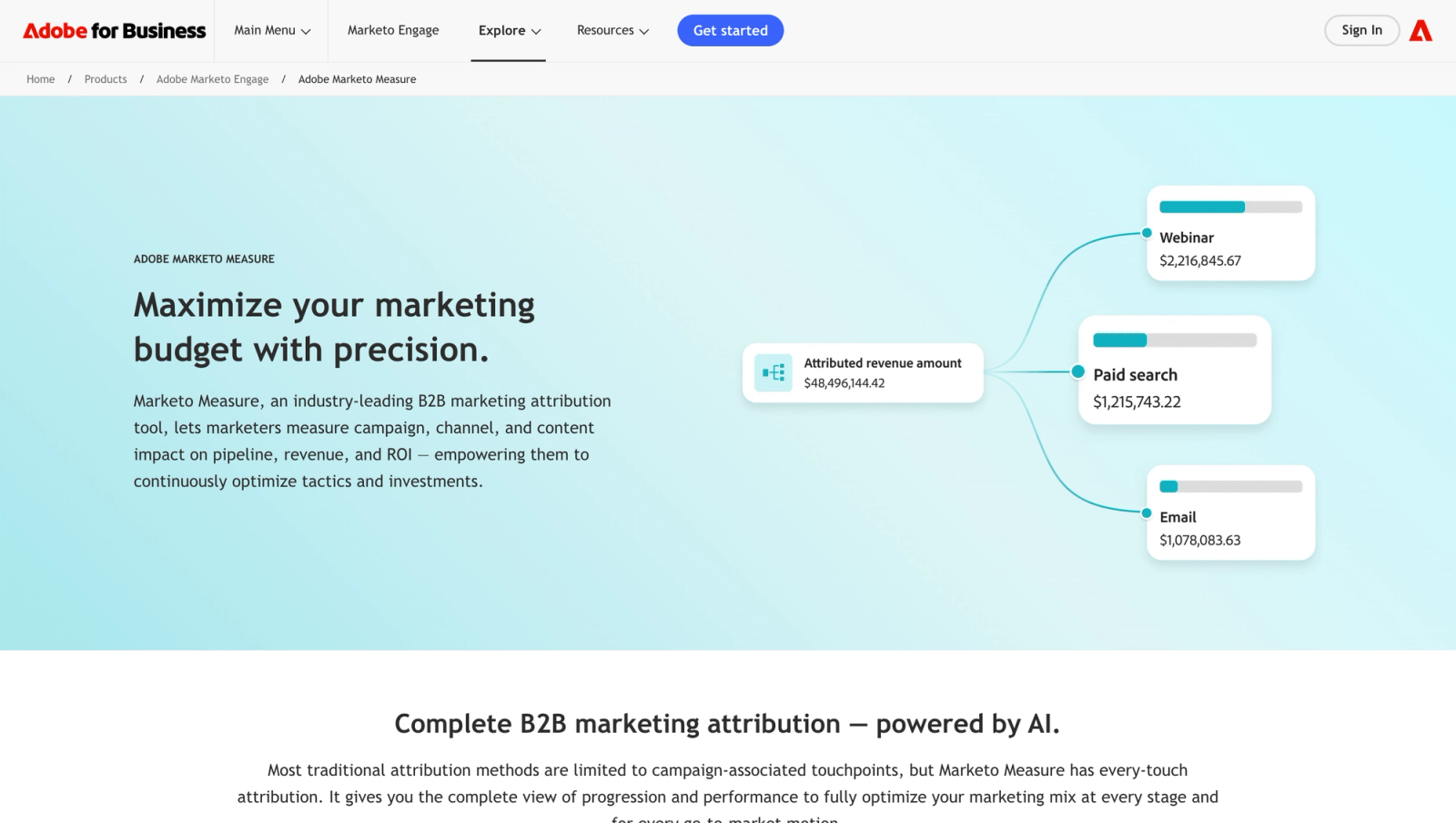
Marketo Measure, once Bizible, is the original "attribution inside Salesforce" tool. It writes touchpoints onto Salesforce records and splits opportunity revenue across them with rule-based and custom models.
In the walkthrough, the depth was obvious: W-shaped models, offline channels and ad spend all feeding the same Salesforce reports. It's the closest like-for-like for Heeet's Native plan.
What the admins I know warn about is upkeep. The reports need someone who understands Salesforce objects well, and leads entered by hand can slip through without touchpoints.
Key features
- Touchpoints are stored as Salesforce records, so revenue attribution reports run inside the CRM sales already uses.
- W-shaped, full path and custom models suit long sales cycles with several decision makers.
- Ad spend and offline channels combine into ROI reports, giving marketing a fuller view than web touches alone.
- It slots into Adobe Experience Cloud for teams already running Marketo Engage.
Where it falls short
- It only works with Salesforce, so HubSpot and Pipedrive teams are left out entirely.
- Running useful reports needs a Salesforce admin with strong knowledge of fields and objects.
- Enterprise contracts and configuration make it slower and pricier to adopt than Heeet.
What users say
"What I like most about adobe marketo measure is that it clearly shows which marketing efforts actually influence deals and revenue." (Source)
"It's not very intuitive. You have to have a very strong understanding of Salesforce and your contact fields in order to run any type of report." (Source)
Pricing
- Quoted by Adobe on an enterprise contract. Our Marketo Measure alternatives guide has more.
3. LeanData
Best for: Salesforce teams that need lead routing first, with campaign-based attribution as part of the package.
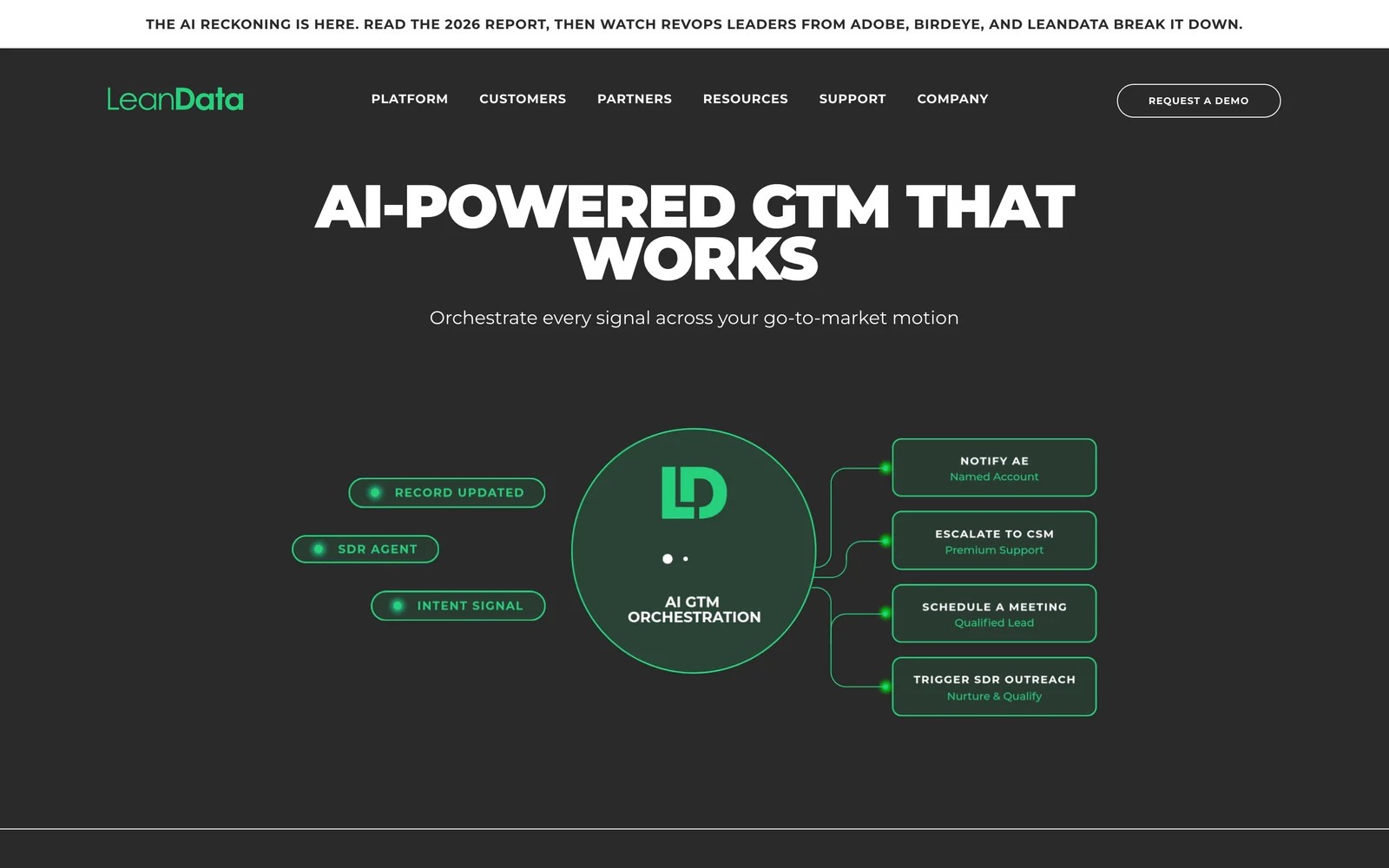
LeanData is best known for lead-to-account matching and routing in Salesforce. Its attribution product runs natively on Salesforce campaigns and custom objects.
From the demo, the attribution side works the way a Salesforce admin would build it: everything hangs off campaign membership. If a web visit never becomes a campaign touch, it doesn't count.
Most reviews talk about routing, which tells you where the product's center of gravity is. For a team leaving Heeet purely for attribution, that's worth weighing.
Key features
- Lead-to-account matching and routing send each lead to the right rep, the core reason most teams buy LeanData.
- Attribution runs natively on Salesforce campaigns and custom objects, with no external app to maintain.
- An account-level engagement view gives marketing and sales a shared picture of activity.
- Every routing decision is logged, which helps RevOps teams audit why leads went where they did.
Where it falls short
- Attribution depends on Salesforce campaign membership, so untracked web touches are missing from reports.
- Reporting is widely described as hard to work with, even by happy routing customers.
- It's Salesforce only, with no option for HubSpot or other CRMs.
What users say
"It gives us a much clearer view of marketing engagement at the account level." (Source)
"Reporting with LeanData is a mystery." (Source)
"if there are a large volume of leads coming in at the same time, lean data can sometimes barf or get backed up." (Source)
Pricing
- Quoted through LeanData sales.
4. GA Connector
Best for: Salesforce and Zoho teams that want source fields on CRM records for a fraction of Heeet's price.
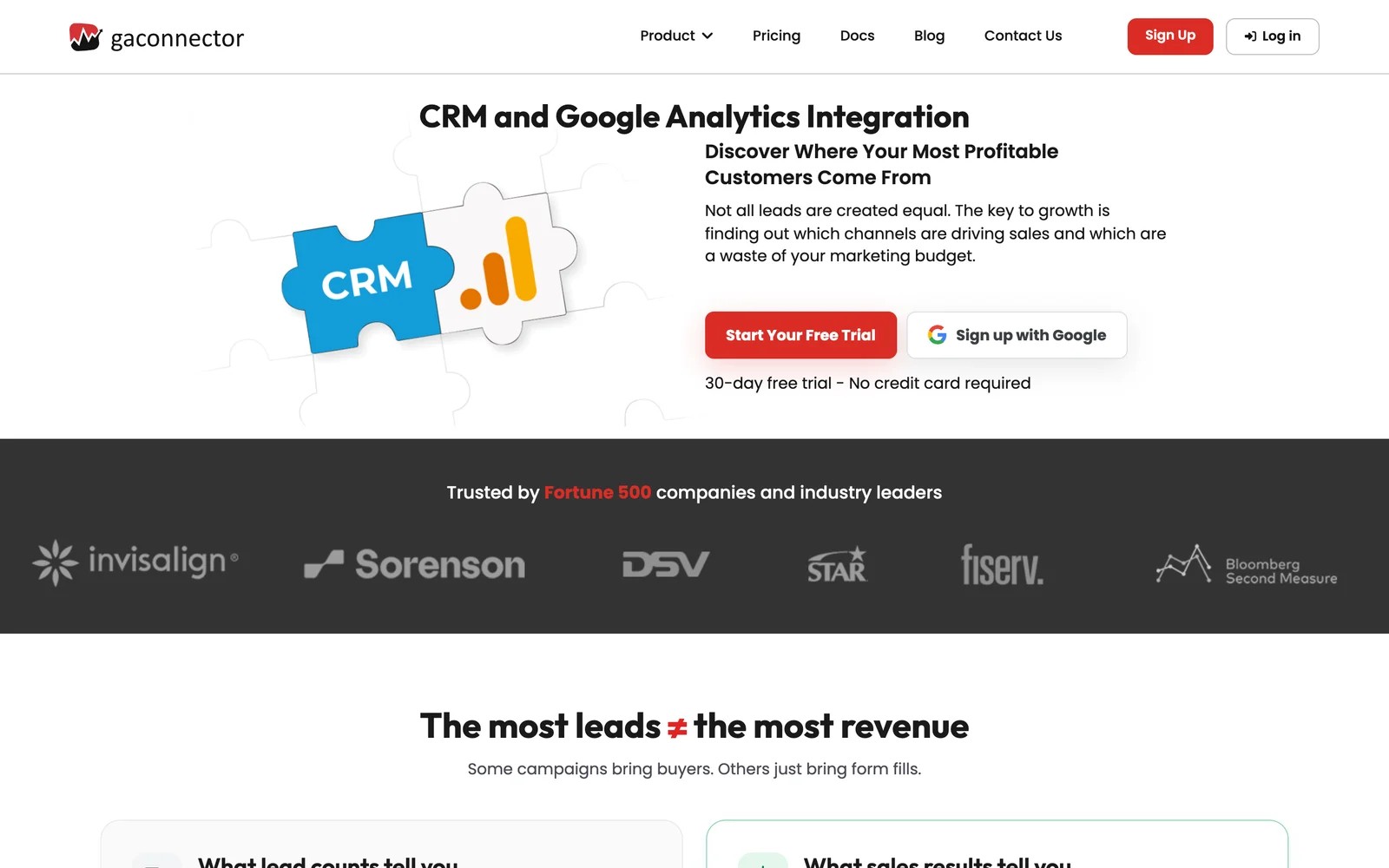
GA Connector writes source, campaign and keyword into the CRM on every lead, then sends CRM outcomes back to Google Analytics. It's the budget version of the Heeet idea.
On the 30-day trial, the fields it added to my test CRM were clear, and test leads arrived with their source filled in. Support is email only, which some users find odd at first, though they report quick replies.
It's much shallower than Heeet. You get source fields and a GA4 link, not touchpoints on opportunities or revenue dashboards.
Key features
- Source, medium, campaign and keyword are written into Salesforce, Zoho and other CRMs on every new lead.
- CRM deal outcomes can be pushed back into Google Analytics to see revenue by channel in GA4.
- One price covers the whole CRM account with no per-user or per-lead fees.
- A 30-day trial with no card makes it easy to test on real leads.
Where it falls short
- It captures source fields, not multi-touch journeys on opportunities, so it's a step down from Heeet's reporting.
- Earlier visits are lumped into one field, which makes journey analysis awkward.
- Support is email only.
What users say
"Simple to set up and excellent customer support." (Source)
"customer service is only by email - which made me think the company was kind of shady, but actually they're pretty prompt and good at solving issues over email." (Source)
"The setup takes some time mostly because every client has Salesforce configured differently." (Source)
Pricing
- Tier 1: $97/mo billed annually for 50,000 page views
- Tier 2 and 3: $197 and $397/mo. 30-day trial.
5. Dreamdata
Best for: B2B SaaS companies that want account journeys and are happy for attribution to live outside the CRM.
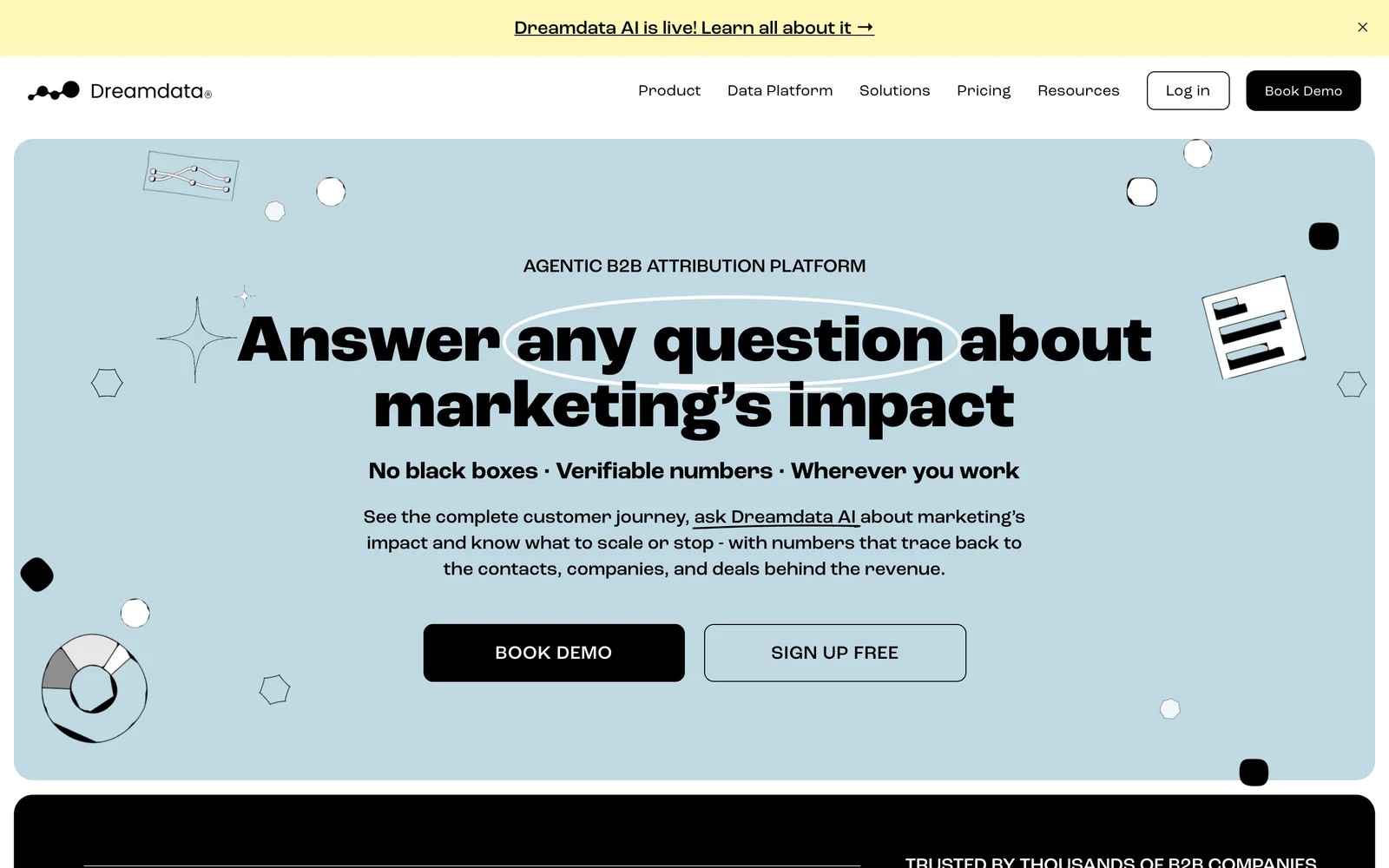
Dreamdata reads your CRM and builds a timeline per company, then credits revenue across every contact's touches. It's the beside-the-CRM approach in its purest form.
I've used the free plan, and the company timeline is what I'd point to. Heeet shows touchpoints on records; Dreamdata shows how a whole buying group moved over months, which is harder to see inside a CRM.
The trade-off is exactly what Heeet users care about. Data mostly stays in Dreamdata rather than flowing back to Salesforce, and that frustrates teams who want sales to see it on the record.
Key features
- Account timelines join every contact and touch at a company, making buying-group journeys visible.
- Revenue is attributed across CRM stages with several models, from first meeting to closed-won.
- Companies are identified from anonymous traffic, so early research shows up before any form fill.
- The free plan includes 2 months of history and 5 seats for a real test.
Where it falls short
- Attribution mostly stays in Dreamdata rather than on Salesforce records, the reverse of Heeet's approach.
- Paid attribution plans are quoted, so cost comparisons with Heeet need a sales call.
- Calls and offline leads aren't covered.
What users say
"Since Dreamdata is easy to use the non technical marketers can easily find out which channel are driving most pipeline with Dreamdata reports." (Source)
"It would be nice if it could push data to SFDC, rather than just pulling it" (Source)
Pricing
- Free: $0 with 2 months of history and 5 seats
- Advanced: custom pricing, guided trial
6. Factors.ai
Best for: B2B teams that want account identification and intent alongside attribution, synced to HubSpot or Salesforce.
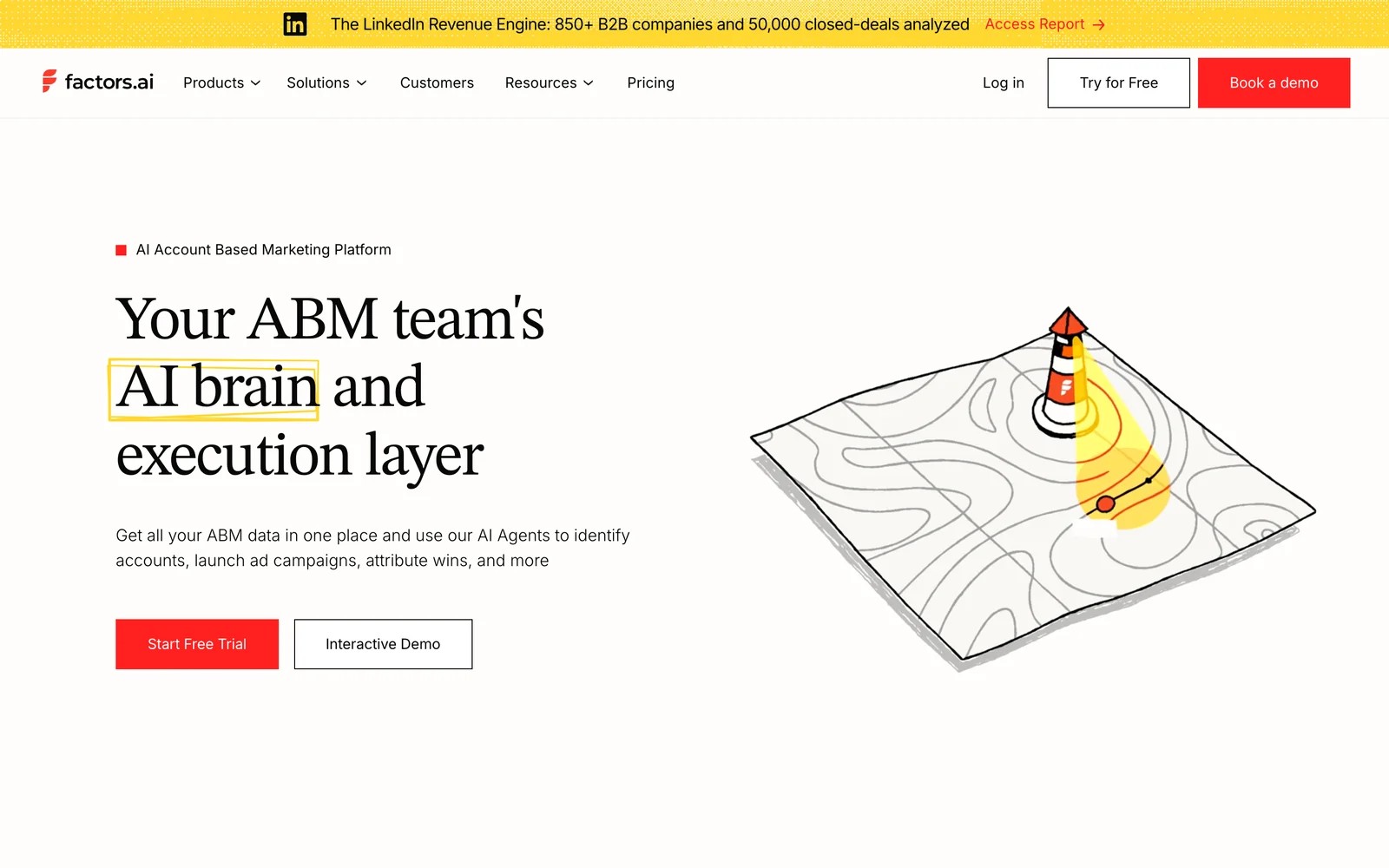
Factors.ai identifies the companies visiting your site, lays out every touch at an account, and ties it to CRM deals. It adds the account intelligence Heeet doesn't attempt.
During the trial, the account timeline was the most useful screen. I could see which companies came back several times before anyone filled in a form, which Heeet can't show because it starts from CRM records.
The weaknesses are match rates for small companies and a sync with HubSpot that some users find slow. Pricing also moves with usage.
Key features
- Visiting companies are identified from their IP address before anyone converts, adding a layer Heeet lacks.
- Account timelines show every person and touch at a company across weeks of research.
- Account-level attribution ties engagement to HubSpot and Salesforce deals.
- LinkedIn and Google Ads audiences can be built from engaged accounts.
Where it falls short
- Smaller companies often go unmatched, which weakens account views for SMB-heavy pipelines.
- The CRM sync can lag, according to some HubSpot users.
- Costs climb as identified accounts and usage grow.
What users say
"Factors shows us which companies are visiting our website and what they're looking at, before they ever fill out a form." (Source)
"We’re also experiencing some delays with the HubSpot-to-Factors sync" (Source)
Pricing
- Lite: $199/mo; Basic: $6,000/yr; Growth: $20,000/yr. Free trial.
7. HockeyStack
Best for: mid-market and enterprise B2B teams that want CRM, ads and product data unified with AI on top.
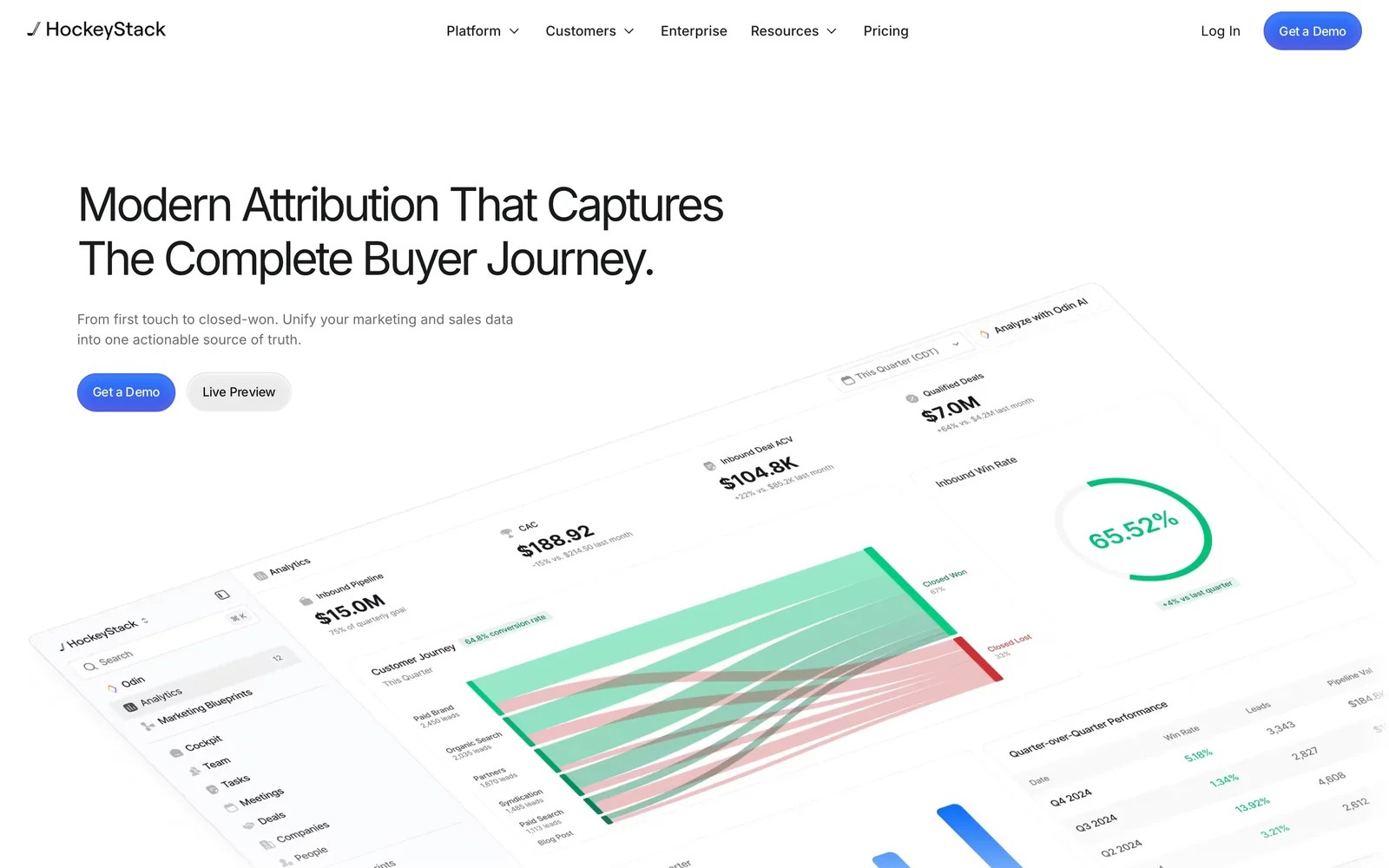
HockeyStack unifies CRM, ad, website and product data, then layers attribution and AI agents across it. It's the heaviest platform here.
The demo is strong on model switching and journey maps. Where Heeet keeps things inside Salesforce, HockeyStack builds its own data model, which is powerful and a lot more to set up.
Teams I know describe onboarding as the make-or-break phase. When the CRM data connects cleanly, it's excellent; when it doesn't, it drags.
Key features
- CRM, advertising, automation and product data are unified into one model, giving reports more context than CRM data alone.
- Attribution models can be switched instantly on the same report.
- Journey maps run from anonymous visit to closed-won across every person at an account.
- AI agents support analysis and sales prospecting.
Where it falls short
- There's no trial or published price, so you commit before seeing it on your data.
- Onboarding depends heavily on clean CRM data and can stretch for months.
- Attribution lives in HockeyStack rather than on CRM records.
What users say
"I like being able to switch between attribution models like first touch, linear, and last touch in a second, so different marketing teammates can look at reports in different ways." (Source)
"Reporting is incredibly complicated." (Source)
"The onboarding process became a sunk cost." (Source)
Pricing
- Custom pricing, with startup pricing available
How to choose
Decide where you want the answer to live, then check how the price behaves.
1. Inside Salesforce, like Heeet Native
- Marketo Measure for enterprises on Adobe, LeanData if routing is the bigger problem, GA Connector on a budget.
2. On CRM records, any CRM, without per-lead pricing
- SourceLoop for lead generation businesses, agencies and SaaS teams on HubSpot, Salesforce, Pipedrive or Jobber.
3. Beside the CRM, with account journeys
- Dreamdata or Factors.ai, or HockeyStack with a bigger budget.
If you're on Salesforce, our guide to tracking Google Ads leads in Salesforce shows what the setup looks like.
Frequently asked questions
-
What is Heeet used for?
Heeet is B2B marketing attribution software that connects touchpoints to pipeline and revenue inside the CRM. Its Native plan runs in Salesforce or HubSpot, and its Platform plan connects other CRMs.
-
How much does Heeet cost?
As of November 2026, Heeet Platform starts at $790 a month billed yearly for 3,000 net new leads a year, and Native at $1,490 a month for 6,000. Extra leads cost $95 per 100.
-
Does Heeet only work with Salesforce?
No. Heeet Native supports Salesforce and HubSpot, and the Platform plan connects other CRMs such as Pipedrive, Zoho and Attio through API or Zapier.
-
What is the cheapest Heeet alternative?
GA Connector starts at $97 a month billed annually and SourceLoop at $49 a month. Both write source data to CRM records without per-lead charges.
-
Which Heeet alternative is Salesforce native?
Adobe Marketo Measure and LeanData both run natively on Salesforce. SourceLoop and GA Connector write to Salesforce records but run as external tools.



 Paid Social


