
7 Attributer.io Alternatives for Lead Source in Your CRM
Seven Attributer.io alternatives, from simple hidden-field tools to full journey and revenue tracking, with pricing and real reviews.
Table of contents
Attributer solves a narrow problem well. It puts the channel, source and campaign into hidden form fields, so every lead lands in your CRM with its origin attached.
Teams usually outgrow it in one of two ways. They want to see the visits before the form, or they want leads from calls and bookings tracked as well.
In this guide, I'll lay out seven alternatives as a ladder, from tools that do roughly what Attributer does to ones that track the whole journey and revenue.
How I tested the alternatives
I pushed the same test leads through each tool that has a trial or free plan, into a HubSpot sandbox, and looked at what reached the contact record: GA Connector, WhatConverts, Dreamdata and HubSpot's own source properties. Heeet and Factors.ai were judged on their onboarding flows, documentation and teams I know who use them.
A lot of the brands and agencies we work with started on Attributer, so their reasons for moving on shaped the criteria. Review quotes come from G2 and Capterra. I compared:
- Exactly what gets written to the CRM record
- Whether visits before the form are kept
- Whether calls, chats and bookings are covered
- Whether you get reports, or build them yourself
SourceLoop is our product. It went through the same test as the others, and I've said where a simpler tool is the better buy.
Last checked November 2026. Confirm current pricing with each vendor.
What you get with Attributer, and what you don't
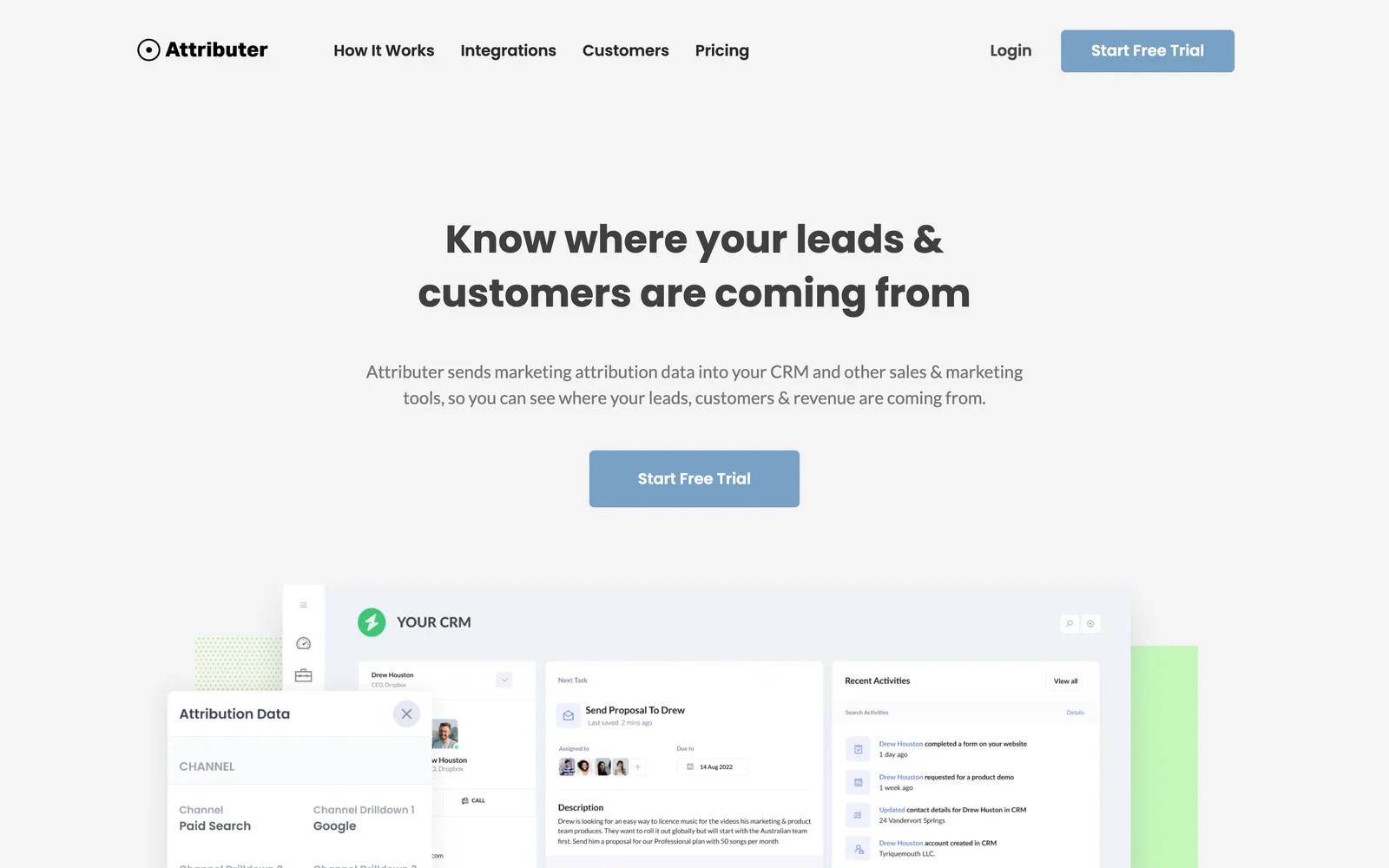
Attributer's appeal is how little it asks of you. A script on the site, hidden fields on the form, and your CRM starts receiving first and last touch data. Its pricing page starts at $29 a month for up to 100 leads, and $199 covers ten sites.
"Easy to set up, seems to give accurate data, inexpensive for the value it brings, and the support team is responsive and helpful." (Source)
The limits are built into the design. It only sees the form, depends on clean UTMs, and leaves every report to you.
"Dependence on UTM parameters - if the UTMs are not properly implemented across all the campaigns, attribution capability will be impacted." (Source)
"A bit pricey for what it does if you're covering multiple sites, but it does really give visibility we wouldn't have otherwise." (Source)
Attributer alternatives compared
Here's how the 7 Attributer.io alternatives compare on what reaches the CRM and what else they track, as of November 2026.
| Tool | What lands in the CRM | Visits before the form | Calls and bookings | Reports included | Paid plan from |
|---|---|---|---|---|---|
 SourceLoop | First and last touch, lead quality, deal stages back | Yes | Yes | Yes | $49/mo |
 HubSpot Marketing Hub | Original source properties | Yes | HubSpot meetings | Higher tiers | Starter per seat |
 GA Connector | Source, campaign, keyword | One field | No | In GA4 | $97/mo, yearly |
 WhatConverts | Lead source and values | No | Yes | Yes | $30/mo |
 Heeet | Touchpoints on contacts and deals | Yes | No | Yes | $790/mo, yearly |
 Dreamdata | Mostly reads from the CRM | Yes | No | Yes | Free plan, paid quoted |
 Factors.ai | Account engagement | Yes | No | Yes | $199/mo |
The 7 best Attributer.io alternatives
The list runs roughly from "a better Attributer" to "a different class of tool".
1. SourceLoop
Best for: lead generation businesses, agencies and SaaS teams that like Attributer's CRM-first approach but want the visits, calls and deal outcomes around each lead.
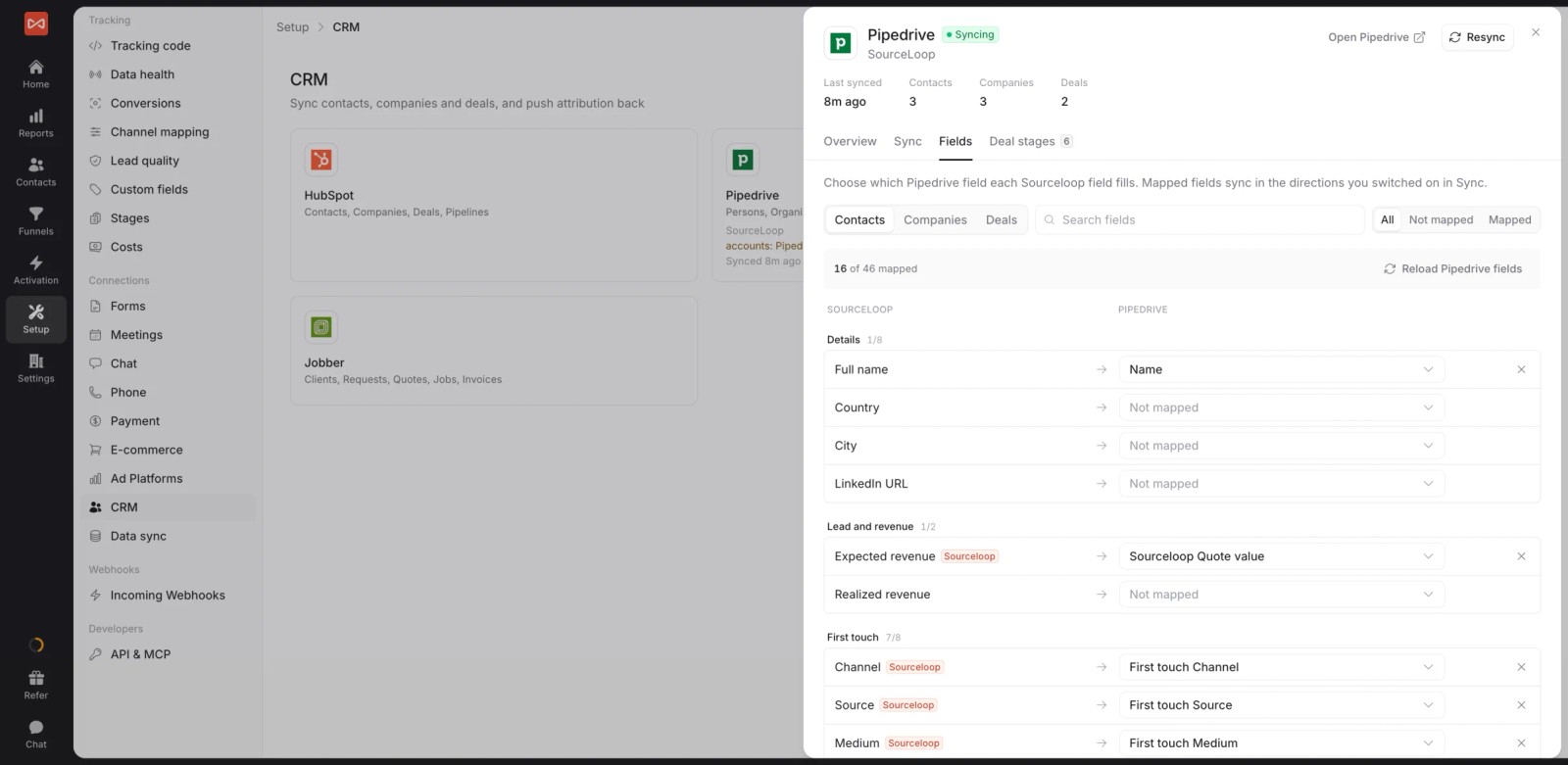
SourceLoop is a marketing attribution and lead source tracking tool. Like Attributer, it writes first-touch and last-touch source, medium and campaign onto every CRM record. Unlike Attributer, it keeps every visit before the conversion, captures calls and meetings too, and reads stages and won deals back.
The setup is a script plus a CRM connection, with no hidden fields to add form by form. Forms are picked up automatically across around 70 builders, and the mapping screen above decides which properties get filled.
Key features
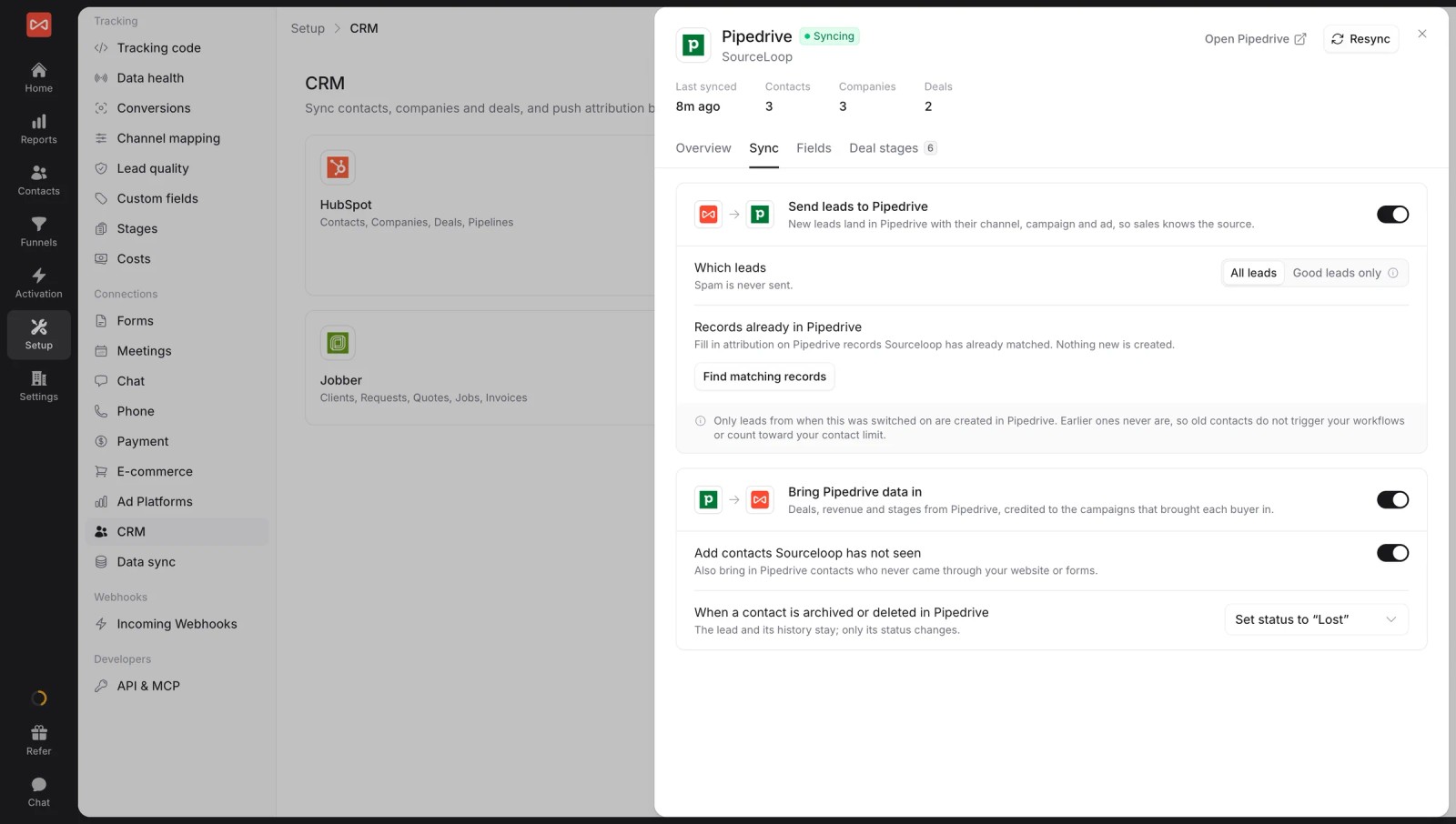
- Two-way CRM sync: send all leads or only good leads to HubSpot, Salesforce, Pipedrive or Jobber, and bring stages and deals back for revenue reports.
- Custom fields from form answers: turn a question like "budget" or "service needed" into a field you can report and filter on, even for leads from the last 12 months.
- Journey on every lead: each visit, ad click and landing page, so a lead isn't reduced to two fields.
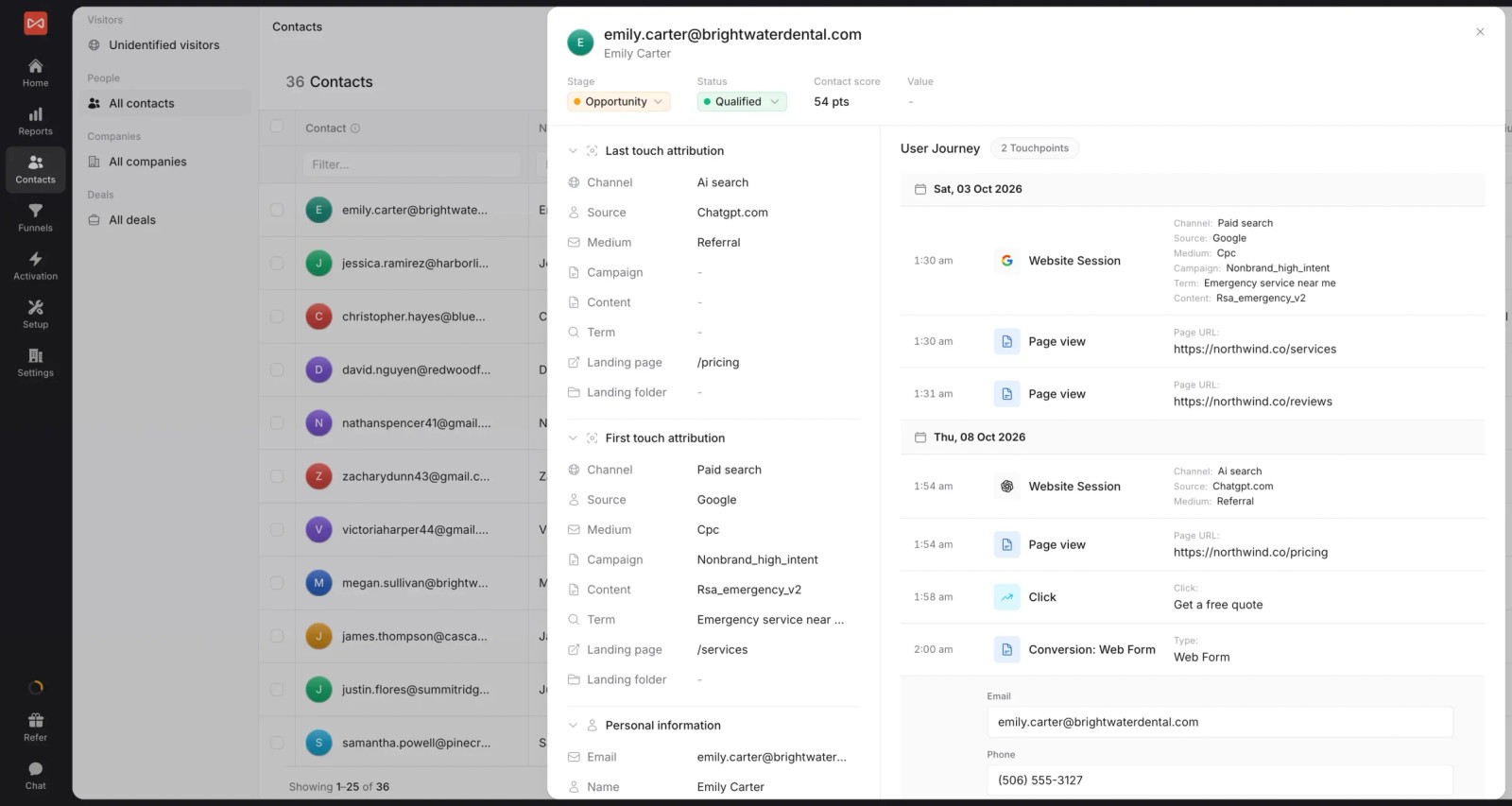
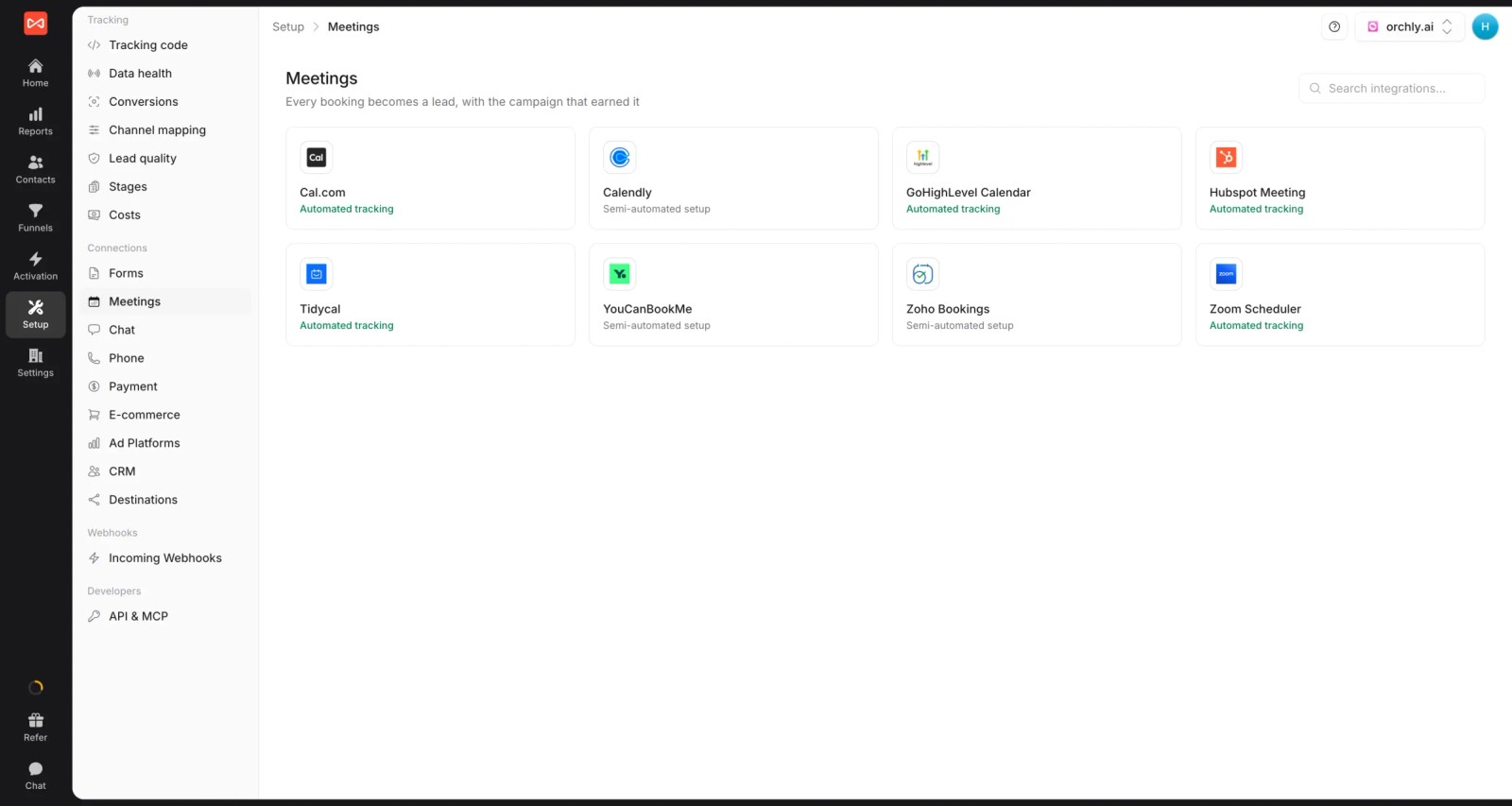
- Calls, chats and bookings: CallRail, CTM, Invoca and Mediahawk calls, plus Calendly, HubSpot Meetings and chat tools, all with their source. Attributer only sees form submissions.
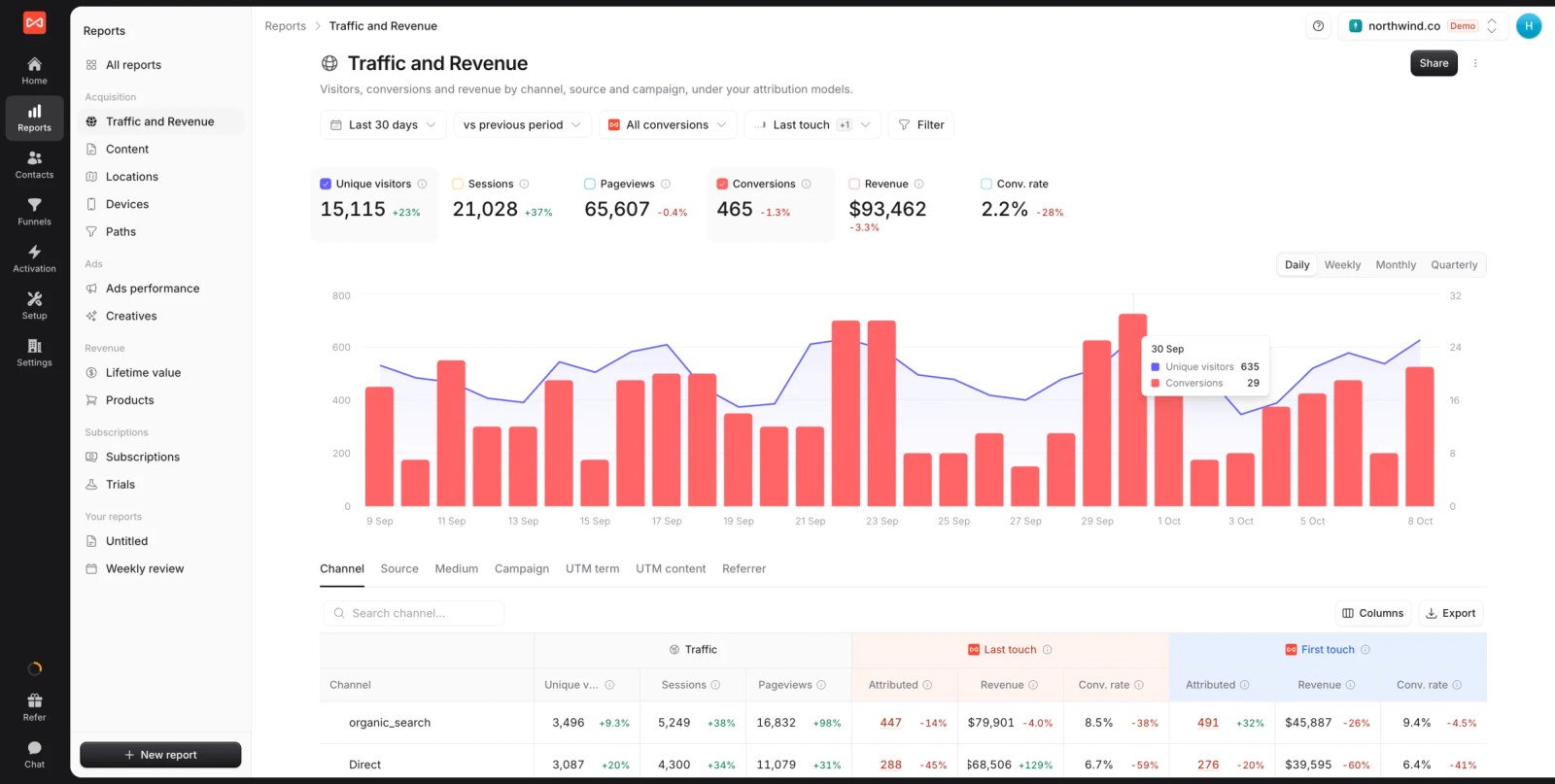
- Reports included: conversions and revenue by channel under seven models, without building anything in the CRM.
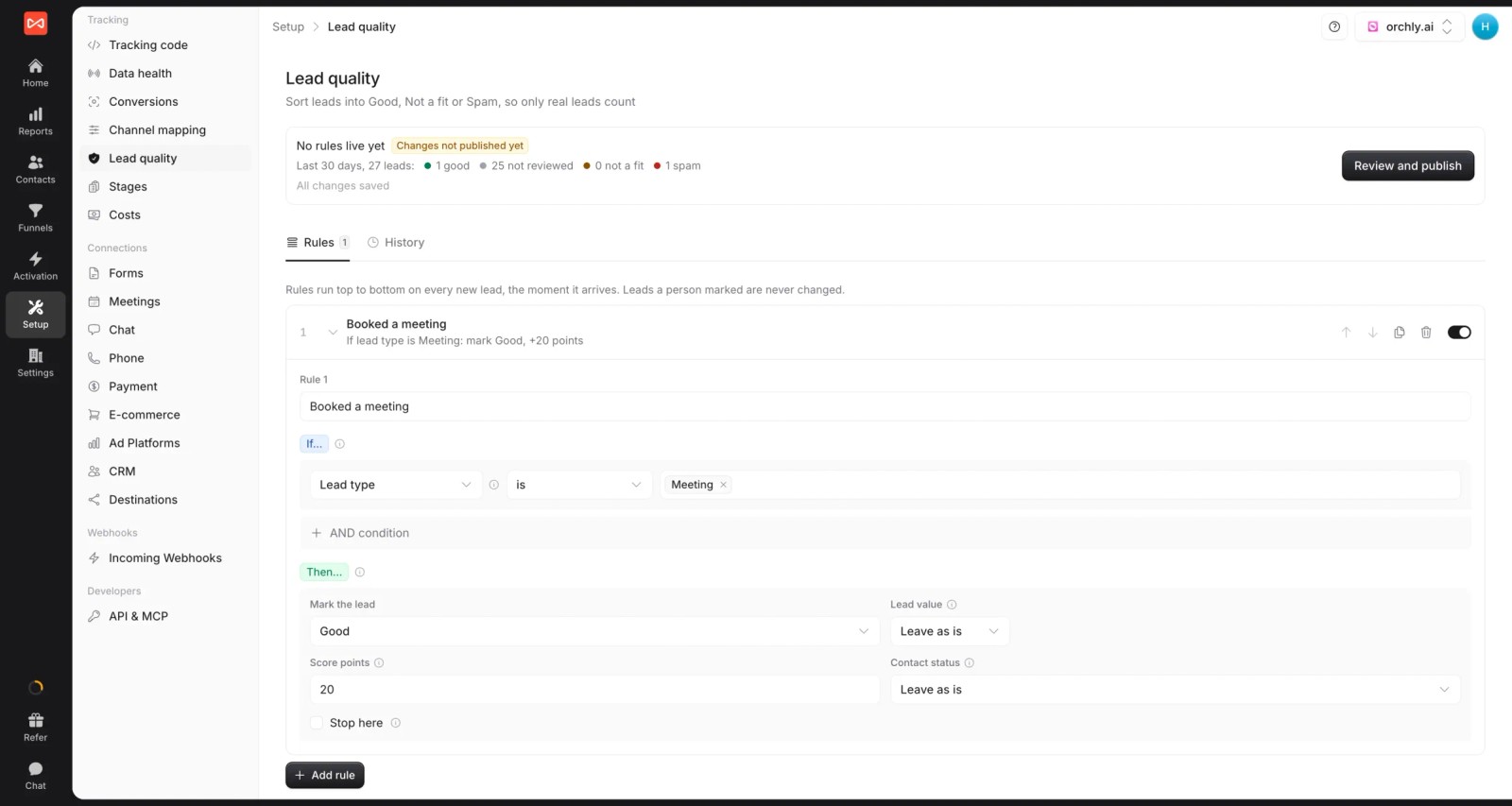
- Lead quality rules: mark leads Good, Not a fit or Spam so only real leads go to the CRM and the ad platforms.
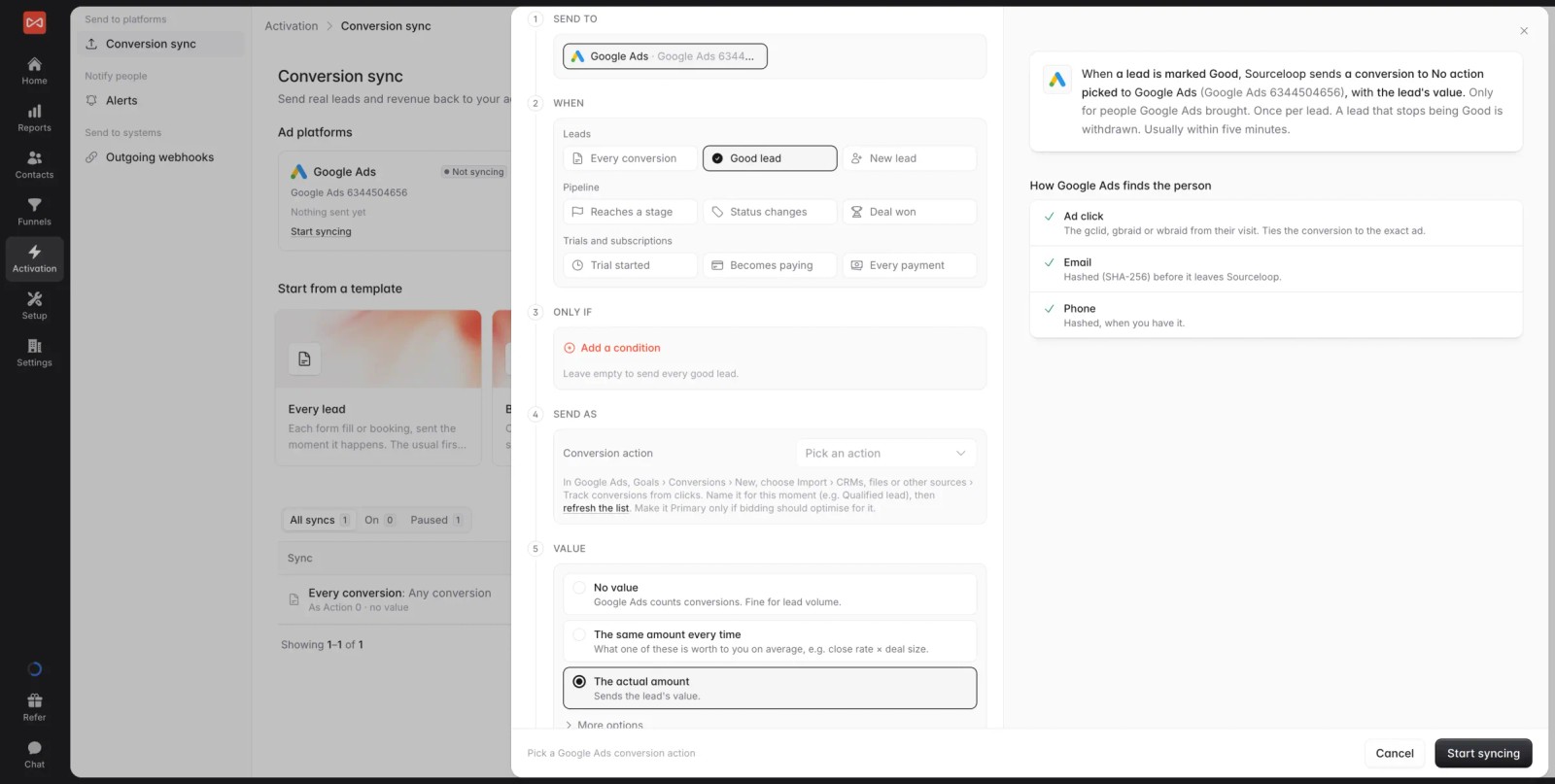
- Conversion sync: good leads and won deals go to Google Ads, Meta, Microsoft Ads and ChatGPT Ads with their value.
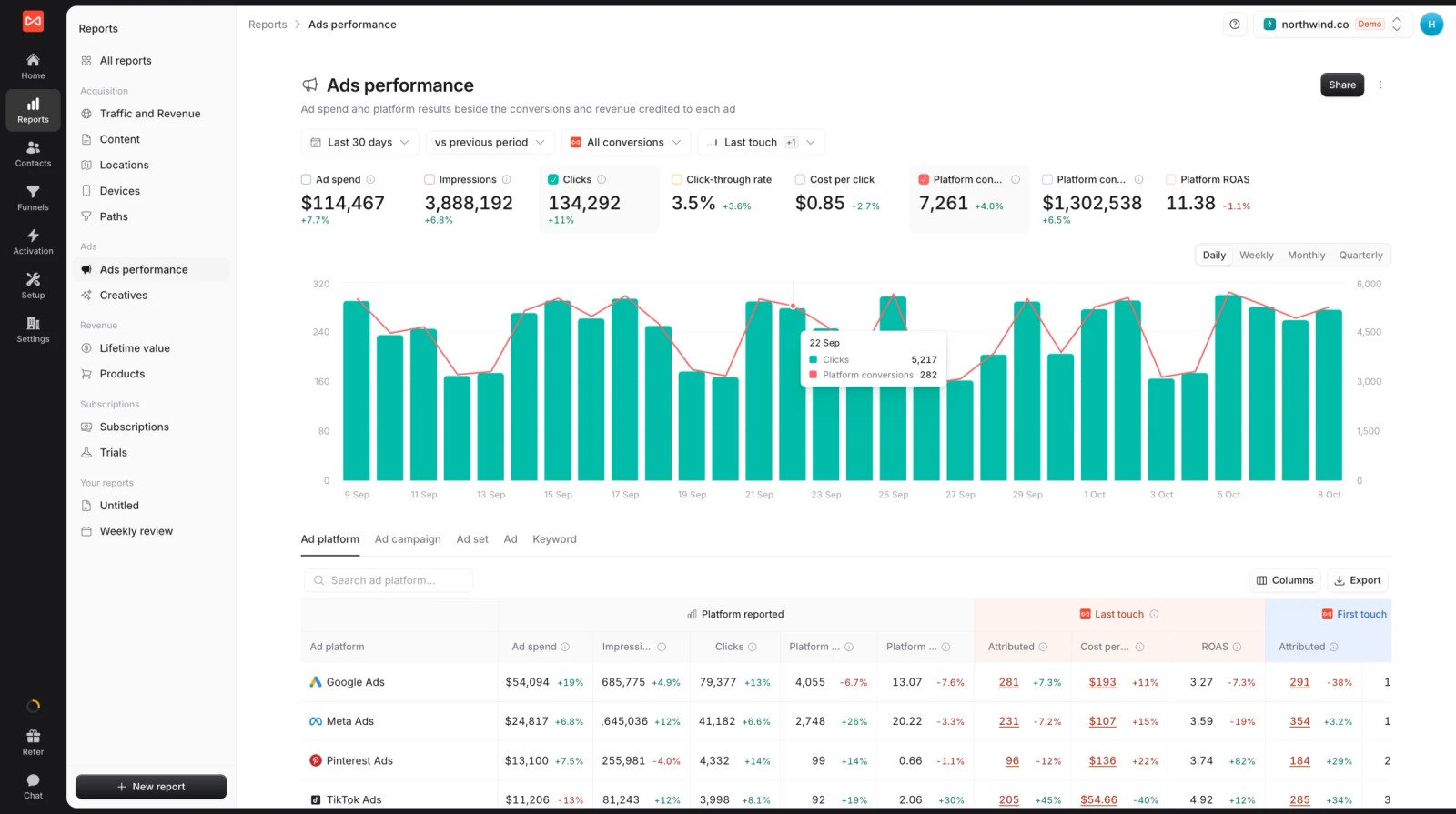
- Ad spend next to results: spend from Google Ads, Meta and Microsoft Ads beside the leads SourceLoop credits each platform, so cost per lead uses real numbers.
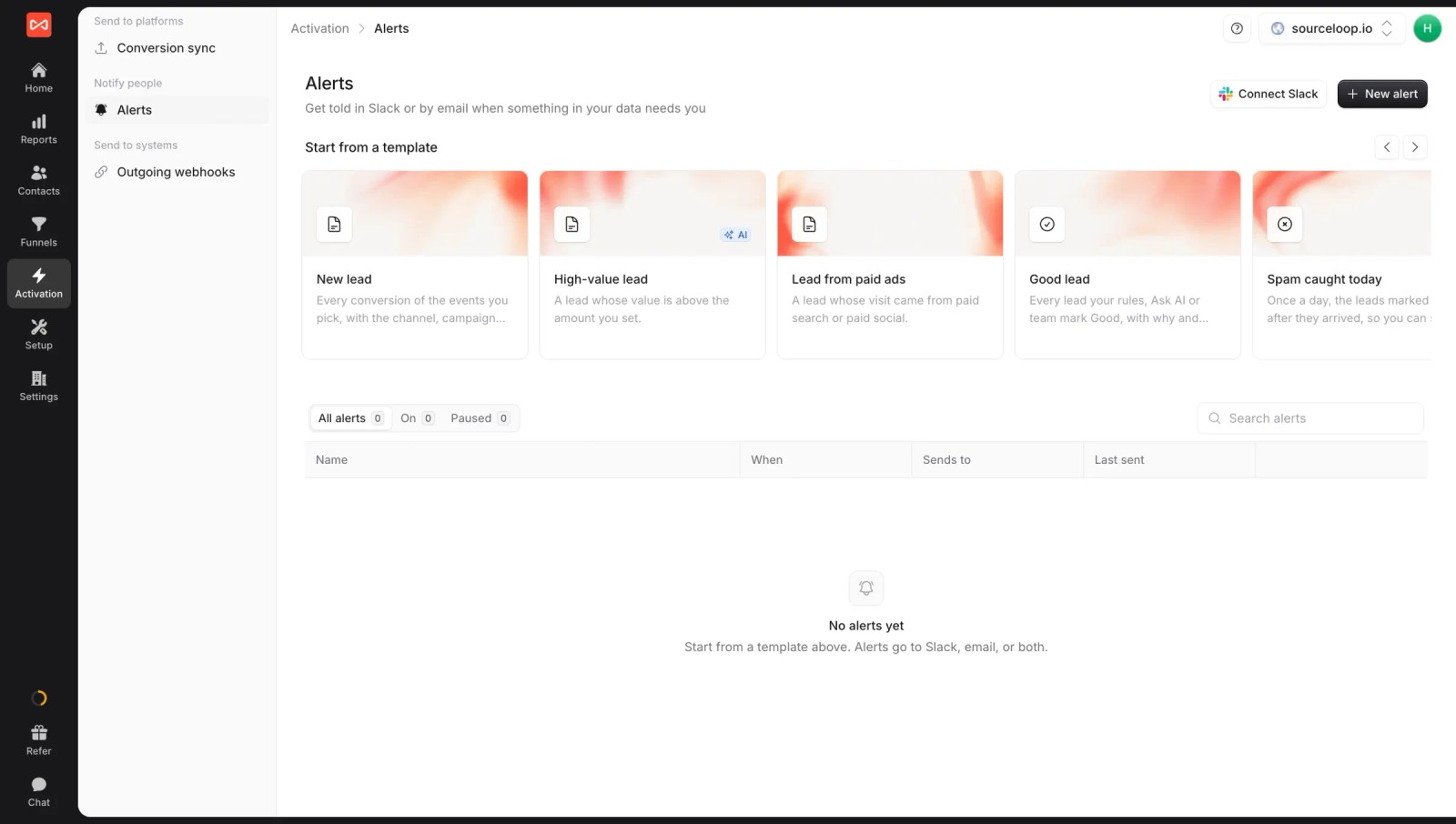
- Alerts: a Slack or email message for every new lead, every good lead, or leads from paid ads.
- Multiple websites and white label, plus an API and MCP server on Professional and up.
Where it falls short
- It costs more than Attributer's smallest plan if all you need is two fields on a form.
- Close, Attio and Copper connect by webhook only, not as native CRM integrations.
Pricing
- Essential: $49/mo for one site and 30,000 page views, with tracking, attribution reports, lead quality rules and alerts
- Professional: $99/mo for 100,000 page views and unlimited users, adding CRM sync, conversion sync to the ad platforms, the API and MCP
- Agency: $249/mo for three sites and 1.5 million page views, adding white label reporting
- Unlimited conversions and a 7-day trial. Attributer meters by leads instead.
Verdict: the step up when the source fields alone stop answering your questions. Stay on Attributer if two fields in the CRM are genuinely all you need.
2. HubSpot Marketing Hub
Best for: teams that already run HubSpot and mainly need original source on each contact.
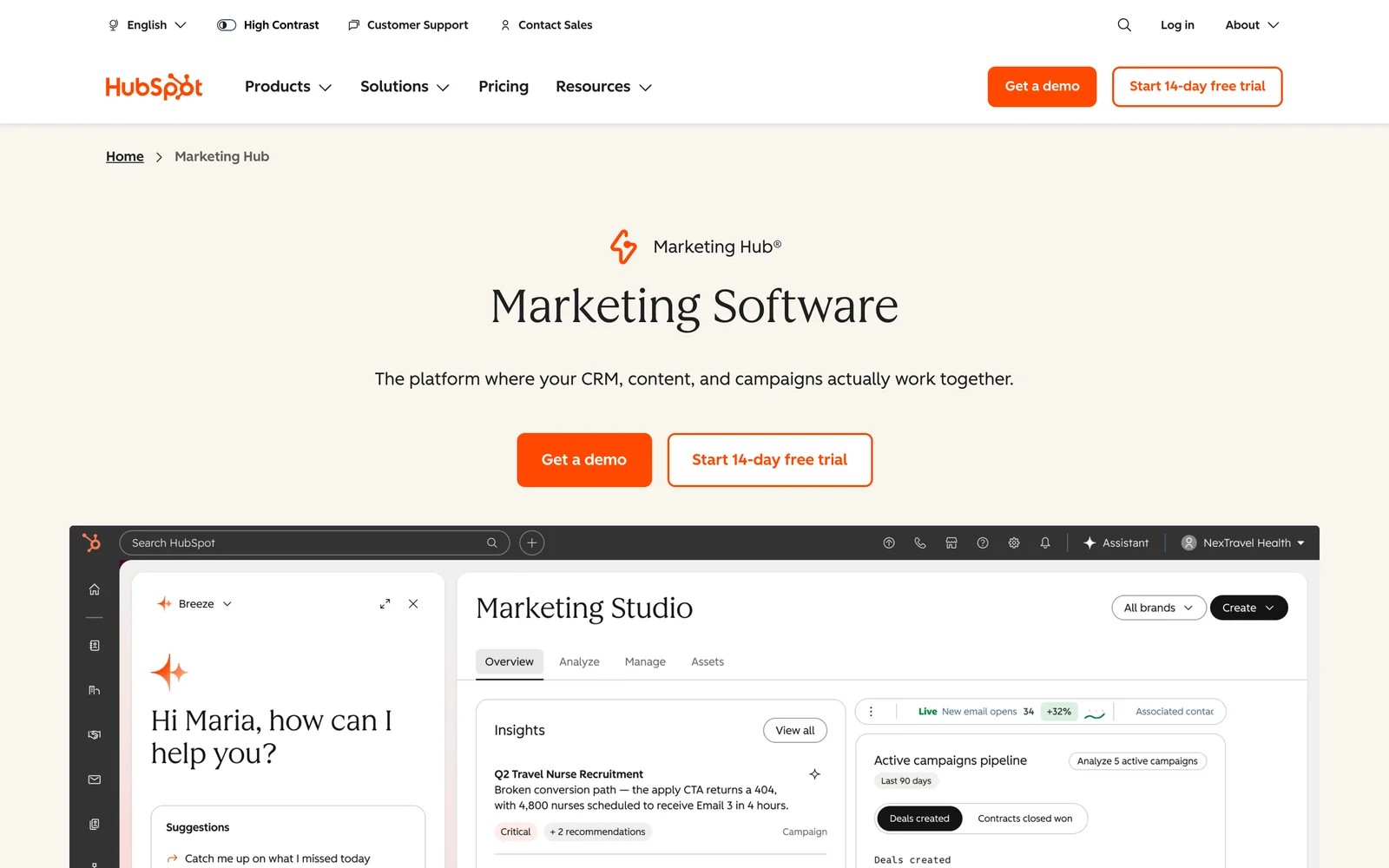
HubSpot tracks the original source of every contact natively. If your forms are HubSpot forms and your site runs the HubSpot tracking code, you may not need Attributer at all.
When I checked a test contact, the original source and drill-down fields filled in by themselves, and the activity timeline showed page views before the form. That's more history than Attributer gives you, and it's free on every tier.
It gets harder outside HubSpot's own tools. Third-party forms, calls and chat widgets often create contacts with "offline sources" as the origin, and the deeper attribution reports sit on higher tiers. HubSpot's documentation puts deal and revenue attribution on Enterprise only.
Key features
- Original source and drill-down properties are set automatically on every contact, giving you Attributer-style data with no extra tool.
- The contact timeline shows page views and form fills before conversion, which adds context sales teams find useful.
- Contact create attribution reports on Professional show which channels produce new contacts across several models.
- Native email, social and CMS tracking keep marketing activity and lead source in the same system.
Where it falls short
- Leads from third-party forms, calls and chats often arrive without a usable source, which is exactly where Attributer helps.
- Deal and revenue attribution are locked to Enterprise, a large jump from the tiers most small teams run.
- It only helps if HubSpot is your CRM; Salesforce and Pipedrive teams get nothing from it.
Our guide to UTM tracking in HubSpot covers how to fill the gaps.
What users say
"HubSpot Marketing Hub connects directly with our CRM, making it really easy to track how our client accounts interact with marketing campaigns, emails, and content." (Source)
"The reporting and template customization options feel unnecessarily locked down in the basic plans, forcing you to upgrade to incredibly expensive premium tiers just for flexible reporting." (Source)
"the attribution is the worst. we dont know which channel provides what" (Source)
Pricing
- Starter: priced per seat; Professional adds contact attribution
- Enterprise: from $3,600/mo, needed for deal and revenue attribution
3. GA Connector
Best for: Salesforce and Zoho teams that want Attributer-style fields plus CRM outcomes sent back to Google Analytics.
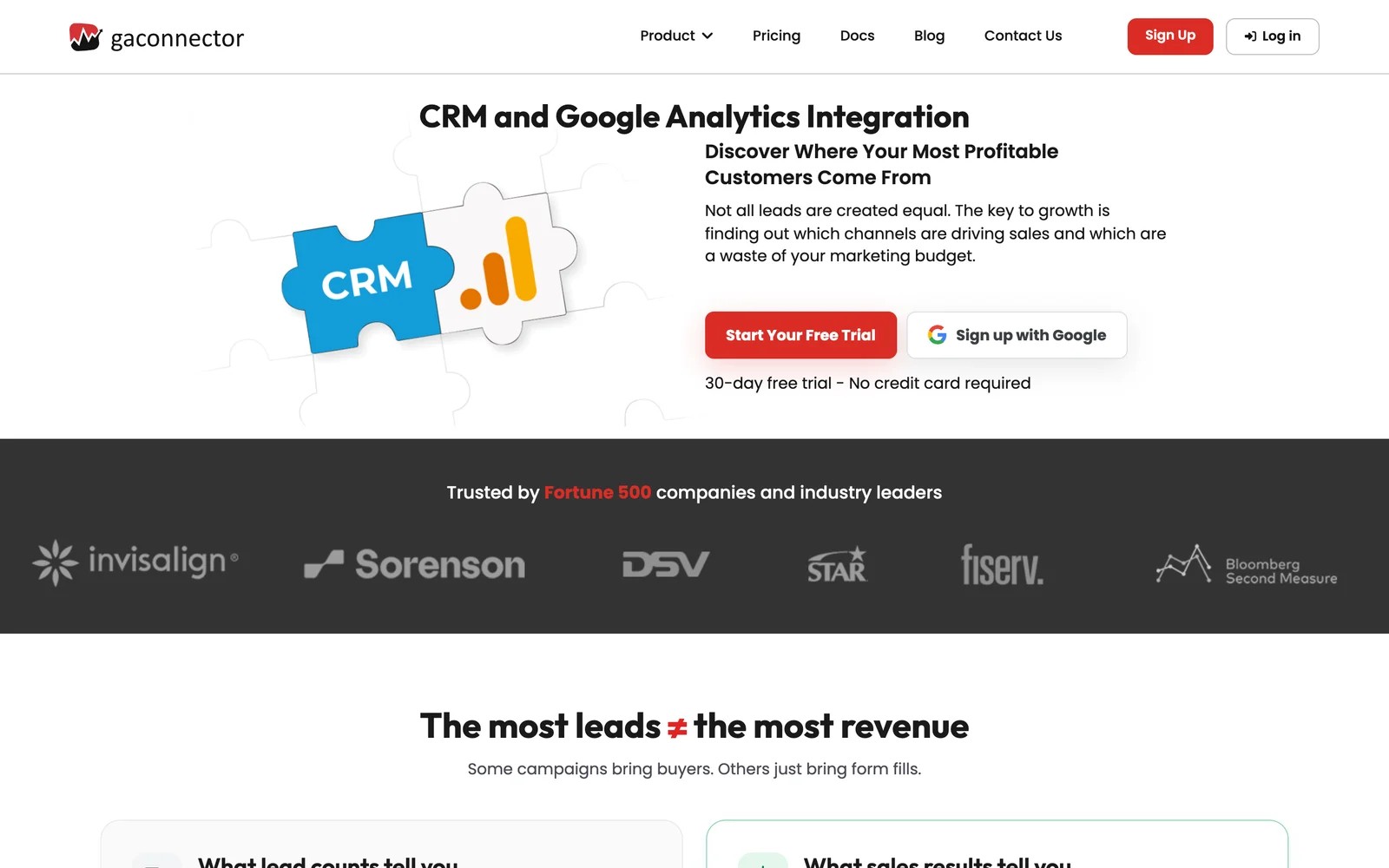
GA Connector is the closest thing to Attributer on this list. It writes source, campaign and keyword into the CRM on each lead, then adds the reverse trip: deal outcomes go back to Google Analytics.
On the 30-day trial, the CRM connection was the easy part. The fields it created in my test CRM were clear, though they lump earlier visits into a single field, so the journey is there but hard to read.
Pricing is by page views rather than leads, which flips Attributer's model. Busy sites with few leads pay more; sites with many leads per visit pay less.
Key features
- Source, medium, campaign and keyword are written into Salesforce, Zoho and other CRMs on every lead, much like Attributer's hidden fields.
- CRM deal data can be pushed back into Google Analytics, so GA4 reports show customers and revenue by channel.
- A single price covers the whole CRM account with no per-user fees, which keeps costs predictable for growing sales teams.
- Pricing tiers by page views suit lead-heavy sites better than Attributer's per-lead caps.
Where it falls short
- Earlier visits are lumped into one field, so you can't easily see the order of touches before a lead.
- Calls and chats aren't tracked, which leaves the same gap Attributer has.
- Its entry price is several times Attributer's, which is hard to justify for small sites.
What users say
"If you're like me, your company can't afford marketing automation at the moment, but we still want to track all the traffic coming in by channel." (Source)
"was very simple to get working alongside our lead forms to give us a simple layer of tracking within Salesforce" (Source)
"It's a little pricey compared to others out there but for me it worked quickly and has been very good." (Source)
Pricing
- Tier 1: $97/mo billed annually for 50,000 page views
- Tier 2 and 3: $197 and $397/mo. 30-day trial with no card.
4. WhatConverts
Best for: businesses that want calls and chats captured alongside forms, with a lead log the whole team can read.
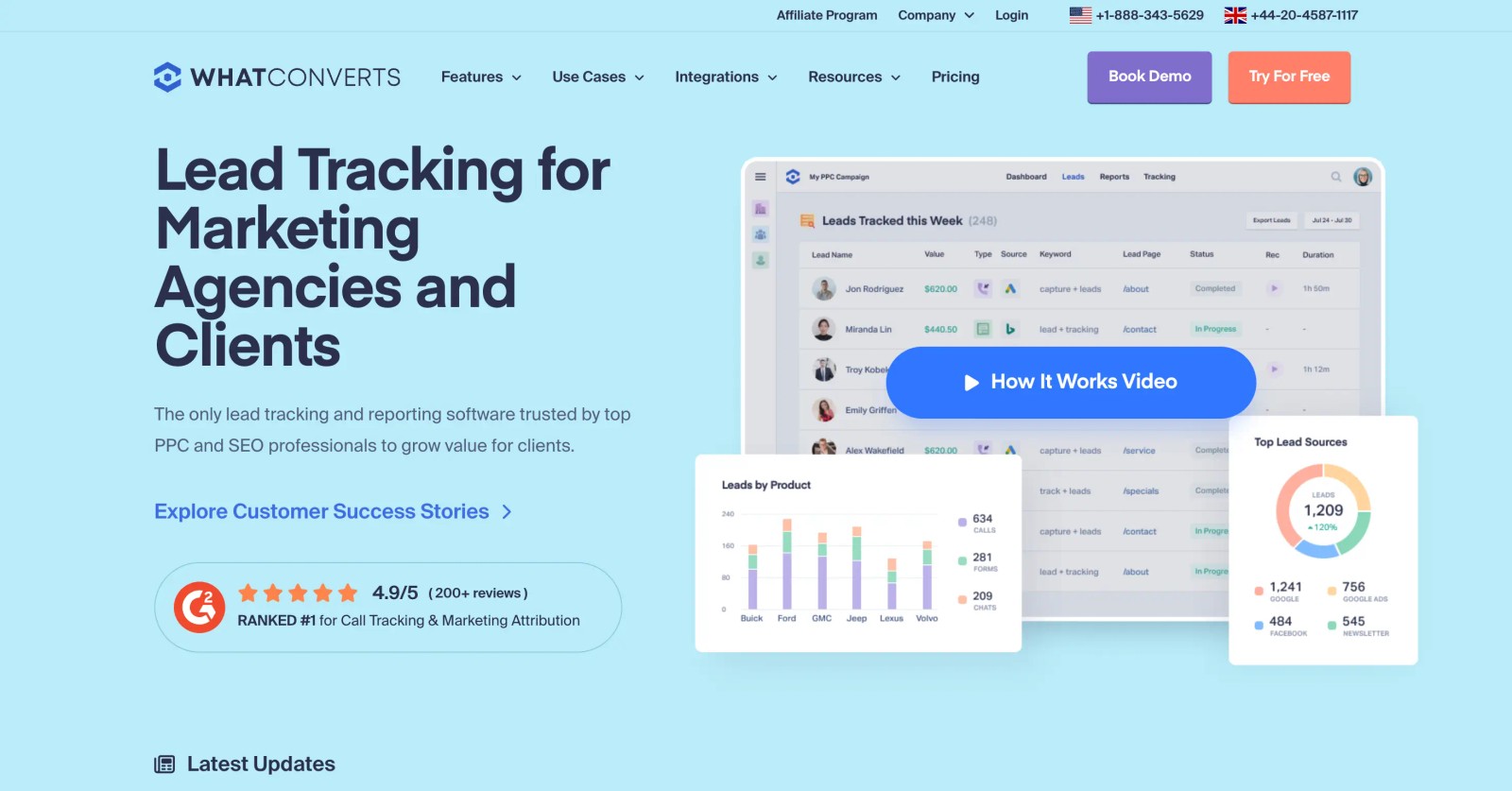
WhatConverts fills Attributer's biggest hole: phone calls. It tracks calls, forms and chats, gives each lead a source and keyword, and keeps them in one log you can share.
The lead log was what I liked on the trial. Every lead, whatever the channel, sits in one list with its source. Attributer leaves you to find that in the CRM; WhatConverts shows it directly.
The CRM side is lighter than Attributer's. Values and outcomes are mostly entered by hand or imported, so revenue reporting depends on someone keeping it updated.
Key features
- Calls, forms and chats land in one lead log with source, keyword and landing page, which covers the phone leads Attributer can't see.
- Quote and sale values on each lead turn the log into a simple revenue report.
- Built-in dashboards mean you don't have to build lead source reports inside your CRM.
- Lead values can go to Google Ads as offline conversions, so campaigns learn from real outcomes.
Where it falls short
- It doesn't keep the visits before a lead, so you only see the converting source.
- Revenue relies on values typed in or imported rather than read from the CRM.
- Extra tracking numbers and minutes add to the bill as call volume grows.
What users say
"I thought it was really simple to set up, results and the experience have been great, the team were super helpful and it's cheaper than callrail" (Source)
"I have been on call with your sales team a few times and the software still cant track conversions properly and traffic source of leads along with keywords." (Source)
Pricing
- Call Tracking: $30/mo
- Plus, Pro and Elite: $60, $100 and $160/mo. 14-day trial.
5. Heeet
Best for: B2B teams that want touchpoints stored on contacts, opportunities and revenue inside Salesforce or HubSpot.
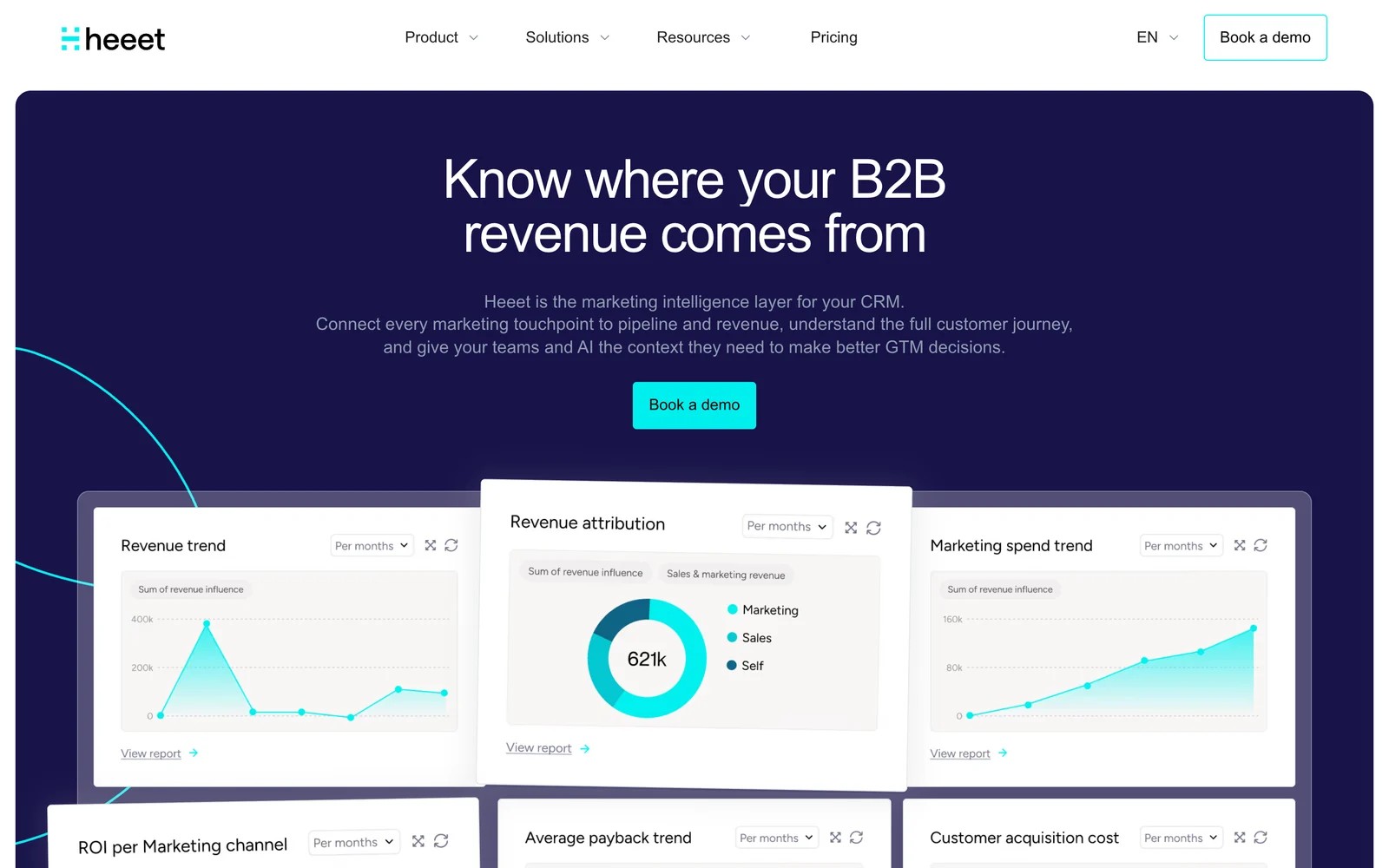
Heeet calls itself a marketing intelligence layer for your CRM. Its Native plan lives inside Salesforce or HubSpot, and its Platform plan now works with any CRM, including Pipedrive, Zoho and Attio.
From the onboarding flow and docs, the CRM-first philosophy is the same as Attributer's, taken much further. Every touchpoint is stored against contacts and opportunities, not just the first and last. It also markets itself as cookieless.
The price is the shock. Platform starts at $790 a month billed yearly, against Attributer's $29, with a cap on net new leads and a charge per 100 leads over it.
Key features
- Touchpoints are linked to contacts, opportunities and revenue inside the CRM, so attribution reports run where sales already works.
- The Native plan runs as a managed package in Salesforce or an app in HubSpot; Platform connects other CRMs by API or Zapier.
- Paid media sync and Search Console data help measure content and SEO alongside ads.
- An AI analyst agent, built on Salesforce Agentforce, offers summaries and alerts for Salesforce customers.
Where it falls short
- The entry price is far above Attributer's, which only makes sense for B2B teams with real pipeline to measure.
- Lead caps with per-100 overages mean the cost rises as your marketing succeeds.
- Calls and chats aren't a focus, so phone-led businesses won't get full coverage.
Our Heeet alternatives guide compares it in more depth.
What users say
"I use Heeet to track and attribute LinkedIn engagement to pipeline and revenue." (Source)
"It does what it say it will do and collects data without the need for cookies. The support is also stellar." (Source)
Reviews on both sites are positive; I couldn't find a critical one.
Pricing
- Platform: $790/mo billed yearly for 3,000 net new leads a year, any CRM, 30-day trial
- Native: $1,490/mo for Salesforce or HubSpot. Extra leads cost $95 per 100.
6. Dreamdata
Best for: B2B SaaS teams that want to see every person and touch at an account, not just a source on each lead.
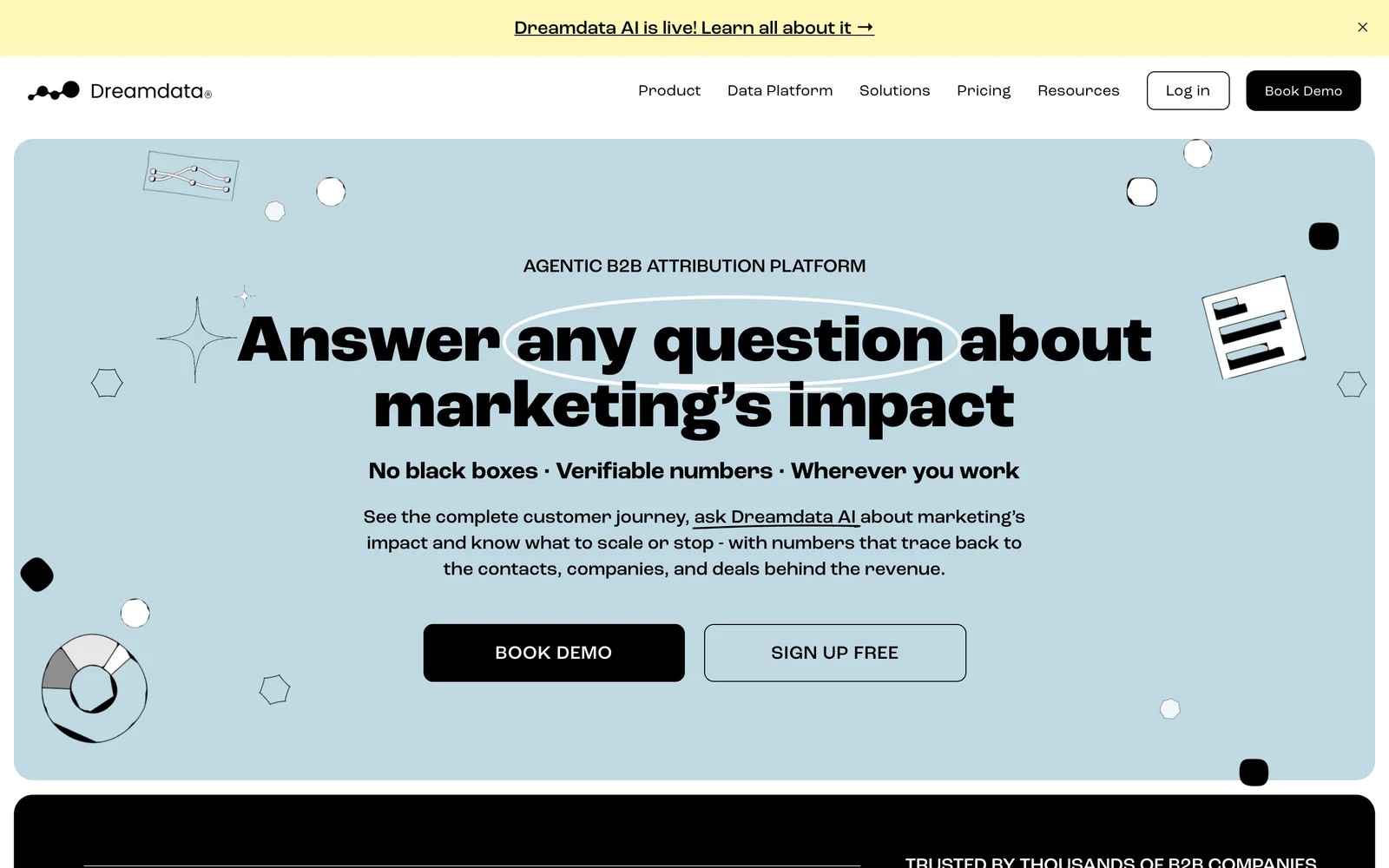
Dreamdata works the other way round from Attributer. It reads from your CRM rather than writing to it, then builds a company timeline from every contact's activity and credits revenue across it.
I've used Dreamdata's free plan, and the account view is the reason to pick it. Seeing three people from the same company reading different pages over a month is something Attributer's two fields can never show.
The catch for Attributer users is that the data mostly stays in Dreamdata. If your sales team wants the source on the CRM record, that's a weaker fit.
Key features
- Account timelines join every contact and touch at a company, giving context for long, multi-person B2B deals.
- Revenue attribution runs across CRM stages with several models, from first meeting to closed-won.
- Companies are identified from anonymous visits, so you see interest before anyone fills in a form.
- The free plan includes 2 months of history and 5 seats, enough to judge it on real data.
Where it falls short
- It mostly pulls from the CRM rather than writing source data back, which is the opposite of what Attributer users expect.
- Paid attribution features are quoted, so costs are unclear until you talk to sales.
- Calls and local lead channels aren't covered, which limits it for service businesses.
What users say
"After we implemented dreamdata we finally were able to show how all the marketing touch points contribute to sales/revenue." (Source)
"It would be nice if it could push data to SFDC, rather than just pulling it" (Source)
"If your CRM health is poor, then no magic will happen, but Dreamdata is very helpful at revealing the problems." (Source)
Pricing
- Free: $0 with 2 months of history and 5 seats
- Advanced: custom pricing, with a guided trial
7. Factors.ai
Best for: B2B teams that care more about which companies are engaging than which form a lead filled in.
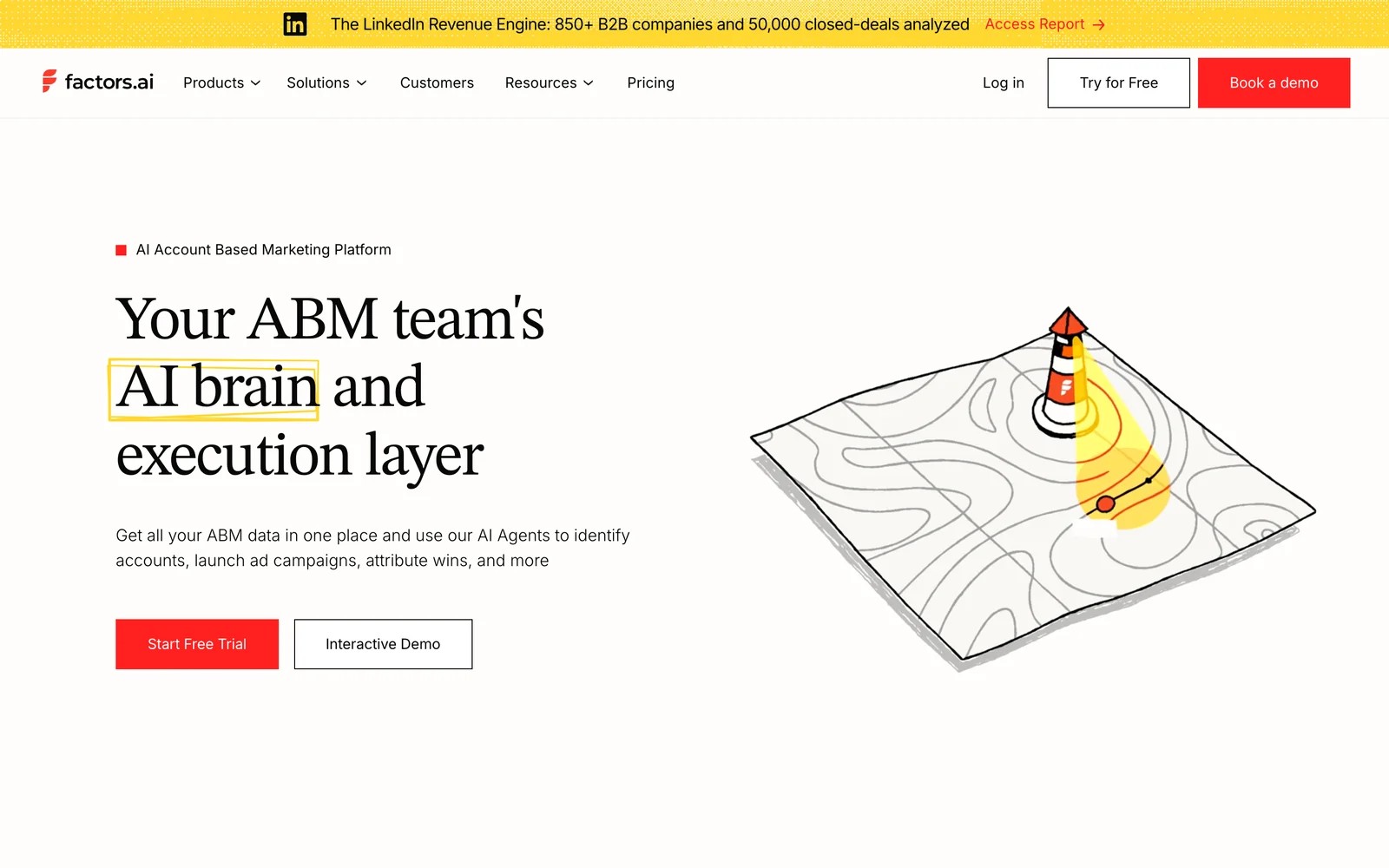
Factors.ai identifies companies visiting your site, lays out every touch at an account, and ties it to CRM deals. It's account intelligence first and lead source second.
From the trial flow and the teams I know who use it, the account timeline is the standout. It's a big shift from Attributer, which only knows about people once they submit a form.
The trade-off is match quality and cost. Smaller companies often go unidentified, and pricing climbs with usage.
Key features
- Companies are identified from their IP address, so you see engaged accounts before anyone fills in a form.
- Account timelines show every person and touch at a company across weeks of research.
- Account-level attribution ties engagement to HubSpot and Salesforce deals.
- LinkedIn and Google Ads audiences can be built from engaged accounts to focus spend.
Where it falls short
- It's built for B2B traffic, so local and consumer businesses get few useful company matches.
- Individual lead source on the CRM record isn't its focus.
- Costs rise as identified accounts and usage grow.
What users say
"It makes life very easy to build website funnels - much easier to build and visualize as compared to any other tool such as Google analytics" (Source)
"Some website visitors don't get matched to a company, especially smaller companies. Pricing can also go up as usage grows." (Source)
Pricing
- Lite: $199/mo; Basic: $6,000/yr; Growth: $20,000/yr. Free trial available.
How to choose
Climb the ladder only as far as you need.
1. Two fields in the CRM are enough
- Stay on Attributer, or use HubSpot's native source if HubSpot is your CRM. GA Connector suits Salesforce and Zoho.
2. You need calls and a lead log
- WhatConverts adds calls and chats. SourceLoop adds calls, bookings and the visits before every lead.
3. You need journeys and revenue
- SourceLoop for lead generation businesses, agencies and SaaS teams that want deals read back and good leads sent to the ad platforms.
- Heeet, Dreamdata or Factors.ai for B2B account views.
For the setup itself, our guide on tracking UTM parameters in your CRM walks through the options.
Frequently asked questions
-
What does Attributer.io do?
Attributer captures a lead's channel, source and campaign and writes it into hidden form fields, so the data reaches your CRM with each new lead. It covers first and last touch for form submissions.
-
How much does Attributer cost?
As of November 2026, Attributer starts at $29 a month for up to 100 leads, with multi-site plans from $199 a month for 10 sites. There's a 14-day trial.
-
What is the closest alternative to Attributer?
GA Connector is the most similar, writing source fields into Salesforce, Zoho and other CRMs. SourceLoop does the same and adds journeys, calls and deal outcomes.
-
Can I track phone call leads like Attributer tracks forms?
Not with Attributer. WhatConverts tracks calls directly, and SourceLoop ties calls from CallRail, CTM, Invoca or Mediahawk to the visitor's source.
-
Do I need Attributer if I use HubSpot?
Maybe not. HubSpot sets original source on contacts from its own forms and tracking code. Attributer, or a tool like SourceLoop, helps when leads come from third-party forms, calls or chats.




 Paid Social


