
How to Track UTM Parameters in Typeform
Follow 4 simple steps to capture UTM parameters in Typeform and and uncover the true source of every lead
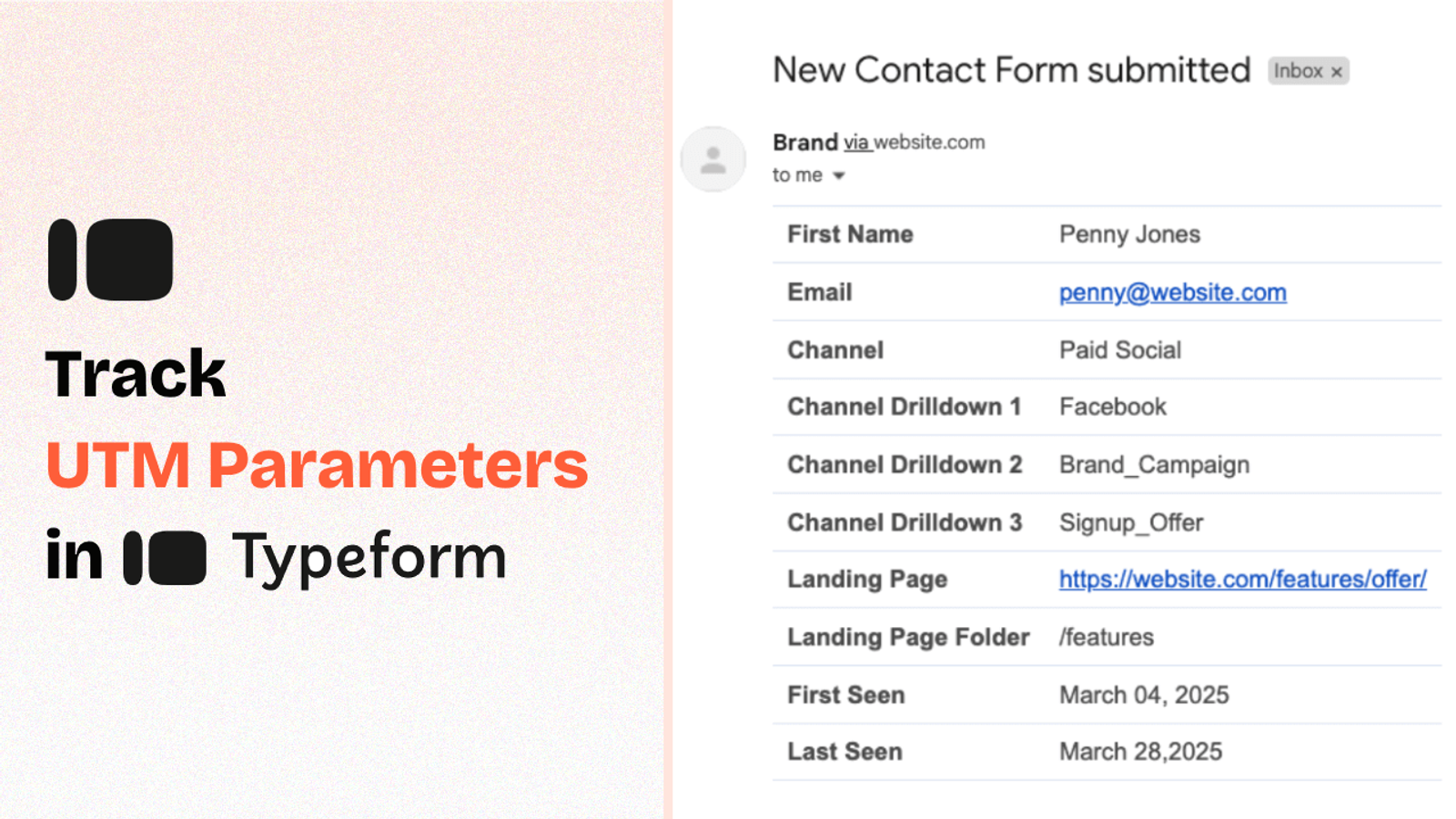
Table of contents
You’re investing in marketing campaigns across Google Ads, Meta, LinkedIn, and more — but when someone fills out your Typeform, you’re left wondering:
Where did this lead come from?
That’s because Typeform doesn’t track UTM parameters if they’re not in the page URL.
And most of the time, users don’t fill out the form on the first page they land on. They might browse your blog, check out pricing, or explore your services — and somewhere along the way, the UTM data is lost from URL.
In this guide, we’ll show you how to track UTM parameters in Typeform using SourceLoop.ai — so you always know which channel, campaign, or ad drove each lead.
5 Easy Steps to Track UTM Parameters in Typeform
Here are 4 simple steps to capture UTM parameters in Typeform:
1. Add SourceLoop on Your Website
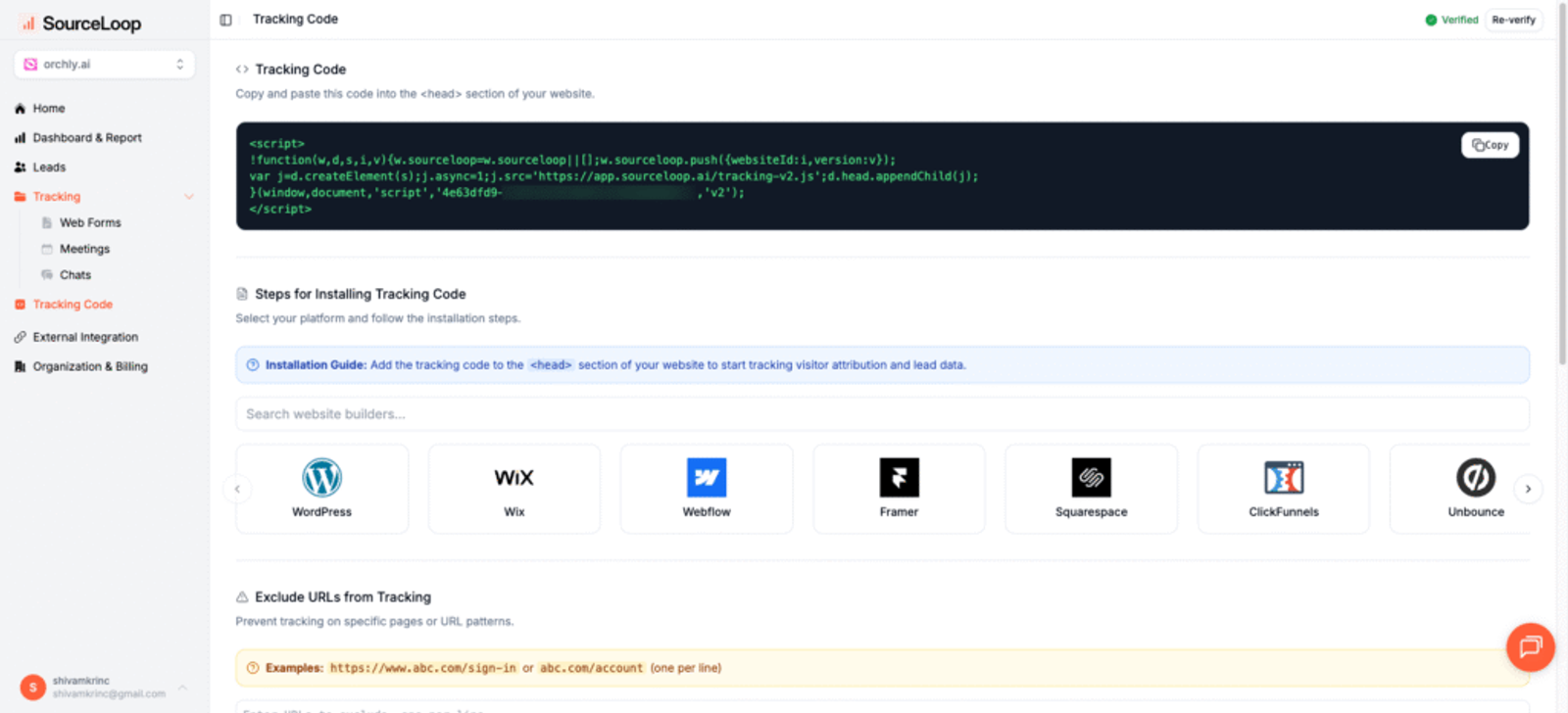
Go to SourceLoop.ai and sign up for a free account.
Once signed in, you’ll get a small snippet of tracking code to add on your website.
Copy and paste it into the of your site, either globally via your CMS, or through Google Tag Manager.
Don’t have a full website?
You can still add this script to the landing pages where you embed your Typeform.
SourceLoop.ai will now track each visitor’s UTM parameters (and more) and store that information in their browser cookies.
The best part? Instead of storing the raw UTM string, SourceLoop.ai uses its intelligence and organizes them into clean, usable data like this:
Example:
Let’s say Airbnb is using SourceLoop.ai, and a user clicks on one of their Google Search ads while looking for vacation rentals in Italy.
SourceLoop.ai will capture and organize the user’s visit information like this:
- Channel = Paid Search
- Channel Drilldown 1 = Google
- Channel Drilldown 2 = Search Ad
- Channel Drilldown 3 = Italy Summer Rentals
- Landing Page = www.airbnb.com/s/italy
- Landing Page Folder = search
- Last Seen = Apr 14, 2025
2. Add UTM Parameters to Your Links
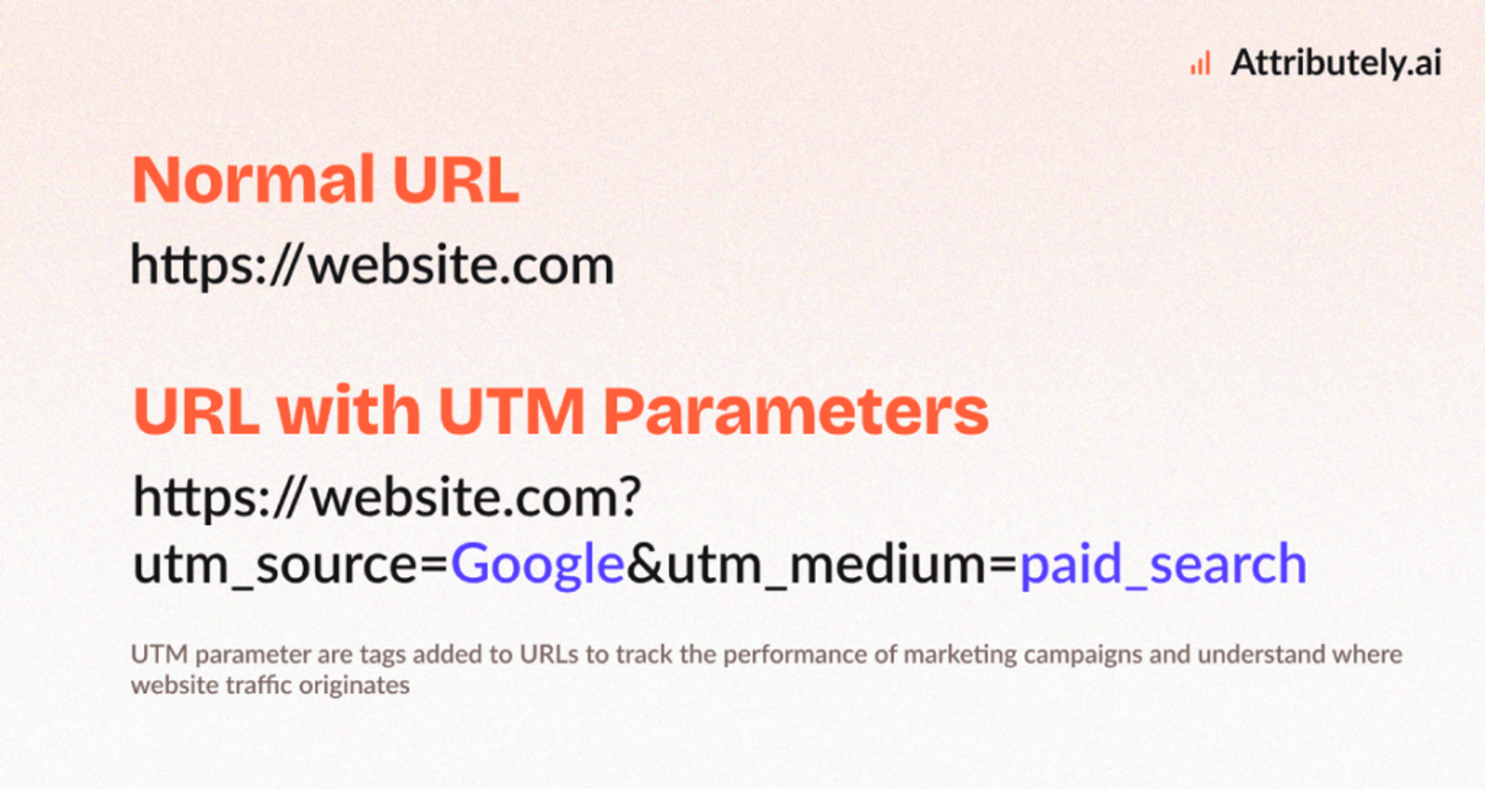
Now that Atributely.ai is actively tracking UTMs, you need to make sure your campaign links actually include them.
Open your Google Ads, Facebook Ads, email campaigns, or wherever you’re sending traffic from and add UTM tags to each link.
Example of a link with UTM parameters:
https://yoursite.com/quiz?utm_source=facebook&utm_medium=paid&utm_campaign=summer_sale
TIP: Don’t just add UTM in ads. Include it in email links, social media posts, influencer swipe-ups and any other campaign you are using to drive traffic to your site.
Resources:
- How to add UTM parameters in Google Ads
- How to add UTM parameters in Facebook Ads
- How to add UTM parameters in LinkedIn Ads
- How to add UTM parameters in TikTok Ads
3. SourceLoop Automatically Capture the UTM Parameters
SourceLoop.ai records UTM tags and page visits every time someone comes to your site. We save that first-party visit data so a visitor’s path is preserved across sessions.
When a visitor fills a form or books a meeting, SourceLoop links those stored visits to their lead profile and shows the complete attribution record in the Lead Manager.
Open any lead to see a clear timeline: the first marketing touch and UTM details, each return visit with pages and timestamps, and the final conversion event.
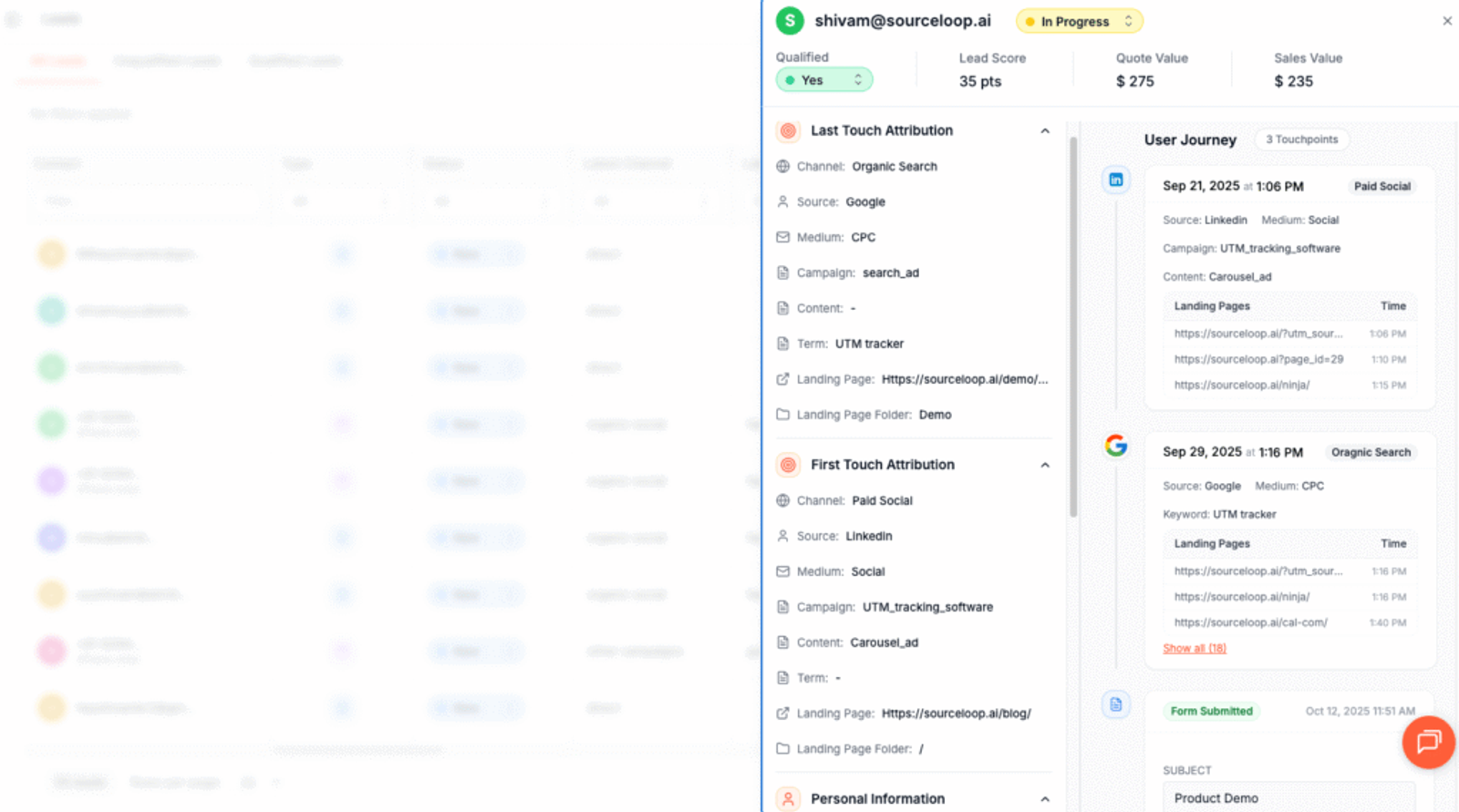
This makes it easy to understand which campaigns actually began the relationship and which ones influenced conversion.
Additional Tutorials:
4. Configure URL Parameters in Typeform (Optional)
If you’d like to record a lead’s UTM parameters directly in your lead form, you can set this up by adding hidden fields with the recommended values.
Here’s how to do it:
- At the top of your Typeform editor, click on the Logic tab.Then select Pull data in from the menu.
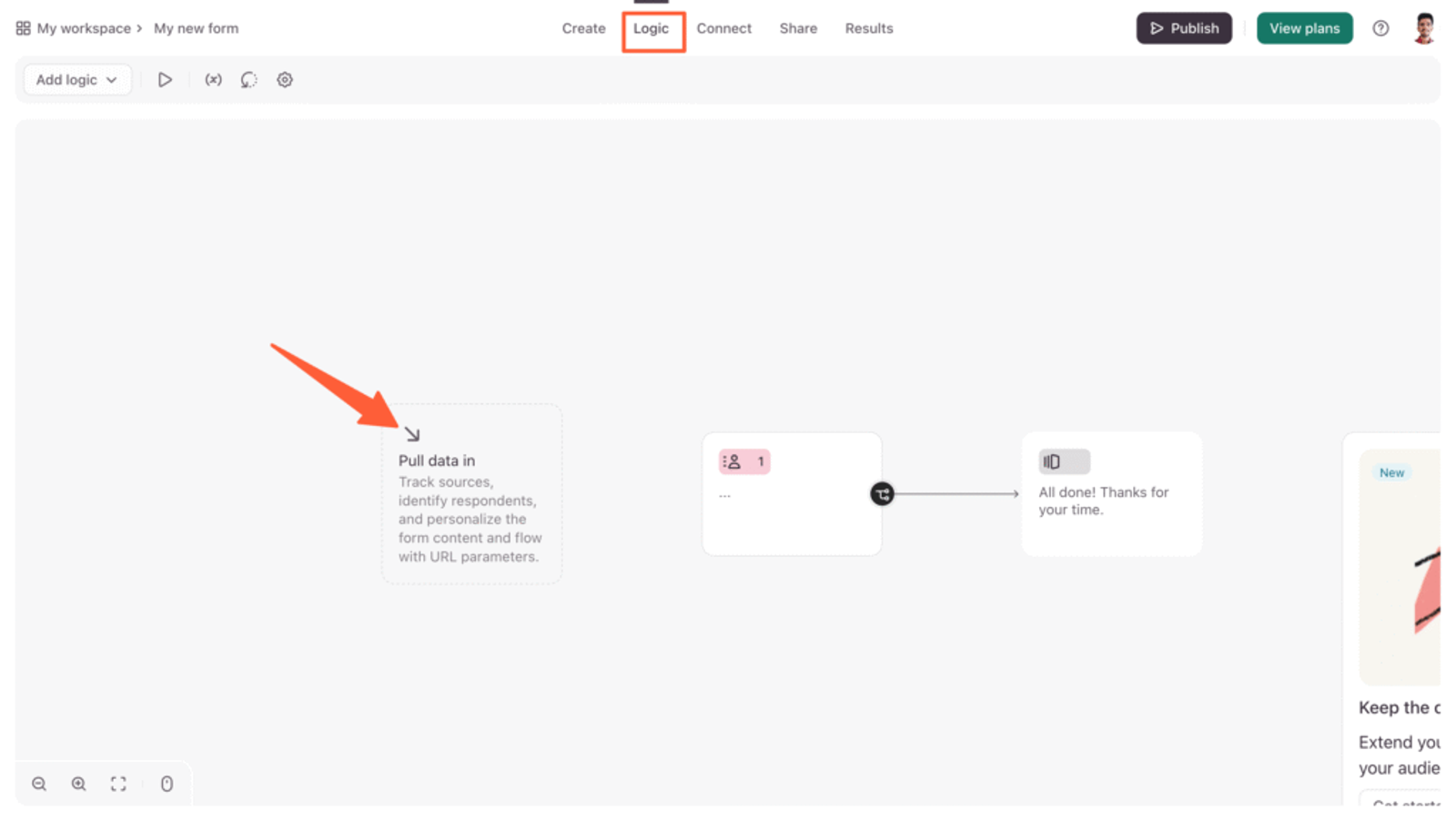
- A panel will appear allowing you to define custom parameters. Click the + Add new parameter button.
- Create the following seven parameters exactly as shown below in screenshot.
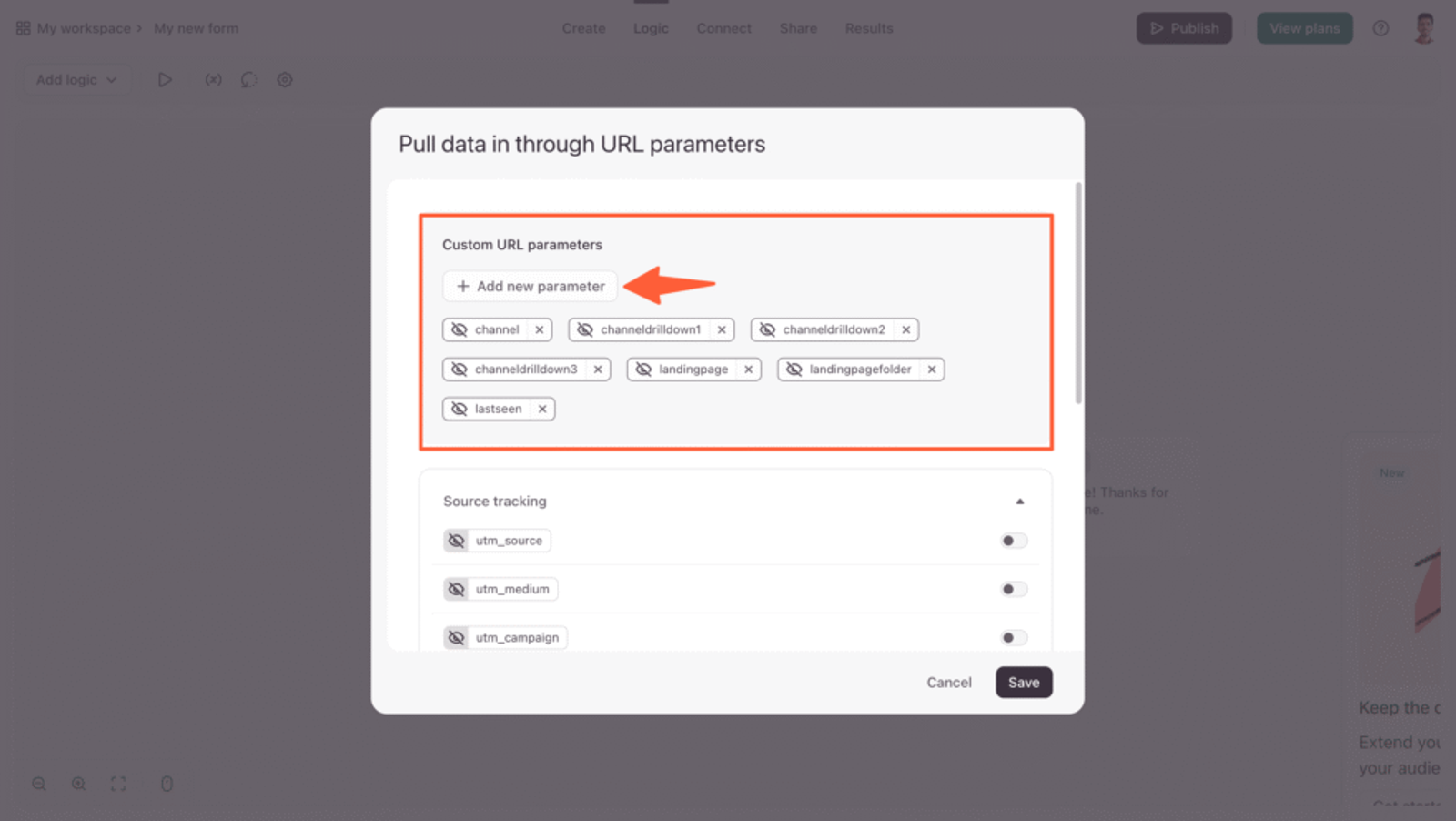
- [channel]
- [attribution_source]
- [attribution_medium]
- [attribution_campaign]
- [attribution_term]
- [landingpage]
- [landingpagefolder]
- [lastseen]
Optional: Track First-Touch Attribution (Highly Recommended for B2B)
If you’re in a B2B business or selling high-consideration products, it’s likely that your leads will visit your website multiple time before filling the lead form.
So, simply knowing where a lead came from at the time of conversion may not give you the full picture.
To truly understand which channels and campaigns are contributing to initial interest, it’s crucial to track the very first point of contact that led a visitor to your website.
Here are 7 additional parameters you can configure to get the attribution data of the user’s first visit to your website in the past 6 months.
- [first_channel]
- [first_source]
- [first_medium]
- [first_campaign]
- [first_term]
- [first_landingpage]
- [first_landingpagefolder]
- [first_seen]
5. UTM Parameters Are Automatically Collected in Typeform Submission
Once you’ve configured the parameters, copy the embed code of the form and paste it along with a small additional snippet of code on your website where you want to embed the form.
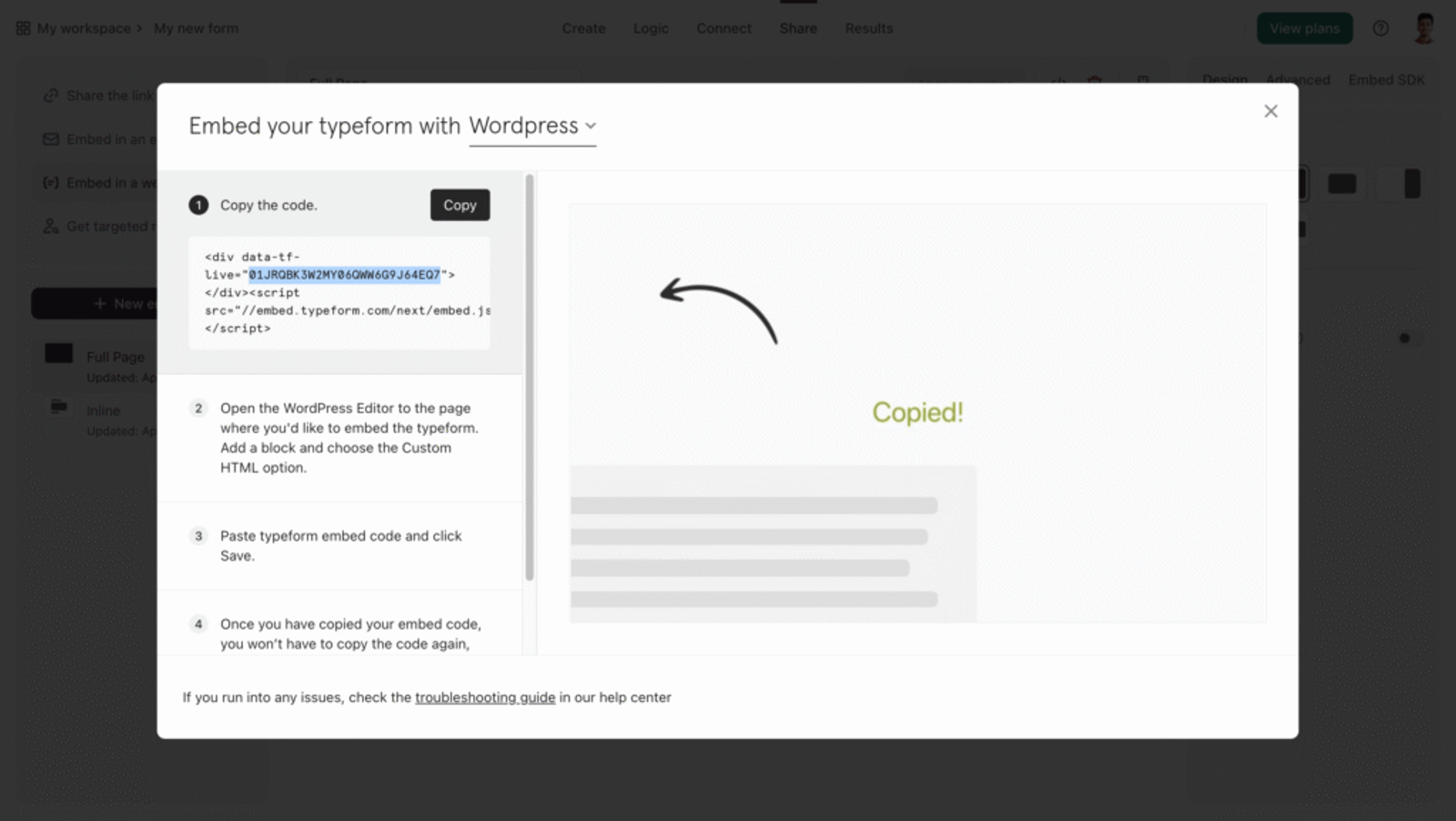
And then SourceLoop.ai will do the rest.
Whenever a user fills your form, SourceLoop.ai automatically sends the UTM values in the parameters field you configured in the previous step.
So, just open the form submission details of any user and you’ll be able to see their UTM information.
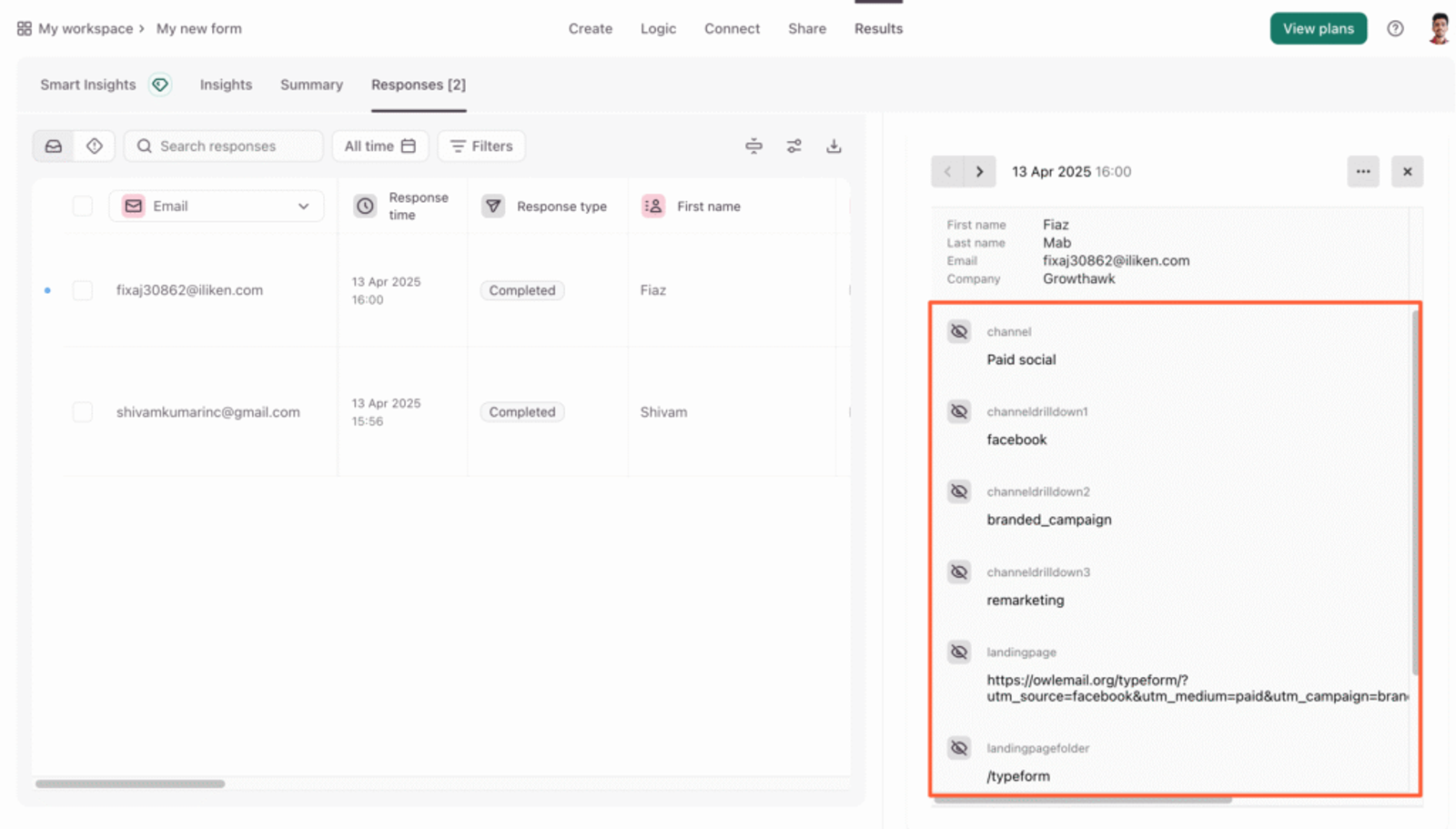
Now that you have the actual source of each lead, you can:
Sync it with your Analytics platform & create reports:
Typeform integrates with Google Analytics, Google Sheets, Airtable, etc., allowing you to create reports and charts to understand how each marketing campaign helps you drive actual leads that convert.
Sync with your CRM:
Typeform integrates seamlessly with CRMs like HubSpot, Salesforce, Pipedrive, Close, and more so that you can create contacts in your CRM with their attribution data.
Create automations:
Typeform also integrates with email platforms like Mailchimp, Yotpo, Omnisend, Brevo, etc., allowing you to send automated marketing campaigns based on the source and channel of leads.
More Guides:




 Paid Social


