
11 Best Marketing Attribution Software: Compared in 2026
A practical comparison of 11 attribution tools, who they're built for, and what you'll actually pay.
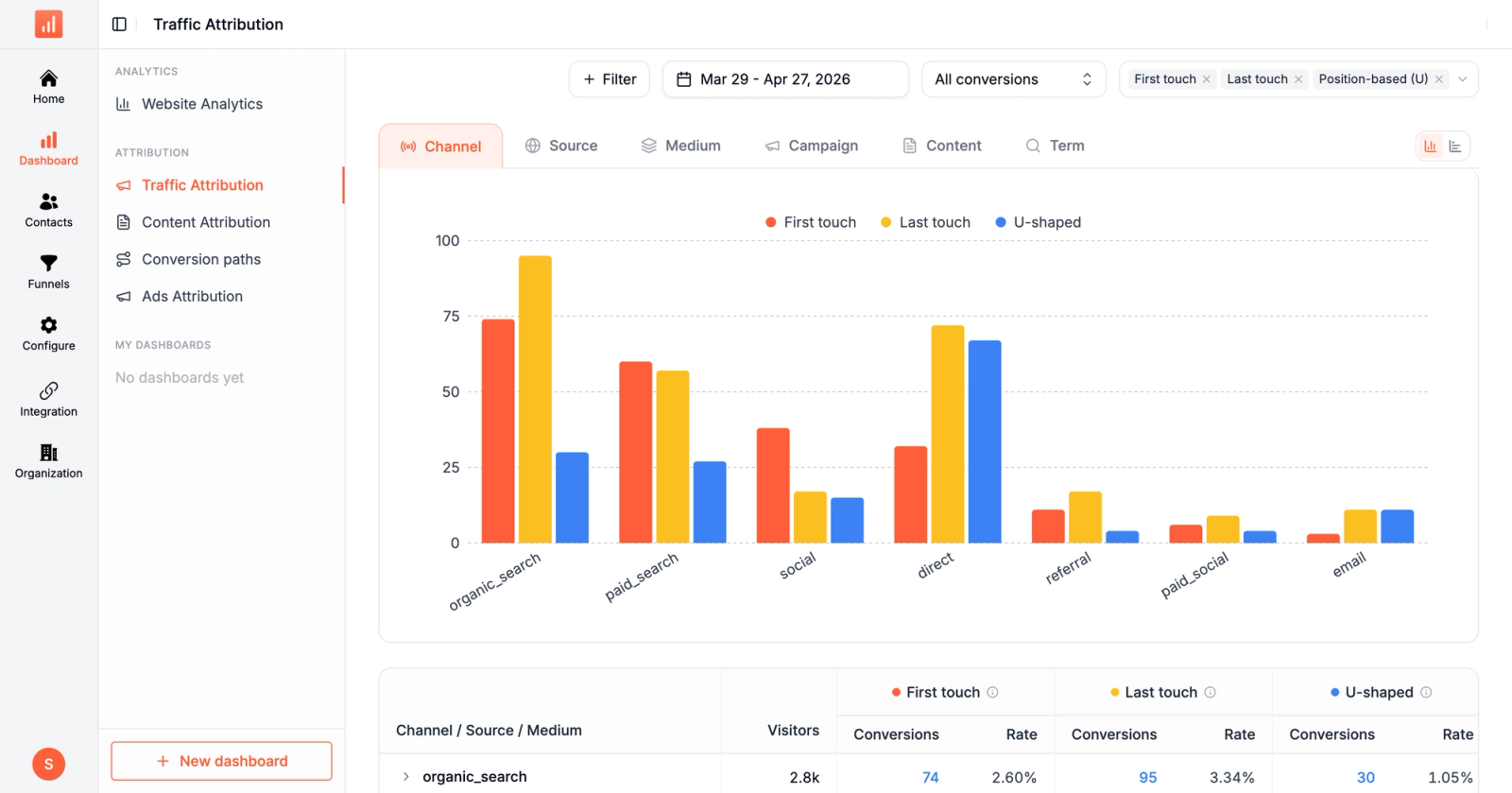
Table of contents
- Quick Comparison of Best Marketing Attribution Software
- 1. Sourceloop
- Why Sourceloop can be a good marketing attribution tool
- What Sourceloop replaces
- 2. HockeyStack
- 3. Dreamdata
- 4. Triple Whale
- 5. Northbeam
- 6. Cometly
- 7. Ruler Analytics
- 8. Hyros
- 9. HubSpot Marketing Hub Enterprise
- 10. Adobe Marketo Measure (formerly Bizible)
- 11. AppsFlyer
- How to choose
Google Ads says it drove 40 conversions. Meta claims 32. TikTok takes credit for another 18. Add them up and you have more conversions than actual sales.
Each platform grades its own homework.
Marketing attribution software fixes that, giving you one number you can defend in a budget meeting.
Picking the right tool is harder than it sounds. Pricing ranges from free (GA4) to over $30,000 a year (HockeyStack, Dreamdata, Marketo Measure), and tools built for B2B SaaS rarely fit Shopify stores.
And believe me attribution has only gotten harder: after Apple's ATT, iOS opt-in rates settled around 15-25%, and only 21% of B2B marketers can measure ROI with confidence.
Below are 11 marketing attribution software that actually deliver in 2026.
Quick Comparison of Best Marketing Attribution Software
| Tool | Best for | Pricing | CAPI | Multi-touch | Cookieless | Warehouse | Category |
|---|---|---|---|---|---|---|---|
 Sourceloop ⭐
|
Founders, SaaS, agencies | $49/mo | Yes | Yes | Yes | Yes | All-in-one |
 HockeyStack HockeyStack
|
Mid-market & enterprise B2B | $1,399/mo | Yes | Yes | Partial | Yes | B2B attribution |
 Dreamdata Dreamdata
|
B2B SaaS (long cycles) | $750/mo | Yes | Yes | Partial | Yes | B2B attribution |
 Triple Whale Triple Whale
|
Shopify DTC brands | $179/mo | Yes | Partial | No | No | DTC |
 Northbeam Northbeam
|
High-spend DTC ($1M+) | $1,500/mo | Yes | Yes | Partial | Partial | DTC |
 Cometly Cometly
|
Paid media teams | Custom | Yes | Yes | Partial | Partial | Performance marketing |
 Ruler Analytics Ruler Analytics
|
B2B with phone sales | £199/mo | Partial | Yes | Partial | No | Call tracking |
 Hyros Hyros
|
Info products | $230/mo | Yes | Partial | Partial | No | Performance tracking |
 HubSpot Marketing Hub HubSpot Marketing Hub
|
HubSpot CRM users | $3,600/mo | Native | Yes | Partial | Ops Hub | CRM suite |
 Adobe Marketo Measure Adobe Marketo Measure
|
Adobe enterprises | Custom | Yes | Yes | Partial | Yes | Enterprise attribution |
 AppsFlyer AppsFlyer
|
Mobile app marketers | Free / Custom | Yes | Yes | Yes | Partial | Mobile attribution |
1. Sourceloop
Best for: Founders, SaaS teams, and agencies that want web analytics, multi-touch attribution, and funnels in one tool.
Sourceloop isn't just an attribution tool.
It's a one-script marketing analytics platform that replaces the typical four-tool stack of Google Analytics, a Cometly or Triple Whale-style attribution layer, and a funnel tool.
One tag, one source of truth, $49 a month.
Instead of fighting with conflicting dashboards, paying for three separate tools, and still not knowing which ad earned the booking, Sourceloop gives you one place to track, attribute, and optimize every channel.
Why Sourceloop can be a good marketing attribution tool
Most attribution tools either gate the good stuff behind their top tier or only solve half the problem. Sourceloop ships everything on the $49 plan and works for both B2B and e-commerce. Here's what you get.
1. All 7 attribution models on the entry plan
Last-touch, first-touch, last non-direct, first non-direct, linear, position-based (40/40/20), and time-decay (7-day half-life). Compare them side by side on the same dashboard. See where Google Ads shows 12 conversions on last-touch but only 4 on first-touch, then decide which budget call to make.
Most competitors gate multi-touch behind their highest tier. Sourceloop doesn't.
2. Server-side Conversions API to Google, Meta, TikTok, LinkedIn
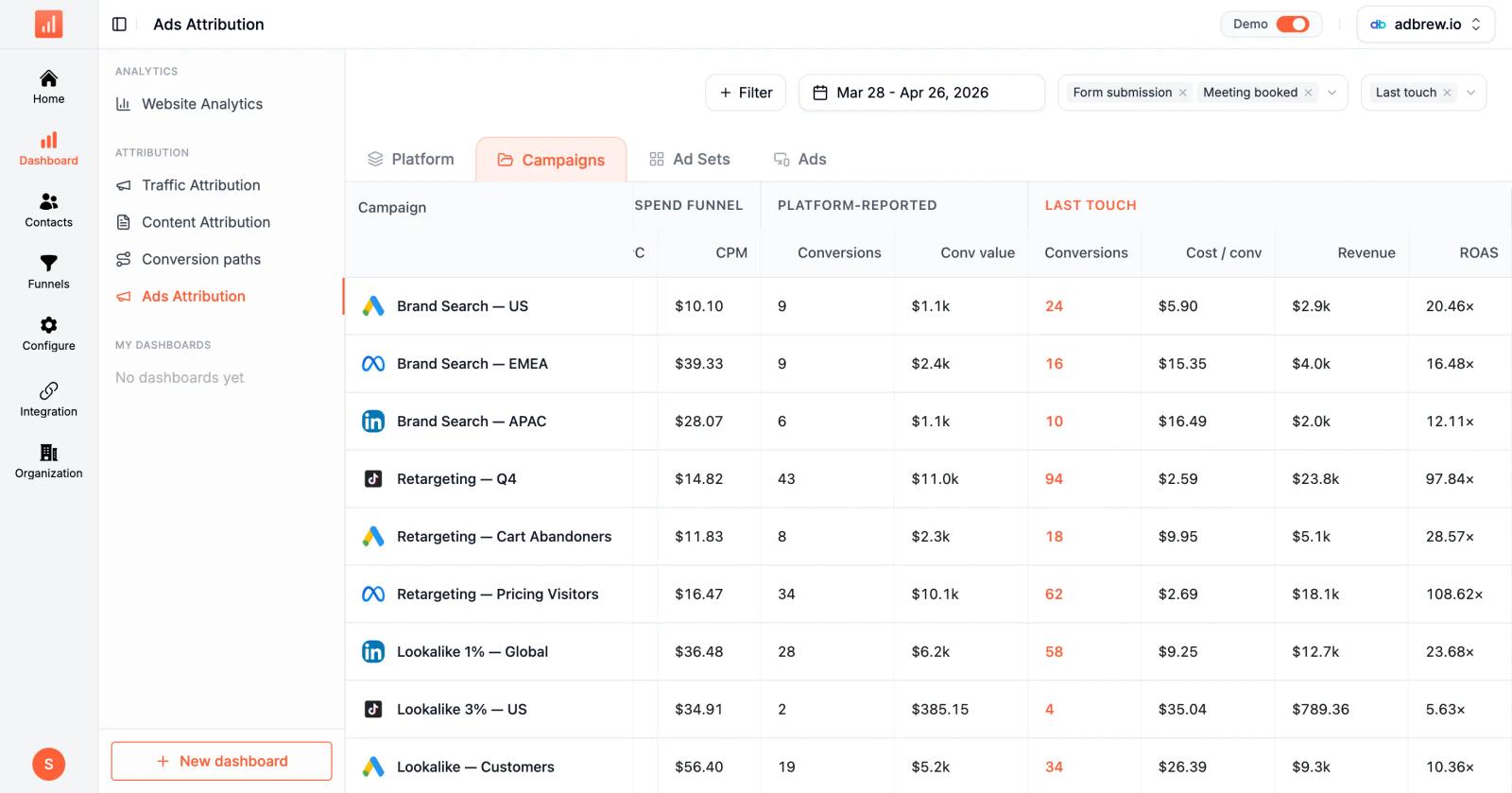
After iOS 14 broke client-side pixels, ad platforms started flying blind. Sourceloop's server-side CAPI feeds conversions back to each platform's algorithm so optimization keeps working.
This is included in the $49 plan, not a $200/mo add-on like most analytics tools charge.
3. Cookieless-resilient tracking
Sourceloop keeps working through iOS 14, Safari ITP, Brave, ad blockers, and GDPR opt-outs. It uses click IDs (gclid, fbclid, msclkid, ttclid, li_fat_id, gbraid, wbraid), server-side ingest, identity stitching from email, and webhook matching from payment processors.
When cookies get cleared or blocked, the rest of the chain still works.
4. 18-channel auto-classification, including AI referrals
Eighteen traffic channels are classified automatically: Direct, Organic Search, Paid Search, Organic Social, Paid Social, Display, Email, Referral, Affiliates, Podcast, SMS, Push, and more.
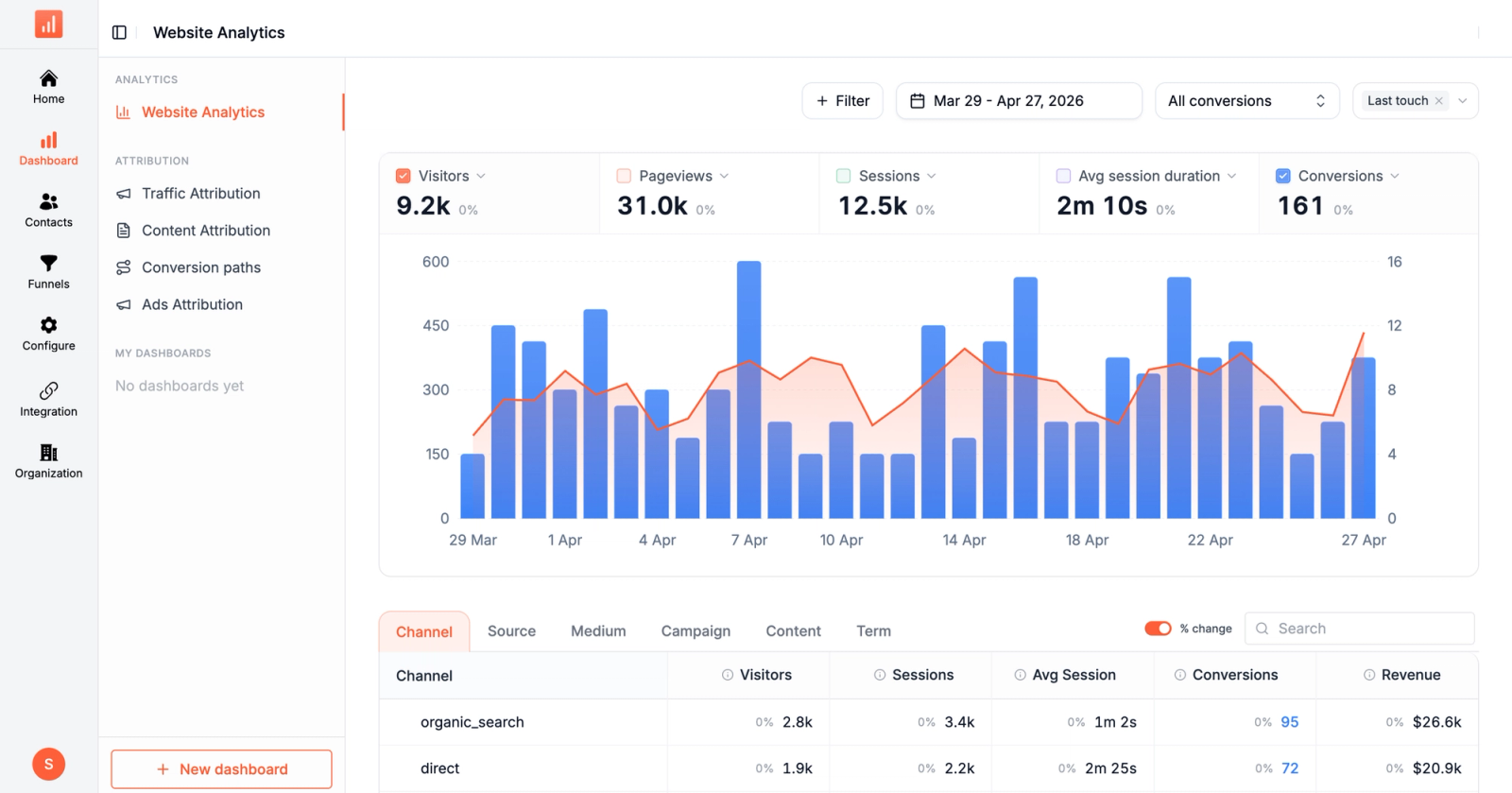
The standout: AI Referrals from ChatGPT, Claude, and Perplexity show up as their own channel. Most analytics tools still bucket these as "direct," and you miss the early signal.
5. Auto-detection for B2B booking and form tools
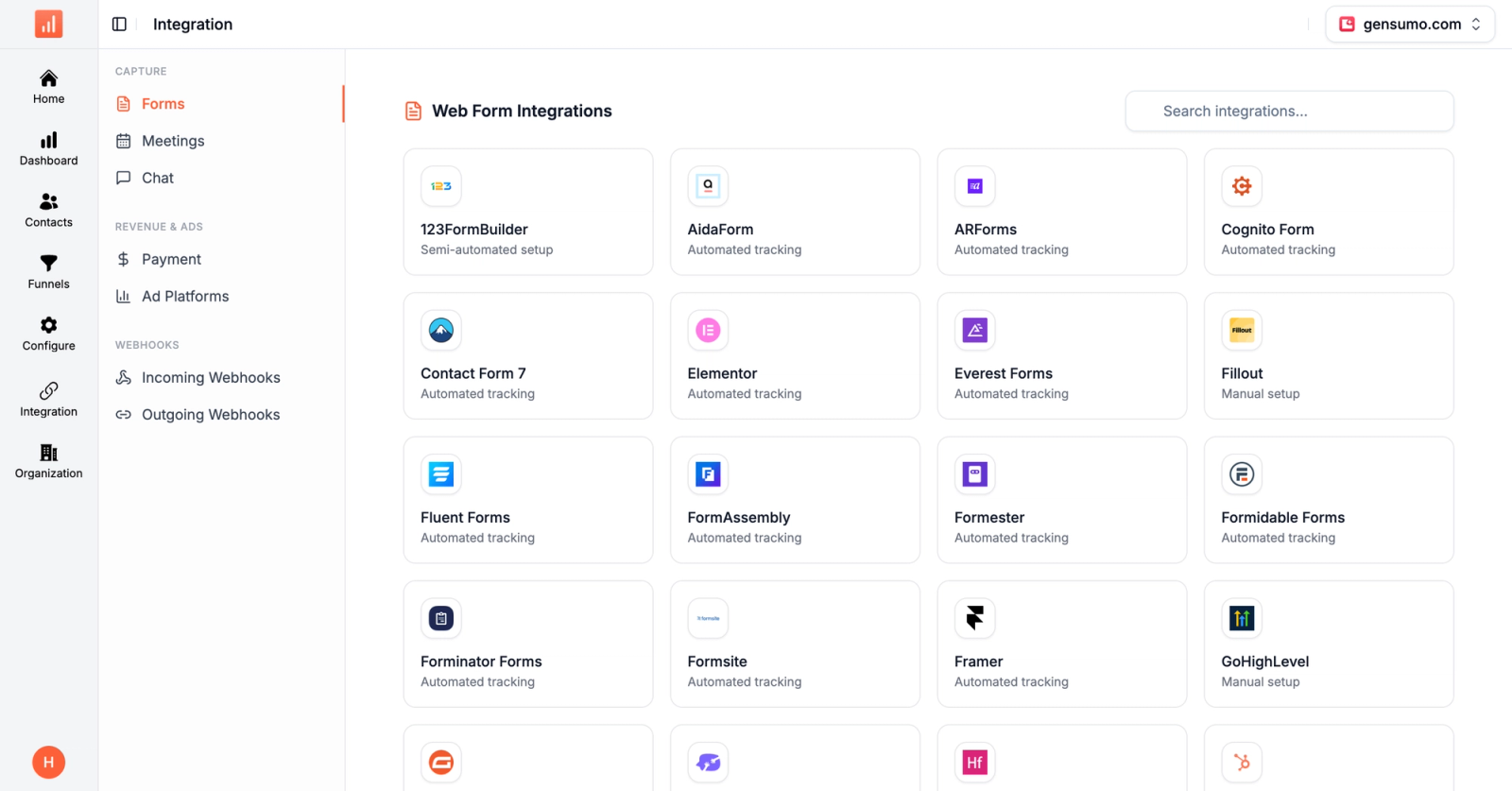
Calendly, Cal.com, HubSpot Meetings, Typeform, Jotform, and 123FormBuilder are auto-detected. No JavaScript work. Drop the script, the meetings get tracked.
Account-level identity tracking shows which company visited the pricing page, not just which user. Useful when you're trying to tie pipeline back to ABM lists.
6. Stripe, Polar, LemonSqueezy webhook stitching
Every purchase gets matched back to the visitor who originally clicked the ad, even if the checkout happens days later on a different device.
Pre-checkout payment stitching with sourceloop.payment(email) keeps the chain intact when a user signs up before paying.
7. 365-day data retention on every plan
GA4 defaults to 14 months for most properties. Most attribution competitors give 90 days on entry tiers. Sourceloop gives 365 days flat across all plans, no surprises.
What Sourceloop replaces
Tool you're paying forWhat Sourceloop coversGoogle Analytics 4Web analytics, all 18 channelsCometly / Triple WhaleMulti-touch attribution + CAPIMixpanel / AmplitudeFunnels and conversion pathsHotjar / Microsoft ClarityClick and scroll capture
Pros
- All 7 attribution models on the $49 entry plan, no upsell games
- Server-side CAPI to Google, Meta, TikTok, LinkedIn included
- Cookieless-resilient through iOS 14, ITP, ad blockers
- Auto-detects Calendly, Cal.com, HubSpot Meetings, Typeform, Jotform forms
- Stripe, Polar, LemonSqueezy webhook stitching for revenue attribution
- AI referral channel detection (ChatGPT, Claude, Perplexity)
- 365-day retention on every plan
Cons
- Newer to market than incumbents like GA4 or HockeyStack
- Not a full product analytics replacement for teams needing deep in-app event tracking
Pricing: Starts at $49/mo with all 7 models, all 18 channels, 365-day retention, and all native ad integrations included. Professional unlocks unlimited websites. Business adds white-label. Enterprise adds the DPA.
2. HockeyStack
Best for: Mid-market and enterprise B2B teams running complex multi-channel motions
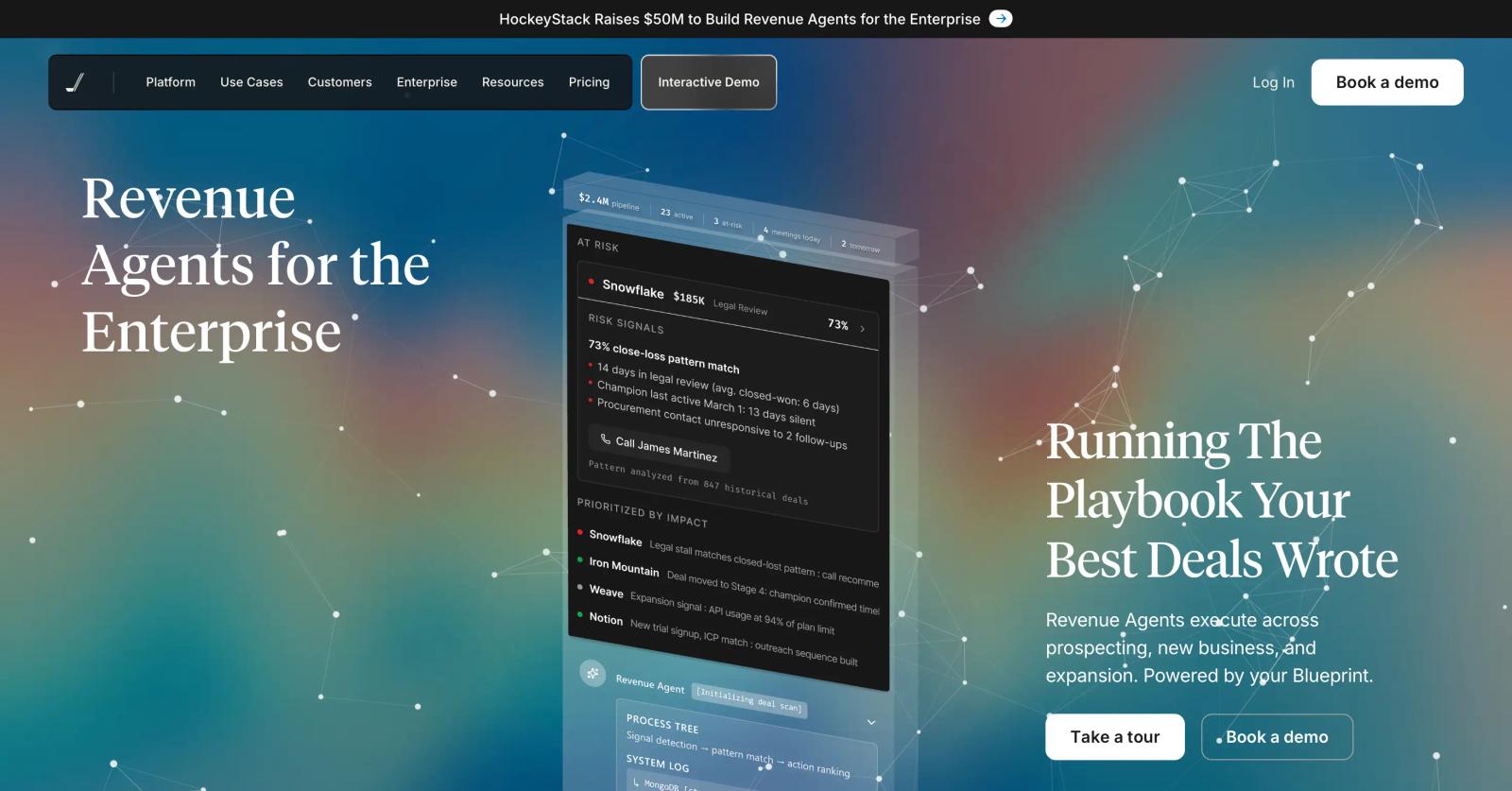
HockeyStack is a B2B revenue analytics and attribution platform built for go-to-market teams with long, multi-stakeholder sales cycles.
It connects data from CRMs, marketing automation, ad platforms, product analytics, and customer success tools into a unified data foundation, then layers AI agents (Odin for analysis, Nova for sales) on top.
The product is genuinely strong for teams spending six figures a month across paid, organic, events, and outbound. Buyer journey mapping tracks anonymous research through to closed-won, including pre-form-fill engagement.
HockeyStack tracks pipeline across customers including 8x8, DataRobot, RingCentral, and MasterCard.
The downside is access. HockeyStack doesn't publish prices, and the Growth plan starts around $1,399/month per Docket's research, with annual contracts only. The most-cited negative on G2 is the learning curve, with 11 explicit mentions and 8 calling it "steep".
Pros:
- Best-in-class multi-touch attribution for complex B2B
- AI agents that surface insights without manual reporting
- Deep CRM and product analytics integration
Cons:
- Steep learning curve, 2-6 weeks to full operationalization
- No public pricing, demo-gated
- No raw data export API on lower tiers per G2 reviewer disclosures
Pricing: Growth plan starts around $1,399/month, Enterprise pricing custom. Annual contracts required.
3. Dreamdata
Best for: B2B SaaS teams with multi-stakeholder buying journeys
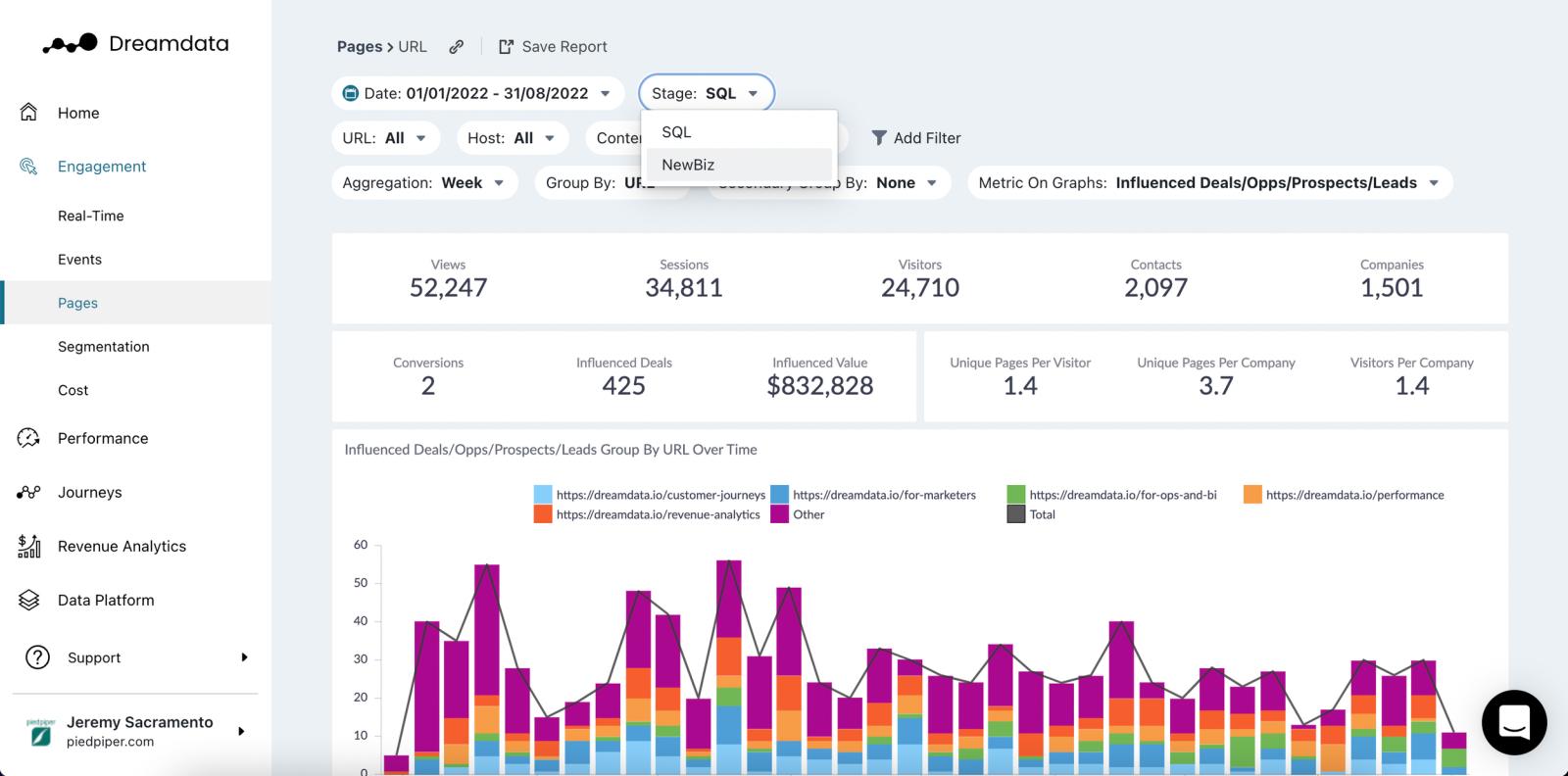
Dreamdata is a B2B attribution and activation platform out of Copenhagen that maps the full account-level customer journey. It connects to CRMs, marketing automation, ad platforms, intent tools, and product usage to build a unified, account-based data model.
The product is rated number one in G2's B2B Attribution category with over 230 reviews. The journey visualization gets the most love from users, with 56 mentions of journey visualization and 50 mentions of attribution accuracy in a recent G2 analysis. The IP-to-company resolution engine identifies up to 80% of companies visiting your site. What sets Dreamdata apart from HockeyStack is warehouse access on advanced plans, with native BigQuery and Snowflake connectivity.
Pros:
- Up to 80% company identification rate
- BigQuery and Snowflake access on higher tiers
- Free tier available to start
Cons:
- 4-8 week typical implementation timeline
- Pricing scales sharply with contact volume
- BigQuery storage costs add unpredictable overhead
Pricing: Free plan available. Activation Starter at $750/month. Business around $1,499-$2,499/month. Enterprise custom. Most paid plans require annual commitment, with annual contract values typically $9,000-$30,000.
4. Triple Whale
Best for: Shopify DTC brands wanting attribution plus profit analytics
Triple Whale is the analytics operating system for Shopify. The Triple Pixel does first-party multi-touch attribution, the dashboards stitch together Shopify orders with Meta, Google, and TikTok ad data, and the Moby AI agents have evolved into something closer to autonomous campaign management than a reporting layer.
The 2026 version is materially different from earlier years. Sonar Send, which enriches Klaviyo flows and has driven average Klaviyo revenue lifts of 14.2%, is now included on the Starter plan. Moby Actions lets you pause underperforming ad sets, send segments to Klaviyo, and adjust budgets without leaving the platform. Negative reviews on G2 mention pricing being high for smaller stores and occasional support delays for non-enterprise customers (Triple Whale G2 reviews).
Pros:
- One-click Shopify integration, fast time-to-value
- Profit analytics at the order level
- Moby AI agents are genuinely useful
Cons:
- Shopify-first; non-Shopify support is newer and less mature
- Above $5M GMV, pricing becomes GMV-based and climbs quickly
- Some users report attribution discrepancies on imported marketplace orders
Pricing: Free Founders Dash plan. Starter at $179/month (annual). Advanced at $259/month (annual). Above $5M GMV, pricing becomes GMV-based and requires sales conversation.
5. Northbeam
Best for: DTC brands at $1M+ ARR with serious paid media spend
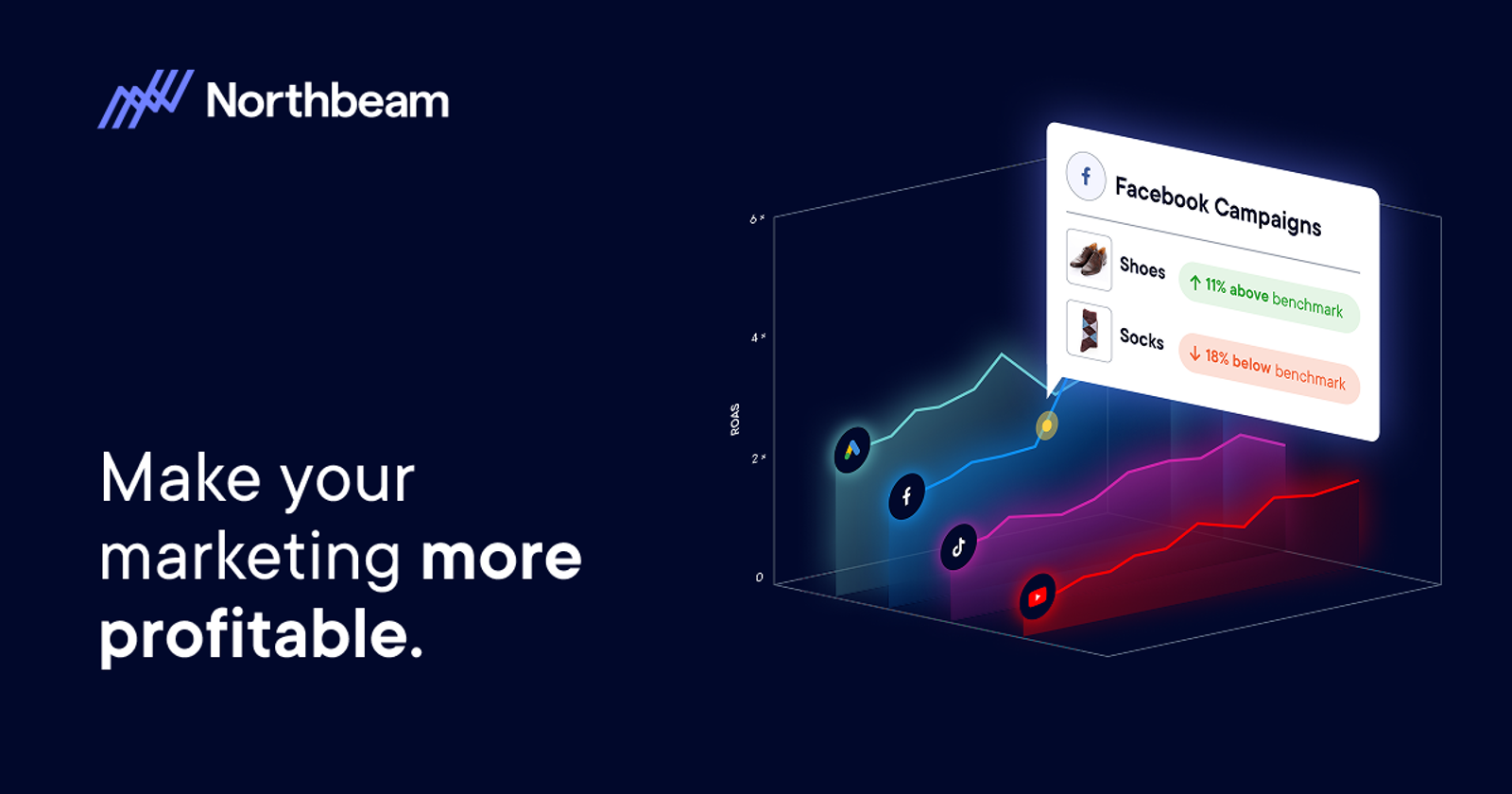
Northbeam is the most technically sophisticated attribution platform for DTC ecommerce. Multi-touch attribution, deterministic view-through measurement, the Apex integration that feeds Northbeam data back into Meta and other ad platforms, and weekly-retraining MMM+ all live in the same product. Northbeam tracks over $25 billion in ad spend across 800+ companies.
Apex is the differentiator. In Northbeam's own study of 25 Meta advertisers spending $1.5 million collectively, Apex users saw an average 34% improvement in conversion rates. Sending first-party data back to ad platforms is something most attribution tools don't offer at any price. G2 reviewers note that Northbeam has become the standard for paid and owned channel attribution, though the onboarding has gotten thinner for sub-$1K/month accounts (Northbeam G2 reviews).
Pros:
- Best-in-class attribution depth for ecommerce
- Apex CAPI integration drives measurable lift
- MMM+ retrains weekly, useful for podcast, CTV, and offline channels
Cons:
- Steep price floor, not viable below $20-50K/month in media spend
- Calibration period of 2-4 weeks before reliable data
- All data is modeled, no straightforward "blended" performance view
Pricing: Starter starts at $1,500/month for brands spending under $250K/month in media. Professional at $2,500/month. Enterprise custom. No free trial.
6. Cometly
Best for: Paid media teams that want server-side tracking plus AI optimization
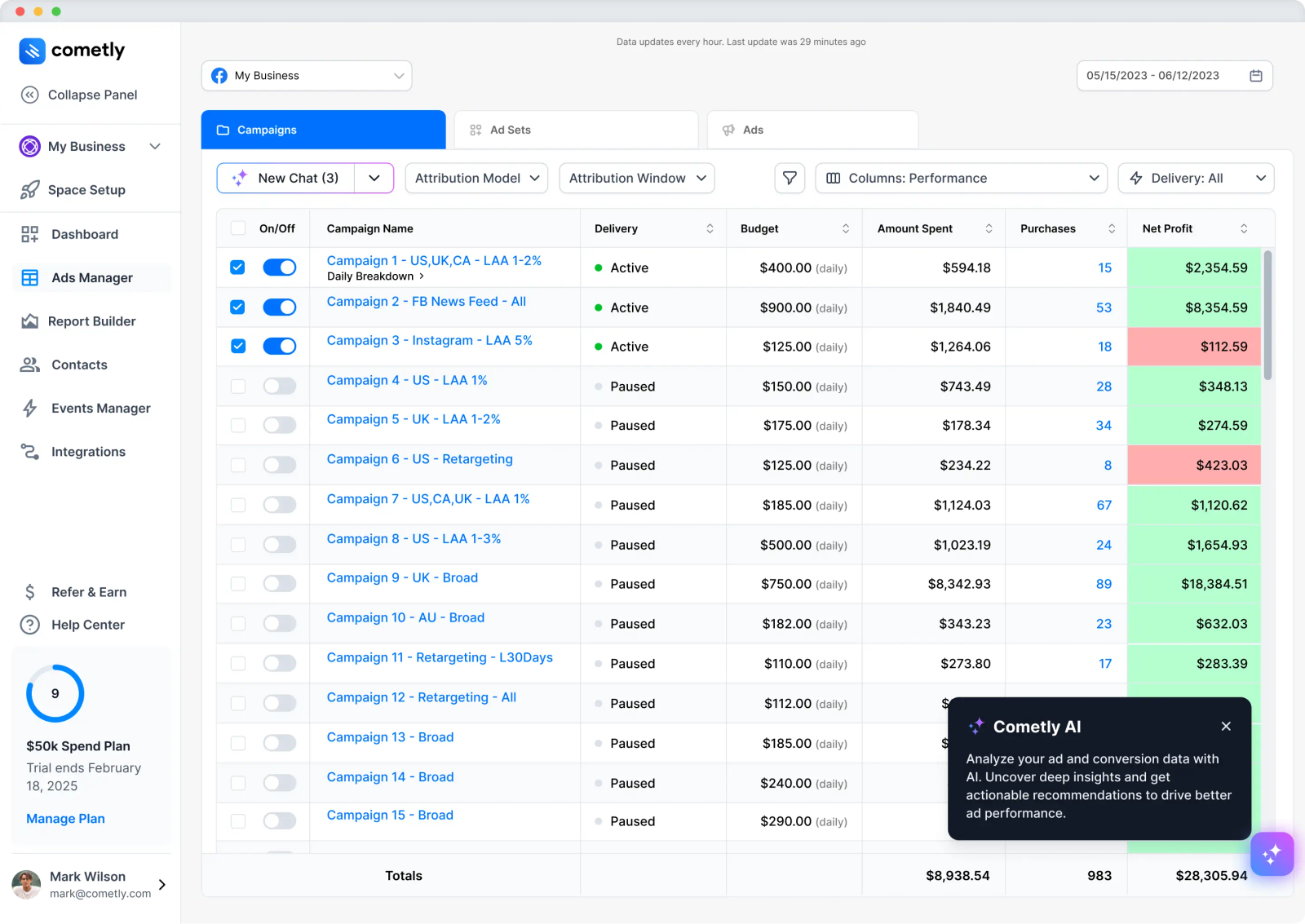
Cometly combines server-side tracking with AI-powered ad optimization. The platform tracks the full customer journey from ad click through CRM conversion and feeds enriched conversion data back to Meta, Google, TikTok, and other platforms via their server-side APIs. The "AI Ad Manager" recommends which ads and campaigns to scale or pause based on actual conversion data, not surface metrics.
A G2 reviewer wrote that Cometly's flexibility to track custom events and easy setup is the best thing about it. Some users mention that documentation can be thin and that complex tech stacks take longer to set up (Cometly G2 reviews).
Pros:
- Server-side tracking that survives iOS and browser restrictions
- AI optimization recommendations, not just reporting
- Clean attribution dashboard, low overwhelm
Cons:
- No public pricing
- Steeper setup for complex tech stacks
- Documentation has been called less complete than expected by some users
Pricing: Quote-based, ad-spend-tiered. Professional and Enterprise tiers, with the same core feature set but different levels of implementation support.
7. Ruler Analytics
Best for: B2B businesses where phone calls and form submissions drive pipeline
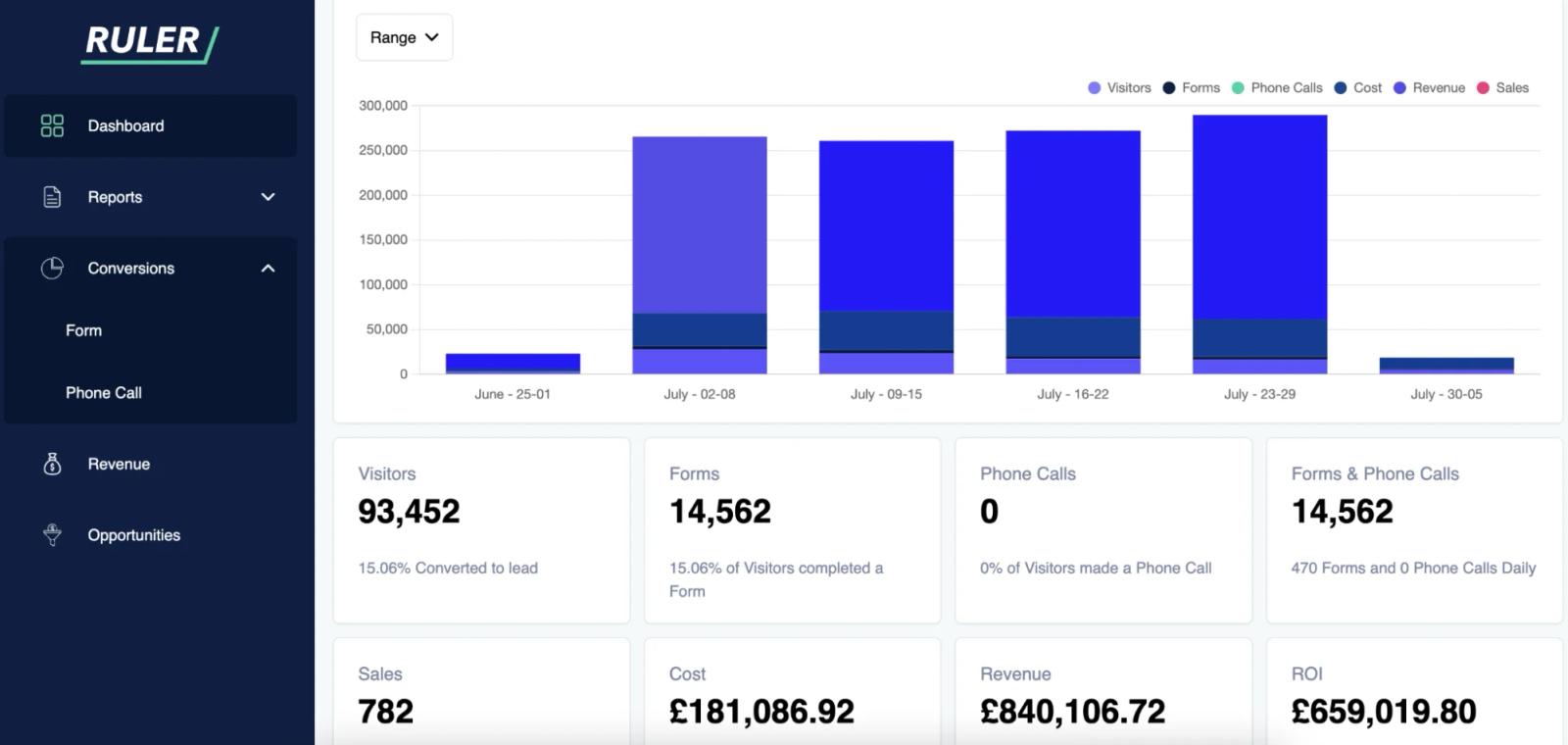
Ruler Analytics is a UK-built attribution platform that closes the loop between marketing activity and CRM revenue, with particular strength in call tracking. It's the right choice for businesses where phone-led sales matter, like legal, professional services, automotive, and high-consideration B2B.
Ruler tracks visitor-level data across 60+ marketing variables, captures form, call, and live chat conversions, and pushes attributed revenue back into HubSpot, Salesforce, Google Ads, and Microsoft Dynamics. Multi-touch attribution models include first, last, linear, time-decay, U-shaped, W-shaped, and full path. The most common complaint, repeated on Capterra, is the 12-month minimum contract being inflexible if you decide it's not the right fit (Ruler Capterra reviews).
Pros:
- Strong call tracking and visitor-level attribution
- Closed-loop CRM revenue reporting
- Re-provided keywords (Google "not provided" matched to phone calls)
Cons:
- 12-month minimum contract, hard to exit early
- Setup can take up to 3 weeks per Capterra reviews
- Pricing scales by website traffic volume rather than leads captured
Pricing: Small Business at £199/month for 5,000 monthly visits. Medium Business at £649/month for 50,000 visits. Large Business at £1,149/month for 100,000 visits. Custom Advanced tier above 200,000 visits.
8. Hyros
Best for: Info products, high-ticket coaching, and long click-to-sale cycles
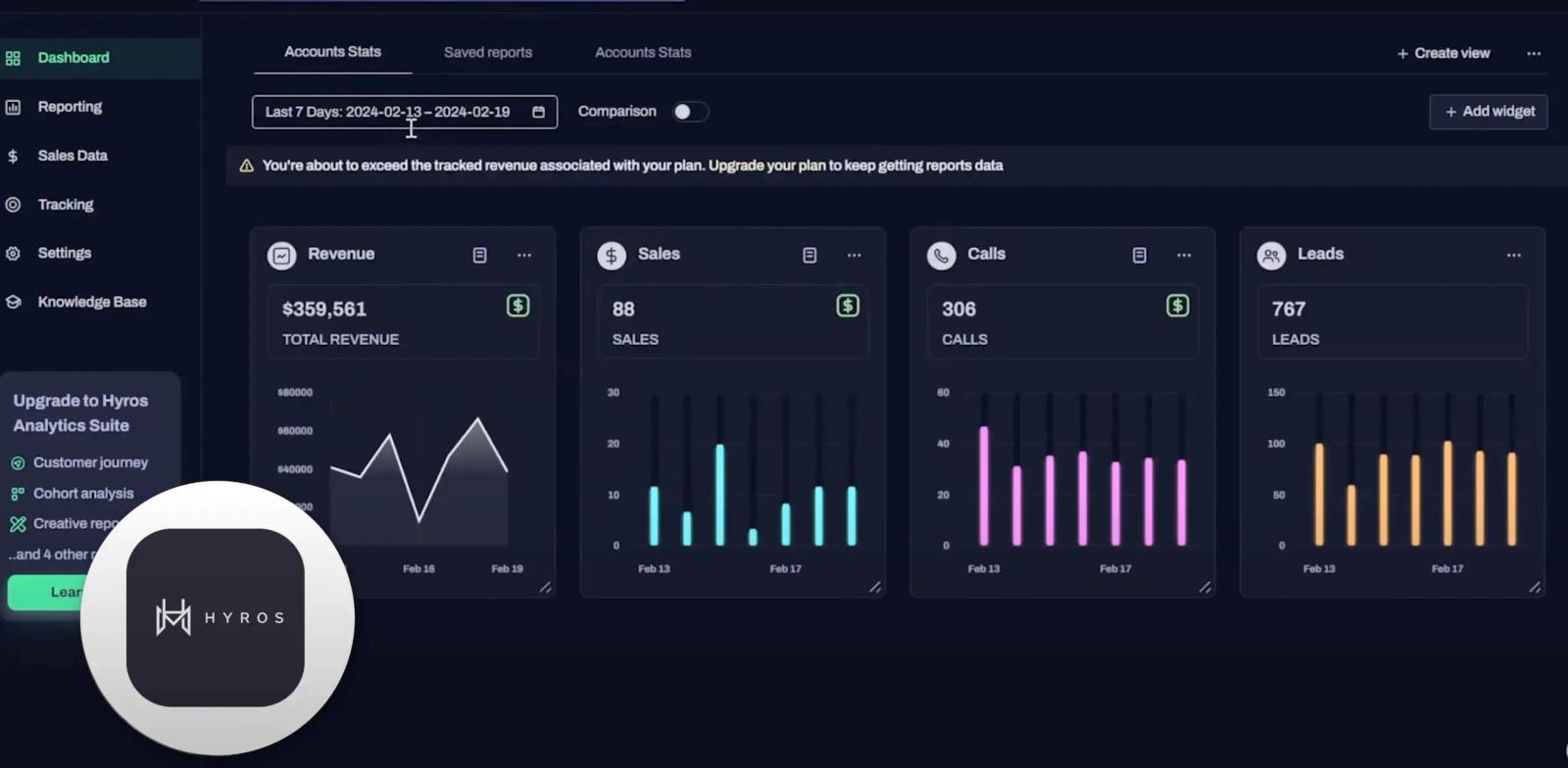
Hyros is a server-side attribution platform that runs in parallel with Meta and Google's tracking, focused heavily on info products, high-ticket courses, and webinar funnels. The customer base includes Tony Robbins, Grant Cardone, and Russell Brunson.
The "Scientific Mode" attribution model is unusual and useful for long sales cycles. Sales within a configurable timeframe get credit on first click, and sales after that timeframe go to last click. Hyros customers report capturing 29-33% more sales and leads than native Facebook, Google, and TikTok reporting. Critics on Reddit and review sites point to opaque pricing and the platform feeling like a black box.
Pros:
- Strong fit for info products, coaching, high-ticket
- Server-side tracking recovers conversions that pixel-based tools miss
- Scientific Mode handles long sales cycles better than rigid models
Cons:
- Sales-call-required pricing, no self-serve
- Better-fit alternatives exist for standard ecommerce
- Heavy affiliate program inflates positive review volume
Pricing: Shopify track at $69/month for $5K tracked revenue. Business track at $230/month for $20K tracked revenue. Agency pricing custom.
9. HubSpot Marketing Hub Enterprise
Best for: Teams already on HubSpot CRM that want native attribution without another tool
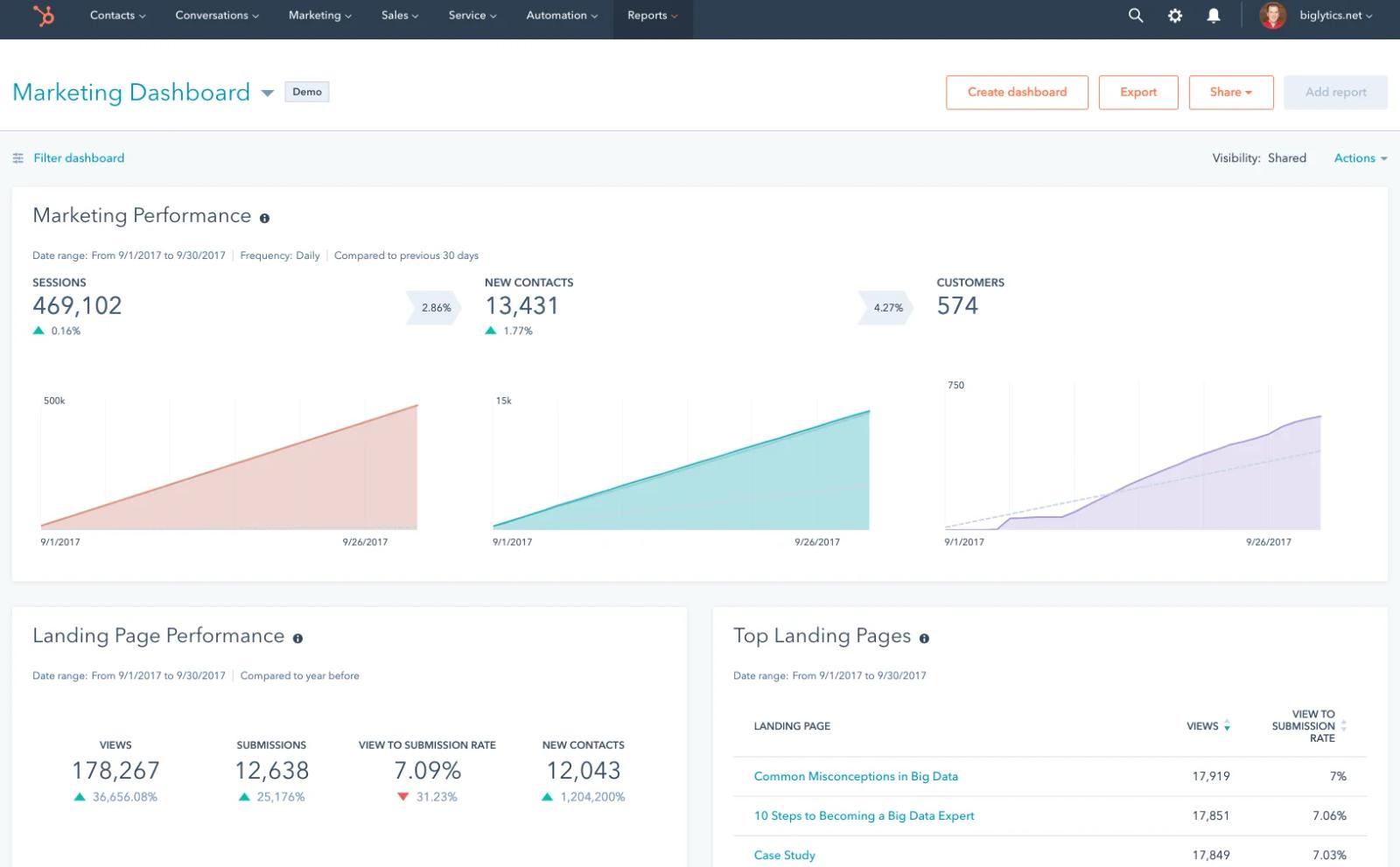
HubSpot Marketing Hub Enterprise ships native multi-touch revenue attribution, customer journey analytics, and campaign attribution reports inside the same platform that already holds your contacts and deals. For HubSpot-native organizations, this is the path of least resistance.
The catch is the price. Multi-touch revenue attribution is gated to the Enterprise plan, which starts at $3,600/month for 5 seats and 10,000 marketing contacts, plus a $7,000 one-time onboarding fee. Below Enterprise, you only get last-ad-interaction reporting, which most attribution buyers consider table stakes, not the real product.
Pros:
- Native CRM integration, no data joining required
- Six attribution models built in
- Campaign, content, and ad attribution all in one place
Cons:
- Multi-touch attribution is Enterprise-tier only
- $7,000 onboarding fee on top of the subscription
- Channel attribution is less granular than dedicated tools (e.g., "paid search" not broken into Google vs Bing)
Pricing: Enterprise plan at $3,600/month for 5 seats, plus $7,000 one-time onboarding. Additional seats at $75/month. Marketing Contacts pricing scales above 10,000.
10. Adobe Marketo Measure (formerly Bizible)
Best for: Enterprise B2B teams already invested in Adobe and Marketo
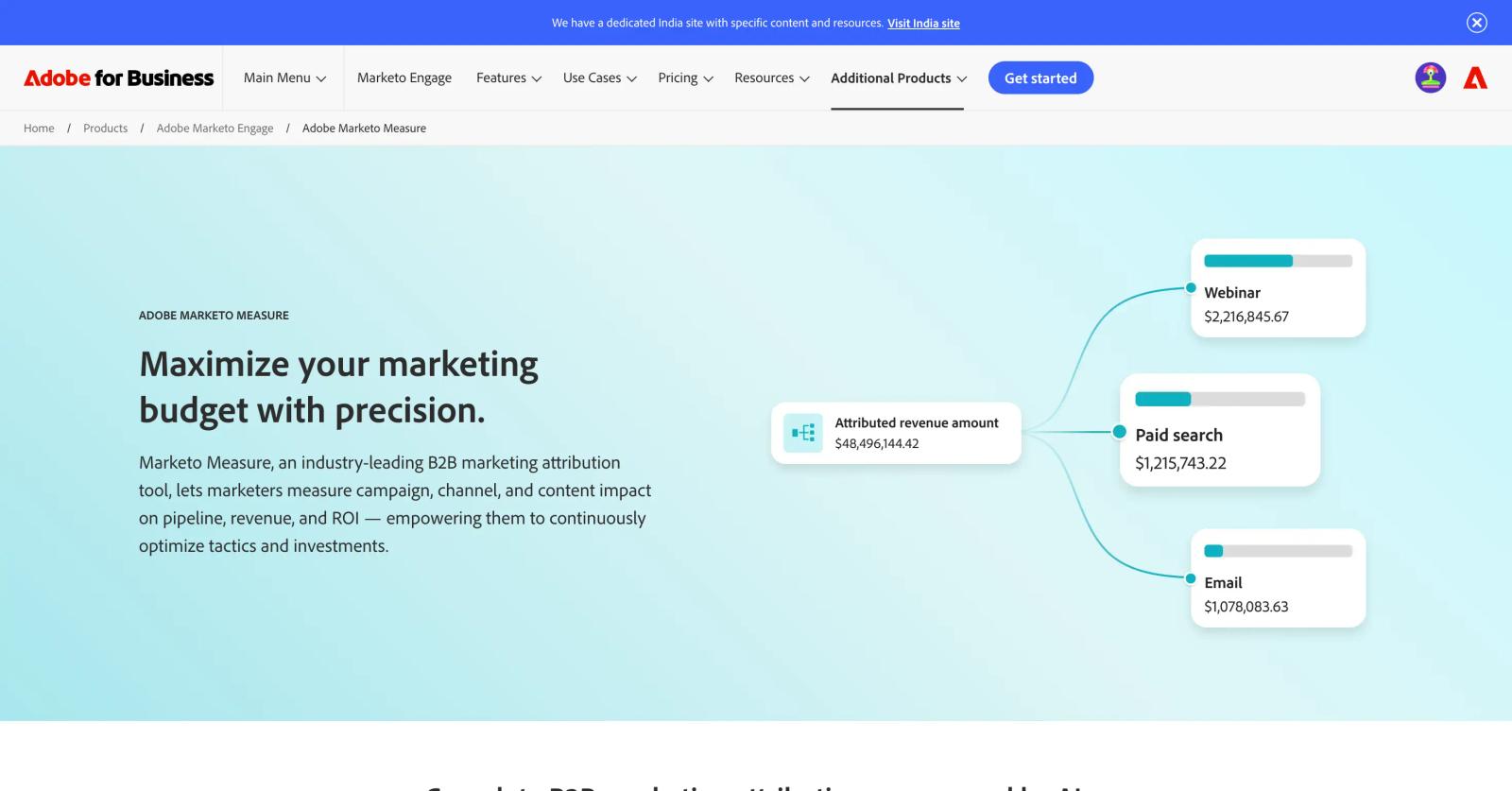
Adobe Marketo Measure, formerly Bizible, is the long-standing enterprise attribution layer for B2B. It ships every-touch attribution, six built-in models (First Touch, Lead Creation, U-Shaped, W-Shaped, Full Path, Custom), and tight integration with Salesforce, Microsoft Dynamics, Marketo Engage, and Adobe Analytics.
For organizations already on the Adobe Experience Cloud, Marketo Measure is the obvious choice. For everyone else, the SegmentStream review of Bizible alternatives makes the case that the product hasn't kept pace since the Adobe acquisition. Predictive lead scoring, conversion modeling, budget optimization, and incrementality testing all live elsewhere now.
Pros:
- Deep Adobe and Marketo integration
- Mature every-touch attribution model
- Strong fit for enterprise governance and compliance needs
Cons:
- Pricing not published, enterprise-only
- Limited innovation since the Adobe acquisition
- Implementation typically requires dedicated resources for several months
Pricing: Custom enterprise pricing only. Multiple sources put annual costs at $50,000+ for typical mid-market deployments.
11. AppsFlyer
Best for: Mobile app marketers managing app install campaigns
AppsFlyer is the dominant Mobile Measurement Partner (MMP), trusted by over 15,000 businesses. If your primary growth motion is app installs and in-app conversions across iOS and Android, AppsFlyer is the category standard, alongside Adjust as the closest competitor.
The Protect360 fraud prevention suite blocks fake installs in real time. SKAdNetwork and Privacy Sandbox support is sophisticated, which matters because iOS post-ATT recovers most of its measurement signal through these frameworks, not the legacy IDFA pipeline. Common complaints are pricing, with 16 G2 mentions of "expensive", and Protect360 being a paid add-on.
Pros:
- Industry-standard for mobile app attribution
- Strong SKAdNetwork and Privacy Sandbox support
- Massive integration ecosystem with ad networks
Cons:
- Pricing climbs quickly with MAU and conversion volume
- Several useful features are paid add-ons
- Limited value for non-mobile-first businesses
Pricing: Free "Zero" plan for owned-media and basic measurement. Paid plans typically run $0.05-$0.06 per conversion with custom pricing for enterprise.
How to choose
For most teams, the right tool comes down to three questions.
What do you sell, and how? B2B SaaS with a 6-month sales cycle is a different problem from a Shopify store with a 3-day click-to-purchase window. Dreamdata, HockeyStack, and Marketo Measure are built for the first. Triple Whale, Northbeam, and Hyros are built for the second. Sourceloop covers both reasonably well, which is part of the consolidation pitch.
What's your ad spend? Below $20K/month in paid media, enterprise tools like HockeyStack and Northbeam don't pencil out. The marginal accuracy gain doesn't justify a $1,500/month line item. Above $250K/month, free tools like GA4 cost you more in misallocated budget than a paid platform would save you in subscription fees.
What else are you running? If you're already paying for GA4 plus Hotjar plus a separate funnel tool plus an attribution layer, the consolidation case for Sourceloop at $49 is hard to beat. If you're already on HubSpot Enterprise, the native attribution may already be paid for.
No single tool nails attribution perfectly. Every platform on this list has trade-offs. The right one is the one that matches what you sell, what you spend, and what your team can actually operate without three weeks of onboarding calls.
Frequently asked questions
-
What is marketing attribution software?
Marketing attribution software tracks every touchpoint a customer has with your brand (ad clicks, page visits, form fills, email opens, purchases) and assigns credit to the channels and campaigns that contributed to a conversion. Instead of trusting Google Ads or Meta to grade their own work, you get one consistent view of which marketing efforts actually drive revenue.
-
What's the difference between single-touch and multi-touch attribution?
Single-touch attribution gives 100% credit to one interaction, usually the first or last click. Multi-touch attribution distributes credit across every touchpoint in the journey using a model like linear (equal credit), position-based (40% first, 40% last, 20% middle), or time-decay (more credit to recent touches). Multi-touch is closer to reality but harder to set up.
-
Do I still need attribution software if I have Google Analytics 4?
GA4 is fine for traffic volume reporting and basic last-click attribution, but it doesn't ship server-side Conversions API to Meta, TikTok, or LinkedIn, doesn't survive iOS 14 cleanly, and hides multi-touch behind exploration reports most marketers can't navigate. If you spend money on ads, you'll outgrow GA4 quickly. You can keep GA4 for volume and add a paid attribution tool for the optimization work.
-
How much should I budget for attribution software?
Below $20K/month in ad spend, look at tools in the $49-$250/month range like Sourceloop or Triple Whale. Between $20K-$250K/month, mid-tier tools at $500-$2,000/month make sense (Dreamdata, Northbeam, Hyros). Above $250K/month, enterprise platforms like HockeyStack or Marketo Measure at $15,000-$60,000/year are justified by the budget at stake.
-
Which attribution tool works best for B2B SaaS?
Dreamdata and HockeyStack are the strongest purpose-built options for B2B with long sales cycles and multi-stakeholder buying committees. If you're already on HubSpot Enterprise or Marketo, their native attribution may cover your needs. For smaller B2B teams or those running ABM, Sourceloop covers Calendly, Cal.com, and HubSpot Meetings auto-detection at a fraction of the cost.


 Paid Social


