
7 Best Triple Whale Alternatives, Tested for 2026
Seven Triple Whale alternatives for Shopify brands and for teams that sell through leads or subscriptions, with pricing and real user reviews.
Table of contents
I've spent a good amount of time inside Triple Whale. It's quick to set up, the summary dashboard earns its keep on day one, and Moby, its AI assistant, answers simple questions well.
The reasons people leave are usually more specific than "it's bad". The pixel's numbers don't match Meta's and someone has to explain the gap. Paid tiers are priced by GMV, so the bill climbs as the brand grows. Or the business simply isn't a Shopify store.
In this guide, I'll go through seven alternatives, grouped by which of those problems they solve, with pricing and what users say.
Where these opinions come from
Triple Whale is the baseline here, and we've used it on live stores. We also ran ThoughtMetric on its trial. Polar Analytics, Northbeam, Wicked Reports, Lifesight and Hyros sell through demos and sales calls, so those sections lean on walkthroughs, documentation and operators we know who run them.
The brands and agencies we work with include DTC teams and businesses that sell through leads and subscriptions, which is why both groups get a pick. Quotes come from public reviews on G2 and Capterra. For each tool we looked at:
- How attribution is calculated, and whether you can check it
- Which store platforms and revenue sources it supports
- How the price grows as revenue grows
- Whether results flow back to Meta and Google
SourceLoop is our product. We held it to the same checklist as the rest and spelled out where it isn't the right fit, which for a pure Shopify store is often.
Last checked November 2026. Confirm current pricing with each vendor.
What changed at Triple Whale, and why people still switch
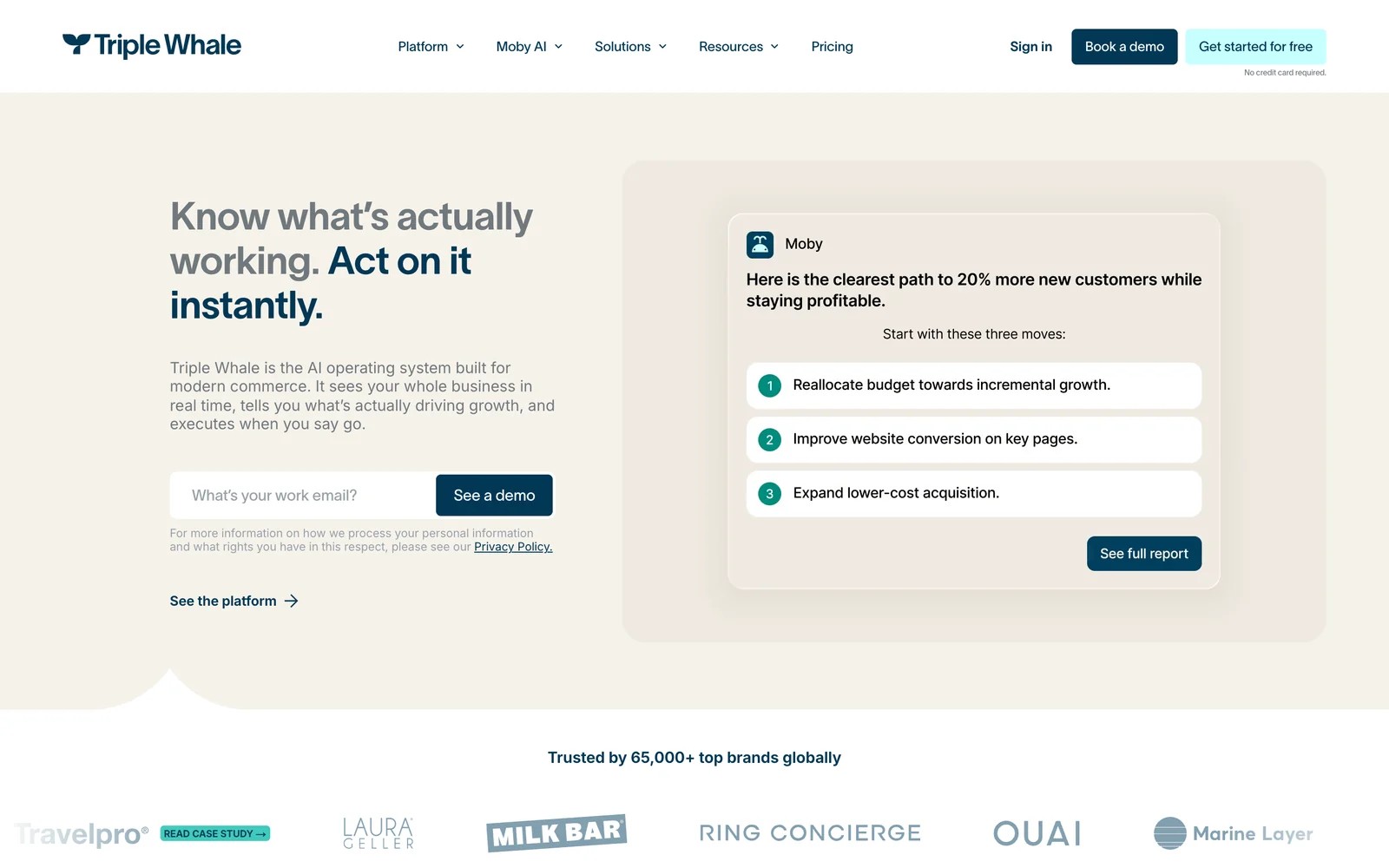
Triple Whale now opens with a free plan that pulls paid, owned, subscription and organic data into one view, plus the Triple Pixel and Moby. The paid tiers, Foundation and Automate, add multi-touch attribution, no-code dashboards, a SQL editor and signals sent back to ad platforms. Its pricing page asks for your annual GMV and books a walkthrough for anything beyond free.
Users like having everything in one place:
"Triple Whale is our source of truth for marketing data." (Source)
The complaints are about cost and trust in the numbers:
"The pricing can also feel high, especially for smaller teams." (Source)
"Unfortunately the Enterprise version has all the best toys and is quite pricey for SMEs." (Source)
"The attribution system is consistently buggy and unreliable, causing more harm than good." (Source)
Triple Whale alternatives at a glance
Here's how the 7 Triple Whale alternatives compare on fit, pricing model and measurement, as of November 2026.
| Tool | Best for | Pricing model | Free plan or trial | Works beyond Shopify | MMM or lift tests | Sends conversions to ad platforms |
|---|---|---|---|---|---|---|
 SourceLoop | Lead gen, SaaS and agencies | Page views, from $49/mo | Yes | Yes | No | Yes |
 Polar Analytics | Shopify brands wanting BI | Quoted by GMV | No | Partly | Lift tests | Add-on |
 Northbeam | Large DTC ad budgets | From $1,500/mo | No | Yes | Yes | Yes |
 ThoughtMetric | Smaller stores on a budget | Page views, from $99/mo | Yes | Yes | No | Partly |
 Wicked Reports | Repeat revenue and LTV | From $499/mo | No | Yes | No | Higher plans |
 Lifesight | MMM plus incrementality | Quote | No | Yes | Yes | Partly |
 Hyros | Info products and call funnels | Quote | No | Yes | No | Yes |
The 7 best Triple Whale alternatives
SourceLoop comes first for businesses that aren't pure Shopify stores. Store owners can skip straight to Polar, Northbeam or ThoughtMetric.
1. SourceLoop
Best for: businesses that sell through leads, calls, bookings or subscriptions, and the agencies that run their ads.
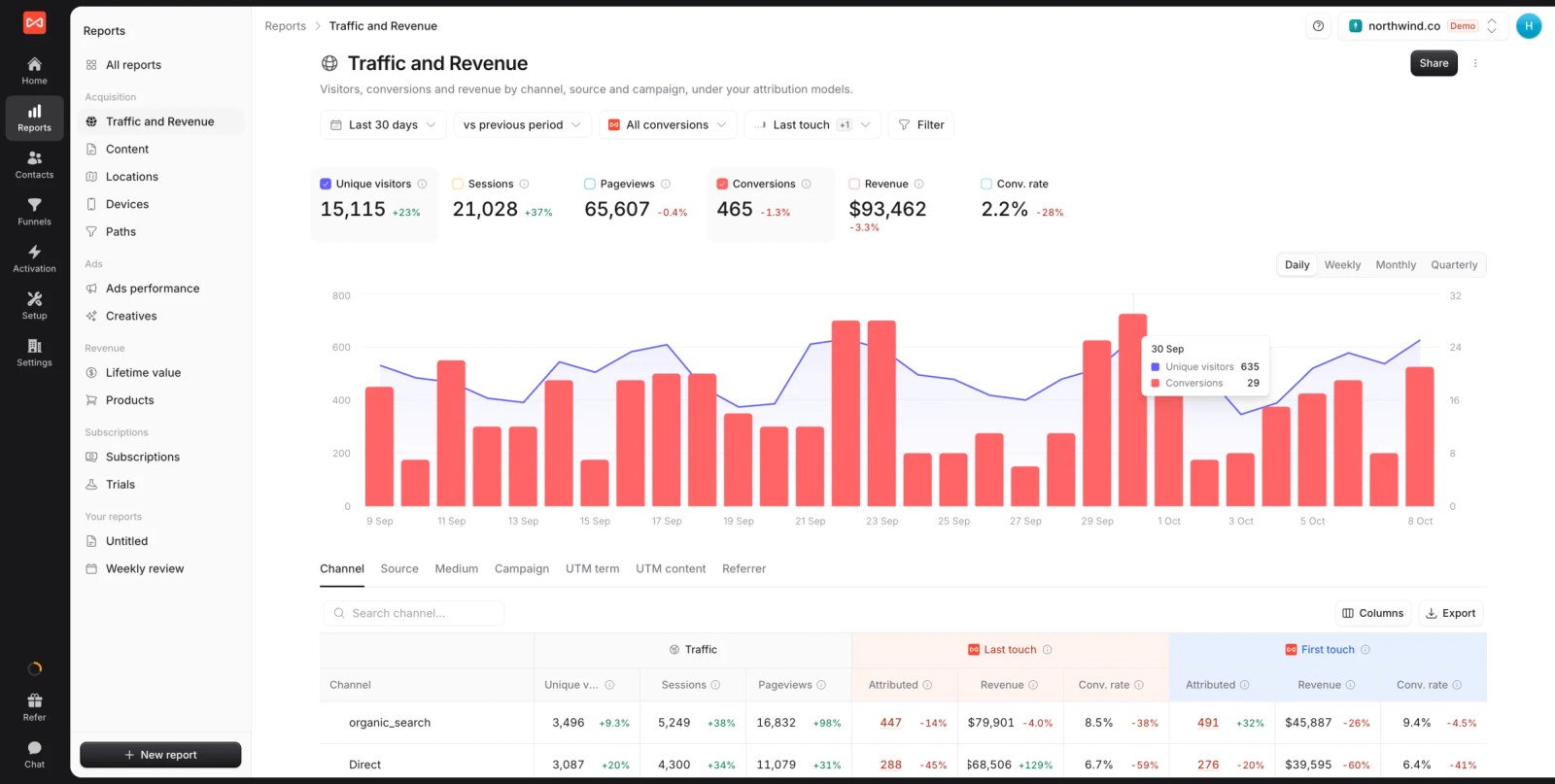
SourceLoop is a lead source and marketing attribution tracking tool. Where Triple Whale follows a click to a Shopify order, SourceLoop follows it to a form fill, a phone call, a booked meeting or a Stripe subscription, and then into the CRM to see which of those leads paid.
That makes it a different kind of Triple Whale alternative. It can read Shopify orders, but its strengths are lead quality, CRM deals and recurring revenue, which a store dashboard doesn't cover.
Key features
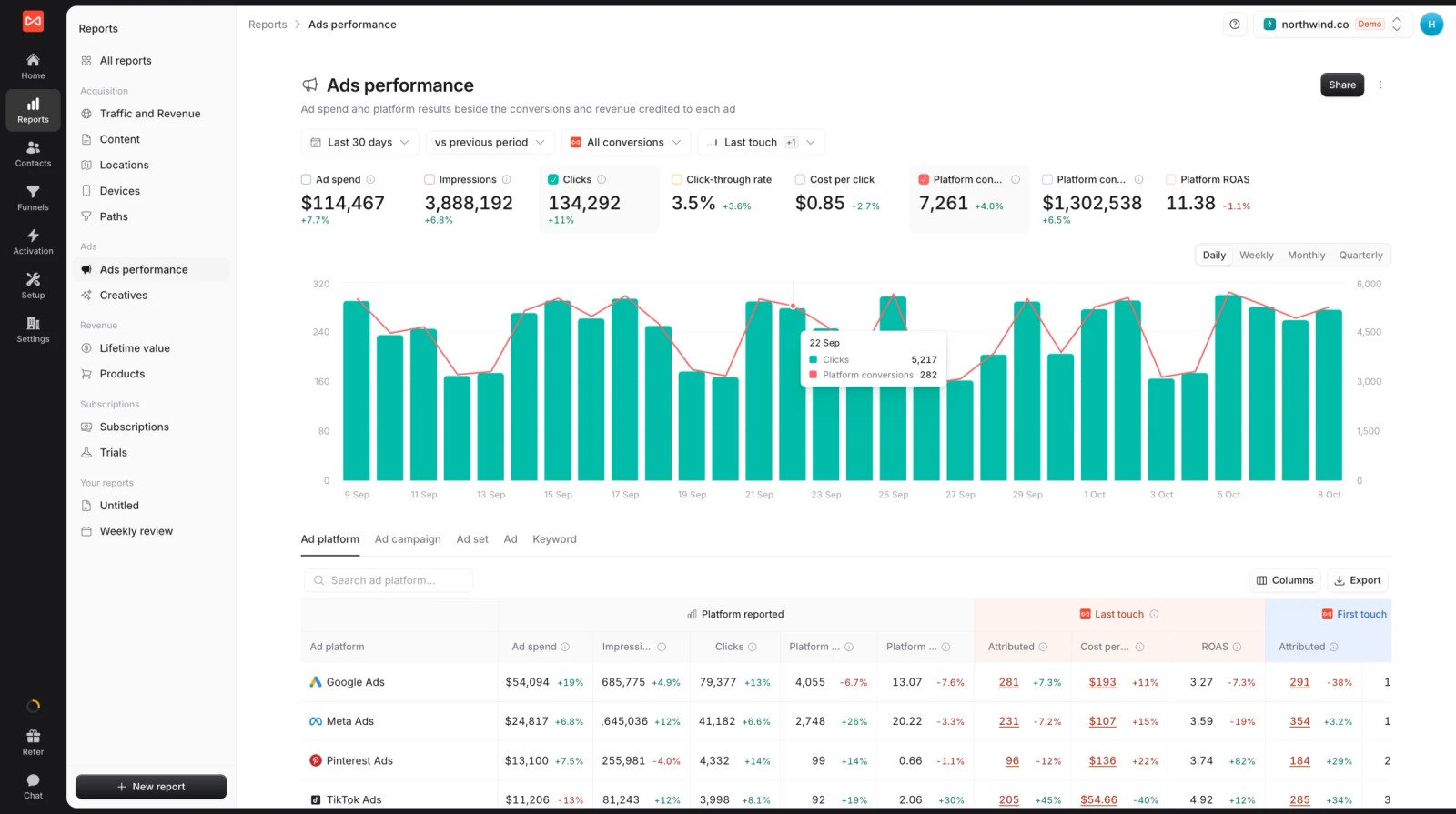
- Platform claims next to credited results: spend, clicks and the conversions each ad platform reports, beside what SourceLoop credits to that platform under first and last touch.
- The journey behind every lead: each visit, ad click and landing page before a form, call, chat or booking, kept on the contact.
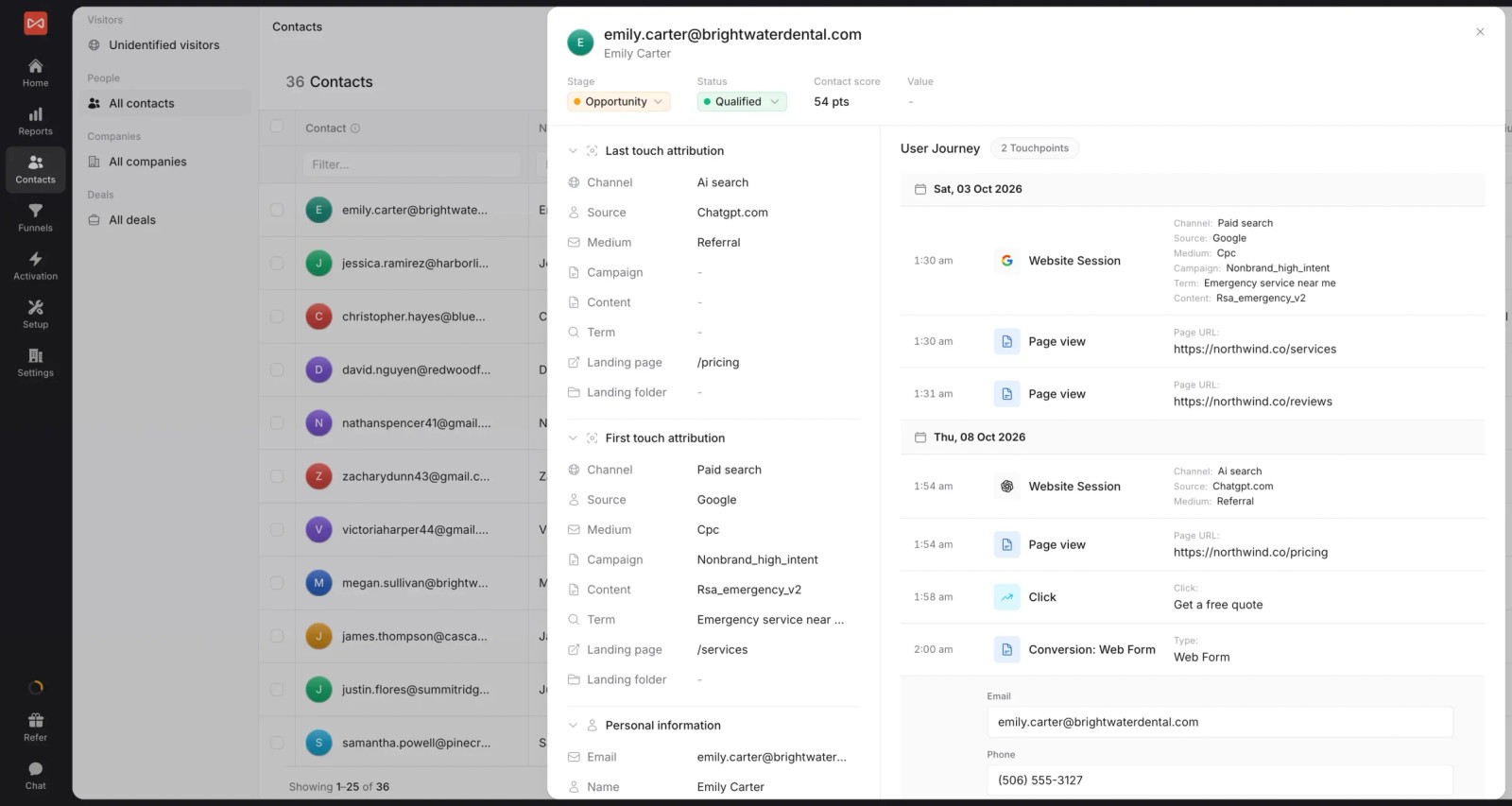
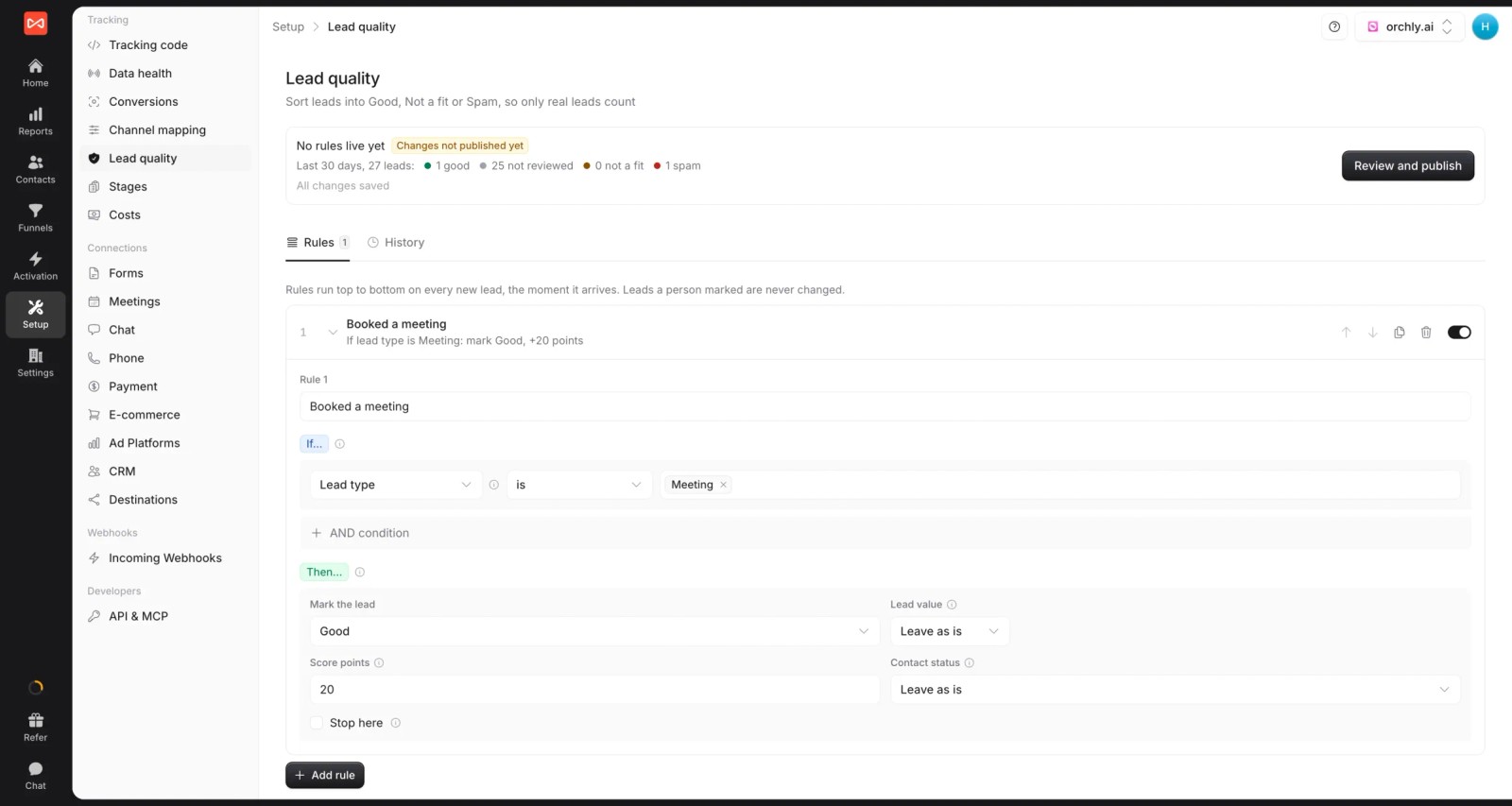
- Lead quality rules: mark leads Good, Not a fit or Spam from form answers, email domain or call length, so reports and bidding ignore junk.
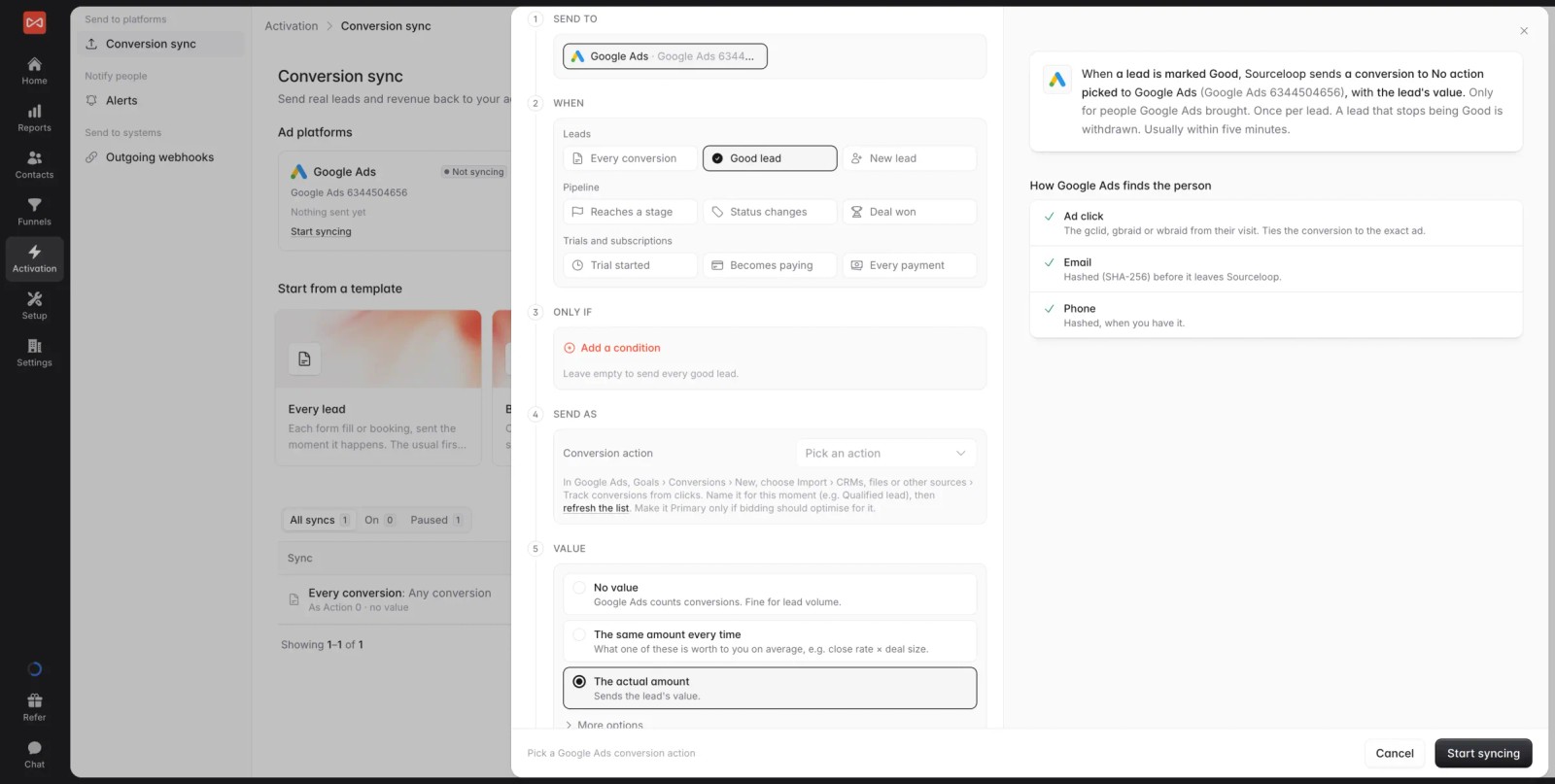
- Conversion sync on real outcomes: send only good leads, won deals or payments, with their value, to Google Ads, Meta, Microsoft Ads and ChatGPT Ads. See how server-side conversion sync works.
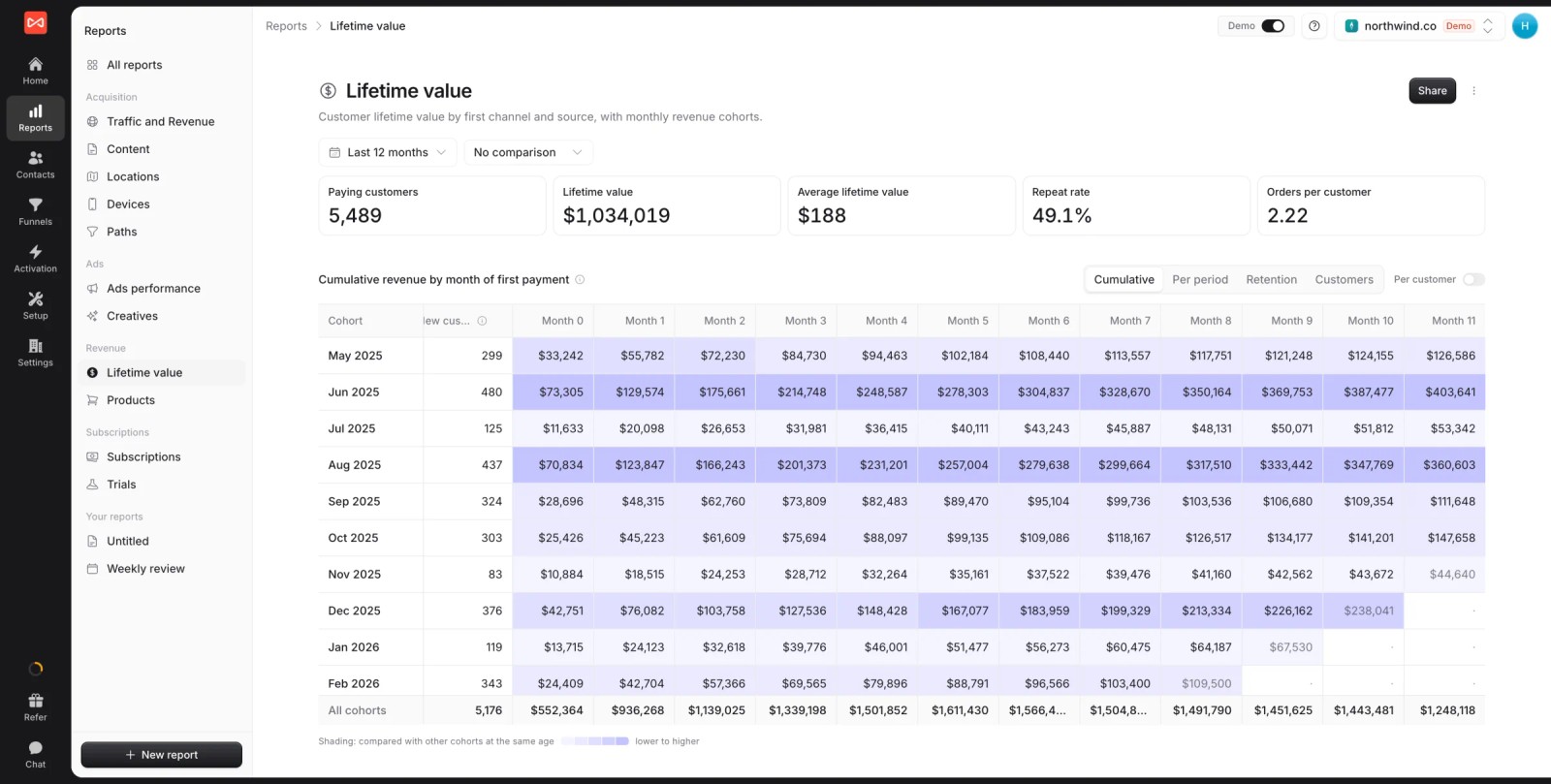
- Subscription revenue and lifetime value: Stripe, Paddle, Polar, Lemon Squeezy and Dodo feed MRR, churn and LTV cohorts by acquisition channel.
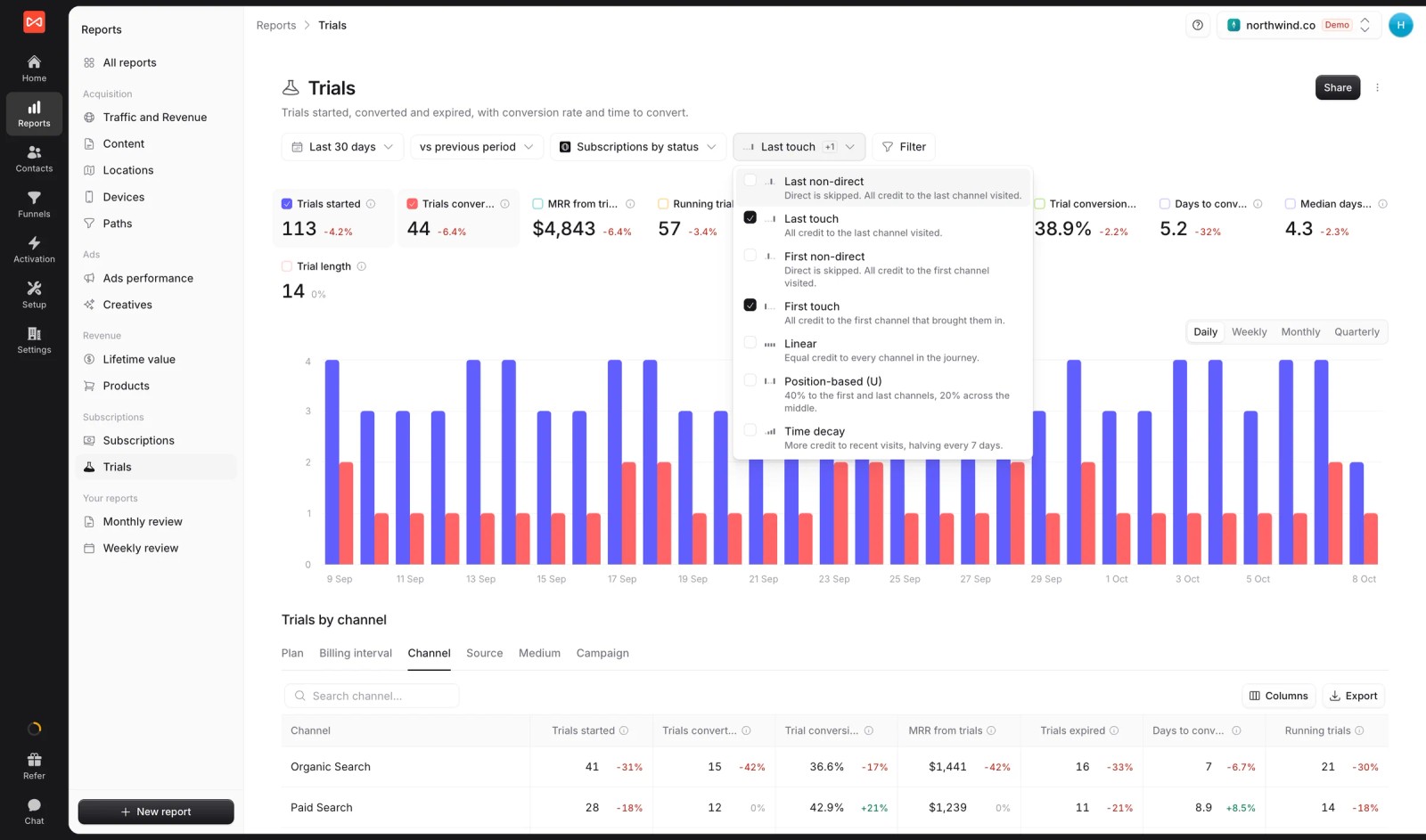
- Seven attribution models: first and last touch, first and last non-direct, linear, U-shaped and time decay.
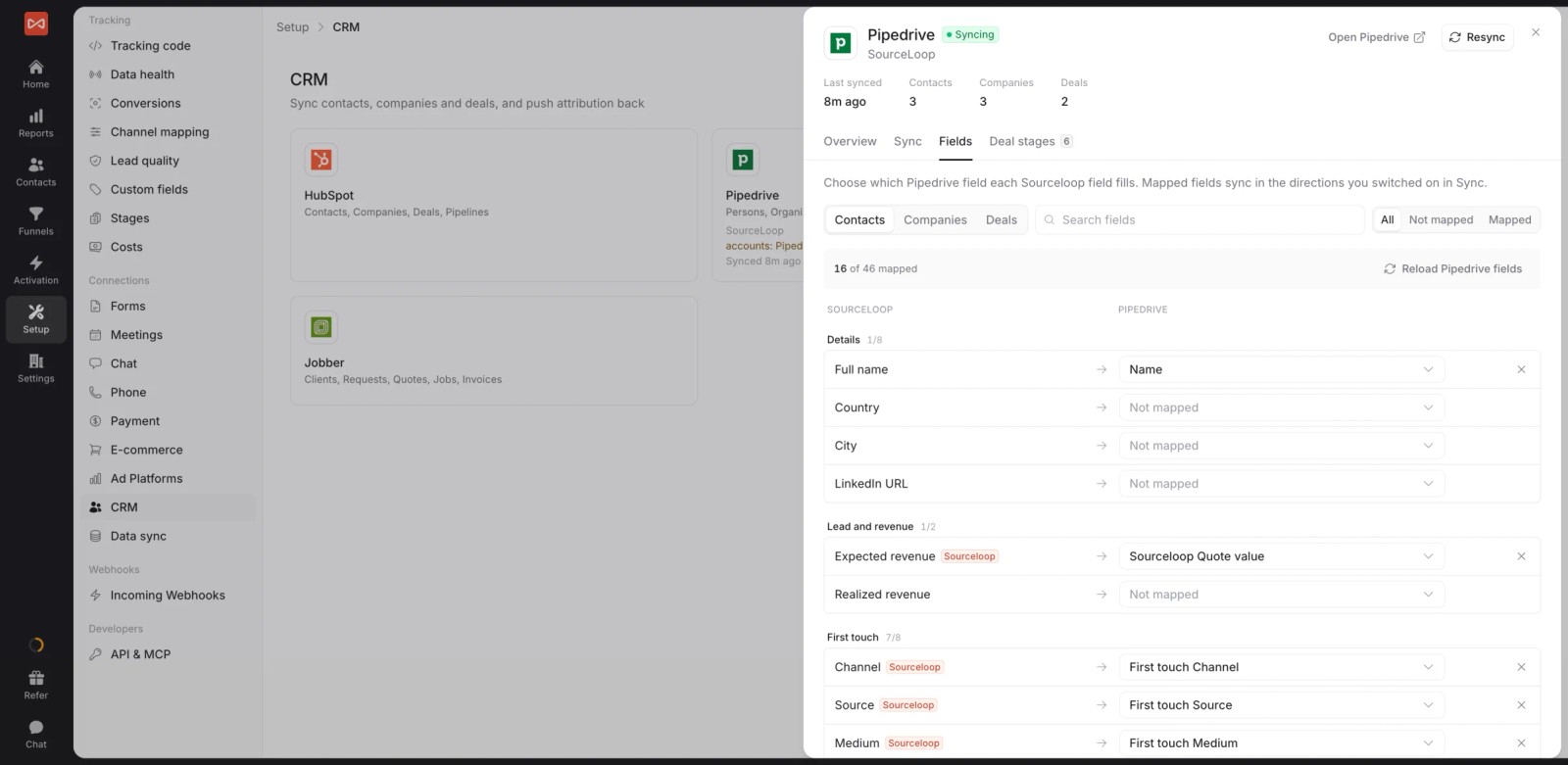
- Two-way CRM sync: HubSpot, Salesforce, Pipedrive and Jobber, with stages and won deals read back.
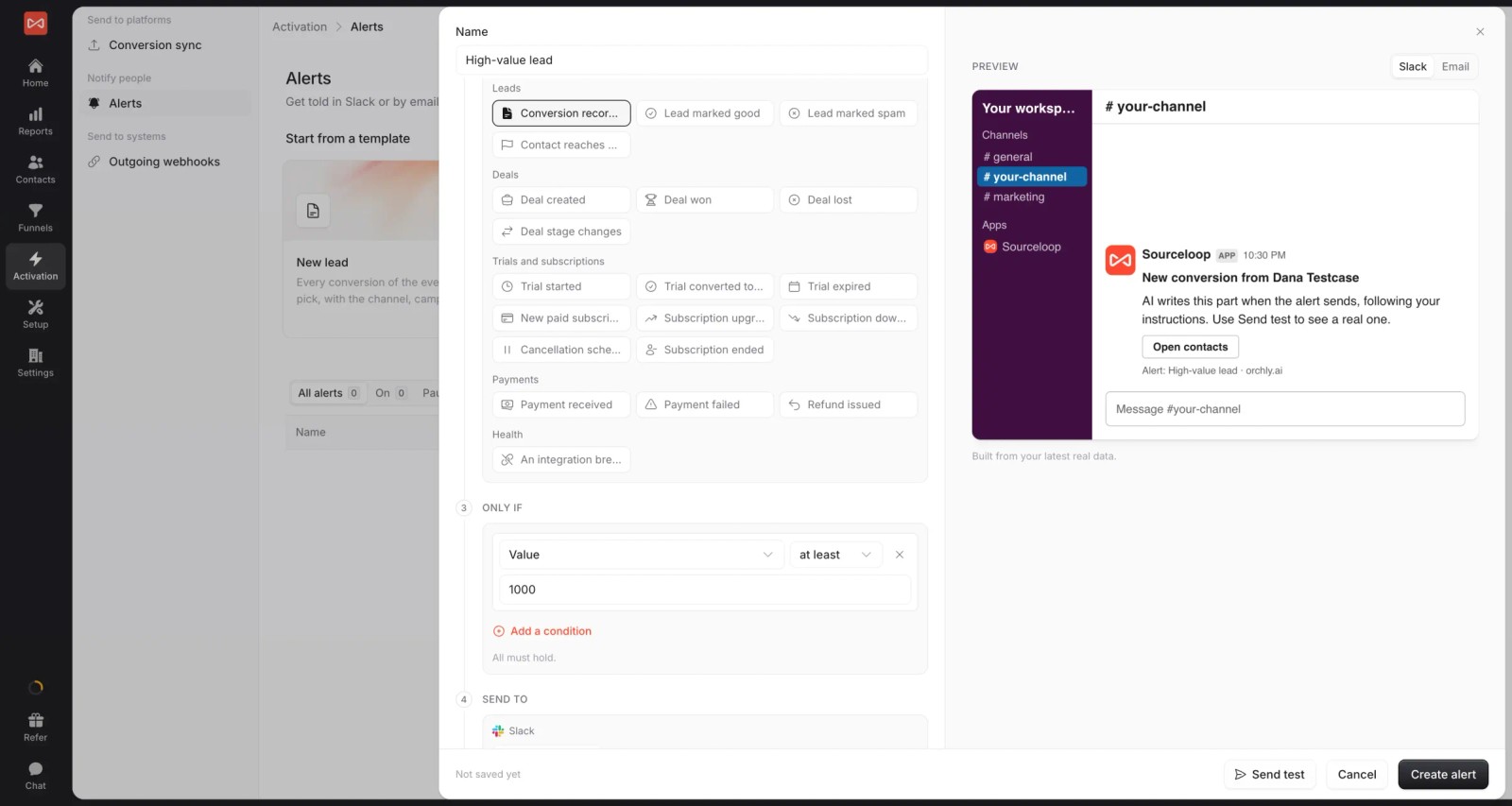
- Custom reports, alerts and white label: live reports, Slack alerts on new deals, and your own branding across multiple websites.
Where it falls short
- It isn't a Shopify analytics suite. There are no product-level merchandising dashboards, creative analytics or post-purchase surveys.
- There's no view-through credit, mix modeling or lift testing.
Pricing
- Essential: $49/mo for one site and 30,000 page views, with tracking, attribution reports, lead quality rules and alerts
- Professional: $99/mo for 100,000 page views and unlimited users, adding CRM sync, conversion sync to the ad platforms, the API and MCP
- Agency: $249/mo for three sites and 1.5 million page views, adding white label reporting
- Unlimited conversions on every plan, with a 7-day trial. The price follows page views, not revenue.
Verdict: the better fit when the sale happens after a lead or through a subscription. For a Shopify-only brand, Polar or Northbeam will feel more at home.
2. Polar Analytics
Best for: Shopify brands that want a proper BI layer and their own data warehouse, with attribution as one part of it.
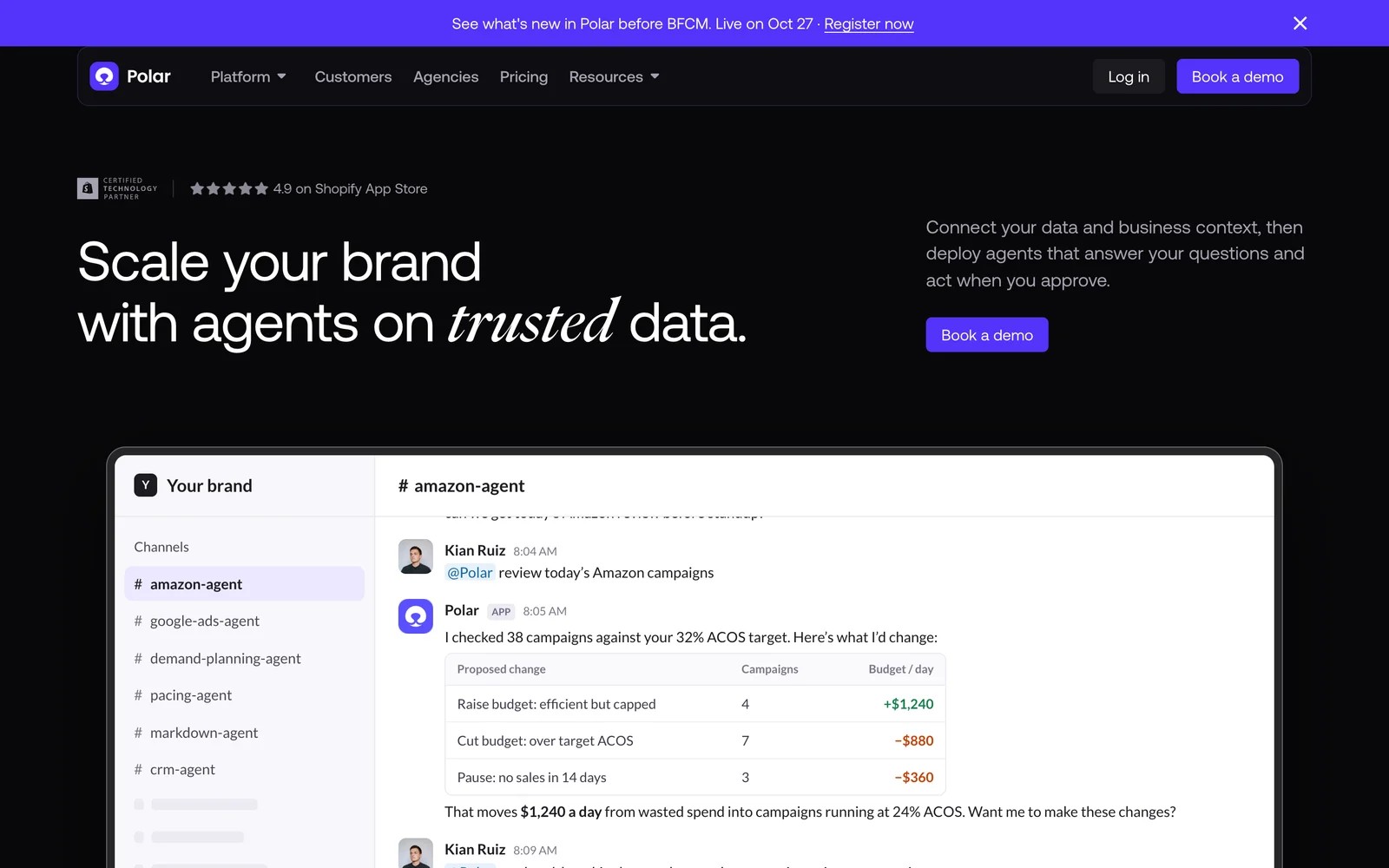
Polar Analytics gives each brand a dedicated Snowflake warehouse, a first-party pixel, multi-touch attribution and a big library of ecommerce dashboards. AI agents and an MCP server sit on top, and incrementality tests are available.
In the walkthrough I sat through, the thing that stood out was how much of the reporting you can reshape yourself. Custom metrics and dashboards that would need a SQL editor in Triple Whale are point-and-click here, and the cohort views go deeper on retention.
The flip side is that Polar asks you to think like an analyst. There's a lot to configure, and the operators I know who run it have someone on the team who enjoys building reports. If you just want a daily summary, that's more tool than you need.
Support is where reviews split. Most users describe a smooth setup with the native connectors, but a few describe attribution problems that took too long to resolve, which is worth asking about before you sign.
Key features
- Every brand gets a dedicated warehouse holding store, ad and email data with full history, which suits teams that want to own and query their data.
- Custom metrics, dashboards and cohort reports cover LTV and retention in depth, without needing a data team to build each view.
- Multi-touch attribution runs on Polar's own first-party pixel, so credit doesn't depend on what each ad platform chooses to report.
- Conversion API signals for Meta and Google, plus lift tests, are available as add-ons once you want to act on the data.
Where it falls short
- There are no published prices or self-serve trial, so you'll need a sales conversation before you can test it on your own store.
- It's built around the Shopify ecosystem, and brands on other platforms may find integrations and support noticeably thinner.
- Conversion API delivery isn't in the base plan, which raises the real cost for brands that need signals sent back to Meta.
What users say
"It’s easy to set up the native connectors (Shopify, Amazon, ad accounts), and our internal users find it very straightforward to create custom metrics, dashboards, and KPIs." (Source)
"the platform wasn't able to attribute events correctly, we where met by radio silence for a long period (continued today)" (Source)
"Custom connectors require intervention from a support specialist, which slows down the integration process for non-standard data sources." (Source)
Pricing
- Quoted by annual GMV, with ad platform signals priced separately.
3. Northbeam
Best for: established DTC brands spending heavily on paid social and search.
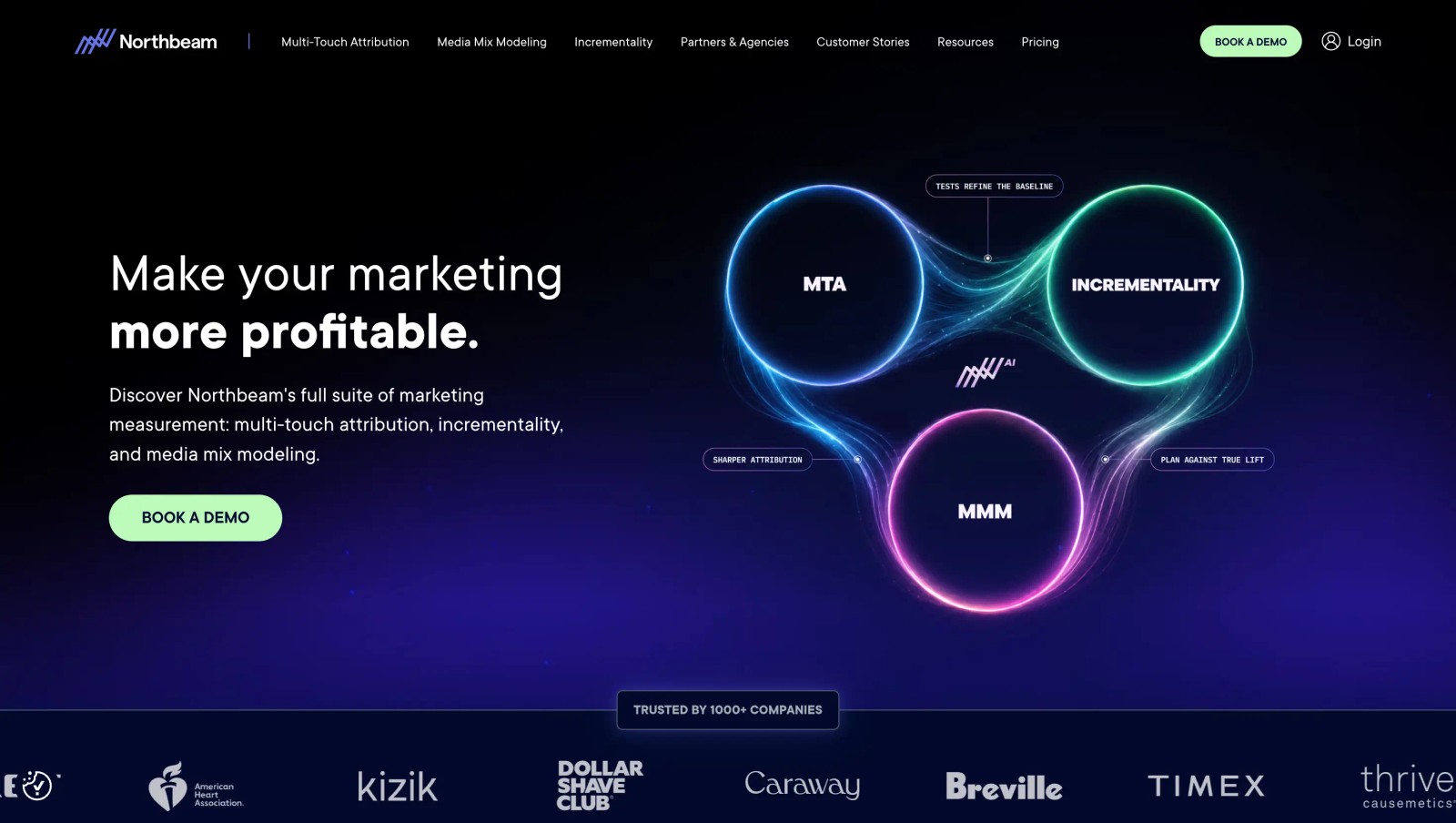
Northbeam is the tool Triple Whale users most often graduate to. It attributes orders across channels with clicks plus deterministic views, then layers media mix modeling and incrementality on top.
The demo makes a strong case for view-through credit. If a lot of your spend goes to Meta and TikTok video that people watch but rarely click, seeing those views credited changes how prospecting campaigns look.
What operators tell me about the first months is less glamorous. Onboarding takes real effort, the numbers are modeled so they won't match anything else you own, and you need someone who'll learn its logic well enough to defend it to the founder.
The price is the clearest filter. Starter begins at $1,500 a month, so it only makes sense once the budget is big enough for small accuracy gains to matter.
Key features
- Multi-touch attribution counts deterministic ad views as well as clicks, which gives a fairer read on video-heavy paid social campaigns.
- Media mix modeling and incrementality testing on higher tiers help large brands check whether channels are truly adding sales.
- Northbeam Apex sends enriched conversion data back to the ad platforms, so their algorithms optimize on first-party signals.
- Its MCP server and dashboards let teams pull attribution into AI assistants and share one view across marketing and finance.
Where it falls short
- The entry price rules it out for most brands under a few million in revenue, especially those still testing channels.
- Onboarding is demanding, and several users describe it as the hardest part of the whole relationship.
- Because the data is modeled, its totals rarely match Shopify or the ad platforms, which takes ongoing explanation internally.
What users say
"We have tried all 5 of the biggest attribution platforms out there and Northbeam's data is by far the most accurate and consistent." (Source)
"Their onboarding process is very hard." (Source)
"All of the data is modeled, so there's no way to look at a \"blended\" performance report." (Source)
Pricing
- Starter: from $1,500/mo for brands spending under $1.5M a year on ads
- Professional: from $3,500/mo
- Enterprise: custom
4. ThoughtMetric
Best for: smaller ecommerce brands on any store platform that want simple multi-touch attribution at a low price.
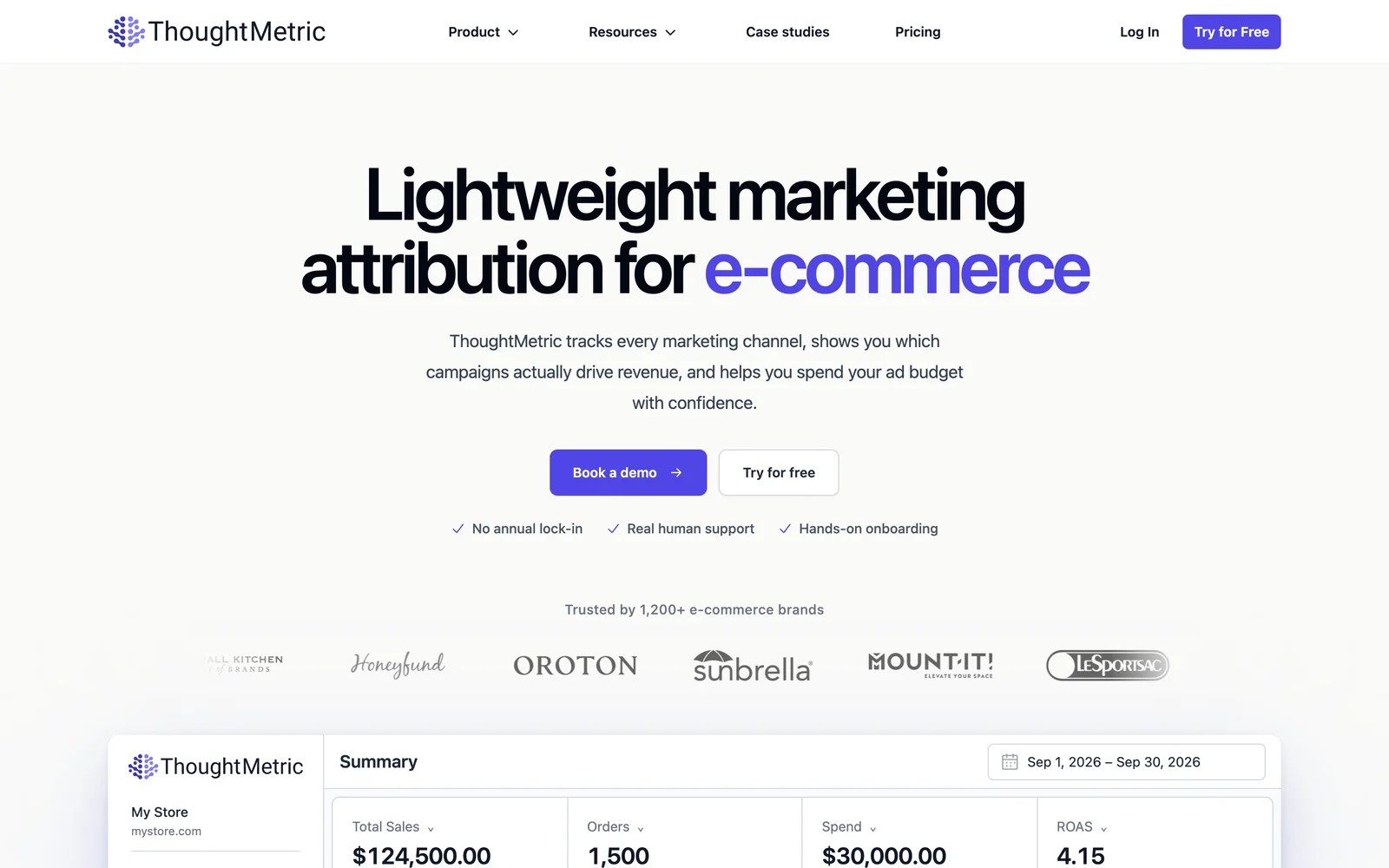
ThoughtMetric is a lightweight attribution tool for Shopify, WooCommerce and other stores, with post-purchase surveys and an MCP connector for Claude and ChatGPT.
When I ran the trial, setup took a script, a store connection and the ad accounts, and the first reports filled in without much fuss. The interface is plainer than Triple Whale's, which I mean as a compliment if you just want to know which channels sell.
The post-purchase survey is the feature I'd point small brands to. "How did you hear about us?" answers sit next to the click data, which helps with podcasts and influencer spend that never produces a clean click.
Where it runs out is depth. You won't find Triple Whale's range of dashboards, and reviewers ask for more LTV insight and ad-level detail.
Key features
- Multi-touch attribution covers the major ad channels and works on Shopify, WooCommerce and most other store platforms, not just one.
- Built-in "How did you hear about us?" surveys add self-reported answers, which helps credit channels that rarely produce clicks.
- An MCP connector brings attribution data into Claude and ChatGPT, so you can ask about performance in plain language.
- Every plan includes every feature and is priced only by pageviews, which keeps costs predictable for brands moving off GMV pricing.
Where it falls short
- Dashboards and custom charts are limited, so teams used to Triple Whale's builder will have fewer ways to slice data.
- LTV and cohort analysis are light, which matters for subscription and replenishment brands that live on repeat orders.
- One reviewer says tracking doesn't go down to keyword or ad level, which limits how far media buyers can take it.
What users say
"It provides the same if not better attribution tracking as Hyros which we paid SIGNIFICANTLY more for." (Source)
"The steps to get ThoughtMetric integrated and ready to use are dead simple." (Source)
"I do wish the analytics could go down further to the keyword or ad level." (Source)
Pricing
- From $99/mo for 25,000 pageviews, scaling with traffic, with a 14-day trial
5. Wicked Reports
Best for: brands with repeat purchases or long consideration that judge ads on lifetime value.
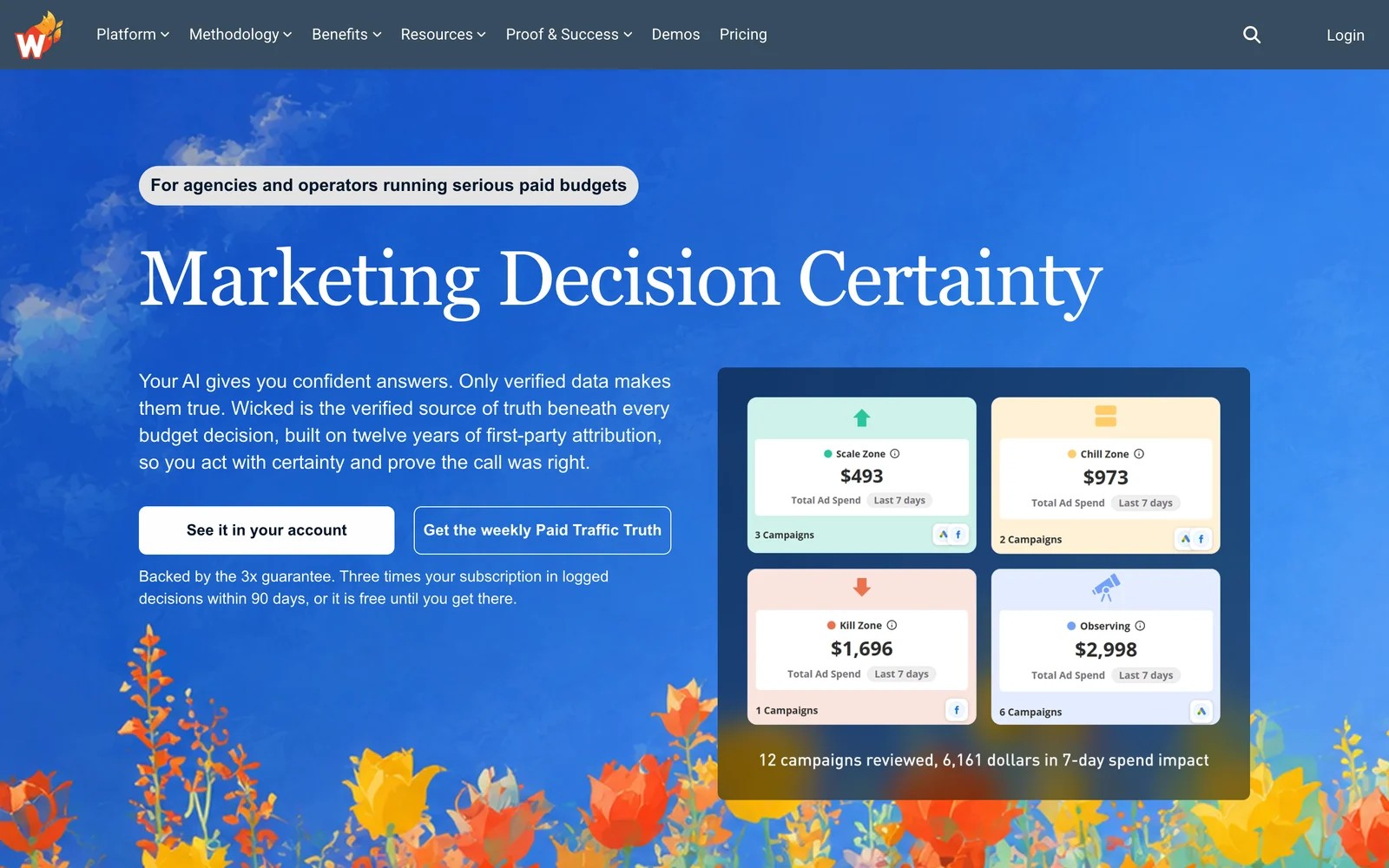
Wicked Reports ties ad spend to customer lifetime value with lookback and lookforward windows far longer than any ad platform allows. FunnelVision splits results into top, middle and bottom of funnel.
In the walkthrough, the most useful idea was crediting a prospecting ad for the second and third orders, not just the first. Brands that sell consumables or subscriptions tend to undervalue cold traffic, and Wicked's reports make that visible.
Teams running it describe a learning curve and an interface that can feel slow. Most of its public reviews are from 2022, so it's worth asking for a current demo account before trusting older impressions either way.
Key features
- Lifetime lookback and lookforward windows credit ads for sales that happen months after the first click, which suits repeat-purchase brands.
- Cohort and LTV reports show which campaigns bring customers who keep buying, not just the cheapest first orders.
- FunnelVision separates prospecting, retargeting and retention results, so cold-traffic ads get judged on their actual role.
- Meta conversion API signals and AI recommendations are included on the Maximize plan or sold as add-ons.
Where it falls short
- There's no self-serve trial, so you evaluate it through demos and a guarantee rather than your own data.
- The interface is dated and can be slow on large date ranges, according to several users.
- Signals to Meta and AI recommendations cost extra below the Maximize plan, which raises the real entry price.
What users say
"I really like that you can track longer than the standard 7 to 30 day attribution options available in the marketing channels." (Source)
"The user experience isn't the best, it can be pretty clunky and, not necessarily hard, but frustrating to navigate, dive deeper, and look around. It also takes forever to load." (Source)
Pricing
- Measure: $499/mo for brands up to $2.5M in annual revenue
- Scale and Maximize: $699 and $999/mo
- Enterprise: from $4,999
6. Lifesight
Best for: brands that want mix modeling, incrementality tests and attribution from one vendor.

Lifesight combines marketing mix modeling, causal attribution and incrementality testing in one platform, with budget planning on top. It's aimed at brands that have outgrown pixel-based reporting.
In the demo I saw, the focus was on decisions rather than dashboards: where to move budget next quarter, and what a geo test would need to prove. That's a different job from Triple Whale's daily view of yesterday's orders.
Teams that run it mention the learning curve and the price as the trade-offs, and say it rewards brands with enough spend and history for the models to settle.
Key features
- Mix modeling and causal attribution run side by side, so channel credit is checked against a model that doesn't rely on clicks.
- Incrementality and geo tests measure whether a channel truly adds sales, which helps settle budget arguments with evidence.
- Budget planning tools forecast results for different spend splits before you move money between channels.
- It covers offline and upper-funnel media as well as digital ads, which suits brands spending on TV, audio or retail.
Where it falls short
- Pricing isn't published, and users describe it as on the higher side for smaller brands.
- Models need enough spend and history to be useful, so newer brands may not get much from it for months.
- It's more of a planning tool than a daily dashboard, so teams who check performance every morning may miss Triple Whale's simplicity.
What users say
"Its unified measurement approach combines MMM and causal attribution, making it a comprehensive solution." (Source)
"The learning curve is somewhat steep, and the pricing tends to be on the higher side." (Source)
"Some reports took a while to load, especially when filtering large datasets." (Source)
Pricing
- Quoted after a demo.
7. Hyros
Best for: info-product, coaching and high-ticket brands that sell through funnels and sales calls.
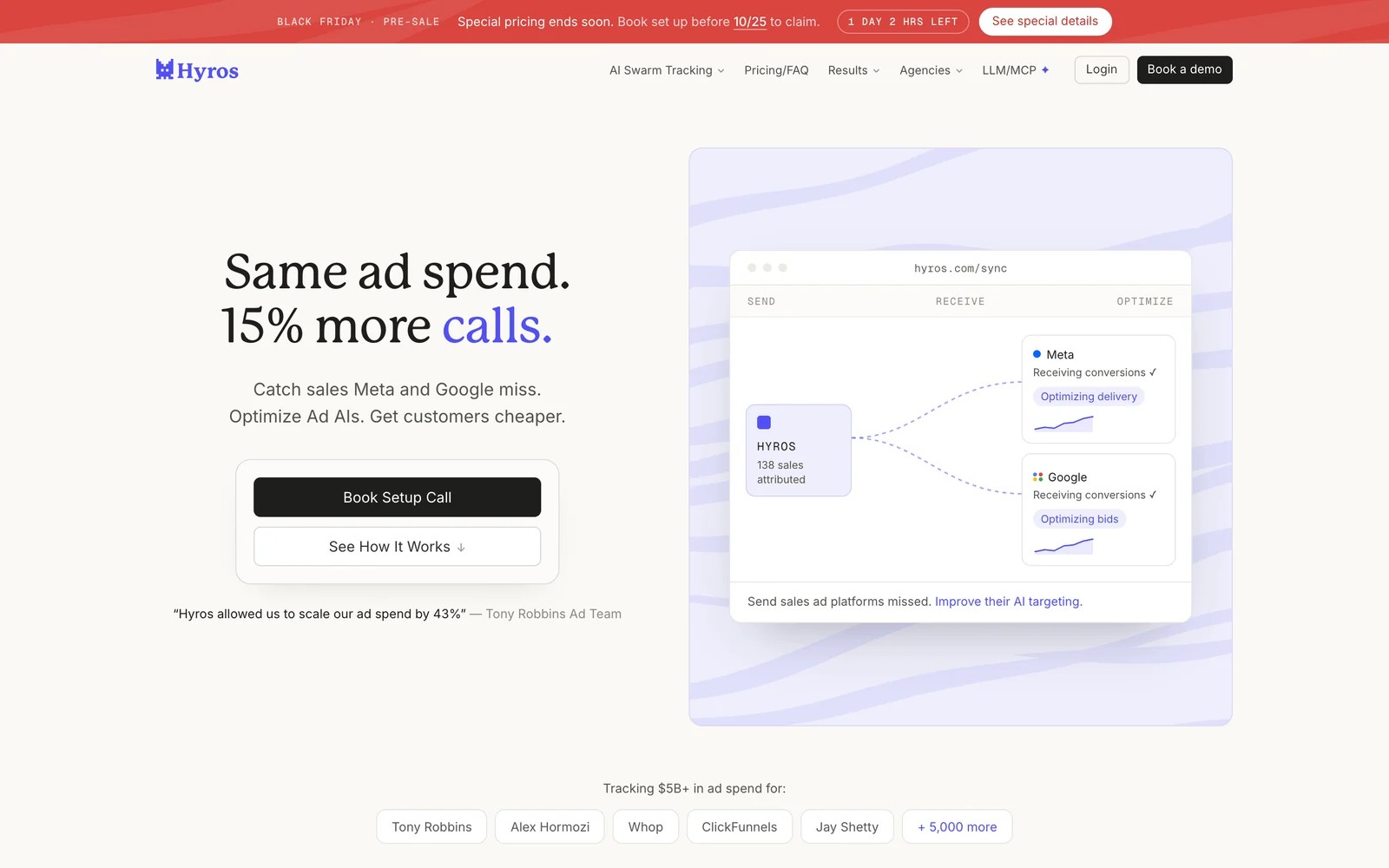
Hyros tracks ad clicks through funnels, booked calls and final sales, then feeds that sales data back to the ad platforms. It's popular with course creators and coaches who also run DTC offers.
Getting to a demo means booking a call, and the pitch centers on long attribution windows and ad optimization from real sales data. For a brand whose biggest sales happen on a phone call weeks after the click, that's a gap Triple Whale doesn't cover.
Public review data is thin, and the two reviews on G2 are both critical of the setup and the promises made. I'd ask for references from businesses like yours before committing.
Key features
- Ad clicks are followed through funnels, booked calls and final sales, even when the purchase comes weeks after the first visit.
- Sales data is sent back to the ad platforms, so campaigns optimize toward buyers instead of cheap leads or add-to-carts.
- Long attribution windows suit high-ticket offers where people take time to decide.
- AI-driven reports point to which ads and funnels are making money and which are only producing clicks.
Where it falls short
- Prices aren't published and there's no trial, so you commit before seeing your own data in it.
- Very few public reviews exist, which makes it hard to judge long-term reliability.
- It's built around funnels and calls, so a standard Shopify store gets less from it than from a store-native tool.
What users say
"They over promise and under deliver." (Source)
"They make set-up super difficult." (Source)
Pricing
- Not published. Pricing is set after a call. Our Hyros alternatives guide covers what buyers report.
How to choose
Start with where your revenue is recorded, then with the problem that pushed you to look.
1. Is it a Shopify store?
- Yes, and you want deeper reporting: Polar Analytics.
- Yes, with a large paid social budget: Northbeam.
- Yes, on a tight budget: ThoughtMetric.
- No, sales come from leads, calls or subscriptions: SourceLoop. It suits lead generation businesses, SaaS teams and agencies, and sends good leads or payments back to the ad platforms.
2. What's the real complaint?
- Numbers you can't explain: ThoughtMetric or SourceLoop, where the rules are simple to check.
- Ignoring repeat revenue: Wicked Reports.
- Needing proof that channels work: Lifesight or Northbeam's incrementality tools.
3. How should the bill grow?
- Triple Whale, Polar and Wicked price by revenue. ThoughtMetric and SourceLoop price by traffic, so a strong sales month doesn't raise the bill.
For a closer look at the cost side, our Triple Whale pricing breakdown walks through the tiers.
Frequently asked questions
-
Is Triple Whale free?
Yes, Triple Whale has a free plan with its pixel, a unified dashboard and Moby AI. Multi-touch attribution, custom dashboards and signals back to ad platforms are on paid tiers, priced by annual GMV after a walkthrough.
-
What is the best Triple Whale alternative for Shopify?
Polar Analytics for brands that want deep, customizable reporting, Northbeam for large paid social budgets, and ThoughtMetric for smaller stores that want simple attribution from $99 a month.
-
Is Northbeam better than Triple Whale?
Northbeam goes further on measurement, with view-through credit, mix modeling and incrementality, but it starts at $1,500 a month and onboarding is demanding. Triple Whale is easier to start with and broader as a daily dashboard.
-
What should non-Shopify businesses use instead of Triple Whale?
If you sell through leads, calls or subscriptions, a lead attribution tool fits better. SourceLoop tracks the source of every lead, follows it into the CRM or billing system, and sends good leads back to the ad platforms.
-
Why don't Triple Whale's numbers match Meta's?
Each platform uses its own pixel, attribution window and modeling, so totals rarely agree. Triple Whale credits orders from its own pixel, while Meta also counts views and modeled conversions.
-
Can I run Triple Whale and another attribution tool together?
Yes, many brands do while comparing. Just make sure only one tool sends each conversion back to an ad platform, or the platform will count it twice.


 Paid Social


