
How to Track UTM Parameters in ARForms
Follow 4 easy steps to capture UTM parameters in ARForms and and uncover the true source of every lead
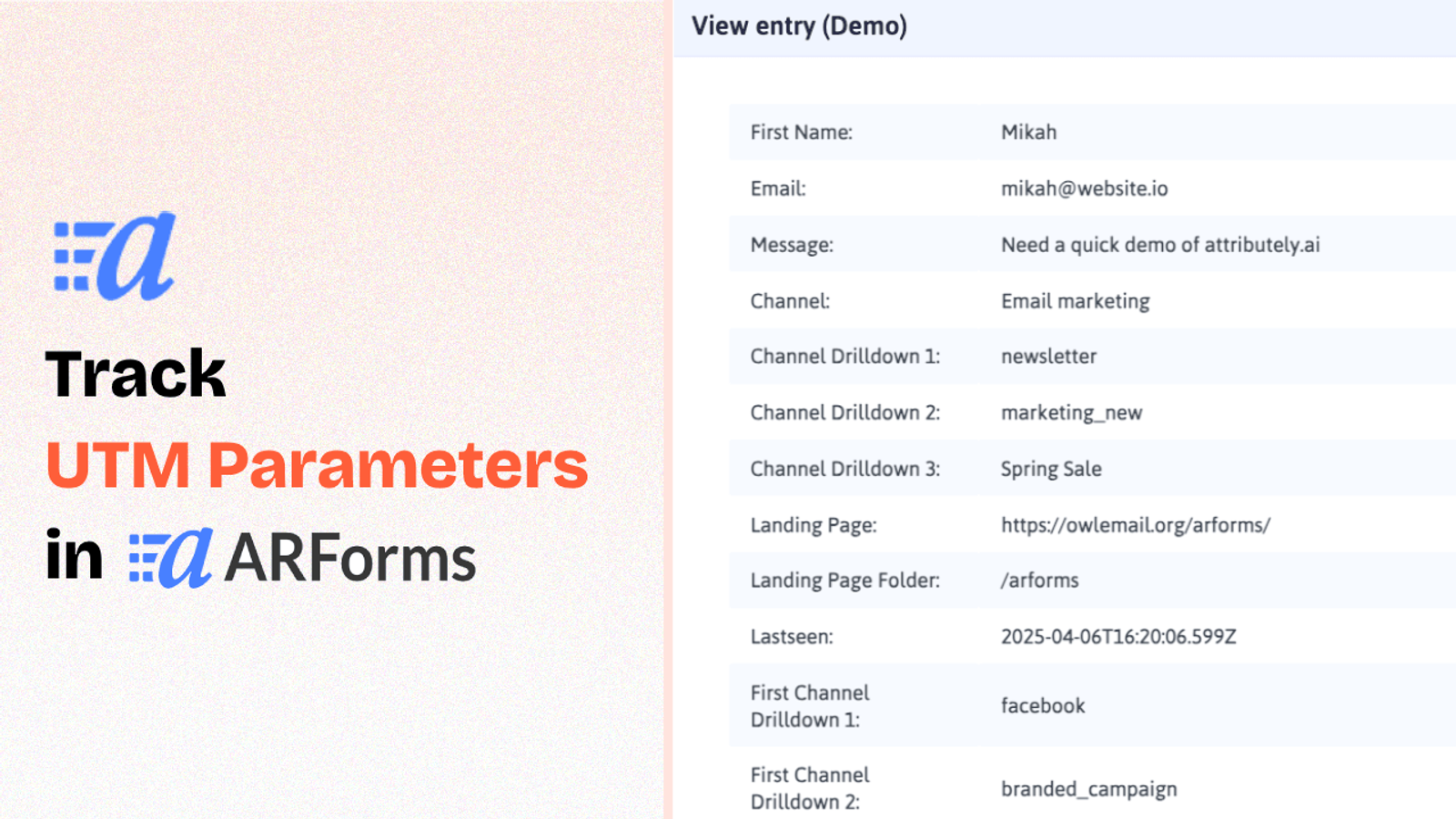
Table of contents
Are you driving traffic to your website through different marketing channels and using UTM parameters to track their performance?
Then you probably want to capture those UTM parameters in your ARForms submissions.
Unfortunately, ARForms doesn’t track UTM parameters by default.
However, plug-and-play tools like SourceLoop make it easy to track UTM parameters inside any form.
Here’s a simple step-by-step guide to help you track UTM parameters in ARForms using SourceLoop.ai.
4 Easy Steps to Track UTM Parameters in ARForms
Here are 4 simple steps to capture UTM parameters in ARForms:
1. Add SourceLoop on Your Website
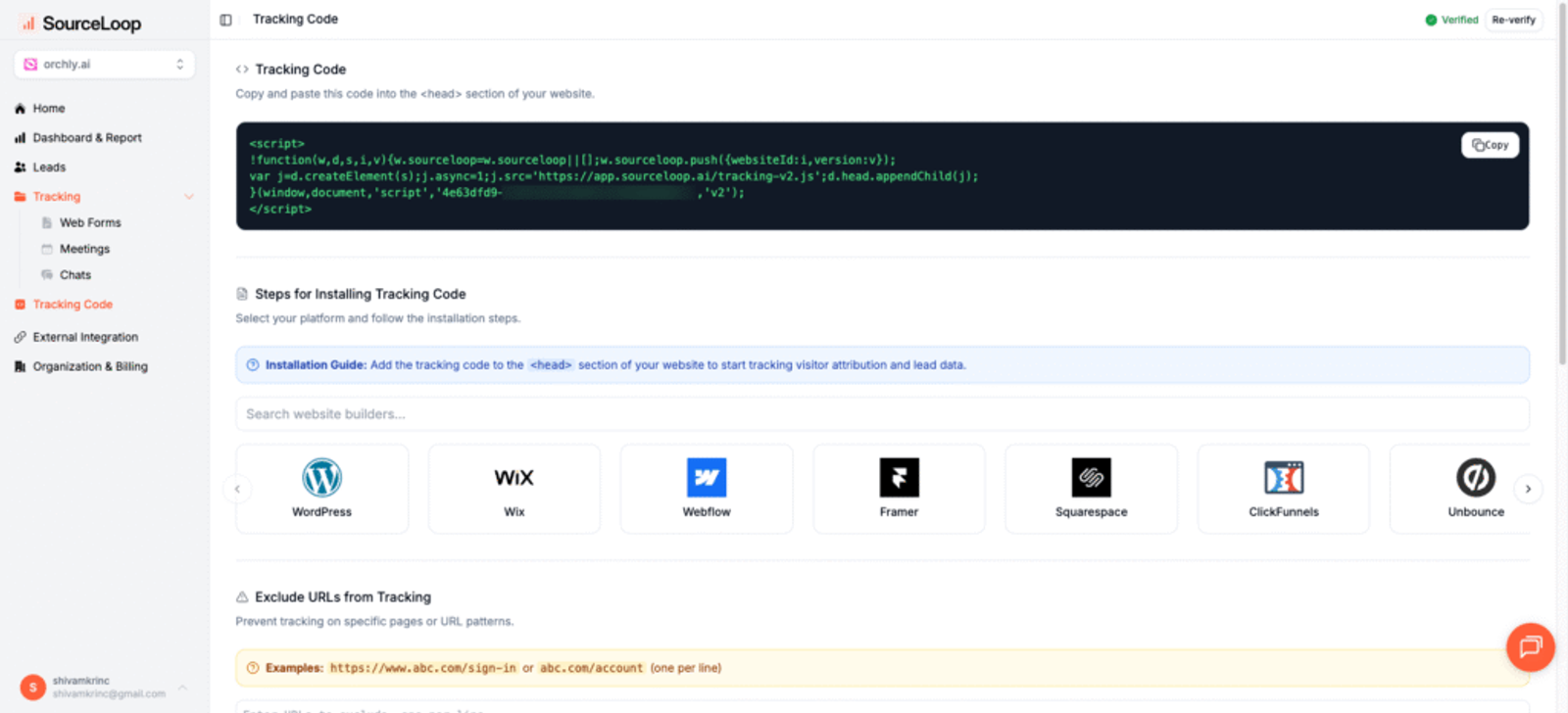
Firstly, create your free SourceLoop.ai account.
Once you sign up, you’ll get a small JavaScript tracking code to add to your site.
You can use WordPress plugin like WPCode to add the tracking script in the head section of your site within a few seconds.
Once installed, SourceLoop will:
- Track how each visitor lands on your website
- Capture UTM parameters and source info automatically
- Store organized marketing attributes in user’s browser cookie
Example:
Let’s say you’re running a Facebook ad campaign for Nike, promoting a new line of running shoes.
A user clicks on the ad, which takes them to your landing page. SourceLoop.ai will capture and organize the visit information like this:
- Channel = Paid Social
- Channel Drilldown 1 = Facebook
- Channel Drilldown 2 = Sponsored Post
- Channel Drilldown 3 = New Running Shoes Launch
- Landing Page = www.nike.com/new-running-shoes
- Landing Page Folder = new-running-shoes
- Last Seen = June 14, 2025
2. Add UTM Parameters to Your Links
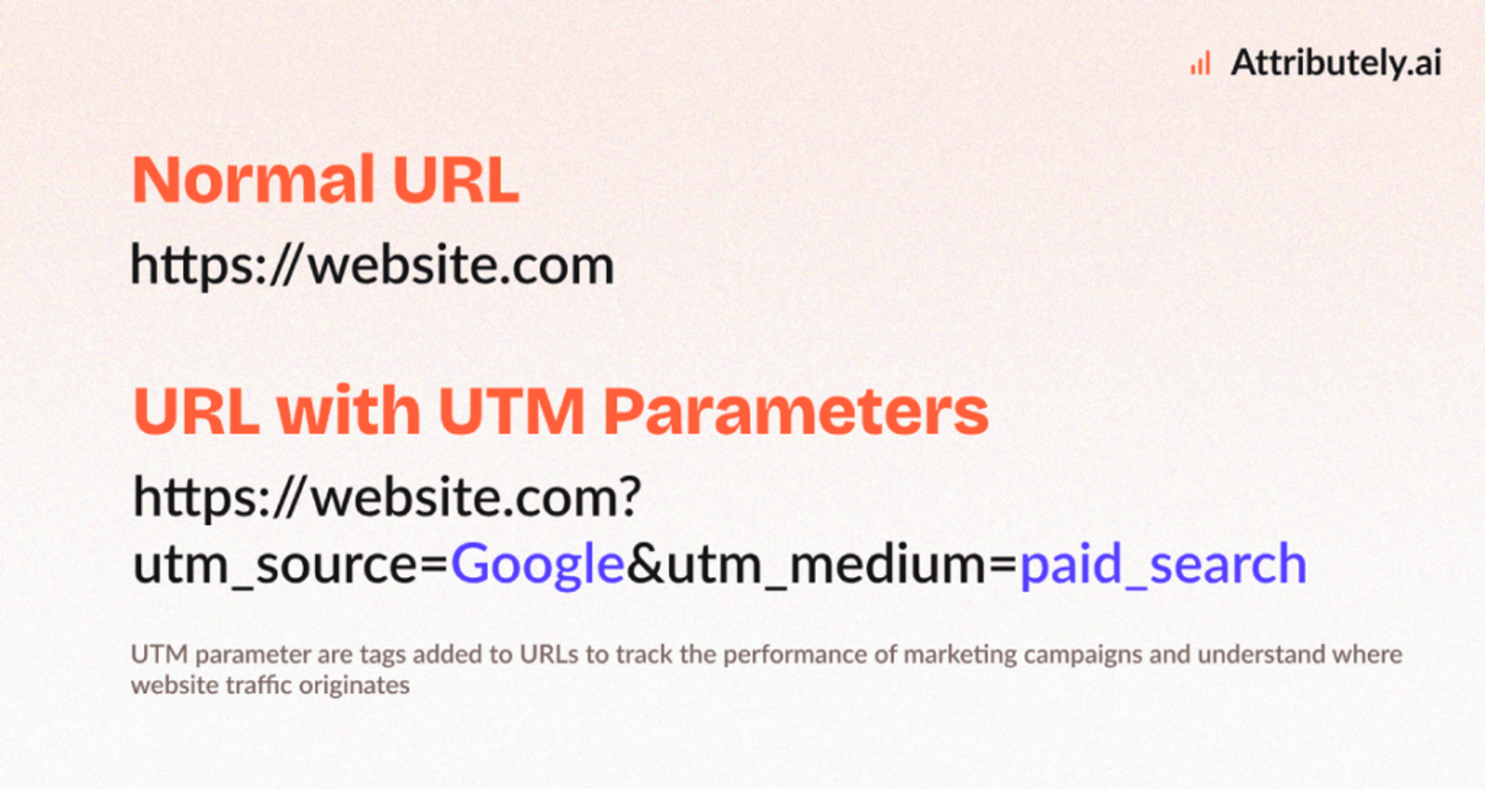
Now that SourceLoop.ai is monitoring your website, it’s time to ensure that it get the right data to capture for every visitor.
So, open your Google Ads, Meta Ads, LinkedIn, TikTok, email newsletters, etc campaign and ensure that the URLs pointing to your site include UTM parameters.
These parameters work like little name badges, helping SourceLoop identify how a user discovered your website.
Example of a link with UTM parameters:
https://website.com?utm_source=paid_search&utm_medium=Bing&utm_campaign=prime_day
Resources:
- How to add UTM parameters in Google Ads
- How to add UTM parameters in Facebook Ads
- How to add UTM parameters in LinkedIn Ads
- How to add UTM parameters in TikTok Ads
3. Add Hidden Fields to Your Form
Now, let’s add a few hidden fields in ARForms that SourceLoop.ai can identify and fill the UTM data of user filling the form.
To get started;
- Log in to your WordPress dashboard and open the form where you’d like to capture UTM information.
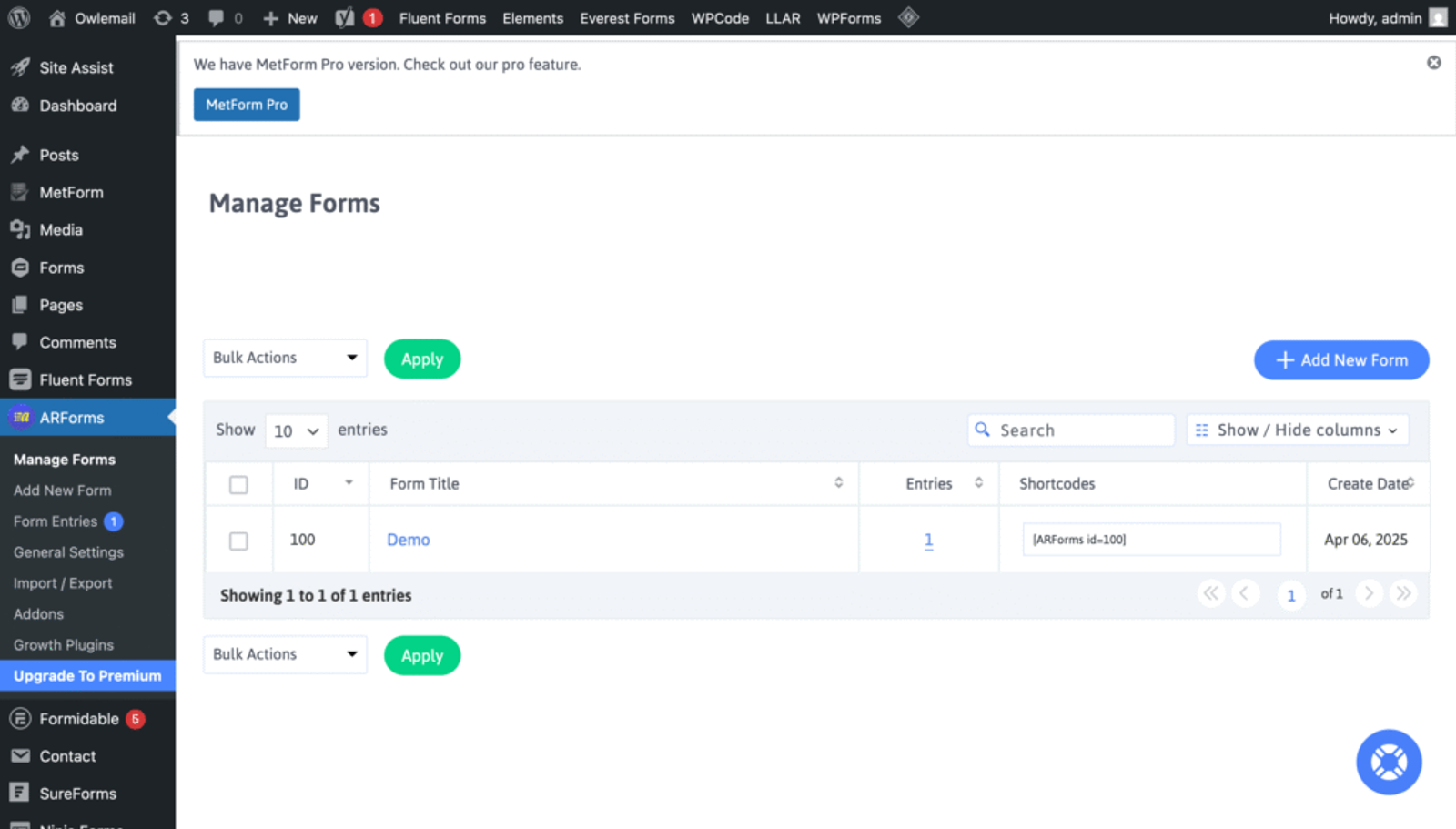
- Click on the “Other options” menu on top and choose “Hidden input fields.”
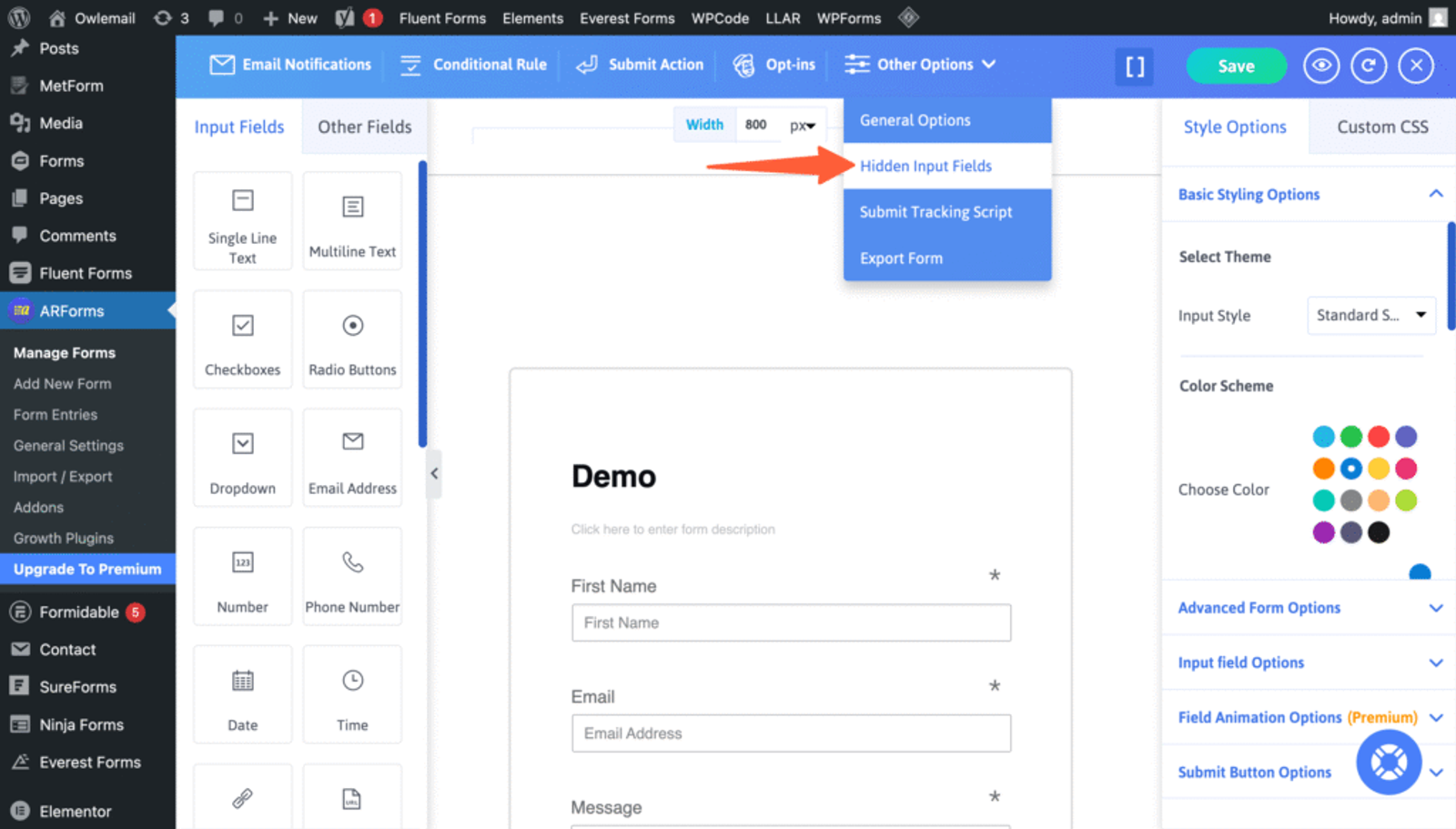
- Add 7 hidden fields inputs with the recommended values as shown in the screenshot.
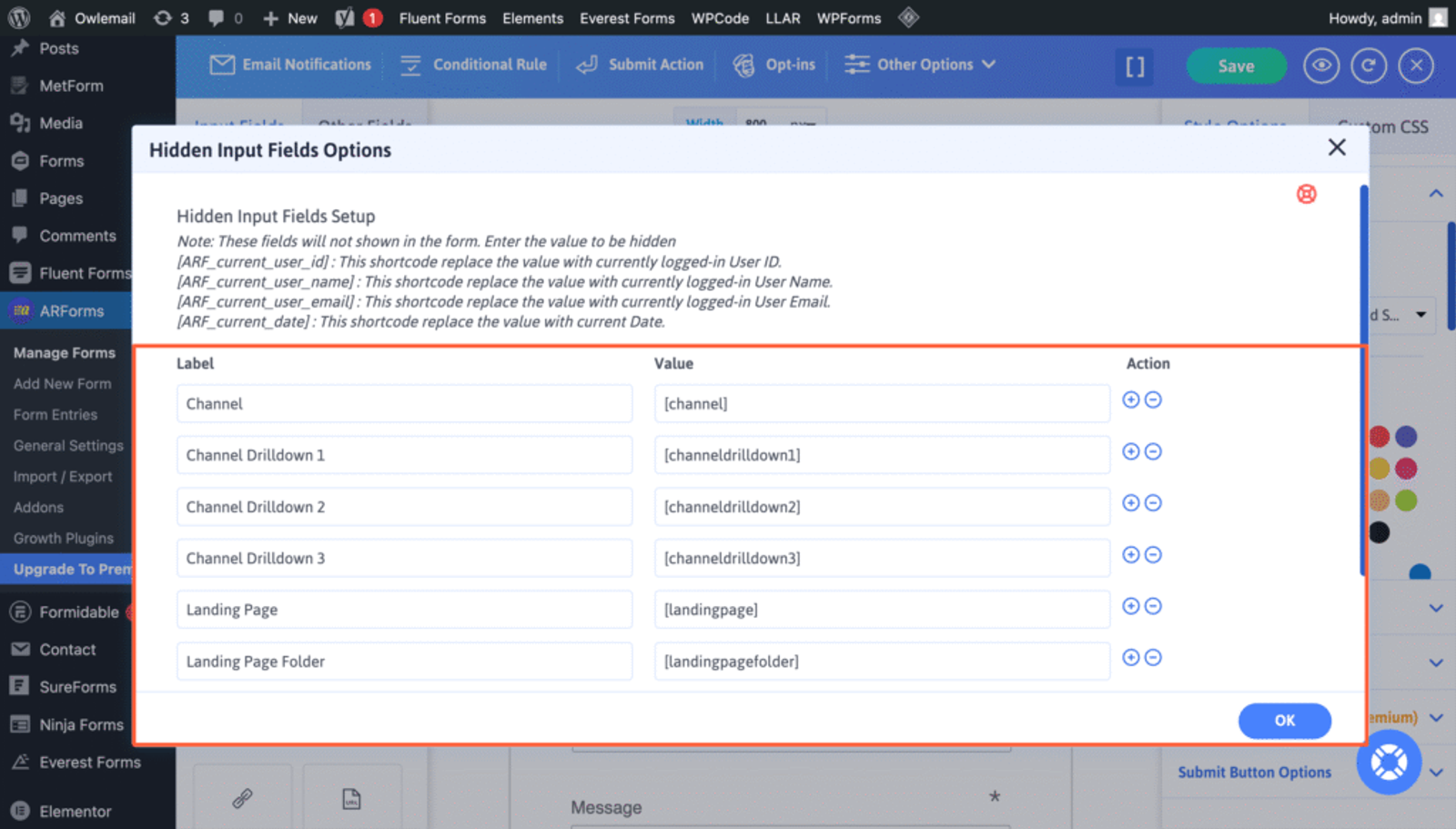
Recommended Default Value for Hidden Fields
These fields help capture the latest visit information from SourceLoop.ai:
channelchanneldrilldown1channeldrilldown2channeldrilldown3landingpagelandingpagefolderlastseen
Optional: Track First-Touch Attribution (Recommended for B2B Business)
If you’re in B2B or offer high-consideration products, users often visit multiple times before converting. To get full-funnel attribution, you can also track how they landed on your website for the first time.
Add these additional 7 hidden fields with the following default values:
firstseenfirst_channelfirst_channeldrilldown1first_channeldrilldown2first_channeldrilldown3first_landingpagefirst_landingpagefolder
SourceLoop.ai stores a users attribution data in their cookie for up to 6-months, allowing you to track both first and latest visit sources throughout a lead’s journey.
4. UTM Parameters Are Automatically Passed for Each Form Submission
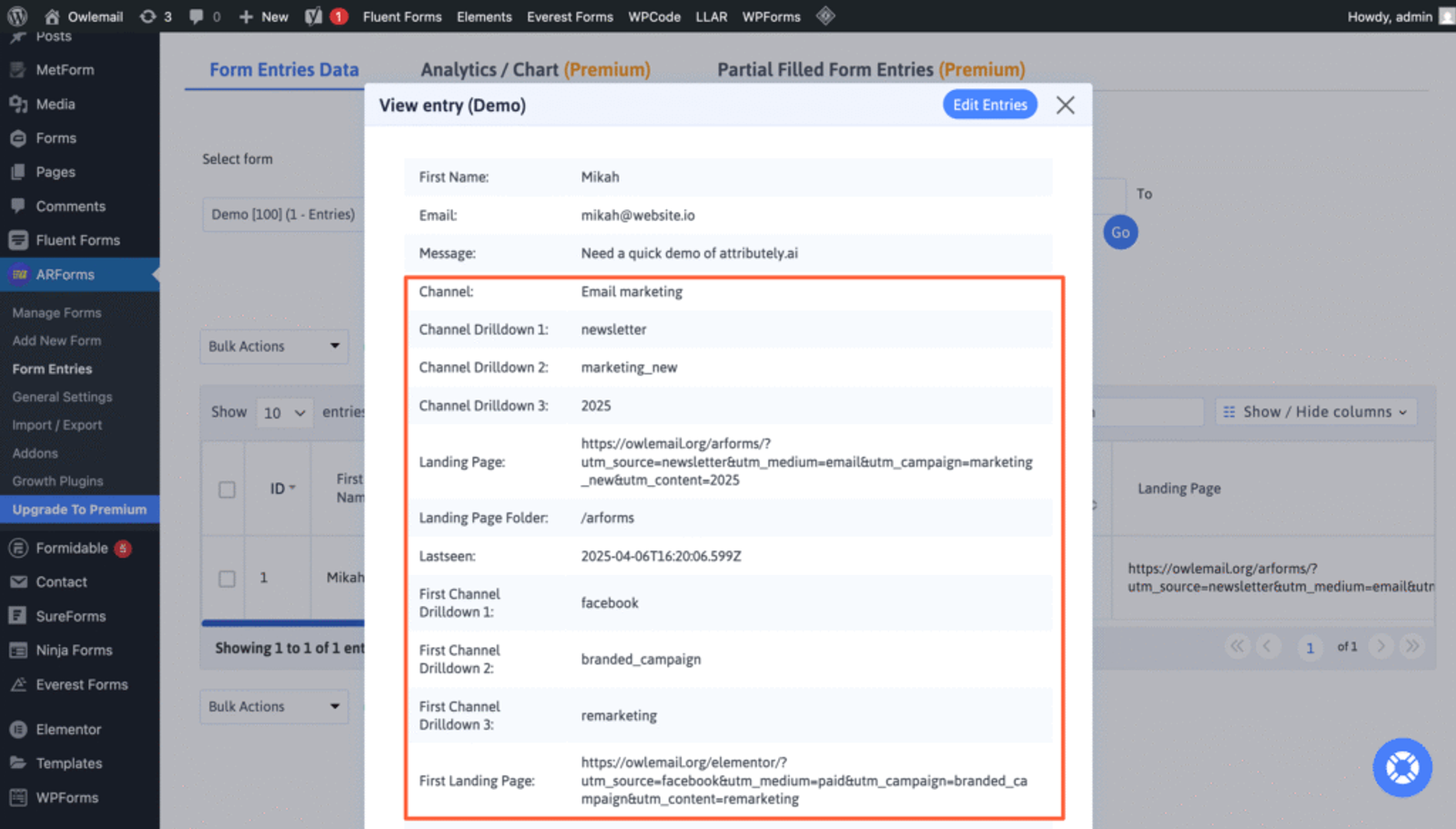
Now, whenever a user submits a form on your website, their UTM values will automatically be populated into the hidden fields of your form.
- View UTM Data in Submissions
Go to the Entries section in ARForms and open any form submission to view the details—along with the user’s UTM values.
- Create email marketing automation:
ARForms has direct integrations with email marketing tools like Mailchimp, Campaign Monitor, Constant Contact, MailPoet, and more—allowing you to run targeted email campaigns based on the source of each lead.




 Paid Social


