
7 Wicked Reports Alternatives for LTV Attribution
Seven Wicked Reports alternatives compared on lifetime value reporting, lookback windows, ad platform signals and price, with real user reviews.
Table of contents
Wicked Reports has a clear point of view. Credit the ad that found a customer, then keep crediting it for every order that customer places, sometimes years later.
If that's what you loved about it, your replacement needs the same long memory. If you're leaving because of the $499 starting price or a slow interface, you may be able to give up some of it.
In this guide, I'll break Wicked down into the four jobs it does and show which alternative handles each one best.
Where this comparison comes from
Wicked Reports buyers tend to care about repeat revenue, so we judged every tool on whether it can tell you what a customer was worth after the first order. We used Triple Whale and Cometly ourselves, and ran ThoughtMetric on its trial. Polar Analytics, Northbeam and Hyros sell through demos, so those sections rely on their docs, walkthroughs and operators we know.
The brands and agencies we work with include subscription businesses and high-ticket sellers as well as Shopify stores. We also read reviews on G2 and Capterra for each tool. We scored them on:
- Lifetime value and cohort reporting
- How long the attribution window can run
- Whether conversions go back to Meta and Google
- Whether the price makes sense below $2.5M in revenue
SourceLoop is ours. It isn't a Shopify tool, and we've placed it for the readers it actually fits.
Last checked November 2026. Confirm current pricing with each vendor.
What Wicked Reports does, and what you'd need to replace
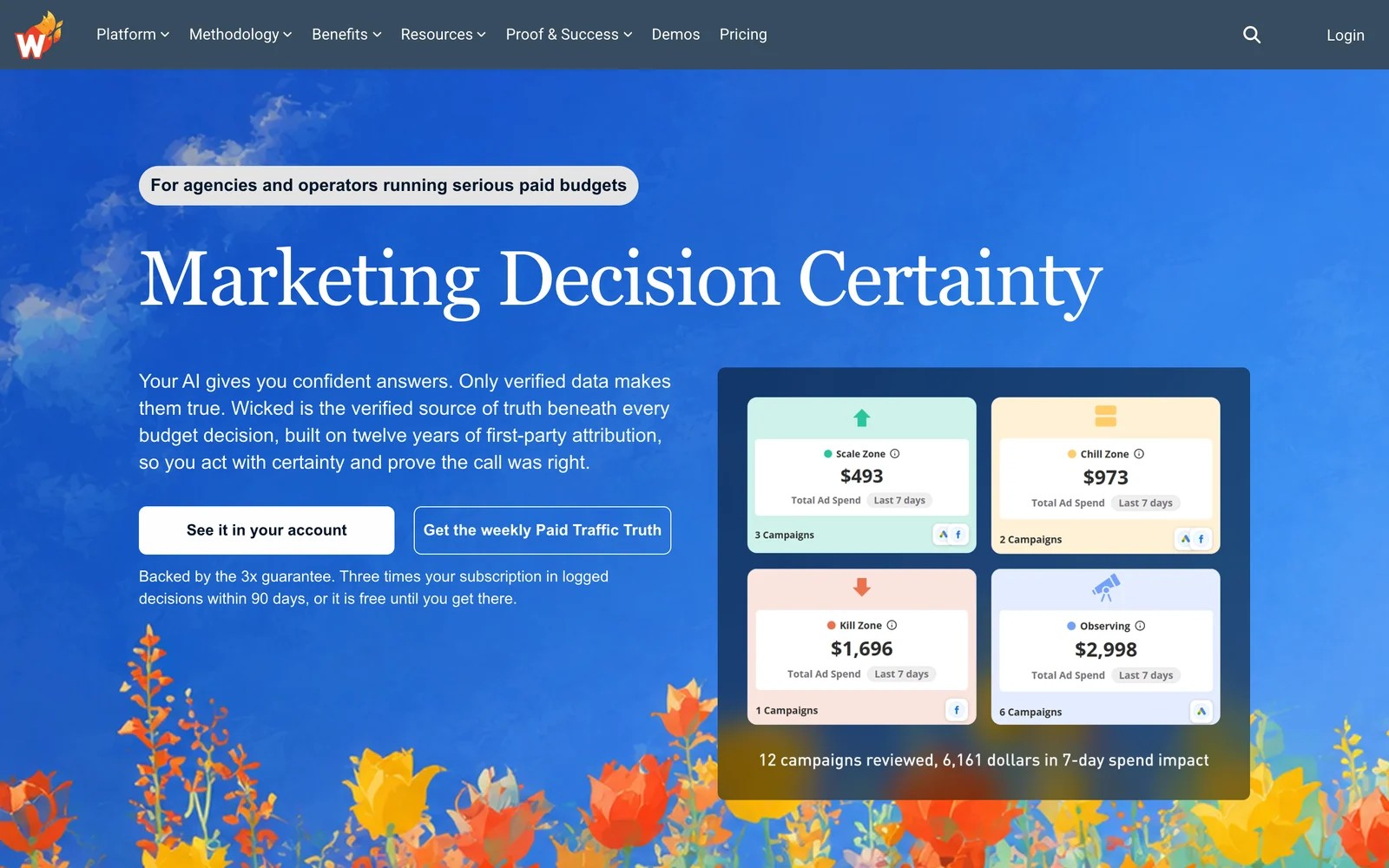
Wicked Reports connects your cart, CRM and ad accounts, then attributes revenue to campaigns with very long lookback windows. On its pricing page, plans run from $499 a month for brands up to $2.5M in annual revenue to $999 for Maximize, with Enterprise from $4,999.
Strip it down and it does four jobs:
- Lifetime attribution: credit for repeat orders, not just the first one.
- Cohort and LTV reports: what each acquisition month and channel is worth over time.
- Verified revenue: orders matched to known customers from your cart or CRM, which tends to report fewer conversions than the ad platforms claim.
- Signals back to ads: its Advanced Signal feature feeds Meta's conversion API on the Maximize plan or as an add-on.
Users have long praised the windows:
"I really like that you can track longer than the standard 7 to 30 day attribution options available in the marketing channels." (Source)
The common complaints are speed and usability, and most public reviews are from 2022:
"The user experience isn't the best, it can be pretty clunky and, not necessarily hard, but frustrating to navigate, dive deeper, and look around. It also takes forever to load." (Source)
"Occasionally, we have issues having our data processed in a timely fashion." (Source)
Wicked Reports alternatives compared
Here's how the 7 Wicked Reports alternatives compare on the jobs above, as of November 2026.
| Tool | Built for | LTV and cohorts | Longest lookback | Signals to Meta and Google | Pricing |
|---|---|---|---|---|---|
 SourceLoop | Subscription SaaS, lead gen, agencies | Yes | 365 days | Yes | From $49/mo |
 Triple Whale | Shopify brands | Yes | Configurable | Yes | Priced by GMV |
 Polar Analytics | Shopify brands wanting BI | Yes | Configurable | Add-on | Quote, by GMV |
 ThoughtMetric | Ecommerce on any platform | Limited | Configurable | No | From $99/mo |
 Northbeam | Large DTC ad budgets | Partly | Configurable | Yes | From $1,500/mo |
 Hyros | High-ticket and call funnels | Partly | Long | Yes | Quote |
 Cometly | B2B SaaS pipelines | No | Configurable | Yes | Usage-based |
The 7 best Wicked Reports alternatives
SourceLoop comes first for subscription and lead-based businesses. If you run a Shopify store, skip ahead to Triple Whale.
1. SourceLoop
Best for: subscription SaaS companies, lead generation businesses and agencies that liked Wicked's lifetime view but don't sell through a Shopify cart.
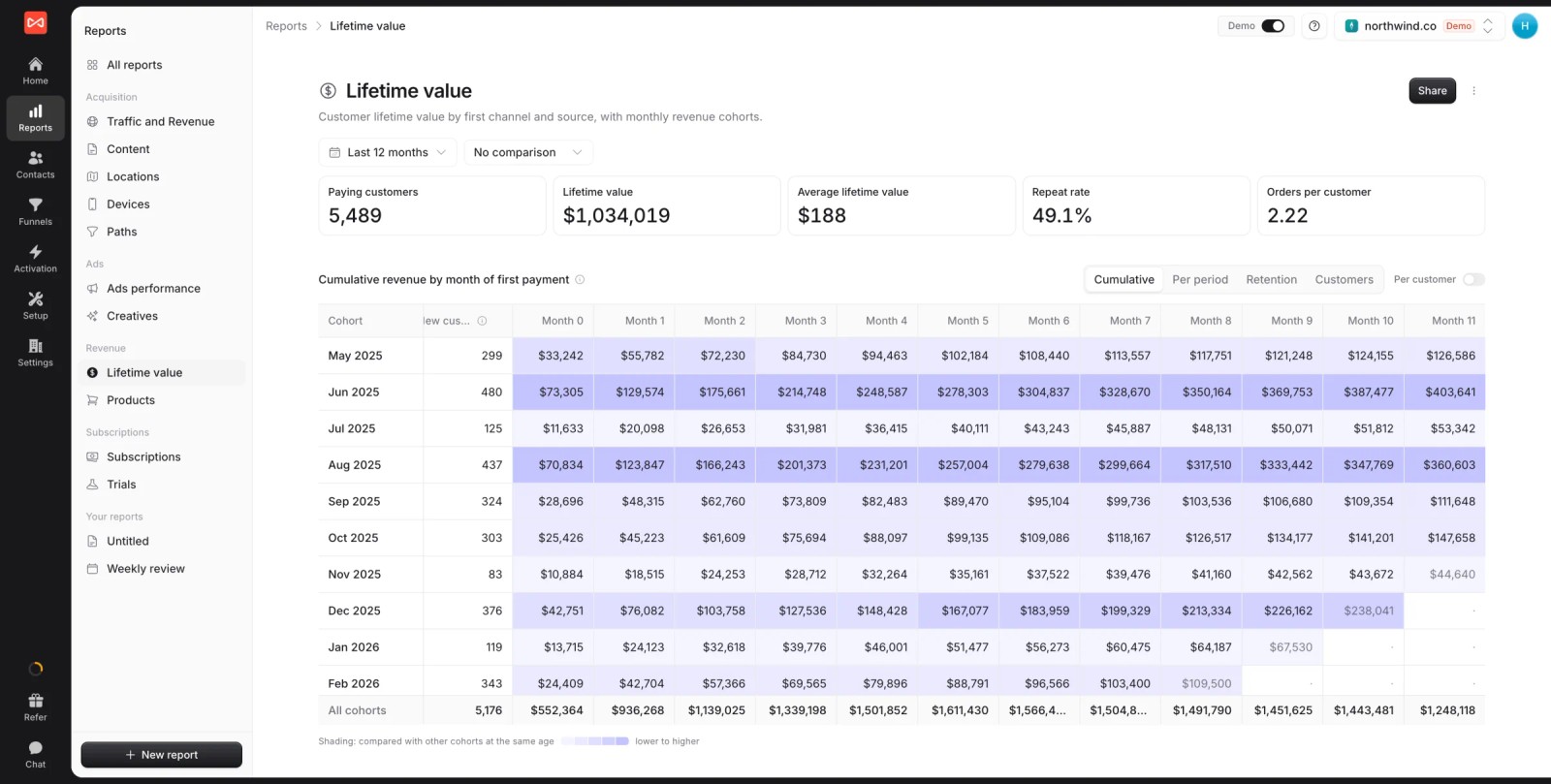
SourceLoop is a marketing attribution and revenue measurement tool. It remembers the first visit and every touch after it, then credits revenue from your billing system or CRM back to those touches, looking back up to a full year.
That covers Wicked's core idea for businesses that bill through Stripe or Paddle, or close deals in a CRM. Each renewal, upgrade and refund lands on the customer who arrived from a specific campaign, so you can see which channels bring customers who stay.
To be clear, it isn't built for Shopify stores. It connects to Shopify through an app, but ecommerce teams will get more from the tools further down.
Key features
- Lifetime value cohorts: paying customers, LTV, repeat rate and cumulative revenue by month of first payment, filterable by channel. See the lifetime value report.
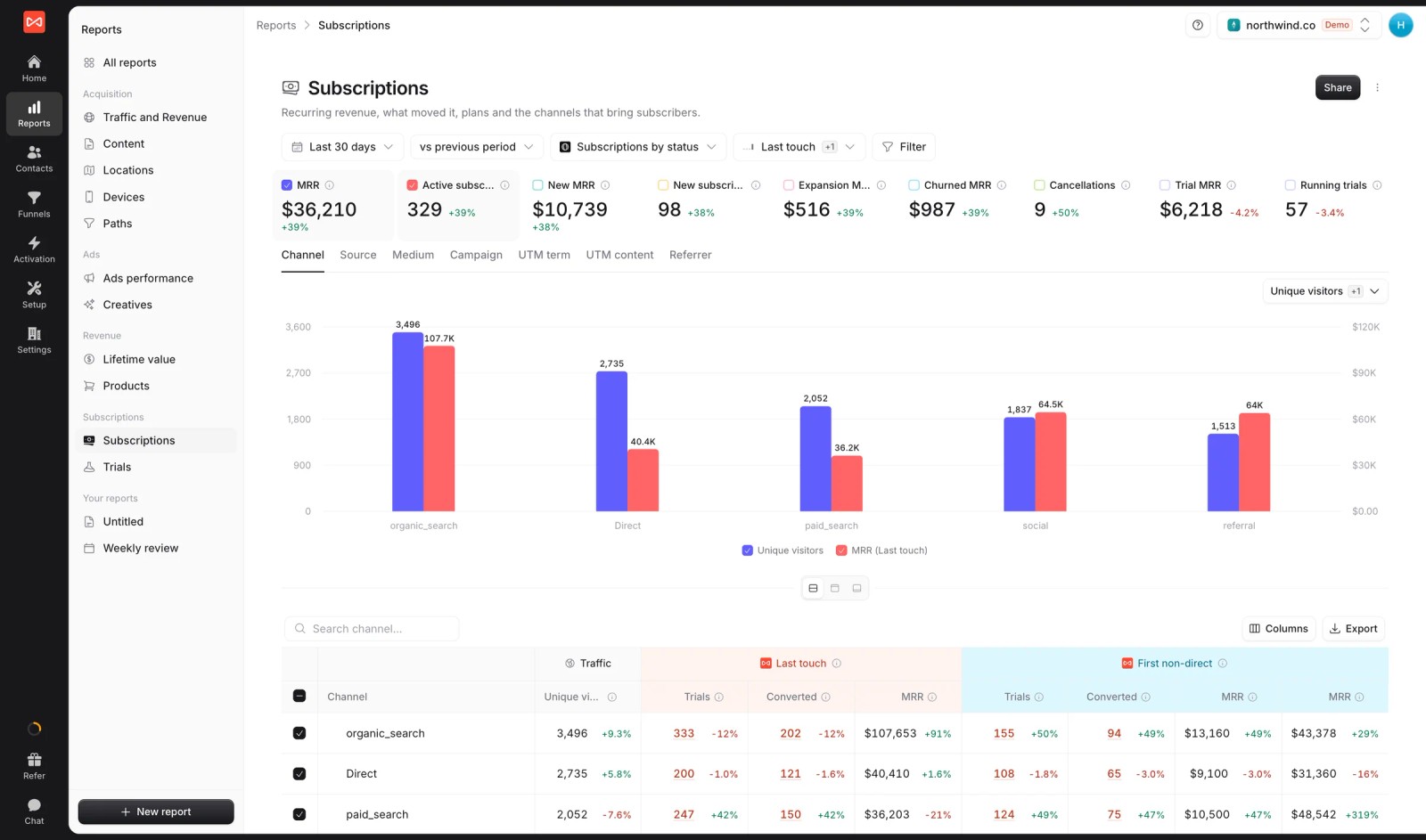
- Subscriptions and MRR by channel: new MRR, churn and trial MRR credited to the channel under first or last touch.
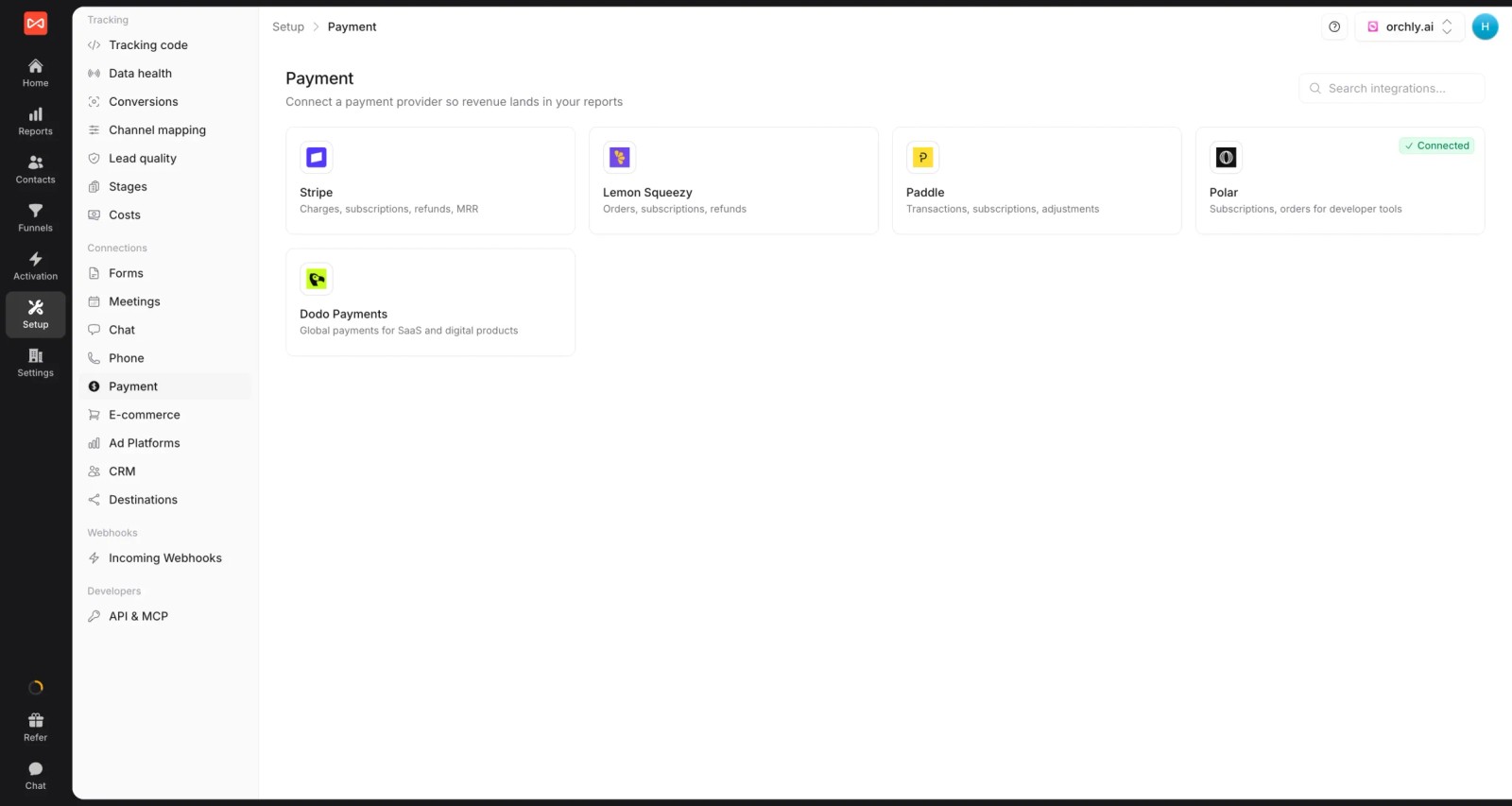
- Payments from five providers: Stripe, Paddle, Polar, Lemon Squeezy and Dodo connect by webhook, and every charge, renewal and refund becomes dated revenue on the right customer.
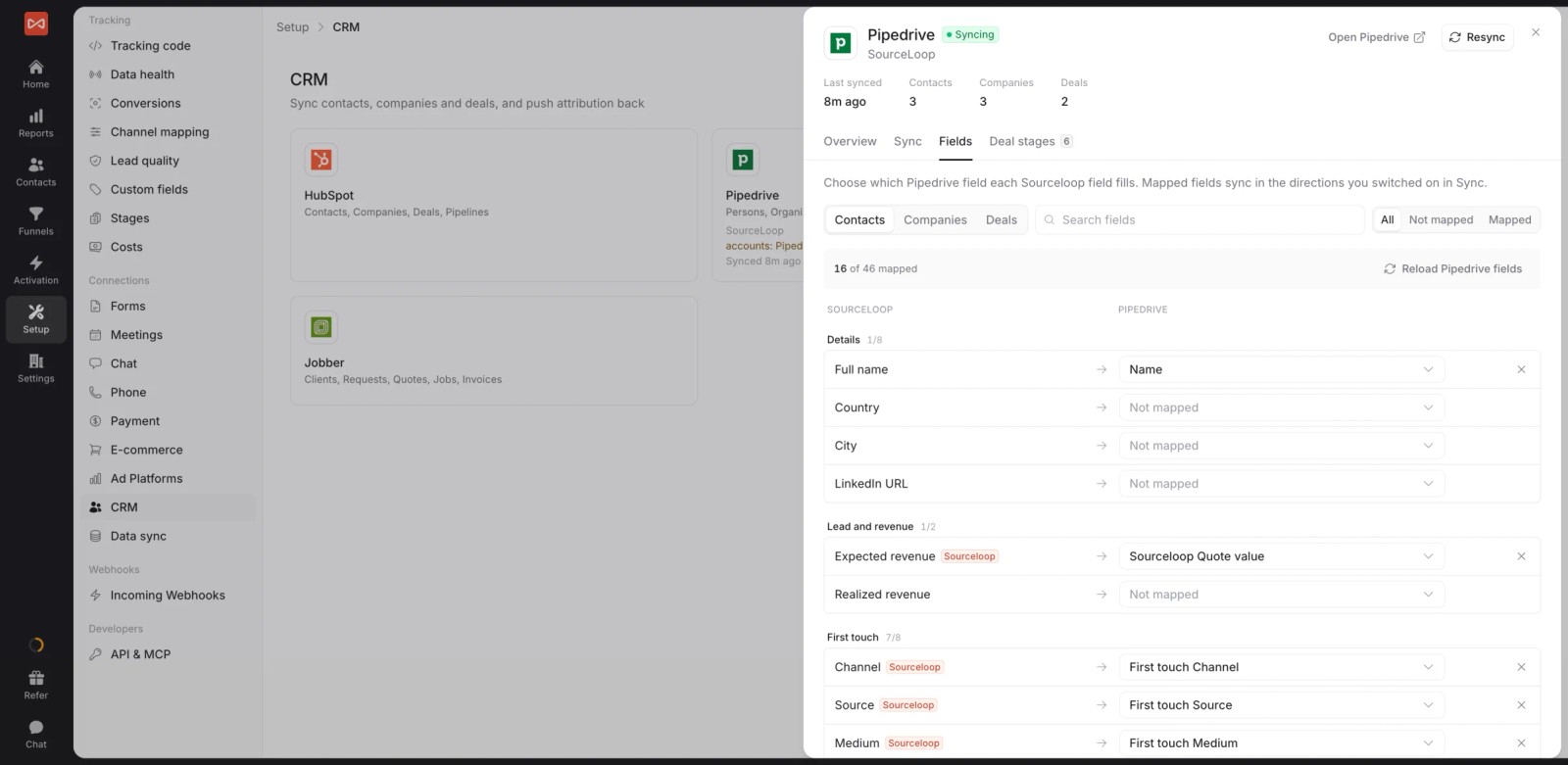
- CRM deals for lead gen: two-way sync with HubSpot, Salesforce, Pipedrive and Jobber writes the source onto each record and reads stages and won deals back, plus calls from CallRail or CallTrackingMetrics.
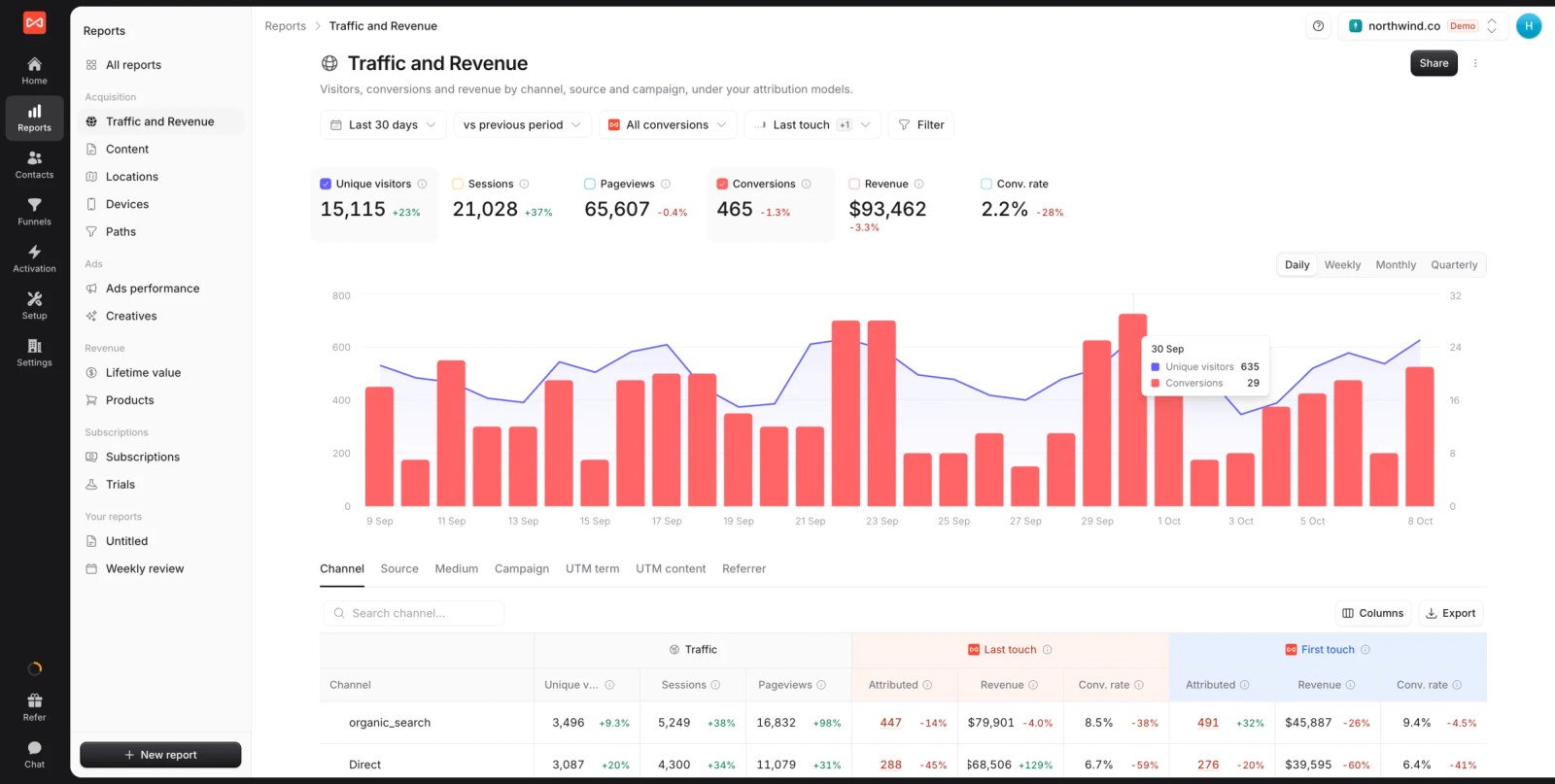
- Seven attribution models: first and last touch, first and last non-direct, linear, U-shaped and time decay.
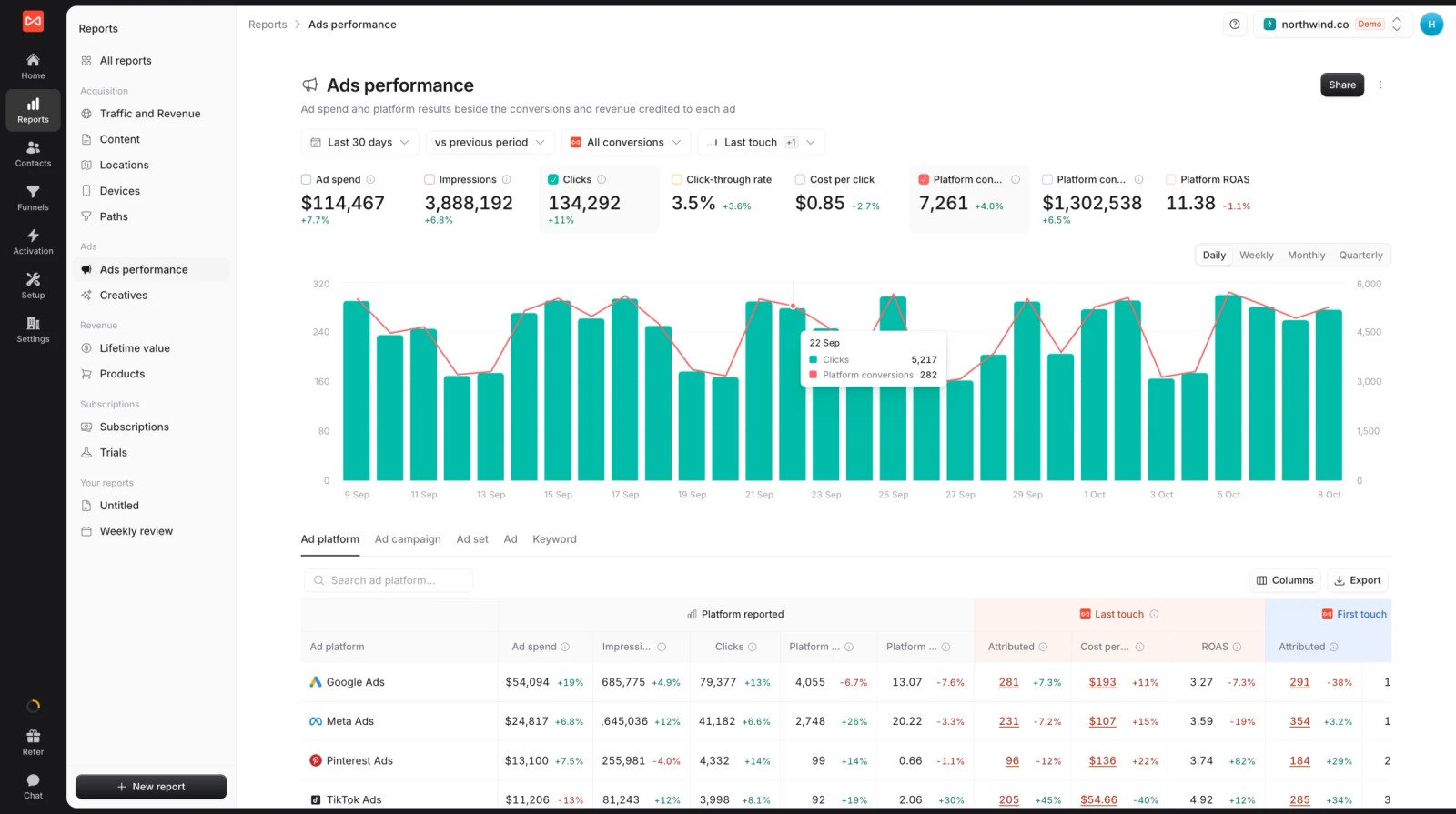
- Ad spend beside credited revenue: spend and platform-reported ROAS next to what SourceLoop credits each ad platform, which is where Wicked users usually spot the gap between Meta's numbers and the bank.
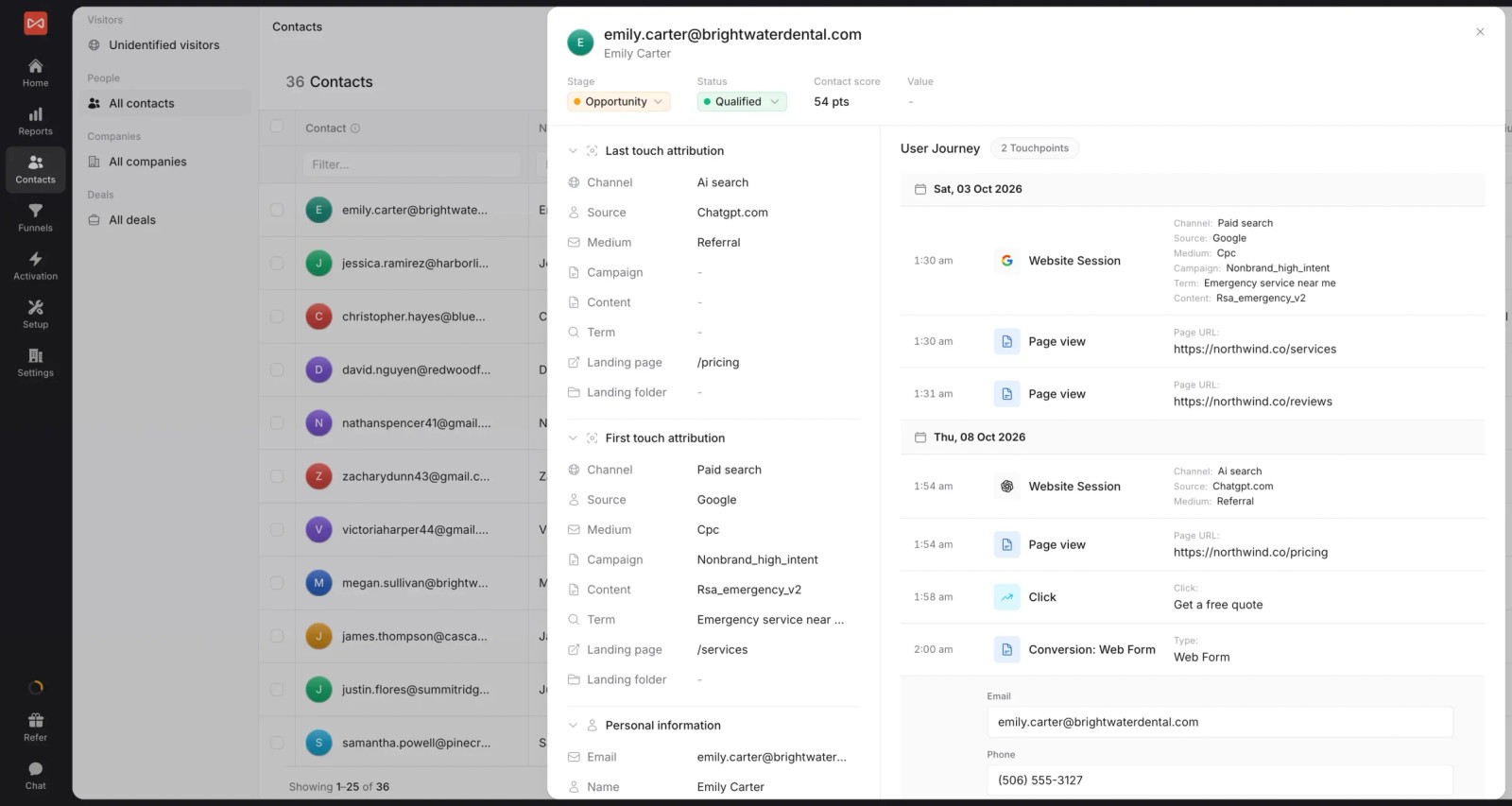
- Journey on every customer: each visit and ad click before they paid.
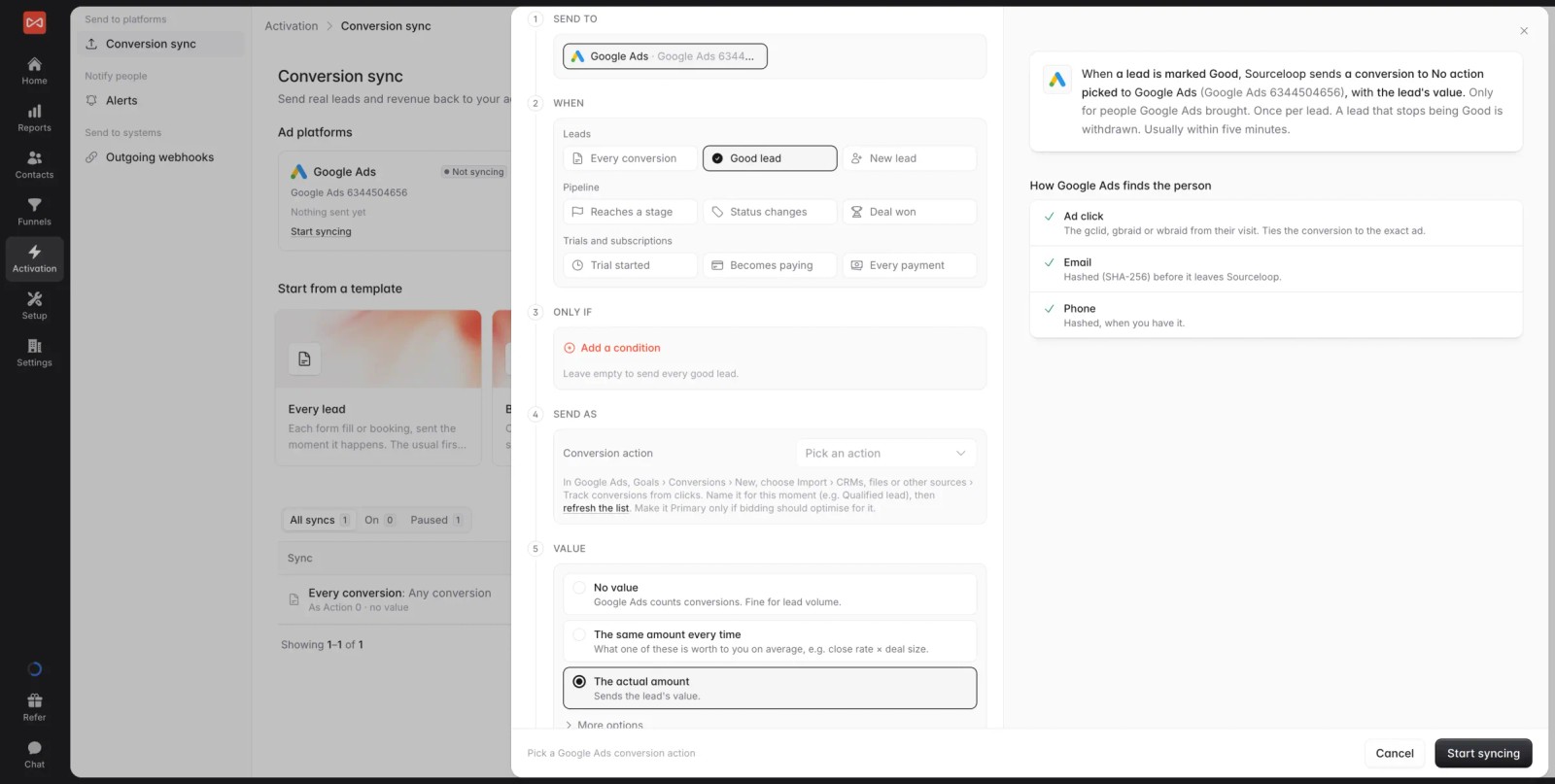
- Signals back to ads: trials, payments, good leads and won deals go to Google Ads, Meta, Microsoft Ads and ChatGPT Ads with their value, through server-side conversion sync.
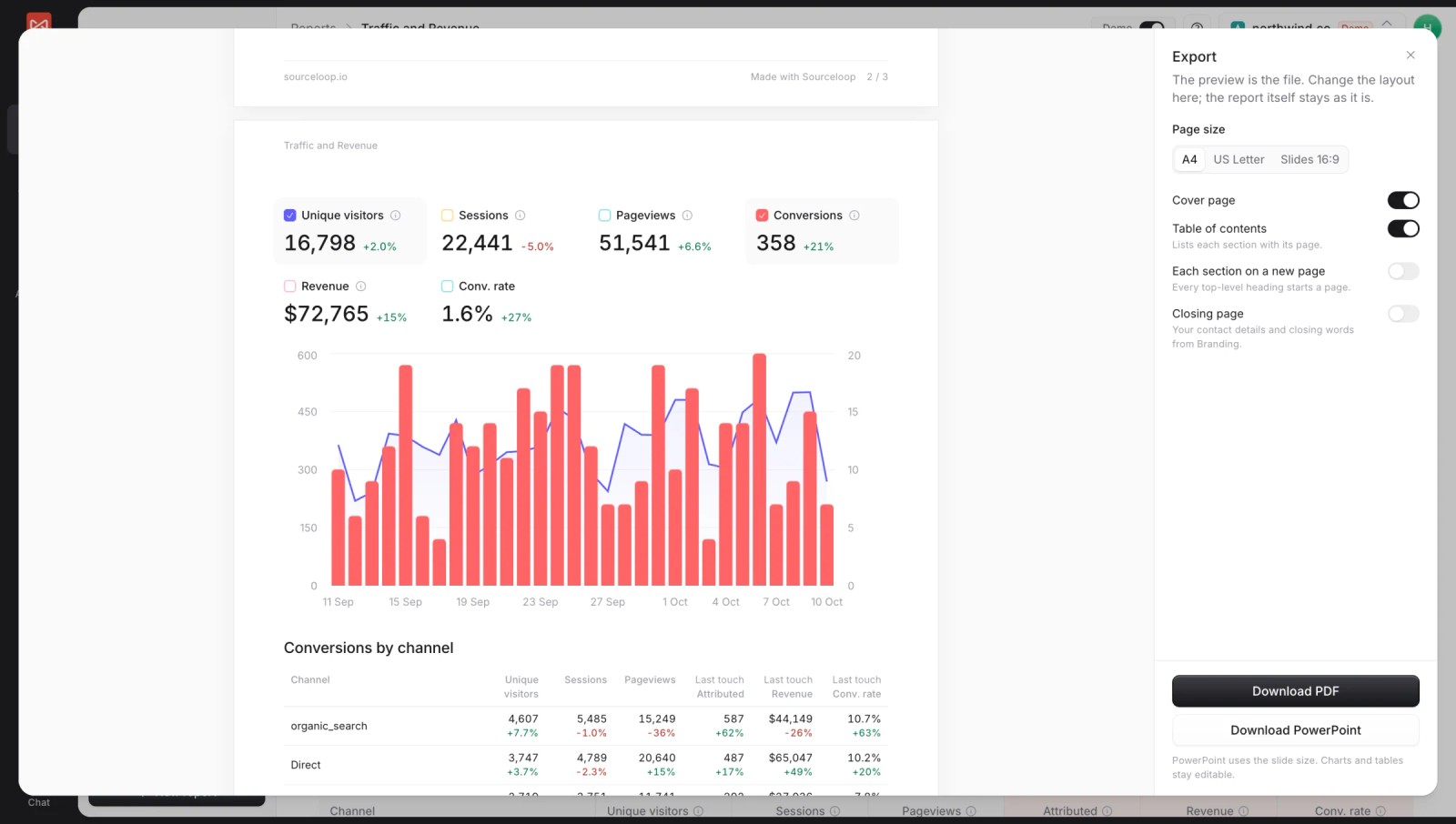
- Custom reports with exports: build a monthly LTV or MRR report once, share it as a live link, or download it as a PDF or PowerPoint for the board.
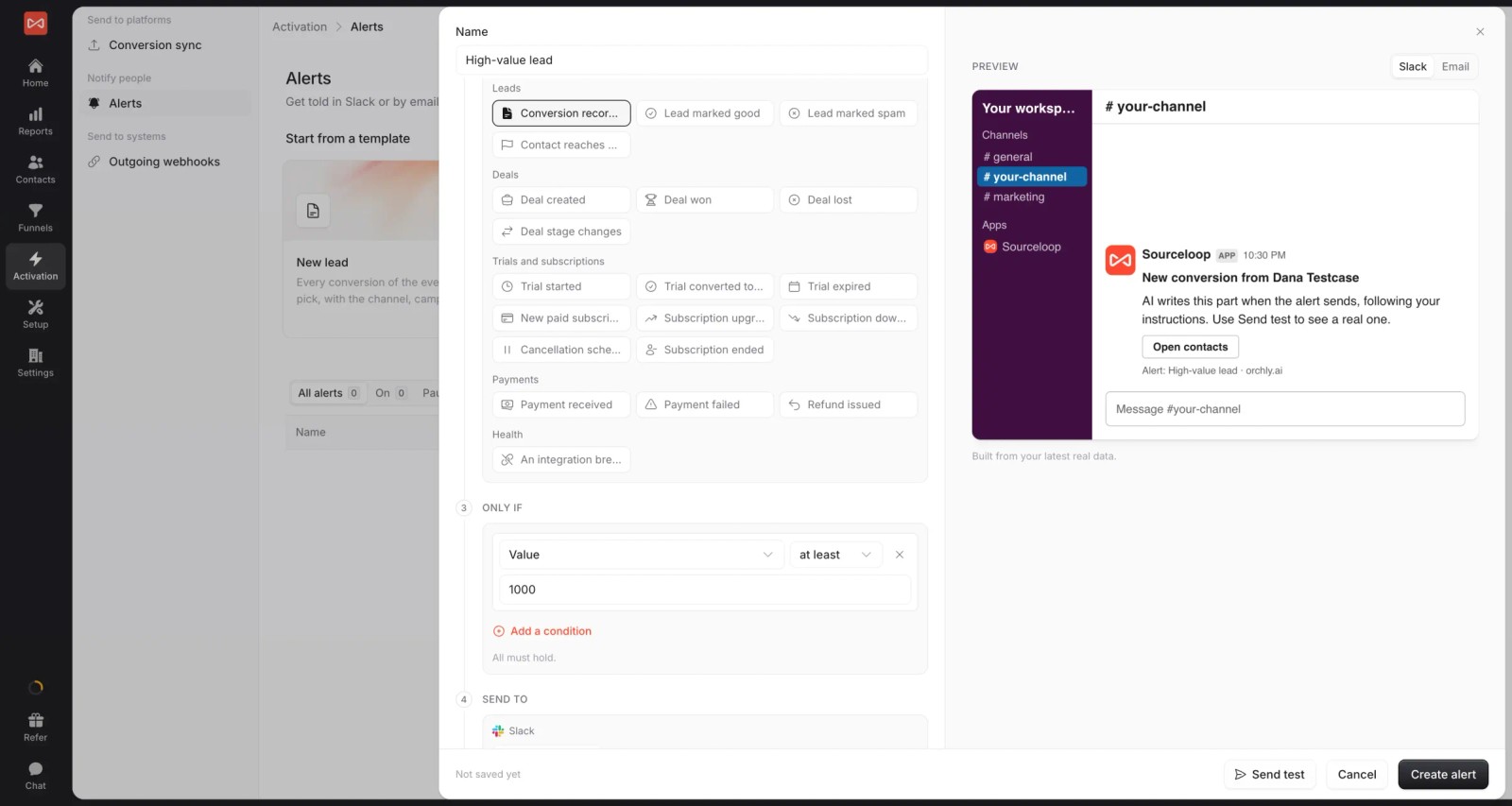
- Alerts: post a message to Slack or email when a high-value customer signs up, a payment fails to arrive or weekly revenue moves.
- Profit, white label and MCP: a profit report after costs and ad spend, full white label for agencies, and an API and MCP server on Professional and up so an AI assistant can query revenue by channel.
Where it falls short
- Not a Shopify analytics tool: no store-level dashboards, product margin views or Klaviyo revenue sync.
- No view-through attribution or media mix modeling.
Pricing
- Essential: $49/mo for one site and 30,000 page views, with tracking, attribution reports, lead quality rules and alerts
- Professional: $99/mo for 100,000 page views and unlimited users, adding CRM sync, conversion sync to the ad platforms, the API and MCP
- Agency: $249/mo for three sites and 1.5 million page views, adding white label reporting
- Unlimited conversions on every plan, and a 7-day trial. Wicked's entry plan is $499.
Verdict: a strong replacement if your repeat revenue comes from subscriptions or a sales team. Shopify brands should start with Triple Whale or Polar.
2. Triple Whale
Best for: Shopify brands that want attribution, cohorts and AI analysis in one daily dashboard.
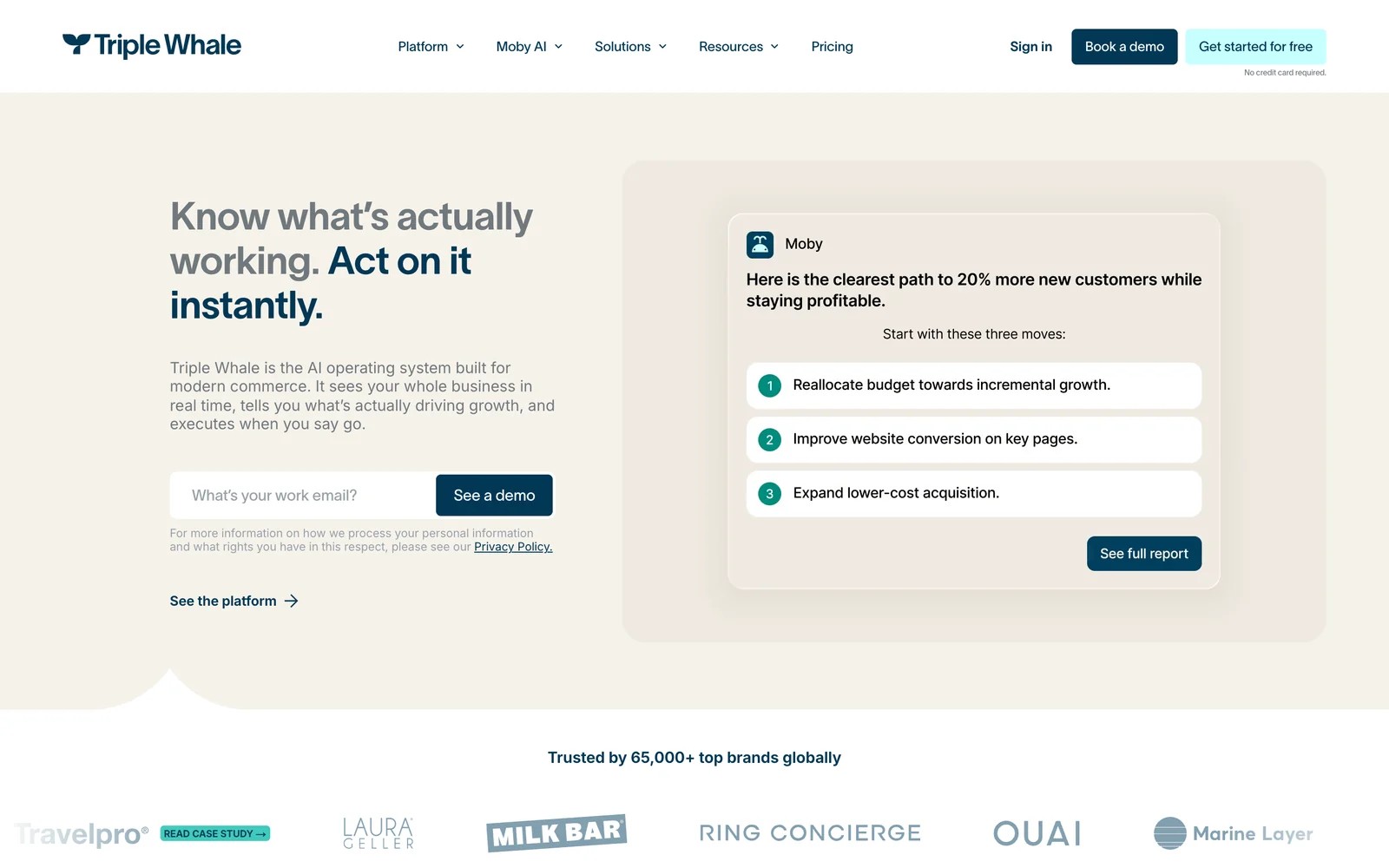
Triple Whale is the most common destination for Shopify brands leaving Wicked. It pulls orders, ad spend and its own pixel data together, with cohort and LTV views and AI agents that answer questions.
We've tested it on a store. It's much faster to get value from than Wicked: the summary dashboard was useful on day one. The trade-off is that its pixel numbers need context, since they rarely match what Meta reports.
Key features
- Shopify orders, ad spend and the Triple Pixel come together in one dashboard, which is far quicker to get value from than Wicked.
- Cohort and LTV reports show what customers from each channel are worth over time, covering the repeat-revenue view Wicked users rely on.
- AI agents answer questions and flag changes in performance, so a small team can spot a drop without checking reports every morning.
- Enriched conversions are sent back to Meta and other ad platforms, helping their algorithms learn which customers are actually valuable.
Where it falls short
- Subscription billing outside Shopify and CRM deals aren't attributed, so SaaS and lead-gen businesses get little from it.
- Pricing rises as your store's revenue grows, which can make the bill climb faster than the value you get.
- Stores on platforms other than Shopify don't get as smooth a setup, since the product is built around Shopify first.
What users say
"The transparency of the data, Triple Whale demonstrated that we had 3 times the amount of users on site vs Klaviyo's metrics." (Source)
"Unfortunately the Enterprise version has all the best toys and is quite pricey for SMEs." (Source)
"The attribution system is consistently buggy and unreliable, causing more harm than good." (Source)
Pricing
- Priced by store GMV, with a free starter tier. See Triple Whale pricing.
3. Polar Analytics
Best for: Shopify brands that want a full BI layer and data warehouse, with attribution as one part.
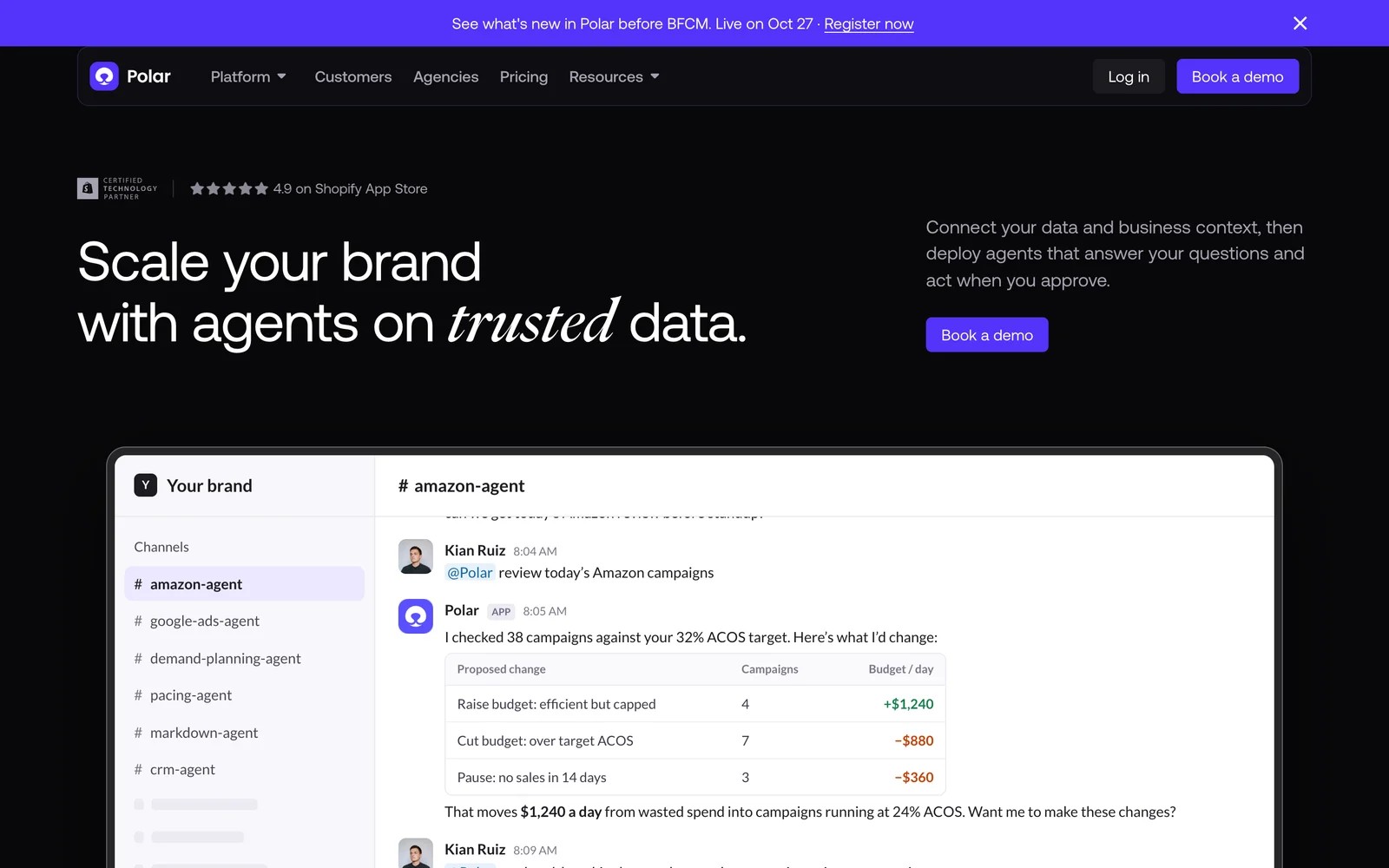
Polar Analytics gives each brand a dedicated Snowflake warehouse, a first-party pixel, multi-touch attribution and a library of ecommerce dashboards. AI agents and an MCP server sit on top, and incrementality tests are available.
It's the closest match to Wicked's depth, with more flexibility in reporting. Users like how easy it is to centralize data. A few describe attribution issues that took too long to resolve.
Key features
- Each brand gets a dedicated warehouse holding store, ad and email data with unlimited history, a good fit for teams that want to own their data.
- Dashboards, custom metrics and cohort reports cover LTV and retention in depth, matching much of the reporting Wicked users are used to.
- Multi-touch attribution runs on Polar's own first-party pixel, so credit isn't limited to what each ad platform chooses to report.
- Conversion API signals for Meta and Google, plus lift tests, are available as add-ons for brands ready to go beyond reporting.
Where it falls short
- There are no published prices or self-serve trial, so you'll need a sales conversation before you can evaluate it properly.
- It's built for the Shopify-led ecosystem, so stores on other platforms may find integrations and support thinner.
- Ad platform signals like conversion API delivery aren't in the base plan, which raises the real cost for brands that need them.
What users say
"Polar Analytics is a tool that centralizes our revenue information with acquisition expenses and email activity." (Source)
"the platform wasn't able to attribute events correctly, we where met by radio silence for a long period (continued today)" (Source)
"Custom connectors require intervention from a support specialist, which slows down the integration process for non-standard data sources." (Source)
We couldn't find Polar Analytics reviews on Capterra.
Pricing
- Quoted by annual GMV, with a Core plan and a custom plan. Advertising signals are priced separately.
4. ThoughtMetric
Best for: smaller ecommerce brands on any platform that want simple multi-touch attribution at a low price.
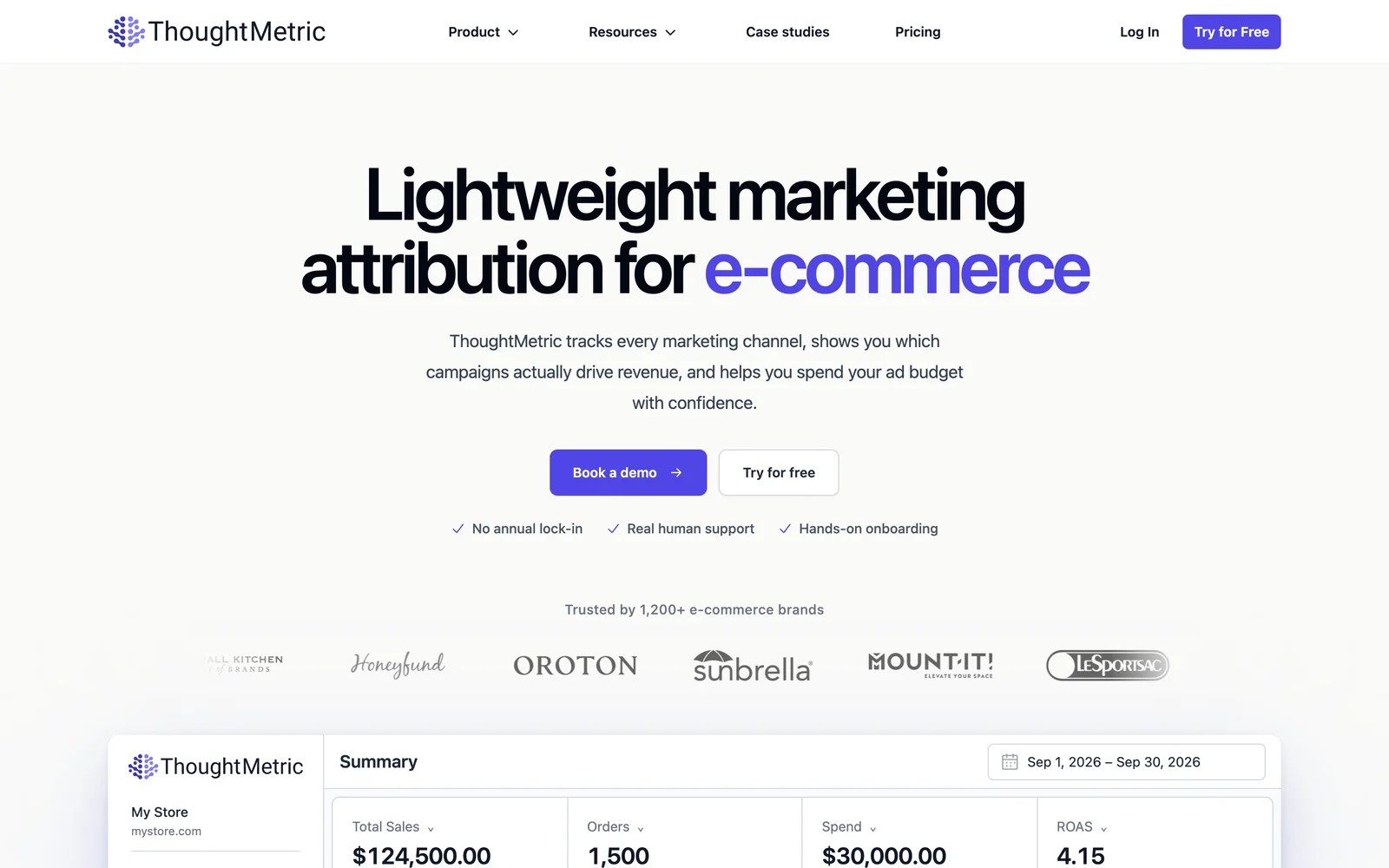
ThoughtMetric is a lightweight attribution tool for Shopify, WooCommerce and other stores, with post-purchase surveys and an MCP connector for Claude and ChatGPT. Pricing is by pageviews, and every plan gets the whole product.
On the trial, setup was quick and the reports were easy to read. It's the cheapest way off Wicked here. What you give up is depth: users ask for more LTV insight, custom reports and ad-level detail.
Key features
- Multi-touch attribution covers every major ad channel and works on Shopify, WooCommerce and most other ecommerce platforms, not just one store type.
- Built-in "How did you hear about us?" surveys add self-reported answers, which helps with channels like podcasts that rarely produce clicks.
- An MCP connector brings attribution data into Claude and ChatGPT, so you can ask questions about performance in plain language.
- Every plan includes every feature and is priced only by pageviews, which keeps costs predictable for smaller brands moving off Wicked.
Where it falls short
- LTV and cohort analysis are much lighter than Wicked's, so brands that lived in repeat-revenue reports will notice the difference.
- One reviewer says it doesn't drill down to keyword or ad level, which limits how far media buyers can take the data.
- Subscription billing and CRM deals aren't tracked, so it only fits stores whose revenue happens at checkout.
What users say
"Setup was fast, the reports are snappy, and the UI is clean and easy to use." (Source)
"I would love more insights like ROAS, LTV, Fastest moving items, usually bought together insights, etc... which would allow us to create even better strategies" (Source)
"Tracking is the worst of all the apps I've tested, and I've tested a lot of them" (Source)
Pricing
- From $99/mo for 25,000 pageviews, scaling with traffic. 14-day trial, and two months free on annual billing.
5. Northbeam
Best for: DTC brands with large paid social budgets that want modeled attribution plus MMM.
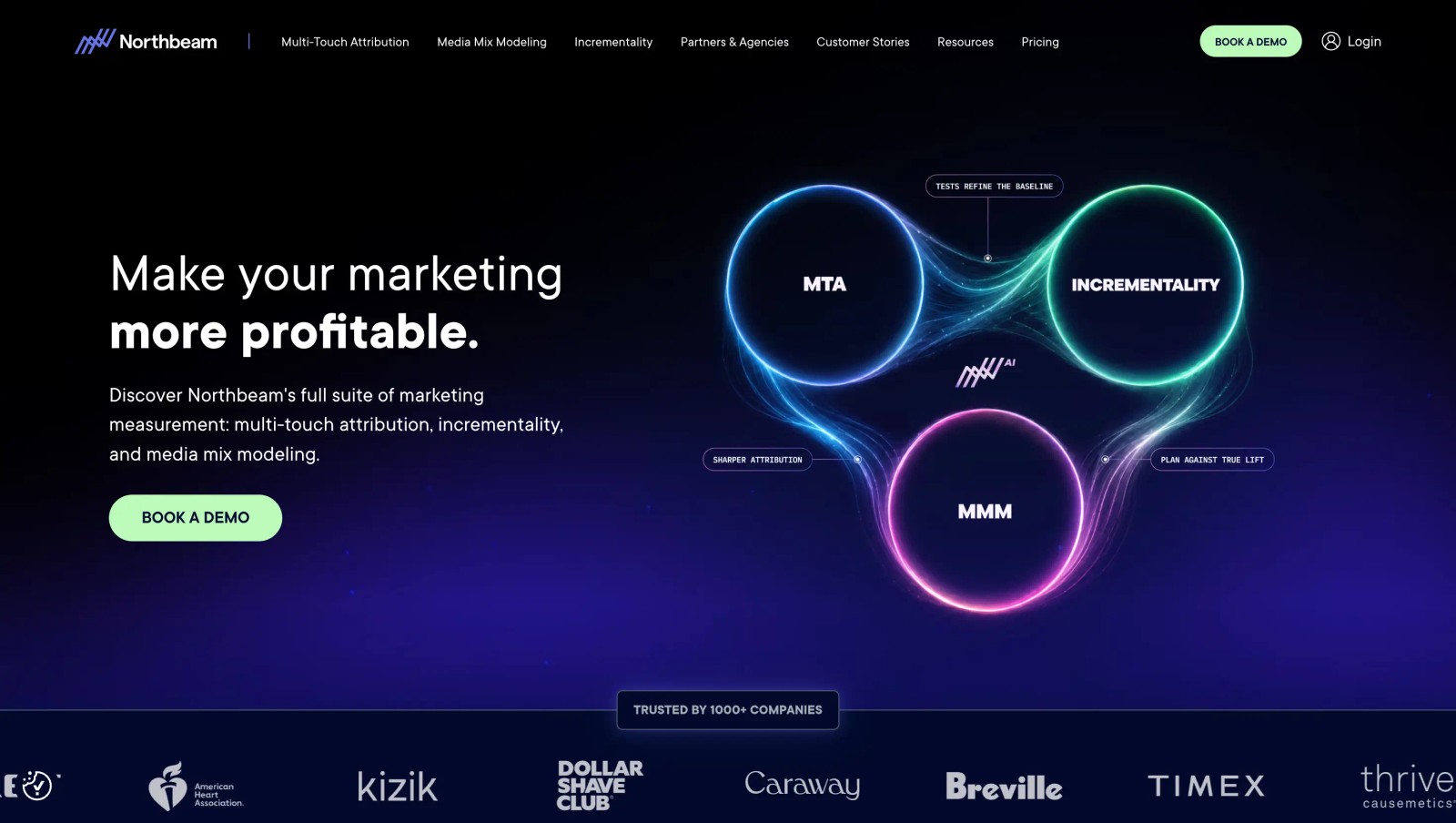
Northbeam attributes orders with clicks and deterministic views, adds media mix modeling and incrementality, and sends enriched conversions to the ad platforms. Where Wicked is conservative, Northbeam credits more of the upper funnel.
It's a step up in price as well as scope. It makes sense when ad spend is high enough that modeling view-through actually changes budget decisions.
Teams we know who moved from Wicked to Northbeam found its dashboards more modern and faster to act on. The trade-off they mention is trust: Wicked's conservative numbers were easy to defend, while modeled view-through credit takes more explaining.
Key features
- Multi-touch attribution counts deterministic views as well as clicks, crediting more of the upper funnel than Wicked's conservative approach does.
- Media mix modeling and incrementality testing are offered on higher tiers, so brands can test modeled credit against other methods.
- Northbeam Apex sends enriched conversion data back to the ad platforms, aiming to sharpen how they target and bid on your behalf.
- An MCP server gives AI assistants access to the attribution data, letting analysts query results from the tools they already use.
Where it falls short
- Much of its data is modeled, which is a big shift for brands that chose Wicked for its conservative, verified-orders approach.
- Brands below its spend threshold will find the price and onboarding hard to justify for what they'd actually use.
- CRM deals and subscription billing outside the store aren't attributed, so it won't replace Wicked's CRM-based attribution.
What users say
"We'd recommend Northbeam to any business doing over $5 million a year, spending on paid traffic, and looking to find clarity within their numbers." (Source)
"Their onboarding process is very hard." (Source)
Northbeam has no reviews on Capterra yet.
Pricing
- Starter: from $1,500/mo, for brands under $1.5M a year in ad spend
- Professional: from $3,500/mo
- Enterprise: custom
6. Hyros
Best for: info-product, coaching and high-ticket sellers whose sales close on calls, weeks after the first click.
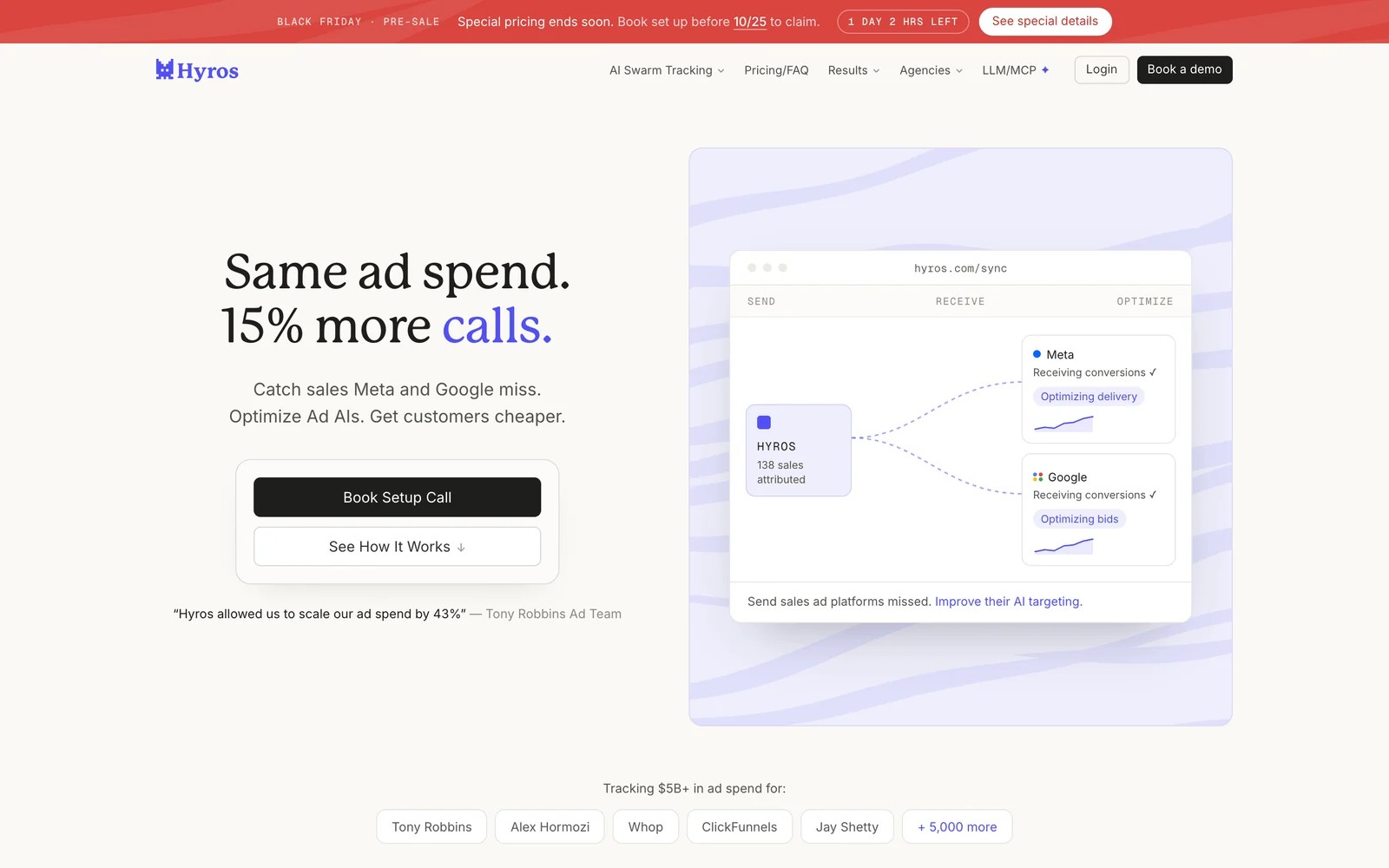
Hyros tracks ad clicks through funnels and booked calls to final sales, with long attribution windows, and feeds the sales back to the ad platforms. It overlaps with Wicked's long memory for the high-ticket crowd.
Public feedback is thin and mixed. Its two G2 reviews are both critical about setup and promises, so ask for references in your niche.
Operators in the high-ticket space describe a hands-on setup, with tracking wired through funnels, calendars and payment tools. When it works, they value seeing a sale credited to an ad from weeks earlier, but reviews on setup are mixed.
Key features
- Ad clicks are followed through funnels, booked calls and final sales, even when the purchase happens weeks after the first visit.
- Sales data is fed back to the ad platforms, so campaigns can optimize toward buyers rather than leads that never close.
- Long attribution windows suit slow, high-value decisions like coaching programs, where Wicked's long memory was the original draw.
- AI-driven reports highlight which ads and funnels actually make money, aimed at operators who want a quick read on profit.
Where it falls short
- There are no published prices or trial, so you'll go through a sales call before knowing what it costs.
- It doesn't offer store-style cohort dashboards, which Wicked users rely on to understand repeat purchase behavior.
- It's built for high-ticket offers, so low-ticket ecommerce brands will find most of its strengths irrelevant to them.
What users say
"They over promise and under deliver." (Source)
"They make set-up super difficult." (Source)
We couldn't find Hyros reviews on Capterra.
Pricing
- Not published; set after a call. See our Hyros alternatives for what buyers report.
7. Cometly
Best for: B2B SaaS teams that want ad spend tied to pipeline and closed-won revenue.
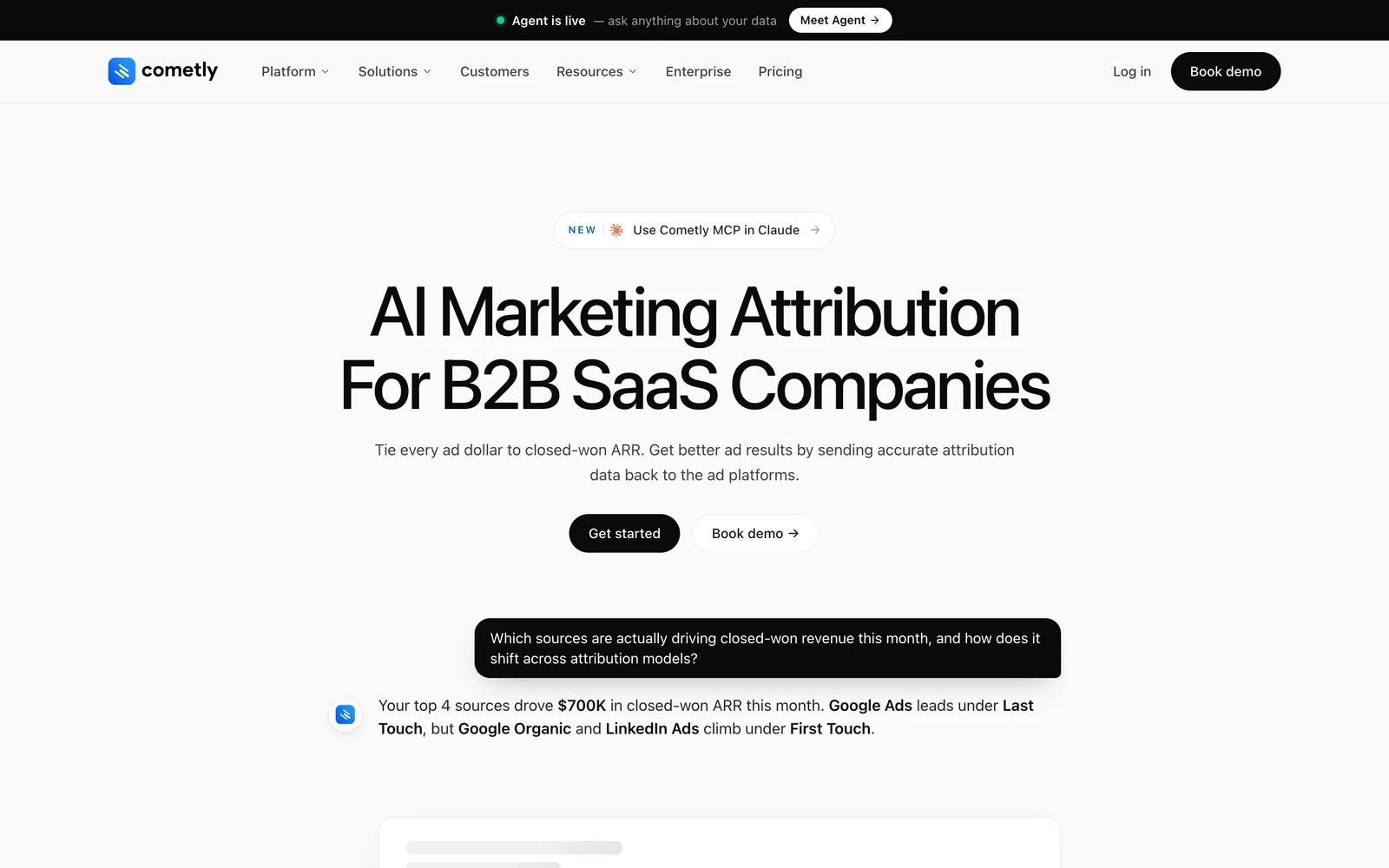
Cometly follows leads from the ad click into the CRM and credits closed-won revenue across touches, sending conversions back to Meta and Google. It now positions itself for B2B SaaS.
We've tested it. Ad-level revenue next to Ads Manager's numbers is useful, and setup is smooth for the ad side. It doesn't try to do lifetime value or repeat-order cohorts, so it only replaces Wicked's CRM attribution.
Key features
- A first-party pixel and server-side tracking capture ad clicks that browsers and blockers would otherwise drop from your reports.
- Multi-touch attribution follows each lead from the ad click through the CRM to closed-won revenue, which suits B2B sales cycles.
- Conversions, offline sales included, are sent back to Meta and Google through their conversion APIs to improve campaign optimization.
- An AI agent and an MCP server answer questions about the data in plain language, without building a custom report each time.
Where it falls short
- Lifetime value and repeat-purchase cohorts aren't reported, so it only replaces Wicked's CRM attribution, not its LTV views.
- Phone calls aren't tracked, which matters for businesses where high-value sales happen over the phone.
- Ecommerce brands aren't its focus anymore, since the product now targets B2B SaaS teams and their pipelines.
What users say
"Cometly marries sales and marketing data into one platform and feeds it back to your ad channels for optimization so you can make data driven decision right from your Ad Accounts." (Source)
"Sometimes it takes a bit too long to set it up if you have complex Tech Stack." (Source)
Pricing
- Usage-based Core plan and quoted Enterprise.
How to choose
Decide which of Wicked's four jobs you can't live without.
If lifetime value is the reason you bought Wicked:
- Shopify store: Triple Whale or Polar Analytics.
- Subscriptions billed through Stripe or Paddle: SourceLoop, which credits MRR and LTV to the acquiring channel.
If price is the reason you're leaving:
- ThoughtMetric from $99 a month for ecommerce, or SourceLoop from $49 for lead gen and SaaS.
If you mostly used it to feed Meta better data:
- Triple Whale or Northbeam for stores. SourceLoop for lead generation businesses and agencies that want good leads and won deals sent back to Google Ads, Meta and Microsoft Ads.
If your sales close on calls:
- Hyros for high-ticket funnels, or SourceLoop with CallRail or CallTrackingMetrics for service businesses.
Frequently asked questions
-
What is Wicked Reports used for?
Wicked Reports is a marketing attribution platform for ecommerce, subscription and high-ticket businesses. It credits revenue, including repeat orders, to the campaigns that acquired each customer, using very long lookback windows.
-
How much does Wicked Reports cost?
As of November 2026, Wicked Reports starts at $499 a month for brands up to $2.5M in annual revenue, with Scale at $699, Maximize at $999 and Enterprise from $4,999.
-
What is the cheapest Wicked Reports alternative?
For ecommerce, ThoughtMetric starts at $99 a month. For subscription SaaS and lead generation, SourceLoop starts at $49 a month with LTV and subscription reports included.
-
Which Wicked Reports alternative is best for Shopify?
Triple Whale is the most popular choice for Shopify brands, and Polar Analytics suits brands that want a full BI layer. Northbeam fits brands with large ad budgets.
-
Can I track lifetime value by acquisition channel without Wicked Reports?
Yes. Triple Whale and Polar Analytics offer cohort and LTV reports for Shopify, and SourceLoop credits subscription revenue and LTV to the first campaign for businesses billing through Stripe, Paddle and similar providers.
-
Why does Wicked Reports show fewer conversions than Facebook?
Wicked only counts orders it can match to known customers in your cart or CRM, while ad platforms include modeled and view-through conversions. Most first-party attribution tools show the same gap.

 Paid Social


